
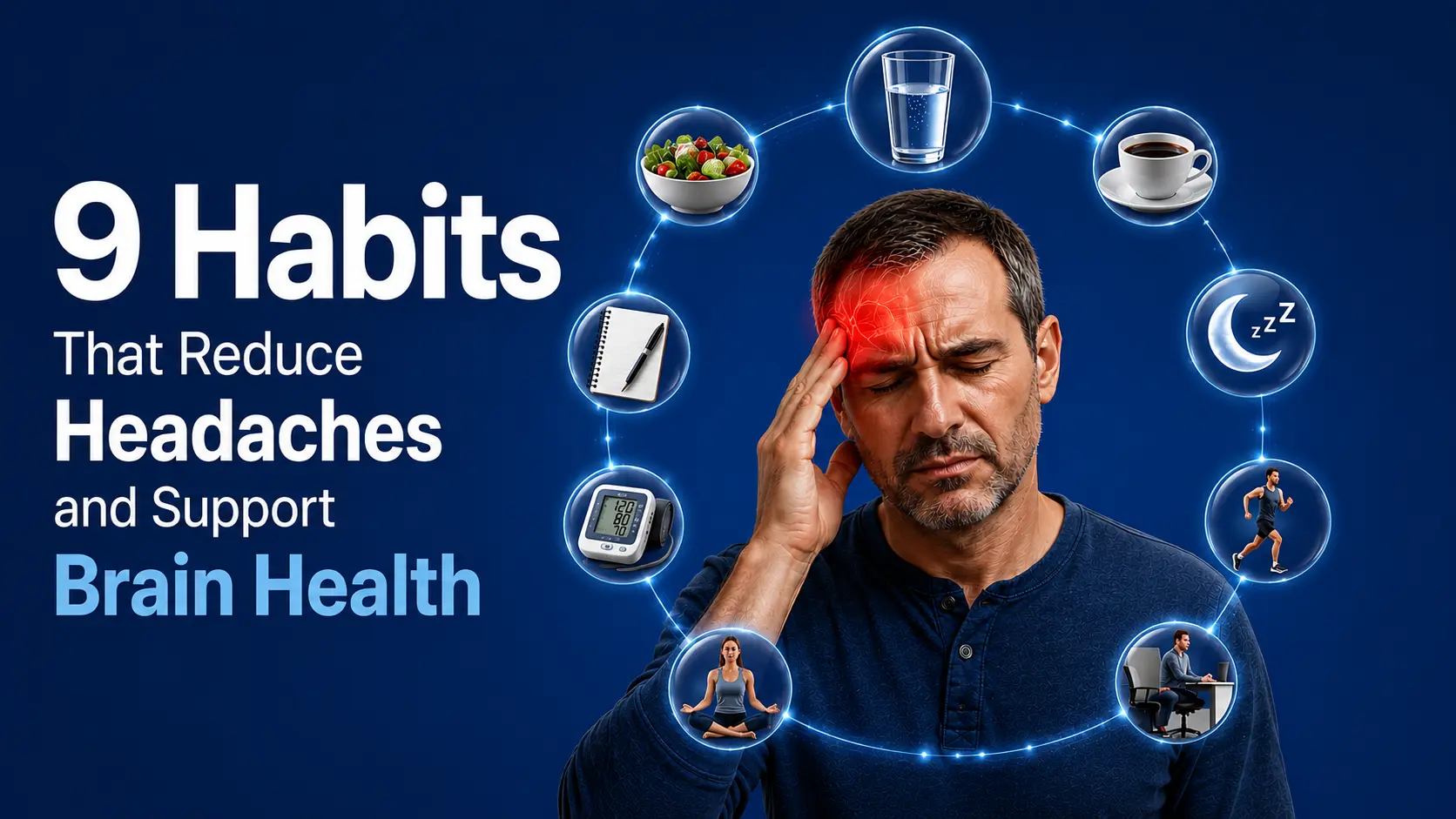
9 Habits That Reduce Headaches and Support Brain Health
Healthy Daily Habits for Headaches and Support Brain Health can help people better understand how everyday choices may influence headaches, migraine attacks, cardiovascular health, and overall neurological wellness.
For people living in Bloomington, Illinois, and El Paso, Texas, a busy lifestyle can make healthy routines difficult. Work schedules, commuting, skipped meals, inadequate hydration, irregular sleep, stress, long periods of sitting, and lack of exercise can become normal parts of everyday life.
These habits do not mean that a person will develop migraine or another neurological disease. Migraine itself is a neurological disease, and neurological conditions can have many different causes. However, lifestyle factors may influence migraine attacks and can affect overall cardiovascular and brain health.
For people with frequent or disabling attacks, lifestyle habits are usually discussed alongside medical treatment options such as BOTOX Chronic Migraine: 7 Facts Before Your First Injection, not instead of it.
That makes one question especially important:
What can people change in their everyday lives to support their brain and better manage recurring headaches — and how does that fit alongside a treatment like BOTOX?
The answer begins with understanding the problem.
Quick Answer
Habits for headaches and brain health — regular meals, hydration, consistent sleep, gradual exercise, movement breaks, stress awareness, vascular health checks, and a headache diary — don’t replace medical treatment. For people with 15 or more headache days a month, they work best alongside options like BOTOX for chronic migraine and ongoing neurology care.
How Common Are Headaches and Migraine in America? (Brain Health Data)
Headaches and migraine affect a significant number of Americans.
According to the Centers for Disease Control and Prevention, 4.3% of adults aged 18 years and older reported being bothered a lot by headache or migraine in the past 3 months in 2021, with the percentage among women (6.2%) higher than that among men (2.2%).
Age also made a difference. Among adults ages 18–44, the percentage was 7.4% for women versus 2.5% for men.
| U.S. Group | Bothered “A Lot” by Headache/Migraine |
|---|---|
| All adults | 4.3% |
| Women | 6.2% |
| Men | 2.2% |
| Women ages 18–44 | 7.4% |
| Women ages 45–64 | 6.7% |
| Women ages 65+ | 3.1% |
Source: CDC/NCHS, National Health Interview Survey QuickStats, 2021.
These percentages should be interpreted correctly. The CDC was measuring adults who said headache or migraine bothered them “a lot.” It was not measuring everyone who experienced any headache. An earlier CDC survey used a different definition — whether someone had experienced a severe headache or migraine during the previous three months. In 2018, that figure was 20.1% among women and 10.6% among men.
This difference shows why health statistics need context.
Headaches are only one part of neurological health. A major Global Burden of Disease analysis found that an estimated 3.40 billion individuals had a condition affecting the nervous system in 2021, corresponding to 43.1% of the world population. These 37 conditions were collectively ranked as the leading group cause of disability-adjusted life years globally in 2021, according to The Lancet Neurology.
The question, therefore, is not simply how to stop today’s headache. It is also how people can build healthier daily habits that support their long-term brain health — and know when it’s time to talk with a neurologist about options like BOTOX.

1. Improve Your Eating Schedule for Headaches and Support Brain Health
When headaches become frequent, many people immediately search online for “foods that cause migraine.” That can lead to unnecessarily eliminating many foods.
A better starting point is often examining the overall eating pattern.
Consider someone who wakes at 7 a.m., drinks coffee, skips breakfast, becomes busy at work, misses lunch, eats a snack in the afternoon, and finally has a large meal at 8 p.m. For a person susceptible to migraine, this type of irregular eating schedule may be relevant.
The American Migraine Foundation cautions against restricting all possible trigger foods for an extended period of time, noting this is not likely to be helpful and that too much concern about avoiding foods may increase stress and make consistent, healthy eating less likely.
| Eating Habit | Possible Concern | Better Approach |
|---|---|---|
| Frequently skipping breakfast | Long period without food | Develop a regular meal routine |
| Missing lunch | Irregular eating pattern | Plan meals around work |
| Very restrictive diets | Nutritional imbalance may occur | Seek professional guidance |
| Assuming every food is a trigger | May cause unnecessary restriction | Track individual patterns |
| Balanced, regular meals | Supports overall health | Make consistency the goal |
The important word is individual. Food-related migraine patterns differ from person to person. The American Migraine Foundation recommends limiting a suspected food for four weeks while monitoring headache frequency, severity, and response to treatment with a headache diary, rather than assuming a universal list applies to everyone.
Why This Matters for Headaches and Support Brain Health
Meal consistency is one of the simplest, lowest-cost changes a person can make, and it’s a habit doctors ask about during any headache or migraine consultation.

2. Make Hydration Part of Your Routine for Headaches and Support Brain Health
How many times have you reached late afternoon and realized that you barely drank anything all day? It is easy to do. Meetings, driving, working at a computer, caring for children, travel, outdoor activity, and exercise can all interrupt normal hydration habits.
For people with migraine, maintaining hydration is one component of the American Migraine Foundation’s lifestyle recommendations.
| Situation | What to Remember |
|---|---|
| Long workday | Keep appropriate fluids accessible |
| Exercise | Think about hydration before and after activity |
| Hot weather | Fluid needs may increase |
| Travel | Don’t let normal hydration disappear from your routine |
| Medical fluid restriction | Follow your healthcare provider’s instructions |
This last point matters. People with certain kidney, heart, or other medical conditions may need individualized fluid recommendations. “Drink more water” should never override medical advice.
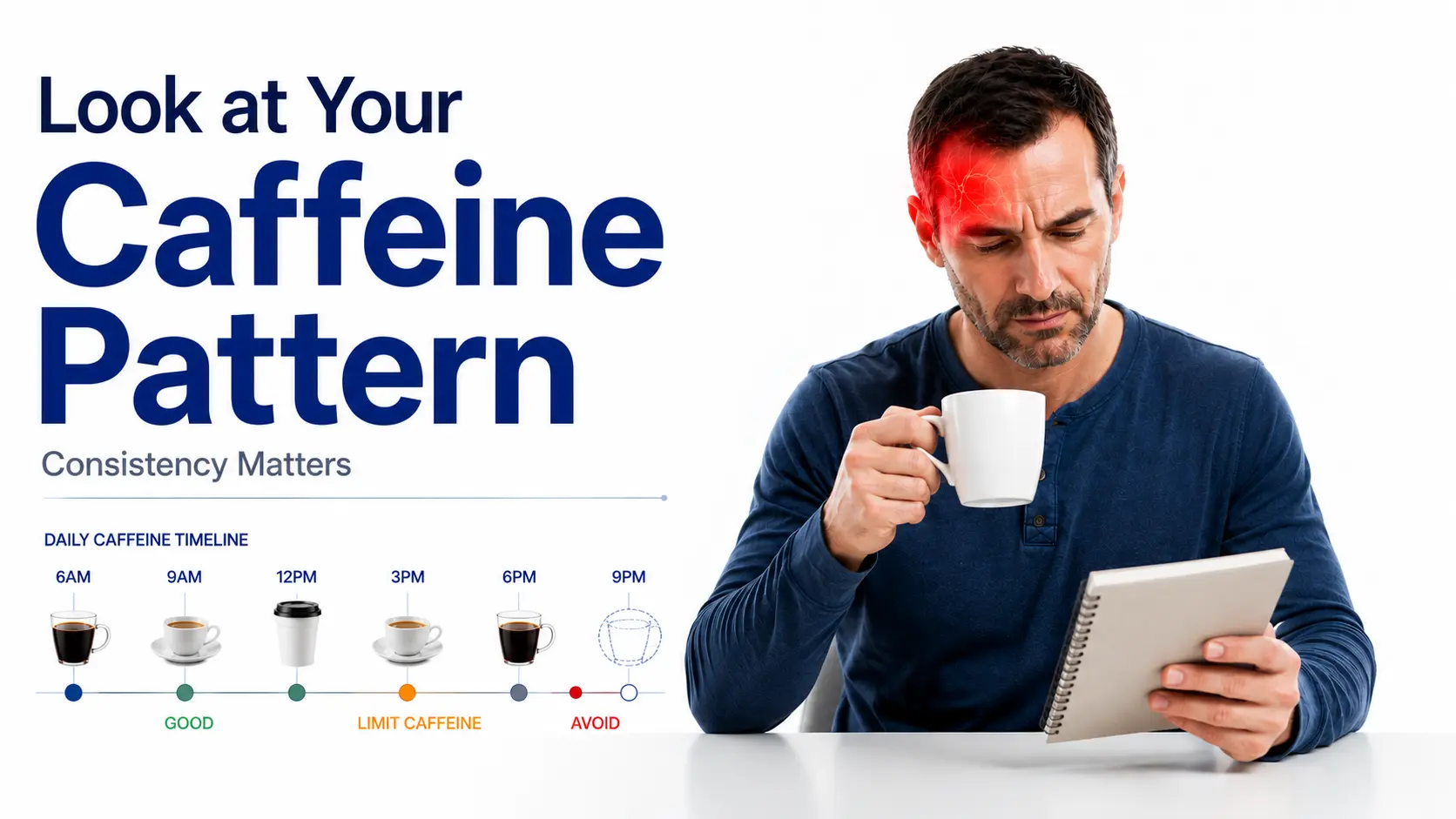
3. Look at Your Caffeine Pattern for Headaches and Support Brain Health
Caffeine deserves special attention because it is part of many people’s daily routine. Coffee before work, another cup at the office, soda at lunch, an energy drink in the afternoon — caffeine intake can accumulate without someone thinking about it.
Caffeine is also complicated in headache management. Caffeine withdrawal is among commonly reported migraine-related dietary factors, while caffeine itself may be included in some headache treatments.
Instead of immediately eliminating all caffeine, consider how much you consume and how consistent your intake is. If you normally consume several caffeinated drinks every day and suddenly stop, record whether your headache pattern changes. Likewise, if your caffeine intake increases significantly during stressful workdays, write that down.
The goal is to identify patterns — not make assumptions.

4. Treat Sleep as Part of Headaches and Support Brain Health
Sleep is not simply “downtime.” It is an important biological process, and the relationship between sleep and migraine can work in both directions: migraine can interfere with sleep, while poor sleep can contribute to migraine attacks in susceptible people.
Recent research uses the mnemonic SEEDS to outline five types of lifestyle changes that can help manage migraine: sleep, exercise, eat, diary and stress, according to the American Migraine Foundation.
| Less Helpful Routine | Healthier Routine |
|---|---|
| Different bedtime every night | More consistent bedtime |
| Sleeping very little on workdays | Allow adequate sleep opportunity |
| Large weekend schedule changes | Keep sleep/wake times more stable |
| Phone use immediately before sleep | Create a wind-down period |
| Ignoring persistent sleep problems | Discuss ongoing problems with a provider |
Think about your own week. Do you sleep five hours Monday through Friday and then ten hours on Saturday? Do you stay awake scrolling on your phone? Do you regularly wake feeling exhausted? Do headaches commonly appear after nights when you sleep poorly?
These are useful details to record. A healthy routine does not guarantee that migraine attacks will disappear, but consistent sleep is one of the lifestyle measures recommended for migraine management. Ongoing sleep problems are also worth reviewing on their own — see 9 Sleep Disorders & Restless Legs Syndrome (RLS) for warning signs.

5. Exercise Regularly for Headaches and Support Brain Health
Exercise is important for cardiovascular health, physical fitness, mood, sleep, and general wellness. It can also be relevant to migraine management.
The American Migraine Foundation’s SEEDS framework lists exercise as a core lifestyle pillar, generally recommending regular moderate-intensity aerobic activity several days a week, while advising people who are inactive to begin gradually.
| Activity | Practical Starting Idea |
|---|---|
| Walking | Start with manageable distances |
| Swimming | Consider if appropriate for your health |
| Cycling | Increase duration gradually |
| Yoga | May combine movement and relaxation |
| Aerobic activity | Build frequency and intensity gradually |
The key is gradual progress. Someone who has been inactive for six months does not necessarily benefit from attempting an exhausting workout on the first day. Start at a level appropriate for your health and physical ability. People with significant medical problems should discuss appropriate exercise with their healthcare professional.
How Exercise Can Support Headaches and Support Brain Health
Regular physical activity may help through several pathways, including stress reduction, improved sleep, mood benefits, and cardiovascular health.
| Exercise Benefit | Why It May Be Useful |
|---|---|
| Supports cardiovascular health | Important for overall vascular health |
| May improve sleep | Sleep consistency matters in migraine |
| Can reduce stress | Stress can influence migraine attacks |
| Supports mood | Important for overall well-being |
| May reduce migraine attacks | Evidence supports regular activity for some people |
Exercise should not become another source of stress. If physical activity consistently produces a new, unusual, or severe headache, particularly with other concerning symptoms, medical evaluation may be appropriate.

6. Break Up Long Periods of Sitting to Support Brain Health
Exercise is not the same as daily movement. A person might walk for 30 minutes in the morning but then spend eight hours sitting at a desk, drive home, and spend another three hours sitting in front of a television. Modern life makes prolonged sitting easy.
Consider simple changes:
- Take brief movement breaks during long periods of desk work.
- Walk when practical.
- Stand and stretch periodically.
- Move during work breaks.
- Choose activities that make movement enjoyable rather than treating every activity as formal “exercise.”
These habits primarily support overall physical and cardiovascular health rather than acting as a direct headache treatment.

7. Learn to Recognize Stress Patterns for Headaches and Support Brain Health
“Stop being stressed” is not useful medical advice. People cannot eliminate every deadline, family responsibility, financial concern, difficult commute, or unexpected problem.
What they can do is understand how stress interacts with their routines. The American Migraine Foundation identifies stress management as one of the five components of its SEEDS framework, and stress can act as a migraine trigger in susceptible people.
| Stress Pattern | Practical Response |
|---|---|
| Work pressure | Schedule short breaks where possible |
| Poor sleep during stress | Protect bedtime routine |
| Skipping meals when busy | Plan meals ahead |
| No physical activity | Add manageable movement |
| Feeling constantly overwhelmed | Discuss appropriate support strategies |
Stress also illustrates why headache management should consider multiple factors together. Imagine someone sleeps poorly because of stress, wakes late, skips breakfast, consumes extra coffee, forgets to drink water, and spends the entire day sitting. Which factor caused the headache? It may not be possible to isolate one factor. That is why tracking the whole routine can be more useful than searching for a single trigger — and it’s exactly the kind of pattern worth reviewing at a neurology consultation.

8. Protect Your Vascular Health to Support Brain Health
Brain health and cardiovascular health are closely connected. Stroke, for example, occurs when blood flow to part of the brain is interrupted or when bleeding occurs in or around the brain. That makes cardiovascular risk management an important part of protecting neurological health — a topic covered in more depth in Stroke: Evaluation and Treatment — 9 Critical Steps That Save Lives.
Pay attention to conditions such as:
| Health Issue | Why It Deserves Attention |
|---|---|
| High blood pressure | Important modifiable stroke risk factor |
| Diabetes | Can affect nerves and vascular health |
| High cholesterol | Relevant to cardiovascular risk |
| Smoking | Increases vascular health risks |
| Physical inactivity | Affects overall cardiovascular health |
Diabetes deserves particular attention because prolonged high blood glucose can damage peripheral nerves and contribute to diabetic neuropathy. In fact, diabetic neuropathy is among the major neurological conditions contributing to neurological health loss in global analyses.
Managing these health conditions is therefore part of brain-health protection. That may involve regular medical care, appropriate blood-pressure checks, diabetes management, cholesterol management, exercise, nutrition, and taking prescribed medications correctly.

9. Keep a Diary for Headaches and Support Brain Health
A headache diary is one of the simplest educational tools available. Instead of writing only “headache today,” record what happened around it.
| Track This | Example |
|---|---|
| Time | Headache began at 3:30 p.m. |
| Duration | Lasted approximately 4 hours |
| Severity | Mild, moderate, or severe |
| Sleep | 5 hours the previous night |
| Meals | Skipped lunch |
| Hydration | Less than usual |
| Caffeine | 3 coffees |
| Exercise | None |
| Stress | High work stress |
| Symptoms | Nausea/light sensitivity |
| Medication | What was taken and when |
The diary is one of the five SEEDS lifestyle-management areas because tracking symptoms and daily habits can help patients and healthcare professionals identify patterns. After several weeks, a pattern may become clearer. Perhaps headaches frequently appear after poor sleep. Perhaps they happen on days when meals are skipped. Perhaps they occur during periods when several factors — stress, poor sleep, irregular meals, and caffeine changes — occur together. A detailed record like this is also useful background if you’re evaluating 11 Migraine Triggers That Could Be Causing Your Headaches.
The diary doesn’t diagnose the condition. It provides information that can make a medical conversation more productive.
How These Habits Support BOTOX Chronic Migraine Treatment
BOTOX is an FDA-approved preventive treatment for adults with chronic migraine, generally defined as 15 or more headache days a month, with at least 8 of those days having migraine features. It works by blocking pain signals before they start, and it’s given as a series of injections around the head and neck roughly every 12 weeks.
None of the 9 habits above are a substitute for that treatment when chronic migraine has been diagnosed. Instead, they work alongside it:
- Regular meals, hydration, and consistent sleep can reduce day-to-day headache volatility between BOTOX treatment cycles.
- A headache diary gives your neurologist objective data on how well BOTOX is working and whether the interval or dose needs adjustment.
- Managing cardiovascular risk factors supports overall brain health, independent of migraine treatment.
- Gradual, consistent exercise may reduce reliance on rescue medication between sessions.
Patients who are candidates for BOTOX, and those who want to understand what the first injection appointment involves, can read BOTOX Chronic Migraine: 7 Facts Before Your First Injection for a full walkthrough.
A Simple Daily Checklist for Headaches and Support Brain Health
People do not need to completely transform their lives overnight. Small, sustainable changes can be more realistic.
| Daily Question | ✓ |
|---|---|
| Did I eat regular, balanced meals? | |
| Did I maintain appropriate hydration? | |
| Was my caffeine intake consistent? | |
| Did I move or exercise today? | |
| Did I take breaks from prolonged sitting? | |
| Did I manage stress constructively? | |
| Am I protecting my sleep schedule? | |
| Did I take prescribed medications correctly? | |
| Did I record unusual headache symptoms? |
The purpose is not perfection. The purpose is consistency and awareness.
When Healthy Habits Are Not Enough for Headaches and Support Brain Health
Healthy habits have limits. Someone should not spend weeks experimenting with food, water, sleep, or exercise while ignoring a significant change in neurological symptoms.
Medical evaluation may be appropriate when headaches become:
- More frequent
- More severe
- Progressively worse
- Different from the person’s normal headache
- Difficult to control
- Associated with new neurological symptoms
- Disruptive to work, sleep, or everyday activities
Some symptoms require urgent attention. A sudden, extremely severe headache, new facial drooping, sudden weakness or numbness, difficulty speaking, loss of consciousness, a new seizure, or another sudden neurological deficit can represent an emergency.
Healthy eating, hydration, and sleep are not emergency treatments.
What Should People in Bloomington, Illinois Do for Headaches and Support Brain Health?
For Bloomington residents, the first step can be surprisingly simple: examine your normal week.
How often do you skip meals? How much do you sleep? How consistent is your sleep schedule? Are you physically active? Do you spend most of the workday sitting? Do you know your blood pressure? If you have diabetes, is it appropriately managed? How often are you experiencing headaches? Are those headaches changing?
People experiencing persistent headaches, migraine, or other neurological concerns can seek neurological evaluation locally through Consultant Corner (Neurological Care in Bloomington, IL) — Neurologist in Bloomington, Illinois.
The practice is associated with Saqib A. Chaudhry, MD, Vascular Neurologist and Neuro-Intensivist.
For more educational information, visit the Consultant Corner Blog.
Consultant Corner and MyCare Express Care in Bloomington
Bloomington residents may have both general medical and neurological healthcare needs. Consultant Corner collaborates with MyCare Express Care, a walk-in clinic in Bloomington offering illness and injury care, physicals, and now virtual neurology appointments.
This connection is useful from an educational perspective because headache and neurological health cannot always be separated from general health. For example, a person experiencing headaches may also have questions involving an acute illness, medication, blood pressure, hydration, an injury, or another general medical issue. Persistent or complicated neurological symptoms, meanwhile, may require specialized neurological evaluation.
The important point is to seek the appropriate level of care for the symptoms involved.
What Should People in El Paso, Texas Do for Headaches and Support Brain Health?
The same foundation applies to El Paso residents: eat regularly, stay appropriately hydrated, exercise consistently, protect your sleep, manage stress, know your cardiovascular risks, and track recurring symptoms.
For people who spend substantial time outdoors or exercising in warm conditions, maintaining appropriate hydration and regular meals may deserve particular attention.
Patients with persistent neurological concerns can learn about care through Consultant Corner (Neurological Care in El Paso, TX) — Health consultant in El Paso, Texas.
The practice is associated with Saqib A. Chaudhry, MD, Vascular Neurologist and Neuro-Intensivist.
The goal is not to wait until symptoms become impossible to ignore. Recurring headache, dizziness, unexplained weakness, numbness, tremor, seizures, or other neurological changes may deserve professional evaluation.
The Five Habits Worth Remembering: SEEDS for Headaches and Support Brain Health
For migraine specifically, the American Migraine Foundation offers a very useful educational framework called SEEDS.
| Letter | Meaning | Simple Action |
|---|---|---|
| S | Sleep | Keep a consistent schedule |
| E | Exercise | Stay regularly active |
| E | Eat | Eat regularly and hydrate |
| D | Diary | Track headaches and habits |
| S | Stress | Develop stress-management strategies |
This is an easy framework for Bloomington and El Paso patients to remember. It also captures the central message of this article: headache management is not about one food, one supplement, one exercise, or one lifestyle trick. It is about creating a more stable daily routine, using BOTOX or other prescribed treatments as directed, and obtaining appropriate medical care when symptoms require it.
Frequently Asked Questions About Headaches and Support Brain Health
Can better food habits prevent headaches? Regular meals and balanced nutrition can be helpful parts of migraine management, particularly for people who notice attacks associated with fasting or irregular eating. However, food habits cannot prevent every headache, and there is no universal “migraine diet” that works for everyone.
Should people with migraine avoid specific foods? Not necessarily. Individual patterns vary. Keeping a food and headache diary may be more useful than eliminating many foods based solely on generic trigger lists.
Can exercise help with migraine? Regular exercise may help reduce migraine frequency, severity, and duration in some people. The American Migraine Foundation recommends beginning gradually, particularly for people who are currently inactive.
How important is sleep? Very important. Consistent sleep is the first component of the SEEDS migraine lifestyle framework. Sleep problems and migraine can also influence each other.
Is stress the cause of migraine? Migraine is a neurological disease. Stress may act as a trigger for attacks in susceptible people, but describing stress as the underlying cause of migraine would be inaccurate.
Why should someone keep a headache diary? A diary can help identify patterns involving headache frequency, severity, sleep, meals, hydration, exercise, caffeine, stress, and medication. It can also give a healthcare professional more useful information when evaluating recurring symptoms.
Do these daily habits replace BOTOX for chronic migraine? No. Habits for headaches and brain health can reduce day-to-day volatility and support overall wellness, but they do not replace a prescribed treatment plan. For people diagnosed with chronic migraine, BOTOX is typically used alongside — not instead of — these lifestyle habits.
Where can Bloomington residents seek neurological care? Bloomington residents can learn more about neurological services through Consultant Corner (Neurological Care in Bloomington, IL), associated with Saqib A. Chaudhry, MD, Vascular Neurologist and Neuro-Intensivist.
Is neurological care also available in El Paso? Yes. Consultant Corner also has a presence in El Paso, Texas, providing another location for patients seeking information about neurological care.
Build Better Habits for Headaches and Support Brain Health
The most important lesson is simple: don’t wait for a headache to begin before thinking about brain health. Pay attention to what happens during the other hours of your day.
Eat regular, balanced meals. Maintain appropriate hydration. Keep caffeine consumption consistent. Protect your sleep. Exercise regularly at an appropriate intensity. Break up long periods of sitting. Develop healthy ways of dealing with stress. Know your blood pressure and other important health risks. Keep a headache diary.
And recognize when lifestyle changes are no longer enough.
Healthy daily habits for headaches and brain health can support brain health and may help some people manage migraine attacks, but they are not replacements for diagnosis or medical treatment, including BOTOX for chronic migraine when it’s appropriate.
For people in Bloomington, Illinois, and El Paso, Texas, the goal should be a combination of healthier daily choices, greater awareness of neurological symptoms, and timely access to appropriate healthcare.
For additional neurological education, visit the Consultant Corner Blog or contact Consultant Corner online to schedule a consultation.


