
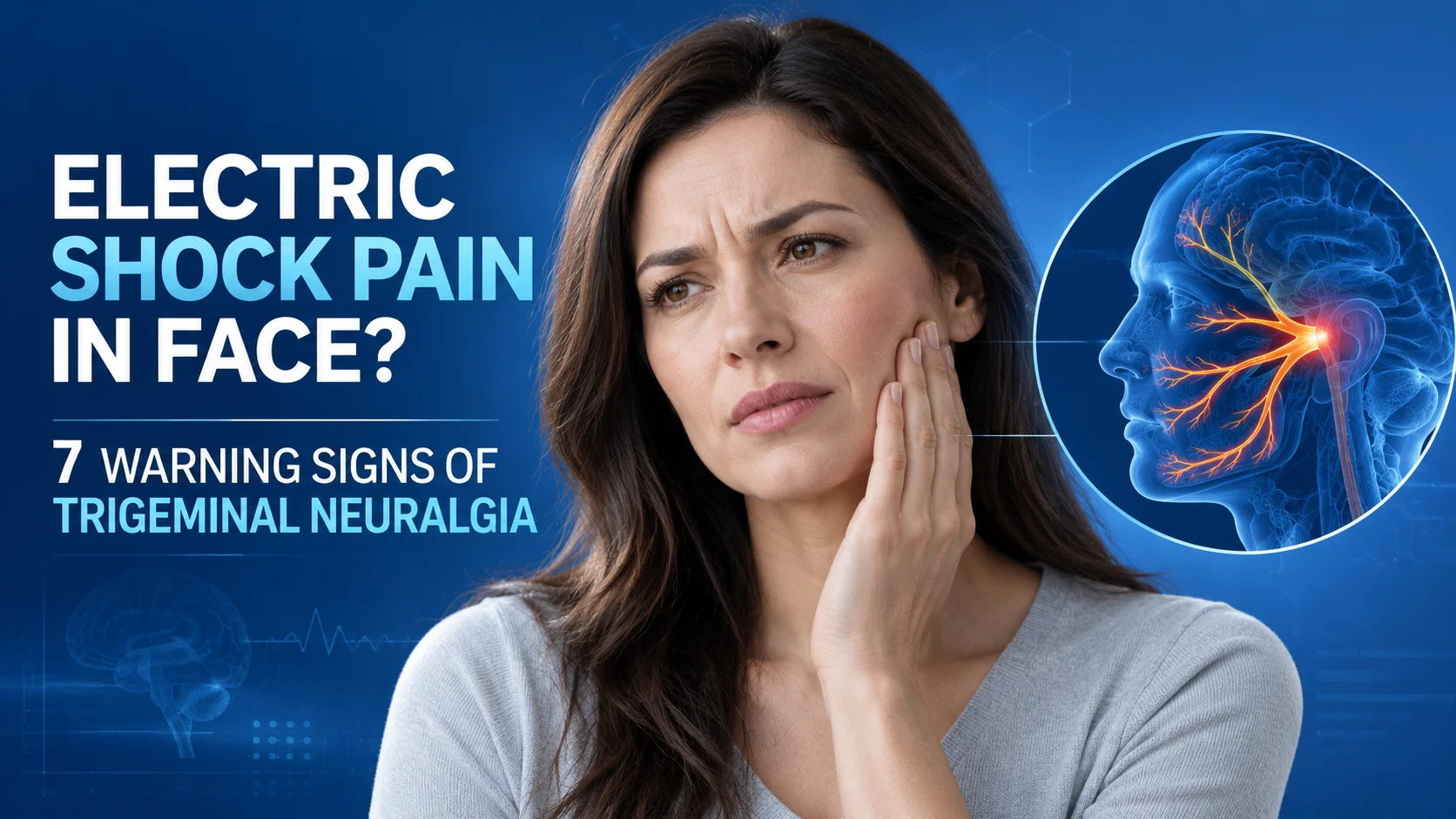
Electric Shock Pain in Face: 7 Warning Signs of Trigeminal Neuralgia
Electric shock pain in face is one of the most startling symptoms a person can experience. It arrives without warning, lasts for a second or two, and can feel like a lightning bolt running through your cheek, jaw, or gum. Then it vanishes, and you are left waiting for the next one. If this sounds familiar, you are not imagining it, and you are not alone. This pattern of pain is the hallmark of a condition called trigeminal neuralgia, and it deserves a proper neurological evaluation.
In this guide, the team at Consultant Corner explains what causes electric shock pain in face, how to recognize trigeminal neuralgia symptoms, what other conditions can mimic it, and how a neurologist finds the true source. You can also browse more patient-friendly articles on our Consultant Corner Blog.
Quick Summary: What You Need to Know
Electric shock pain in face is usually brief, one-sided, and triggered by light touch or everyday actions such as chewing or brushing teeth. The most common cause is irritation of the trigeminal nerve, often by a blood vessel pressing against it near the brainstem. Other causes include multiple sclerosis, tumors, shingles, dental disease, and jaw joint problems. Because the list of possible causes is long, a neurologist should evaluate any new, severe, or repeated episode of sharp facial pain. Treatment is effective for most people, and medication is often the first step.
What Is Electric Shock Pain in Face?
Electric shock pain in face describes a sudden, intense, stabbing, or jolting sensation that appears on one side of the face. People often describe it with words like “lightning,” “burning,” “stabbing,” or “like being hit with a live wire.” The episodes are typically very short, lasting from a fraction of a second to about two minutes. They may come in clusters, with dozens or even hundreds of attacks in a single day, followed by weeks or months of relief.
The classic medical name for the condition behind this pain is trigeminal neuralgia, sometimes called tic douloureux. According to the Mayo Clinic overview of trigeminal neuralgia, the condition causes intense pain similar to an electric shock on one side of the face, and it can be long-lasting. Many patients first notice mild, short episodes that gradually become more frequent and more severe over time.
It is important to understand that electric shock pain in face is a symptom, not a diagnosis. Trigeminal neuralgia is the most recognized cause, but other conditions can produce similar sensations. That is why a careful history and examination matter so much.
Understanding the Trigeminal Nerve and Where the Pain Appears
The trigeminal nerve is the fifth cranial nerve. It carries sensation from your face to your brain and also controls some of the muscles used for chewing. You have two trigeminal nerves, one on each side of your face. Each one divides into three branches, and the branch involved determines where you feel the nerve pain in face.
The Three Branches and Their Territories
| Nerve Branch | Facial Area Served | Typical Pain Location |
|---|---|---|
| V1 – Ophthalmic | Forehead, upper eyelid, scalp | Pain above the eyebrow or around the eye (least commonly affected) |
| V2 – Maxillary | Cheek, upper lip, upper teeth and gums, side of the nose | Pain in the cheek or upper jaw, often mistaken for a tooth problem |
| V3 – Mandibular | Lower lip, chin, lower teeth and gums, part of the jaw | Pain in the lower jaw or chin, triggered by chewing or talking |
In most people, electric shock pain in face involves the V2 or V3 branches, or both. The pain usually affects only one side, although a small number of people experience it on both sides at different times. Because the V2 and V3 territories include the teeth, many patients first visit a dentist and may even undergo unnecessary dental procedures before the real cause is identified.

7 Warning Signs of Trigeminal Neuralgia
Recognizing trigeminal neuralgia symptoms early can shorten the time to diagnosis and relief. Here are seven warning signs that suggest your sharp facial pain may be coming from the trigeminal nerve.
1. Sudden, Electric-Shock-Like Jolts
The defining feature is the quality of the pain. Electric shock pain in face from trigeminal neuralgia is abrupt, severe, and stabbing. It does not build slowly like a typical headache. It strikes like a switch being flipped.
2. Very Short Attacks
Each episode lasts only seconds, occasionally up to two minutes. Between attacks, many people feel normal, although some experience a lingering dull ache or burning after a flurry of shocks.
3. Pain on One Side of the Face
Trigeminal neuralgia is almost always one-sided. The cheek, jaw, teeth, gums, lips, or the area around the eye may be involved. Pain that consistently follows the same side and the same pathway is a strong clue.
4. Triggers From Light Touch or Everyday Actions
Even a gentle breeze, a light touch, or a mouthful of cold water can set off an attack. This is one of the most distinctive features of electric shock pain in face. Pain that is disproportionate to the trigger points toward nerve involvement rather than a muscle or joint problem.
5. Clusters of Attacks With Pain-Free Periods
Trigeminal neuralgia often comes in waves. You may have weeks of frequent attacks followed by months of remission. Over time, the pain-free periods can shorten.
6. Attacks That Spare Sleep (Often)
For reasons that are not fully understood, attacks are less common during sleep, although they can still occur, particularly as the condition progresses.
7. Fear of Eating, Talking, or Washing Your Face
Many people begin to avoid normal activities because they fear provoking the next jolt. Weight loss, poor oral hygiene, social withdrawal, and anxiety are common consequences. If electric shock pain in face is changing how you live, it is time to be evaluated.
Common Triggers of Electric Shock Pain in Face
One of the most frustrating aspects of this condition is how ordinary the triggers are. People with trigeminal neuralgia often identify a handful of repeating situations that set off their attacks. Keeping a simple diary of your triggers can help your neurologist understand the pattern and can guide treatment decisions.
Common triggers include:
- Brushing or flossing teeth
- Chewing, especially hard or crunchy food
- Talking or laughing
- Shaving or applying makeup
- Washing the face
- Wind or air conditioning blowing across the cheek
- Hot or cold drinks
- Smiling or yawning
- Touching the face lightly
- Vibrations, such as from a car ride or walking
Notice that none of these should normally cause pain. When ordinary actions repeatedly produce electric shock pain in face, the nerve is likely hypersensitive. Neurologists often describe the affected areas as having “trigger zones,” small regions of skin or gum where even slight stimulation sets off an attack.
Types of Trigeminal Neuralgia
Not all trigeminal neuralgia is the same. Understanding the type helps guide testing and treatment.
Classic Trigeminal Neuralgia
This is the most common type. A blood vessel, often an artery or vein near the base of the brain, presses on the trigeminal nerve at its root. Over time, the pulsing contact can wear away the protective coating of the nerve, called the myelin sheath, causing it to misfire. Classic trigeminal neuralgia usually produces the sudden electric shock pain in face described above.
Secondary Trigeminal Neuralgia
In this type, an identifiable condition damages or compresses the nerve. Examples include multiple sclerosis, a tumor pressing on the nerve, an arteriovenous malformation, or injury from surgery or trauma. The Mayo Clinic notes that people with multiple sclerosis and high blood pressure are at higher risk for the condition. Because secondary causes can be serious, brain imaging is a key part of the work-up.
Idiopathic Trigeminal Neuralgia
Sometimes testing does not reveal a clear cause. When that happens, the condition is called idiopathic. The pain is just as real, and treatment can still be very effective.
Atypical Presentations
Some people experience a constant, burning, or aching facial pain in addition to, or instead of, the sharp shocks. This is sometimes called type 2 trigeminal neuralgia. It can be harder to diagnose and may overlap with other facial pain conditions, which makes specialist evaluation even more valuable.
Who Is Most at Risk?
Trigeminal neuralgia can affect anyone, but certain groups are more likely to develop it. It is more common in people over 50, and women are affected more often than men. Having multiple sclerosis increases the risk, as does high blood pressure. A family history of the condition is occasionally reported, though most cases occur without any known relatives affected.
If you are younger than 40 and experience electric shock pain in face, doctors tend to be especially thorough, because secondary causes such as multiple sclerosis are more likely to be found in younger patients.
Other Potential Causes of Facial Pain
Here is where careful diagnosis becomes essential. Facial pain is among the most challenging complaints in medicine because so many structures sit in a small space: teeth, sinuses, jaw joints, muscles, blood vessels, and nerves. Not every case of sharp facial pain is trigeminal neuralgia. The table below compares some of the most common alternatives.
| Condition | Typical Pain Quality | Duration | Key Clues |
|---|---|---|---|
| Trigeminal neuralgia | Electric shock, stabbing | Seconds to 2 minutes | Triggered by light touch, chewing, talking |
| Dental problems (abscess, cracked tooth) | Throbbing, aching, sensitive to hot/cold | Minutes to constant | Localized to one tooth, swelling, X-ray findings |
| Temporomandibular joint disorder (TMJ) | Dull ache, clicking, jaw tightness | Hours to constant | Worse with jaw movement, often bilateral, jaw clicking |
| Sinusitis | Pressure, fullness, congestion | Days to weeks | Nasal discharge, fever, pain worse bending forward |
| Cluster headache | Severe, piercing around one eye | 15 minutes to 3 hours | Tearing, red eye, runny nose, restlessness |
| Postherpetic neuralgia | Burning, aching, hypersensitive skin | Constant or intermittent | Follows a shingles rash on the face |
| Giant cell arteritis | Throbbing temple pain, jaw pain with chewing | Persistent | Age over 50, scalp tenderness, vision changes (urgent) |
| Glossopharyngeal neuralgia | Shock-like pain in the throat, tongue, or ear | Seconds to minutes | Triggered by swallowing or coughing |
| Migraine | Throbbing, often with nausea and light sensitivity | 4 to 72 hours | Aura possible, family history |
Why the Distinction Matters
Treating electric shock pain in face as a dental or sinus problem can lead to repeated procedures that do not help. On the other hand, assuming every facial ache is trigeminal neuralgia can delay the diagnosis of conditions like giant cell arteritis, which can threaten vision, or a tumor pressing on the nerve. Accurate sorting of these possibilities is exactly what a neurologist is trained to do.
Red Flags: When Facial Pain Needs Urgent Attention
Most causes of facial pain are not emergencies, but some symptoms should prompt immediate medical care. Call 911 or go to the nearest emergency department if you experience any of the following:
- Sudden facial drooping, weakness, or numbness on one side
- Difficulty speaking, confusion, or trouble understanding speech
- Sudden vision loss or double vision
- The worst headache of your life, appearing suddenly
- Facial pain together with fever, stiff neck, or confusion
- Facial pain after a significant head injury
These can be signs of stroke, bleeding, infection, or other time-sensitive conditions. Facial pain with new jaw pain while chewing and a new headache in someone over 50 should also be evaluated promptly, since giant cell arteritis needs rapid treatment.
How a Neurologist Evaluates Electric Shock Pain in Face
A neurological evaluation for electric shock pain in face is thorough but usually painless. The goal is to confirm the pattern, identify the cause, and rule out dangerous conditions. Here is what to expect.
Step 1: A Detailed Medical History
The most important diagnostic tool is your description of the pain. Your neurologist will ask where the pain starts, how long each attack lasts, how often attacks occur, what triggers them, and whether anything relieves them. Expect questions about dental work, head or facial injuries, shingles, multiple sclerosis symptoms, blood pressure, and medications. A pain diary or short notes on your phone can make this conversation far more productive.
Step 2: A Focused Neurological Examination
The neurologist will test the sensation of your face with light touch, check the strength of your chewing muscles, examine your eye movements and reflexes, and assess other cranial nerves. In classic trigeminal neuralgia, the examination is often normal between attacks. Abnormal findings, such as facial numbness or weakness, raise the possibility of a secondary cause and lead to further testing.
Step 3: Brain Imaging
Magnetic resonance imaging (MRI) of the brain is the standard test. Specialized MRI sequences can show whether a blood vessel is touching the trigeminal nerve and can also reveal tumors, signs of multiple sclerosis, or other structural problems. MR angiography may be added to visualize the blood vessels more clearly. Even when the scan is normal, the diagnosis can still be made based on the clinical pattern.
Step 4: Ruling Out Look-Alikes
Depending on your symptoms, your neurologist may coordinate with a dentist, an ear-nose-throat specialist, or an eye specialist. Blood tests, such as inflammatory markers, may be ordered if giant cell arteritis is a concern. The goal is to make sure the sharp facial pain is not coming from a source other than the trigeminal nerve.
What to Bring to Your Appointment
- A written timeline of when the pain started
- A list of triggers and what you have tried
- All current medications and supplements
- Previous imaging reports or dental records
- Questions you want answered

Treatment Options for Trigeminal Neuralgia
The encouraging news is that electric shock pain in face from trigeminal neuralgia is treatable. Many patients achieve significant relief, and the right plan depends on your age, health, the type of trigeminal neuralgia, and your preferences. Always work with a licensed physician before starting or changing any medication.
Medications
Anticonvulsant medications are usually the first line of treatment. These drugs calm overactive nerve signals rather than act as traditional painkillers. Carbamazepine is widely considered the standard first treatment, and a closely related drug, oxcarbazepine, is also commonly used. Other options a neurologist may consider include baclofen, lamotrigine, gabapentin, and additional agents. Regular pain relievers like acetaminophen or ibuprofen generally do not help this kind of pain. Because these medicines can cause drowsiness, dizziness, or changes in blood counts and sodium levels, your doctor may order periodic blood tests and adjust your treatment carefully. Do not stop these medications suddenly without medical guidance.
Procedures and Injections
When medication stops working or causes side effects, a number of procedures can help. Nerve blocks and Botox injections are sometimes used in selected patients. Percutaneous procedures, including balloon compression, glycerol injection, and radiofrequency thermocoagulation, deliberately injure the nerve fibers that transmit the pain signals. These procedures can offer relief but may leave facial numbness.
Surgery and Radiosurgery
Microvascular decompression is an operation in which a surgeon moves the offending blood vessel away from the trigeminal nerve and places a cushion between them. It offers the potential for long-lasting relief in appropriate candidates with classic trigeminal neuralgia. Stereotactic radiosurgery, such as Gamma Knife treatment, uses precisely focused radiation to the nerve root and is a less invasive alternative, although relief may take weeks to months to appear.
Everyday Self-Care Tips
- Use lukewarm rather than hot or cold water when washing your face and rinsing your mouth
- Choose soft foods and chew on the unaffected side during flare-ups
- Use a soft toothbrush and consider rinsing gently if brushing triggers pain
- Cover your face with a scarf in wind or cold air
- Try stress-reduction techniques such as deep breathing, since stress may worsen flare-ups
- Keep a trigger and symptom diary to share with your neurologist
- Do not skip dental care; tell your dentist about your condition
Living With Nerve Pain in Face: Emotional Health Matters
Chronic facial pain affects more than the body. Fear of the next attack can lead to anxiety, depression, isolation, and poor sleep. Many people stop eating properly or avoid social gatherings. If you recognize these patterns, mention them to your doctor. Counseling, support groups, and mental health care are valid parts of a complete pain management plan. Organizations such as the Facial Pain Association provide community, education, and resources for people living with trigeminal neuralgia. For authoritative medical background, the National Institute of Neurological Disorders and Stroke page on trigeminal neuralgia is also an excellent resource.
Neurological Care in Bloomington, IL With Consultant Corner
If you are searching for a neurologist in Bloomington, Illinois, Consultant Corner offers dedicated neurological care for patients who need clear answers about complex symptoms such as electric shock pain in face, headaches, dizziness, numbness, and more. Our approach is to listen carefully, examine thoroughly, and explain every step so you feel informed and in control.
You can learn more about Consultant Corner Neurological Care in Bloomington, IL and see how we can help you find the cause of your facial pain.
Neurological Care in El Paso, TX With Consultant Corner
Patients in West Texas also have access to Consultant Corner. Our El Paso location serves as a trusted health consultant in El Paso, Texas, helping individuals evaluate nerve pain in face and other neurological concerns. Visit our listing for Consultant Corner Neurological Care in El Paso, TX to get started.
Meet the Neurologist: Saqib A. Chaudhry, MD
Saqib A. Chaudhry, MD, is a vascular neurologist and neuro-intensivist. This specialized training in blood vessel disorders of the brain and critical neurological care is especially relevant when facial pain raises questions about vascular causes, such as a blood vessel pressing on the trigeminal nerve, or about urgent conditions like stroke. His expertise helps ensure that electric shock pain in face is evaluated with both precision and an awareness of the full range of possible causes.
Our Collaboration With MyCare Express Care in Bloomington, IL
Consultant Corner is proud to collaborate with MyCare Express Care, a walk-in clinic in Bloomington, Illinois. This partnership gives patients convenient access to both everyday medical care and specialized neurological guidance.
According to the MyCare Express Care website, the clinic provides affordable, accessible care for non-emergency illnesses and injuries, including headaches, concussions, sprains, and minor trauma, along with X-ray services. They also offer wellness services and virtual neurology appointments. Patients can pay with many insurance plans or choose the DirectCare self-pay option for clear, predictable pricing. You can review insurance and pricing details before your visit.
MyCare Express Care at a Glance
| Detail | Information |
|---|---|
| Location | 1404 Eastland Dr, Suite 103, Bloomington, IL 61701 |
| Phone | 309-319-2393 |
| Hours (Mon–Fri) | 7 am – 7 pm |
| Hours (Sat–Sun) | 10 am – 4 pm |
| Services | Walk-in care, X-ray, wellness services, virtual neurology |
| Appointments | Schedule online |
Hours and services can change, so confirm details directly with the clinic. If you experience stroke-like symptoms or a severe sudden headache, go to an emergency department instead of a walk-in clinic.
Practical Tips Before You See a Specialist
Preparing for your visit helps your neurologist reach an accurate diagnosis faster. Start by noting every episode of electric shock pain in face for one to two weeks. Record the time, the location, the duration, the intensity on a scale of one to ten, and what you were doing when it happened. Take photographs of any facial rash or swelling. Bring a family member or friend if possible, since they may have noticed behaviors you have overlooked, such as wincing, covering your cheek, or skipping meals.
It also helps to list every treatment you have tried, including over-the-counter medicines, dental work, and home remedies, and to note whether each helped. This information prevents repeated testing and points your neurologist toward a plan that fits your situation.
Common Myths About Electric Shock Pain in Face
Myth: It Is Always a Tooth Problem
Dental disease is common, but trigeminal neuralgia mimics toothache so convincingly that many people receive root canals or extractions that do not help. If dental treatment fails to relieve electric shock pain in face, ask about a neurological evaluation.
Myth: It Will Just Go Away on Its Own
Remissions are real, but trigeminal neuralgia is usually progressive in the long term. Early treatment improves comfort and protects quality of life.
Myth: Strong Painkillers Will Fix It
Standard painkillers and even opioids generally do not control this type of nerve pain well. Targeted nerve medications work much better.
Myth: Surgery Is the Only Real Answer
Many people are well controlled on medication for years. Procedures are an option, not an obligation.
Frequently Asked Questions (FAQ)
What does electric shock pain in face feel like?
It typically feels like a sudden, severe jolt, stab, or zap on one side of the face, lasting seconds. Some people also describe burning or aching afterward. The pain is often set off by light touch, chewing, talking, or even a breeze.
Is electric shock pain in face always trigeminal neuralgia?
No. Trigeminal neuralgia is the most recognized cause, but dental problems, shingles, cluster headaches, jaw joint disorders, multiple sclerosis, and tumors can all cause facial pain. A neurologist can sort out the true source.
Can stress cause electric shock pain in face?
Stress does not usually cause trigeminal neuralgia, but it can make flare-ups feel worse or more frequent for some people. Managing stress is a helpful part of overall care.
How is trigeminal neuralgia diagnosed?
Diagnosis is based mainly on your description of the pain and a neurological examination. An MRI is usually ordered to look for a blood vessel compressing the nerve or other causes such as a tumor or multiple sclerosis.
Is trigeminal neuralgia dangerous?
The condition itself is not life-threatening, but the pain can be severe and disabling. Some underlying causes, such as tumors or multiple sclerosis, require their own treatment, which is why evaluation matters.
What medicine is used for nerve pain in face?
Anticonvulsants such as carbamazepine and oxcarbazepine are commonly used first. Your doctor may also consider baclofen, lamotrigine, or other options. Only a licensed physician should prescribe and adjust these medications.
Can trigeminal neuralgia be cured?
Many people achieve long-term relief. Microvascular decompression can provide lasting relief for suitable patients, and medications or procedures help others. The right choice depends on your individual situation.
Should I go to the ER for electric shock pain in face?
Go to the emergency department if the pain comes with facial drooping, weakness, speech difficulty, vision loss, fever, stiff neck, or a sudden severe headache. For repeated brief shocks without those signs, schedule a prompt neurology evaluation.
Can I see a neurologist virtually for facial pain?
Yes, in many cases an initial consultation can be done virtually. MyCare Express Care in Bloomington, IL lists virtual neurology appointments among its services, and Consultant Corner can help you determine the best next step.
Take the Next Step: Contact Consultant Corner
You should not have to live in fear of the next jolt. If you are dealing with electric shock pain in face, sharp facial pain, or any persistent nerve pain in face, our team is here to help you find answers and relief.
Contact Consultant Corner online to schedule a consultation, ask a question, or learn which location is best for you in Bloomington, IL or El Paso, TX. For more educational reading, visit the Consultant Corner Blog.