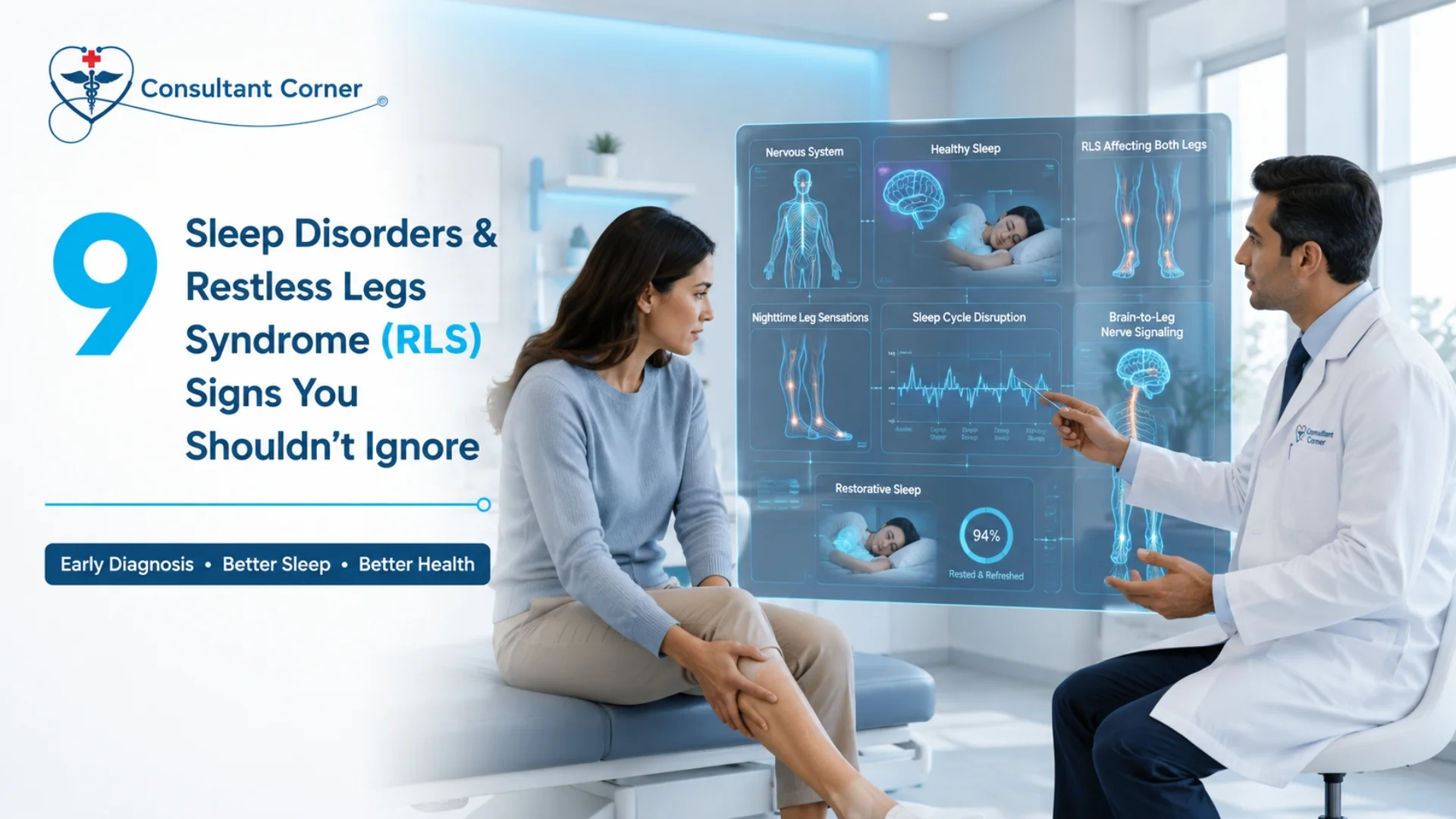
9 Sleep Disorders & Restless Legs Syndrome (RLS) Signs You Shouldn’t Ignore
Restless legs syndrome (RLS) is an often-ignored condition that leaves people exhausted, irritable, and unable to explain why they can’t sleep after spending a full eight hours in bed. If you find yourself tossing and turning, kicking off the blankets, or feeling a strange tingling sensation in your legs the moment you finally lie down, you’re dealing with a real and treatable problem. Sleep disorders and restless legs syndrome (RLS) don’t just take away your nights; they silently erode your mood, focus at work, relationships, and long-term health.
At Consultant Corner, our neurology team evaluates sleep disorders and restless legs syndrome (RLS) every week, and the pattern is almost always the same: Patients chalk up their symptoms to “just stress” or “getting older,” until the disruption becomes impossible to ignore. Below are nine warning signs that your sleep problems may be rooted in a diagnosable neurological condition — and what you can do to address them.
What are sleep disorders and restless legs syndrome (RLS)?
Sleep disorders are a broad category of conditions that interfere with your ability to fall asleep, stay asleep, or feel refreshed after sleep. According to the National Heart, Lung, and Blood Institute, millions of Americans live with a diagnosable sleep disorder, and many of them never receive a formal diagnosis or treatment.
Restless legs syndrome (RLS) is a specific neurological movement disorder that falls into this larger category. This causes an uncomfortable, sometimes inexplicable urge to move the legs, which usually occurs in the evening or at night and is relieved only by movement. As the Mayo Clinic explains, this urge to move at night can disrupt sleep so much that people spend the day feeling tired — and for many patients, this daytime fatigue is the symptom that finally forces them to seek answers.
Sleep problems can also occur after a head injury or concussion, a connection our team discussed in a previous post titled ‘What is a Head Injury?‘. Since restless legs syndrome (RLS) often overlaps with insomnia, periodic limb movement disorder, and other neurological conditions, it’s not enough to make an accurate diagnosis. It requires a doctor who understands how these conditions relate to each other.
9 Symptoms of Sleep Problems and Restless Legs Syndrome (RLS) You Shouldn’t Ignore

1. Trouble falling or staying asleep
If it regularly takes you 30 minutes or more to fall asleep, or you wake up multiple times during the night and have trouble getting back to sleep, it’s not just “a bad sleeper’s habit.” Chronic difficulty falling or staying asleep is one of the main symptoms of insomnia, and when it’s accompanied by discomfort in the legs, it often points to restless legs syndrome (RLS) as the underlying cause.
2. An uncomfortable “creeping” or “pulling” feeling in the legs
People describe this feeling in surprisingly similar terms — a creeping, tingling, throbbing, aching, electrical-like sensation, or itching, not on the skin, but deep in the muscles. It usually occurs in the balls of the feet or thighs, although it can sometimes occur in the arms. This feeling is one of the most obvious diagnostic signs of restless legs syndrome (RLS), and it is rarely caused by anything other than a neurological condition.
3. An urge to move your legs, especially at night
The main symptom of restless legs syndrome (RLS) is not just discomfort — it is an almost irresistible urge to move your legs. Patients report that they have to shake, stretch, walk, or bend their legs to get some relief. The longer you sit or lie still, the more intense this urge becomes, and that is why it often occurs right when you are trying to sleep.
4. Symptoms that worsen in the evening or at night
A distinctive feature of restless legs syndrome (RLS) is its circadian pattern: symptoms are usually mild or absent during the day and increase significantly in the evening and throughout the night. If your feet are fine while sitting at your desk but the problem starts when you sit down to eat dinner or go to bed, this schedule is medically significant.
5. Involuntary leg movements or jerking during sleep
Many people with restless legs syndrome (RLS) also experience periodic limb movements during sleep — rhythmic kicking or jerking that occur every 20 to 40 seconds throughout the night, often without waking the person or remembering it. Bed partners are often the first to notice this pattern, and it can be as disruptive to sleep as a full-blown episode.
6. Frequent awakenings, vivid dreams, or confusion
Fragmented sleep patterns — that is, repeatedly going back and forth between light sleep states — often lead to unusually vivid or disturbing dreams, along with brief periods of drowsiness or confusion upon waking. When it occurs overnight, it’s a sign that your sleep cycle isn’t completing its normal restorative phases.
7. Daytime fatigue, lack of focus, and difficulty concentrating
Perhaps the most distressing consequences of sleep problems and restless legs syndrome (RLS) are those that occur during the day. Patients often report that they need extra caffeine to function normally, have trouble paying attention in meetings, forget simple tasks, or feel irritable for no apparent reason. These daytime problems are often what ultimately prompt someone to seek professional help.
8. Symptoms improve with movement but return with rest
Because the symptoms of restless legs syndrome (RLS) are relieved by walking, stretching, or changing positions — even temporarily — many patients develop unconscious coping habits: such as taking a walk before bed, sleeping with one leg out of the bed, or waking up repeatedly during the night. If you feel the need to move to get relief, this type of relief from movement is an important clue to the diagnosis.
9. Family history of restless legs syndrome (RLS) or unexplained sleep problems
Restless legs syndrome (RLS) has a strong genetic influence, especially in cases that begin before the age of 45. If your parents or siblings have been diagnosed with RLS, or they have reported similar “restless legs” symptoms, you should have a proper neurological examination rather than dismissing your own leg discomfort as unrelated.
What causes sleep problems and restless legs syndrome?
The cause of sleep problems and restless legs syndrome (RLS) is rarely single and simple. Our neurology team evaluates each patient individually, but the most common causes include:
| Cause | Because of How It Affects Sleep |
|---|---|
| Restless Legs Syndrome (RLS) / Willis-Ekbom Disease | An uncomfortable feeling in the legs and an urge to move that disrupts the onset and continuation of sleep |
| Periodic Limb Movement Disorder (PLMD) | Involuntary jerking of the legs during sleep disrupts rest, often without the patient being aware of it |
| Iron or Ferritin Deficiency | Low levels of iron in the body affect dopamine regulation, an important process associated with RLS symptoms |
| Neuropathy or nerve pain | Inflammation of peripheral nerves can mimic the symptoms of restless legs or exacerbate them |
| Insomnia | Chronic difficulty falling or staying asleep, often unrelated to leg symptoms |
| Sleep apnea-related restlessness | Short periods of sleep are interrupted by repeated interruptions in breathing and restlessness |
| Medication side effects | Certain antidepressants, antihistamines, and antiemetics can exacerbate or worsen symptoms |
| Anxiety or chronic stress | Makes it difficult to fall asleep due to excessive arousal at night |
| Circadian rhythm disorders | An imbalance in the body’s internal clock disrupts the timing and depth of sleep |
These conditions are often related to each other, which is why a neurological evaluation is the most reliable way to find real relief, rather than a simple sleep app or store-bought sleeping pills.
Why Patients Choose Consultant Corner for Sleep Disorders and Restless Legs Syndrome (RLS)
Expert evaluation of neurological sleep disorders. Rather than treating the symptom in isolation, we determine whether your symptoms are stemming from restless legs syndrome (RLS), insomnia, neuropathy, or another underlying neurological cause.
Specific treatment for RLS and sleep disorders. Once we understand the underlying cause, we develop a plan around it — which may include medications, supplementation, or behavioral sleep strategies tailored to your specific symptom pattern.
Lab tests to diagnose deficiencies that affect sleep. Since iron, ferritin, B12, and thyroid imbalances are all associated with restless legs syndrome (RLS) and other sleep disorders, we test for deficiencies that are often missed in routine health exams.
Improved sleep without dependency. Our goal is sustainable improvement, not lifelong dependence on sleeping pills. We guide patients toward safe, long-term strategies that address the underlying neurological cause.
Lifestyle and sleep hygiene improvements. We create specific routines based on your schedule, symptoms, and daily habits, which reduce nighttime sleep disruption and improve sleep quality over time.
Same-week appointments. Sleep problems tend to escalate quickly. Faster resolution means faster, deeper sleep — that’s why we prioritize seeing patients quickly, rather than making them wait weeks for an initial evaluation.
When Sleep Disorders and Restless Legs Syndrome (RLS) Need Urgent Attention
While most cases of sleep disorders and restless legs syndrome (RLS) can be managed with the right treatment plan, certain symptoms require immediate treatment. If you have trouble sleeping and are experiencing any of the following symptoms, seek emergency medical attention:
- Sudden weakness on one side of the body
- Sleep paralysis with hallucinations
- Confusion or aimless walking at night
- Snoring or gasping during sleep
- Violent or dangerous behavior during sleep
These symptoms may indicate a more serious neurological or sleep-related emergency and should not wait for a regular appointment.
Relevant reading from our Neurology Blog
If you have symptoms that match those of a sleep disorder, these related articles on our blog may also help:
- Vertigo and Dizziness: 9 Common Causes — There can sometimes be a connection between dizziness and waking up at night
- Treating Essential Tremor: 10 Expert Tips to Stop Tremors — Another physical movement disorder that can disrupt rest
- Carpal Tunnel and Nerve Entrapment: 10 Warning Signs — Pressure on a nerve can cause RLS-like tingling feelings at night
- Back Pain and Sciatica Relief: 10 Proven Ways to Get Long-Lasting Relief — Nerve-related pain that often worsens at night
- Is a Migraine a Valid Reason to Skip a Meeting? What you need to know — Insufficient sleep is a well-established cause of migraines
How we diagnose sleep disorders and restless legs syndrome (RLS)
A proper diagnosis starts with a detailed discussion, not a quick prescription. During an evaluation for sleep disorders and restless legs syndrome (RLS), our neurology team will typically review the following:
A complete history of symptoms. We ask when your symptoms started, how often they occur, what makes them worse or better, and whether they follow the typical evening pattern of restless legs syndrome (RLS). Even seemingly minor details — such as whether symptoms occur during long car rides or watching movies — can often be crucial to a diagnosis.
A neurological exam. We check for signs of nerve involvement, muscle strength, and reflexes to confirm or rule out neuropathy, nerve entrapment, or other conditions that may cause symptoms similar to restless legs syndrome (RLS).
Specific lab tests. Blood tests for iron, ferritin, B12, thyroid function, and metabolic markers can help identify treatable deficiencies that are strongly associated with restless legs syndrome (RLS) and other sleep problems.
A review of current medications. Certain antidepressants, antihistamines, and antiemetics are known to exacerbate or cause symptoms of restless legs syndrome (RLS). We review your medication list to see if any changes can be made to help relieve symptoms.
Sleep pattern assessment. In some cases, we may recommend a sleep study to evaluate periodic limb movement disorder, sleep apnea, or other conditions that often occur with restless legs syndrome (RLS) but require their own specific treatment approaches.
This tiered approach is important because sleep problems and restless legs syndrome (RLS) rarely occur in isolation. Treating the wrong condition — or treating only the symptoms instead of the cause — is the most common cause.

Treatment Options for Sleep Disorders and Restless Legs Syndrome (RLS)
Once a diagnosis is confirmed, treatment for sleep disorders and restless legs syndrome (RLS) is based on your specific symptom pattern and underlying cause. Depending on your evaluation, your plan may include:
- Iron or nutritional supplements, if lab tests reveal a deficiency that is responsible for your restless legs syndrome (RLS) symptoms.
- Medication adjustments, especially if any current prescriptions are exacerbating your symptoms.
- Specific medications for RLS, including options that regulate dopamine activity or reduce nerve excitability; these are prescribed only after other causes have been ruled out.
- Advice on sleep hygiene, including regular bedtimes and wake times, evening routines, and environmental changes that promote deep sleep.
- Lifestyle changes, such as reducing caffeine and alcohol intake, staying active during the day, and managing stress that can exacerbate nighttime symptoms.
- Referral for a sleep study when restless legs syndrome (RLS) is suspected along with periodic limb movement disorder or sleep apnea.
The goal is never to simply suppress symptoms with sleeping pills. The goal is to identify exactly what is disrupting your sleep and develop a sustainable plan around that — one that will improve not only your nighttime sleep, but also your energy, focus, and mood during the day.
Living with Restless Legs Syndrome (RLS): Some Practical Tips Between Doctor’s Appointments
While a proper medical evaluation is essential, in addition to working with your care team, there are some steps you can take at home to reduce sleep problems and discomfort caused by Restless Legs Syndrome (RLS):
Maintain a consistent sleep schedule, even on weekends, so your body’s internal clock is predictable. Limit caffeine and alcohol in the afternoon and evening, as both are known to aggravate Restless Legs Syndrome (RLS) symptoms. Get some light physical activity during the day — a short walk or stretching session can help reduce evening restlessness. Try a warm bath or a gentle foot massage to help reduce discomfort while you relax before bed. Keep a symptom diary where you write down when your legs are having problems, what you were doing before, and what you find comfort in — this record can be extremely helpful during your evaluation.
None of these strategies are a substitute for a proper diagnosis, but they can significantly reduce nighttime disruptions as you continue to receive long-term treatment.
Brain Health Care from Consultant Corner
Consultant Corner is built around a simple idea: Neurological care should be accessible, thorough, and focused on primary diagnosis rather than crisis management. Patients are seen by Sakib A. Chowdhury, MD, a vascular neurologist and neurointensivist who has extensive experience diagnosing and treating all of the neurological conditions covered in this guide — from stroke and headaches to Parkinson’s disease, epilepsy, and memory disorders.
While this guide focuses on Texas, Consultant Corner’s approach to neurological care extends beyond the state’s borders. Patients can also contact Consultant Corner (Neurological Care in Bloomington, IL), which offers the same quality of care for those seeking a neurologist in Bloomington, Illinois. Closer to home for many Texas patients, Consultant Corner (Neurological Care in El Paso, TX) offers the same comprehensive evaluation and treatment as a trusted health consultant in El Paso, Texas.
The goal is the same at each location: accurate testing, effective treatment, and long-term neurological wellness, which identifies problems early rather than dealing with them later.
Frequently Asked Questions About Sleep Problems and Restless Legs Syndrome (RLS)
What is the difference between normal restlessness and restless legs syndrome (RLS)? Occasional restlessness — such as fidgeting during a long flight — is normal. Restless legs syndrome (RLS) is diagnosed when an uncomfortable feeling is associated with the urge to move, is worse at rest, improves with movement, and is especially severe in the evening or at night, and occurs repeatedly over time.
Is restless legs syndrome (RLS) curable? There is currently no direct cure, but according to the Cleveland Clinic, a combination of home therapy and medication can significantly reduce symptoms in most patients. Many people experience significant and long-lasting relief when the underlying cause is identified and addressed.
Is iron deficiency linked to restless legs syndrome (RLS)? Yes. Low iron or ferritin levels in the body are one of the most common and easily treatable causes of restless legs syndrome (RLS). This is why lab tests are an essential part of our evaluation process.
Can stress or anxiety cause sleep disorders? Yes. Chronic stress puts your nervous system in a high-arousal state, making it difficult to get deep, restful sleep. Stress can also worsen existing restless legs syndrome (RLS) symptoms.
When should I see a neurologist for sleep problems? If sleep disturbances persist for more than a few weeks, affect your daytime functioning, or are accompanied by discomfort, cramps, or a desire to move your legs, it’s time to get evaluated by a specialist rather than trying to resolve them on your own.
Do sleeping pills treat the underlying cause of restless legs syndrome (RLS)? Not alone. Sleeping pills can help you sleep, but they don’t address the neurological or nutritional causes behind restless legs syndrome (RLS). A proper evaluation identifies the root cause so that treatment can be targeted directly.
Take Back Your Nights — and Your Energy
Poor sleep doesn’t have to rule your days. Sleep problems and restless legs syndrome (RLS) are highly treatable when you understand the underlying cause. Our neurology team is ready to help you get to the root of the problem and find a path to regular, restful sleep.
👉 Book your sleep / restless legs evaluation today 📞 Call +1 (888) 208-2208 or request an appointment online