Concussion and Post-Concussion Syndrome: 9 Signs of Recovery You Shouldn’t Ignore
Concussions are more serious than just a “little bump on the head.” Even a mild concussion can silently disrupt memory, attention, balance, sleep, and mood — sometimes lasting for weeks or months after the original injury. If you’ve fallen, been in a car accident, been injured while playing sports, or suffered a head injury at work, and still don’t feel normal, you may be suffering from Post-Concussion Syndrome (PCS).
At Consultant Corner, our neurology team — led by board-certified vascular neurologist and neuro-intensivist Dr. Saqib A. Chowdhury — helps patients recover quickly, safely, and completely from concussions. This guide discusses what exactly a concussion does to the brain, nine warning signs that you need expert attention to help you recover, and what to expect from evaluation to full recovery.

What Is a Concussion?
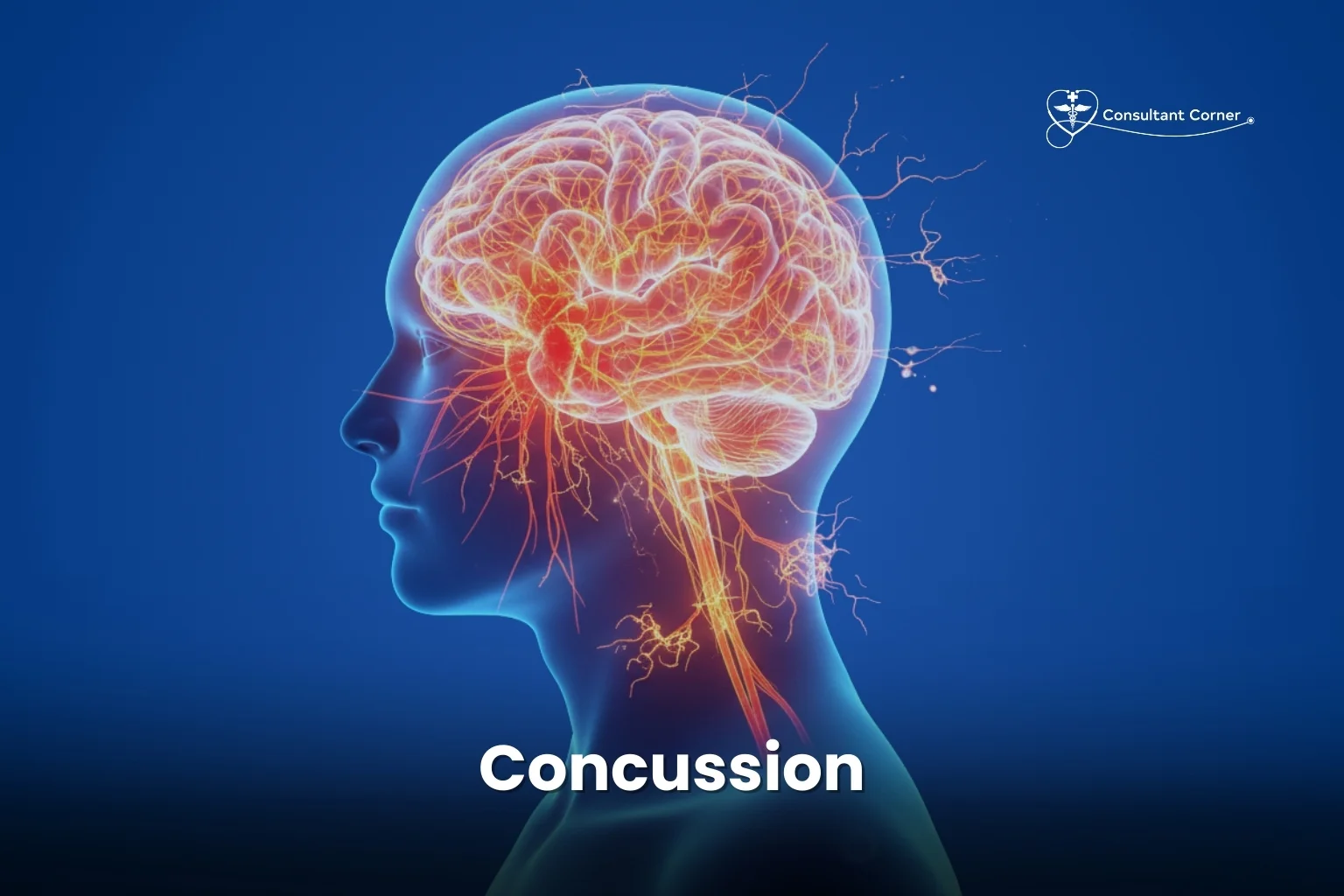
A concussion is a type of mild traumatic brain injury (mTBI) that is caused by a blow, hit, or jolt to the head — or even a blow to the body that causes the head to jerk back and forth. This sudden movement causes the brain to shift its position inside the skull, stretching nerve fibers and causing a wave of chemical changes. According to the CDC’s HEADS UP program, a concussion is a type of traumatic brain injury that is caused by a blow, hit, or jolt to the head — or even a blow to the body that causes the head to jerk back and forth. This rapid movement can cause the brain to bounce or twist inside the skull, causing chemical changes and cell damage.
A concussion does not require loss of consciousness, and it does not require loss of consciousness for it to be serious. Most people with a concussion never lose consciousness. What is important is the type of symptoms that follow: confusion, headache, dizziness, nausea, sensitivity to light, and a general feeling of being unwell.
For most people, a concussion resolves within one to three weeks with rest and a gradual return to normal activities. But for a significant portion of patients, symptoms persist — and that’s where Post-Concussion Syndrome comes in.
Concussion vs. Post-Concussion Syndrome: What’s the Difference?
| Feature | Concussion (Acute) | Post-Concussion Syndrome (PCS) |
|---|---|---|
| Typical duration | A few days to 2–3 weeks | Beyond 3–4 weeks; sometimes months |
| Common symptoms | Headache, confusion, transient dizziness, nausea | Persistent headache, lack of concentration, mood swings, sleep problems |
| Imaging findings | Usually normal (CT/MRI) | Usually normal, but symptoms are real and clinically measurable |
| Who is affected | Almost anyone with a head injury | A subgroup of concussed patients, unrelated to the severity of the injury |
| Recommended care | Rest, observation, gradual return to normal activities | Expert neurological evaluation and a well-organized recovery plan |
| Risks if left untreated | Low with observation | Long-term disability, work/school absence, worsening of mood symptoms |
As the Mayo Clinic Health Library explains, chronic post-concussion symptoms are symptoms of a mild traumatic brain injury that usually last longer than three months and can include headache, dizziness, and problems with attention and memory. Importantly, the risk of developing chronic post-concussion symptoms does not appear to be related to how severe the initial head injury was — that is, even a “minor” injury can lead to a long recovery if not treated properly from the start.

9 Signs You Need Expert Treatment for Your Concussion
If any of the following symptoms persist for more than 10–14 days after a head injury, or if they continue to get worse instead of better, it’s time for a neurological evaluation rather than “waiting it out.”
1. Headaches That Don’t Go Away Easily
Post-concussion headaches often behave like migraines or tension-type headaches and can be one of the most persistent symptoms of a chronic concussion.
2. Dizziness, Vertigo, or Imbalance
Swaying on the feet, staggering when walking, or dizziness when rapidly turning the head often indicate a vestibular (inner ear/balance system) component of the concussion, which is well treatable with specific therapies.
3. Memory or Attention Problems
Lost words in the middle of a conversation, forgetting recent conversations, or having trouble paying attention at work or school are the main cognitive symptoms of Post-Concussion Syndrome.
4. Blurred Vision or Sensitivity to Light
Screens, sunlight, and fluorescent lights can be unexpectedly uncomfortable after a concussion, often due to changes in the way your eyes track and focus.
5. Mood Swings — Irritability, Anxiety, or Depression
Concussions affect not only the structure of the brain but also the chemistry of the brain, so it is common and treatable to feel unusually irritable, anxious, or depressed after a head injury.
6. Fatigue, Brain Fog, or Slowed Thinking
A brain that is still recovering uses up more energy to perform daily tasks, which often manifests as fatigue before noon or a lingering mental “fog.”
7. Sleep Problems
Having trouble falling or staying asleep, or sleeping much more than usual — these are all common and often overlooked symptoms of an unresolved concussion.
8. Sensitivity to Noise
Everyday noises — like vacuum cleaners, crowded restaurants, car horns — may suddenly seem unbearable, indicating that the brain’s sensory filtering system is still recovering.
9. Symptoms That Interfere With Work, School, or Sports
If you’re still missing work, falling behind in school, or unable to safely return to physical activity weeks after your injury, it’s a clear signal that you need not only more time, but a well-organized recovery plan.
If some of these symptoms sound familiar to you, don’t wait for them to go away on their own.
Request a Concussion Evaluation
Why Do Post-Concussion Symptoms Last So Long?
After a head injury, the brain has to work harder to perform tasks that it previously did automatically. Post-Concussion Syndrome typically occurs when the brain struggles to:
- Process information quickly in the face of normal daily demands
- Maintain balance and coordination through the inner ear and visual systems
- Regulate mood, motivation, and emotional responses
- Filter and tolerate visual or auditory stimuli
- Completely recover from the inflammation and minor injuries caused by the initial injury
Without proper guidance — such as maintaining a steady pace of activity, taking care of sleep, and treating specific symptom clusters — recovery can take up to several months. With the right neurological care plan, most patients see significant improvement much more quickly.
Why Patients Choose Consultant Corner for Concussion Treatment
Expert Neurological Evaluation
Dr. Chowdhury and the Consultant Corner team assess the severity of your concussion, rule out more serious injuries, and identify the exact cause of your ongoing symptoms — whether it’s vestibular problems, headache disorders, cognitive fatigue, or a combination of these.
Personalized Recovery Plan
Each patient receives an individualized plan that includes rest and activity pacing, adequate hydration, sleep instructions, and specific treatment options. There is no one-size-fits-all “just rest” approach.
Balance, Dizziness, and Vision Management
Specialized support is available for vertigo, eye movement difficulties, and motion sensitivity — some of the most distressing but often overlooked symptoms of concussion.
Cognitive and Headache Treatment
We use medications, supplements, and evidence-based strategies to reduce brain fog and manage chronic headaches.
Safe Return to Work/Sports Guidelines
Students, athletes, and working professionals all need a clear, doctor-guided path to returning to normal activities — too soon can cause symptoms to return more severely.
Same-Week Appointment
Recovering from a concussion is time-sensitive, and delaying proper evaluation can lead to more severe symptoms, so we prioritize seeing patients quickly.
Rather than simply telling patients to “wait it out,” when they receive proper, expertly directed concussion treatment, they consistently feel better faster.
Our Regional Service Centers
Consultant Corner provides neurological evaluation and concussion management from two centers:
- Consultant Corner (Neurological Services in Bloomington, Illinois) — Neurologists in Bloomington, Illinois
- Consultant Corner (Neurological Services in El Paso, Texas) — Health Consultants in El Paso, Texas
Our Bloomington Service Partner: MyCare Express Care
For patients in the Bloomington area who need fast, direct triage for recent head injuries — such as X-ray services, wound care, or initial evaluation immediately after a fall or accident — we work with MyCare Express Care. This is a local walk-in clinic that provides same-day trauma and emergency services, including concussion evaluations and virtual neurology appointments. Patients can seek rapid treatment at MyCare Express Care for initial injuries and, if symptoms do not improve as expected, are referred to Consultant Corner for ongoing neurological management. This type of integrated care means you never have to choose between “go to urgent care” and “see a neurologist” — you can get both in the right order.
Other Related Conditions We Treat
Concussions do not usually occur in isolation from other neurological health issues, which is why our team also treats other related conditions, including:
- Head Injury — Learn about the full range of conditions that can cause brain trauma in addition to concussions
- Headache/Migraine — Patients whose post-concussion headaches develop into chronic headaches
- Ischemic Stroke — Patients who develop sudden neurological symptoms that need to be differentiated from concussions
- Alzheimer’s Disease — Patients and their families concerned about long-term cognitive changes after repeated head trauma
You can also browse our full library of neurological health guides on the Consultant Corner blog, including recent posts such as Neurological Care in Bloomington – Expert Brain Health Services for Illinois Residents and Millions of Americans Live with Chronic Neurological Disorders.
Who Is Most Likely to Develop Long-Term Symptoms?
Not everyone who has a head injury develops Post-Concussion Syndrome, and researchers still don’t fully understand why some people recover within days while others suffer for months. However, medical experience shows a few things that are consistent:
- A history of previous head injuries. Each additional injury makes the brain more vulnerable, making recovery slower and more difficult.
- Pre-existing migraines or anxiety disorders. Patients who already suffer from headaches or anxiety before the injury often find that their problems worsen after the injury.
- Older age at the time of injury. Recovery takes longer as people get older, although people of any age can develop long-term symptoms.
- A stressful environment at home, school, or work. Trying to keep up with a busy schedule right after the injury can prolong symptoms rather than alleviate them.
- Insufficient sleep in the days following the injury. Since most of the brain’s repair occurs during sleep, sleep disruption during the first week can significantly slow the recovery process.
None of these factors guarantee a smooth recovery, and their absence does not guarantee an easy recovery. This uncertainty is why a thorough neurological evaluation is so important, rather than just guessing, after any head injury that doesn’t heal quickly.
Self-Care Steps While Waiting for Your Appointment
If you already have an evaluation scheduled but want to help your recovery in the meantime, here are some evidence-based practices that can help:
- Protect your sleep. Go to bed at a set time, limit screen time right before bed, and avoid naps that force you to sleep late at night.
- Stay hydrated and eat regularly. A recovering brain uses more energy than usual, and skipping meals or dehydration can worsen symptoms.
- Slow down, rather than avoiding activities altogether. More than two days of complete rest can actually slow recovery. Brief, low-intensity activities that don’t aggravate symptoms are usually more helpful than strict bed rest.
- Limit screens and bright light — don’t cut them out completely. Take breaks before symptoms become severe, don’t wait until you’re completely exhausted.
- Avoid alcohol and any activity that puts you at risk for a second head injury. A second head injury before your brain has fully recovered from the first is one of the clearest risks of a longer and more complicated recovery.
- Keep a daily log of your symptoms. A simple list of headaches, sleep quality, and mood will make your first visit with a neurologist much more productive.
These steps are not a substitute for a proper evaluation, but they can help you recover meaningfully while you wait to see a doctor.
When Is a Concussion a Medical Emergency?
Most concussions don’t require emergency treatment, but some do. If you or someone you care for has any of the following symptoms after a head injury, go to the emergency room immediately, or call 911:
- A headache that continues to worsen and does not go away
- Repeated vomiting
- Weakness, numbness, or loss of balance
- Slurred speech
- Loss of consciousness at any time, even for a short time
- Confusion, unusual behavior, or difficulty recognizing people or places
- Seizures
- One eye appearing larger than the other
The CDC lists these as key danger signs. According to them, if you experience a headache that does not improve, weakness, numbness, or loss of balance, repeated vomiting or nausea, slurred speech, or seizures after a head injury, you should call 911 immediately. These symptoms could indicate a more serious brain injury, such as bleeding, and should be evaluated immediately, rather than being monitored at home.

What the Recovery Process Really Looks Like
The recovery process is not linear, and it is not the same for every patient. Typically, a well-managed concussion recovery process follows several stages:
Phase 1: Initial Rest (First 24–48 Hours)
Limited physical and mental exertion — this means less time in front of a screen, less focused reading or studying, and no return to sports or strenuous work.
Phase 2: Gradual Return to Light Activity
As symptoms begin to subside, light walking, short periods of reading, and reduced screen time (not completely stopped) are gradually resumed, but always kept below the level that exacerbates symptoms.
Phase 3: Return to Full Mental and Physical Function
When a patient is able to perform normal daily activities without symptom flare-ups, a structured, step-by-step process of returning to work, school, or sports begins — usually under the direct supervision of a physician.
Phase 4: Specific Treatment for Chronic Post-Concussion Syndrome
If symptoms do not resolve within a few weeks, specialist neurologist care is essential — in which the headache, vestibular problems, cognitive symptoms, and mood changes are treated directly rather than “wait and see.”
Returning directly to normal activity from Stage 1 — a common mistake — is one of the main reasons concussion symptoms develop into full-blown Post-Concussion Syndrome.
Frequently Asked Questions About Concussions and Post-Concussion Syndrome
How long does it take to recover from a simple concussion? Most concussions heal significantly within one to three weeks with proper rest and a gradual and guided return to activity. Symptoms that last longer than three to four weeks are usually considered Post-Concussion Syndrome and require evaluation by a specialist.
Do I need a CT scan or MRI to diagnose a concussion? Not always. Imaging is usually normal for simple concussions and is primarily used to rule out more serious injuries such as bleeding or fractures, especially if there are danger signs. A neurological evaluation and symptom-based testing are usually more effective in recovering from a concussion than imaging alone.
Can a concussion occur without losing consciousness? Yes. Most concussions occur without losing consciousness at all. Not having a “blackout” does not mean that the injury was mild or that recovery will be quick.
Is it safe to look at screens after a concussion? For the first day or two, reducing screen time can help reduce the severity of symptoms. After that, most patients can gradually resume screen use as tolerated, and depending on whether symptoms are worsening.
When should I see a neurologist instead of just resting at home? If symptoms do not improve significantly after 10–14 days, continue to worsen, or interfere with work, school, or daily life, it is time to seek evaluation by a specialist instead of continuing to rest at home.
Can post-concussion syndrome cause anxiety or depression? Yes. Mood swings are a well-known part of Post-Concussion Syndrome, which is related to the physical effects of the injury and the disruption of daily activities, sleep, and independence due to the long-term symptoms.
Is it safe to return to sports after a concussion? Only with a doctor’s clearance and a well-organized, step-by-step protocol for returning to play. Returning too soon significantly increases the risk of long-term symptoms and re-injury.
Still Not Back to Normal? We Will Help You Get Better.
The lingering symptoms of a concussion are not something you just have to put up with, and they are not a sign of weakness or exaggeration. The sooner you are properly evaluated, the better your chances of a speedy and complete recovery.
Book Your Concussion Evaluation Today 📞 Call +1 888 208 2208 or request an appointment online.