Stroke: Evaluation and Treatment — 9 Critical Steps That Save Lives
Stroke evaluation and treatment is a race against time. When the brain is deprived of blood supply (ischemia), about two million neurons die every minute without blood flow — which is why understanding how doctors evaluate and treat a stroke can make the difference between full recovery and permanent disability. This guide walks through the entire process step-by-step, from the first sudden symptoms to imaging, emergency treatment, and long-term recovery, so you know exactly what to expect and why taking quick action is so important.
At Consultant Corner, our neurology team in Bloomington, Illinois, and El Paso, Texas, has seen firsthand how early stroke evaluation and treatment changes patient outcomes. Below, we discuss in detail what happens during a stroke, how it is diagnosed, and which treatments give patients the best chance of recovery.
Why Is Stroke Evaluation and Treatment Speed So Important?
Stroke is one of the leading causes of long-term disability in the United States, and it remains among the leading causes of death nationwide. Every 40 seconds, someone in the country has a stroke, and every 4 minutes, someone dies from it.
In an ischemic stroke, the average patient loses about 1.9 million neurons for every minute treatment is delayed. Put another way, a stroke can add roughly 3.6 years to the brain’s effective age for every hour that passes without treatment. These numbers explain why hospitals, EMS (Emergency Medical Services) teams, and neurologists treat stroke care as one of the most time-sensitive processes in all of medicine.
The good news is that stroke is treatable and, to a large degree, preventable. Patients who reach a stroke-ready hospital quickly and receive prompt stroke evaluation and treatment are far more likely to leave the hospital with little or no permanent disability than patients whose treatment is delayed.

What Happens During a Stroke
A stroke occurs when blood flow to part of the brain is suddenly interrupted, or a blood vessel in the brain bursts. Brain cells begin to die within minutes due to oxygen and glucose deprivation. This is why doctors often say, “time is brain.”
Symptoms of brain ischemia usually last from a few seconds to a few minutes, though in many cases they last longer. Some resolve on their own within 24 hours — a warning sign known as a transient ischemic attack, or TIA. Others cause permanent damage that requires months of rehabilitation.
Because symptoms can look similar across many different underlying causes, proper diagnosis always starts with a quick, structured assessment rather than guesswork.
Identifying Stroke Symptoms Quickly
Sudden numbness, confusion, or difficulty speaking are common warning signs of a stroke. Other symptoms include:
- Sudden weakness or numbness in the face, arm, or leg — especially on one side of the body
- Sudden difficulty speaking or understanding speech
- Sudden vision changes in one or both eyes
- Sudden, severe headache for no apparent reason
- Sudden difficulty walking, dizziness, or loss of balance and coordination
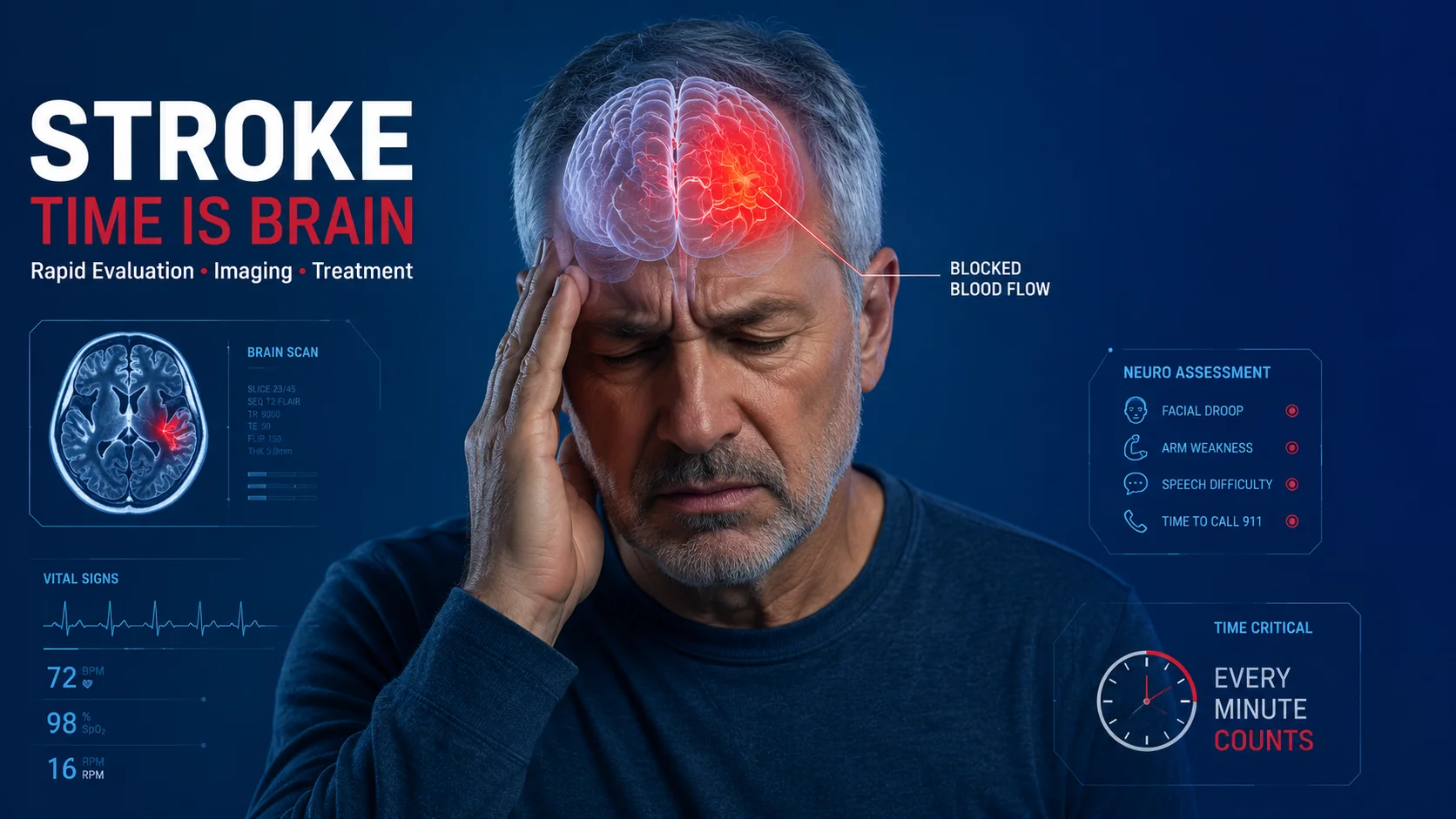
The Centers for Disease Control and Prevention recommends using the F.A.S.T. method to quickly identify a stroke: Face drooping, Arm weakness, Speech difficulty, and Time to call 911. Some organizations now use an expanded “BE FAST” version, which also checks for sudden loss of Balance and Eyesight changes.
If you or someone you know has any of these symptoms, call 911 immediately. Don’t wait to see if symptoms improve on their own, and don’t drive yourself to the hospital — emergency transportation allows treatment to begin on the way.
Types of Stroke: Why Diagnosis Matters
Not all strokes are the same, and the type of stroke determines the entire treatment plan. This is exactly why it’s so important to evaluate and treat a stroke quickly and accurately.
| Stroke Type | Cause | Approximate Share | Main Goal of Treatment |
|---|---|---|---|
| Ischemic Stroke | A blood clot blocks an artery supplying blood to the brain | About 87% of strokes | Medication to dissolve the clot, mechanical removal of the clot |
| Hemorrhagic Stroke | A blood vessel bursts and bleeds into or around the brain | About 13% of strokes | Blood pressure control, surgery to stop the bleeding or reduce pressure |
| Transient Ischemic Attack (TIA) | A temporary blockage of blood flow that resolves on its own | Warning sign, not a full-blown stroke | Rapid testing to prevent a future major stroke |
Understanding the warning signs of ischemic stroke is especially important because it is the most common type. The drugs that help break down blood clots in ischemic strokes can be dangerous — even fatal — if given to someone having a hemorrhagic stroke. That’s exactly why imaging is done before any medication is given.
Stroke Evaluation and Treatment in the Emergency Department
When a patient presents with possible stroke symptoms, the emergency department team follows a well-organized procedure.
Step 1: Rapid Neurological Assessment
Doctors use a standardized method called the NIH Stroke Scale to measure the severity of symptoms. Within minutes of the patient’s arrival, they check facial movement, arm and leg strength, speech ability, vision, and level of consciousness.
Step 2: Immediate Imaging
The type of stroke is determined by immediate imaging tests, such as a CT or MRI scan. A non-contrast CT scan is usually done first, since it can be performed quickly and clearly rules out bleeding. MRI provides more detailed information about small or early-stage ischemic strokes but takes longer to perform.
Step 3: Blood Tests and Vital Signs Monitoring
Blood glucose, clotting factors, and electrolyte levels are checked, since low blood sugar and other conditions can mimic stroke symptoms. Blood pressure, heart rate, and oxygen levels are monitored continuously throughout the evaluation.
Step 4: Treatment Decisions
After imaging confirms the type of stroke, the treatment team chooses between clot-dissolving medication, mechanical clot removal, blood pressure control, or surgery — often within the same hour.
Correctly identifying the cause of symptoms is essential to choosing the right treatment. Giving the wrong treatment, or delaying the right one, directly affects how much brain tissue can be saved.
Imaging Explained: CT vs. MRI in Stroke Treatment
CT and MRI play different roles in diagnosing and managing stroke, and most patients will have at least one, sometimes both.
CT Scan (Computed Tomography)
A CT scan is usually the first imaging test performed, since it takes only a few minutes and can quickly rule out bleeding. CT angiography can also map blood vessels and locate a blocked artery.
MRI (Magnetic Resonance Imaging)
MRI is more sensitive for detecting small or very early ischemic strokes, especially in the brainstem. It’s often used once a patient has stabilized, or if the diagnosis remains unclear after a CT scan.
Both methods help doctors decide whether to use clot-dissolving medication and estimate how much brain tissue can still be saved.
Stroke Treatment Options
Once stroke evaluation and treatment planning are complete, doctors choose from several evidence-based options depending on the type of stroke and the timing and location of the blockage or bleed.
For ischemic stroke:
- Tissue plasminogen activator (tPA): An intravenous clot-busting medication most effective when given within 3 to 4.5 hours of symptom onset.
- Mechanical thrombectomy: A minimally invasive procedure in which a specialist threads a catheter to the blocked blood vessel and physically removes the clot; in select patients, it may help even up to 24 hours after symptom onset.
- Antiplatelet or anticoagulant therapy: Medications used to prevent new blood clots from forming during recovery.
For hemorrhagic stroke:
- Blood pressure–lowering medications to reduce further bleeding
- Reversal agents for patients taking blood thinners
- In severe cases, surgical procedures to remove the blood clot or relieve pressure on the brain
For TIA:
- Urgent outpatient or inpatient testing to identify the cause, such as narrowing of the carotid arteries or an irregular heartbeat
- Preventive medications and lifestyle changes to reduce the risk of a future major stroke
Telestroke: How Technology Speeds Up Evaluation
In many communities, especially smaller towns without an on-site neurologist, hospitals use telestroke programs to connect emergency department physicians with remote neurologists in real time. Through video and shared imaging, neurologists can examine patients, review CT scans, and recommend treatment within minutes — even if they aren’t physically present at the hospital.
Telestroke has significantly narrowed the gap in stroke care access in rural and underserved areas, allowing more patients to receive clot-busting medication within the critical treatment window regardless of which hospital they visit.
Choosing a Stroke-Ready Hospital
Not all hospitals are equally equipped to treat stroke. Many regions designate hospitals as Primary Stroke Centers or Comprehensive Stroke Centers based on staffing levels, imaging capabilities, and access to procedures such as mechanical thrombectomy.
If you have known risk factors for stroke, it’s worth finding out in advance which nearby hospitals carry a stroke center designation. Emergency dispatchers typically route suspected stroke calls to the nearest qualified facility automatically, but knowing your options ahead of time can still help you and your family make faster decisions during a stressful moment.

Stroke Evaluation and Treatment at Consultant Corner
Consultant Corner provides comprehensive neurological evaluation and treatment for stroke patients and their families, supervised by Saqib A. Chaudhry, MD, a fellowship-trained vascular neurologist and neuro-intensivist with extensive experience managing complex strokes and critical neurological cases.
Our practice serves patients through two locations:
- Consultant Corner — Neurological Care, Bloomington, IL
- Consultant Corner — Neurological Care, El Paso, TX
If you’re unsure whether your symptoms warrant a visit, our article on 15 Signs to See a Neurology Consultant is a helpful starting point. You can also browse the full list of neurological conditions we treat, or learn more about our doctor’s background and training.
Our Partnership With MyCare Express Care
Not every urgent symptom is a stroke, and knowing where to go matters. That’s why Consultant Corner has partnered with MyCare Express Care, a walk-in clinic in Bloomington, Illinois.
MyCare Express Care treats common illnesses and injuries — colds, minor injuries, sprains, infections — with same-day care and no long waits. If your symptoms are sudden, severe, or match any warning sign of stroke, always call 911 or go to the nearest emergency department first. But for follow-up care, routine evaluations, or symptoms that don’t seem urgent, our partnership with MyCare Express Care gives Bloomington-area patients a reliable, fast option alongside their neurological care at Consultant Corner.
Recovery After a Stroke: What Happens Next
Recovery time varies widely depending on the severity and location of the stroke and how quickly treatment began. Some patients regain normal function within a few weeks; others need months of structured therapy.
Rehabilitation usually includes physical therapy to rebuild strength and coordination, occupational therapy to relearn daily tasks, and speech therapy for patients with difficulty speaking or swallowing. Emotional support matters too, since depression and anxiety are common after a stroke and should be addressed alongside physical recovery.
For a detailed roadmap, read our guide, 10 Recovery Tips to Avoid Post-Stroke Complications. It covers practical steps for preventing setbacks and protecting against a second stroke, which unfortunately is common in the first year after the initial event.
A Realistic Recovery Timeline
Recovery rarely follows a straight line, and setting realistic expectations helps patients and families stay motivated. In the first few days after a stroke, the focus is on medical stabilization, preventing complications such as blood clots or pneumonia, and resuming light movement as soon as it’s safe to do so.
In the following weeks, inpatient or outpatient rehabilitation typically becomes more intensive, with therapy sessions several times a week focused on strength, speech, and daily living skills. Most of the fastest improvement happens in the first three to six months, though many patients continue to make meaningful gains for a year or more, especially with consistent therapy and a supportive family environment.
It’s also worth remembering that recovery isn’t only physical. Fatigue, irritability, and difficulty concentrating are common in the weeks after a stroke, even in patients whose physical symptoms resolve quickly. Discussing these changes openly with a neurologist — rather than dismissing them as “normal stress” — often leads to better long-term outcomes.
Preventing a Future Stroke
Once a patient’s condition is stable, prevention becomes the priority. Risk factors that respond well to management include high blood pressure, high cholesterol, diabetes, atrial fibrillation, smoking, and physical inactivity.
For patients who have had a stroke or TIA, neurologists typically recommend a combination of medication, lifestyle changes, and regular follow-up imaging or vascular studies. The National Institute of Neurological Disorders and Stroke offers additional resources for patients on recognizing symptoms early and reducing long-term risk.
Modifiable Risk Factors
The table below lists the risk factors most commonly addressed after a stroke or TIA diagnosis, along with the practical steps our neurology team reviews with patients during follow-up visits.
| Risk Factor | Why It Matters | Common Management Approach |
|---|---|---|
| High blood pressure | The single biggest risk factor for both ischemic and hemorrhagic stroke | Daily monitoring, medication, reduced sodium intake |
| Atrial fibrillation | Irregular heartbeat that allows clots to form and travel to the brain | Blood thinners, joint management with a cardiologist |
| High cholesterol | Contributes to plaque buildup that narrows the arteries | Statin therapy, dietary changes |
| Diabetes | Damages blood vessels over time, raising stroke risk | Blood sugar control, regular screening |
| Smoking | Damages vessel walls and thickens the blood | Smoking cessation programs, nicotine replacement therapy |
| Physical inactivity | Contributes to obesity, high blood pressure, and poor vascular health | Planned, gradual increase in exercise levels |
Not every risk factor can be eliminated — age, family history, and a prior stroke can’t be changed — which is exactly why ongoing neurological evaluation and treatment matter even after the initial recovery period ends.
Life After Stroke: Supporting Long-Term Neurological Health
Stroke evaluation and treatment doesn’t end at hospital discharge. Many patients continue to see a neurologist regularly to monitor for recurrent symptoms, adjust medication doses, and track cognitive or physical changes over time.
Caregivers play a key role in this phase. Helping a loved one keep appointments, take medications consistently, and stick with rehabilitation exercises can significantly improve outcomes. It’s also common for stroke survivors to develop related neurological problems, such as seizures, spasticity, or cognitive changes, that require their own evaluation.
If you’re helping a loved one through recovery, our overview of chronic neurological disorders explains conditions that sometimes develop or worsen after a stroke, and our guide to early brain health warning signs can help families recognize when a follow-up visit is needed.
When to Get a Second Opinion
Some patients seek a second neurological opinion after a stroke, especially when the cause is unclear, symptoms persist despite treatment, or the family wants a more detailed prevention plan. This is entirely reasonable, especially for younger patients or those with an unusual presentation, since roughly 1 in 7 strokes occurs in adults under age 50.
A second opinion can also help confirm whether ongoing symptoms — such as fatigue, memory changes, or mood swings — are related to the stroke itself or point to another neurological condition that needs its own specialized evaluation.
Frequently Asked Questions About Stroke Evaluation and Treatment
When is the best time to treat a stroke?
Clot-dissolving medications are most effective when given within 3 to 4.5 hours of symptom onset, though mechanical clot removal can sometimes help up to 24 hours later in select patients. The earlier treatment starts, the better the outcome.
How long does it take to evaluate a stroke in the emergency department?
A well-organized stroke evaluation, including imaging and initial treatment decisions, is typically completed within 30 to 60 minutes of arrival at a stroke-ready hospital, though timing can vary based on symptom complexity.
Can a CT scan miss a stroke?
Yes. While a CT scan is excellent for detecting bleeding, it can miss small or very early ischemic strokes. That’s why an MRI is sometimes ordered afterward for a clearer picture.
Is a TIA considered a stroke?
A TIA, or mini-stroke, involves temporary symptoms that resolve on their own, but it’s a serious warning sign. About 1 in 3 people who have a TIA go on to have a full-blown stroke, often within a year — which is why it’s important to seek emergency medical attention even if symptoms subside.
What should I do if I think someone is having a stroke?
Call 911 immediately. Note the time symptoms started, keep the person calm and seated or lying down, and do not give them any food, water, or medication.
Does Consultant Corner treat stroke patients in both Bloomington and El Paso?
Yes. Consultant Corner provides stroke care, including neurological evaluation and treatment, under the supervision of Dr. Saqib A. Chaudhry, at both our Bloomington, Illinois, and El Paso, Texas, locations.
Can a young, healthy person have a stroke?
Yes. Although risk increases with age, stroke can occur at any age, and about 1 in 7 strokes occurs in adults under age 50. In younger patients, causes may include undiagnosed heart conditions, blood-clotting disorders, or blood vessel abnormalities, which makes thorough evaluation especially important.
What is the difference between a stroke and a seizure?
A stroke occurs when blood flow to the brain is interrupted, while a seizure is caused by abnormal electrical activity in the brain. Some symptoms can be similar, such as confusion or weakness, which is why a proper neurological evaluation is essential before starting treatment.
Talk to Our Neurology Team
Stroke evaluation and treatment shouldn’t wait. If you’re experiencing stroke-like symptoms, have been discharged from the hospital after a stroke, or want an expert opinion on your risk factors, our team is ready to help.
Contact Consultant Corner online to schedule a consultation, or call +1 888 208 2208. For non-urgent symptoms in the Bloomington area, you can also visit our partners at MyCare Express Care.