
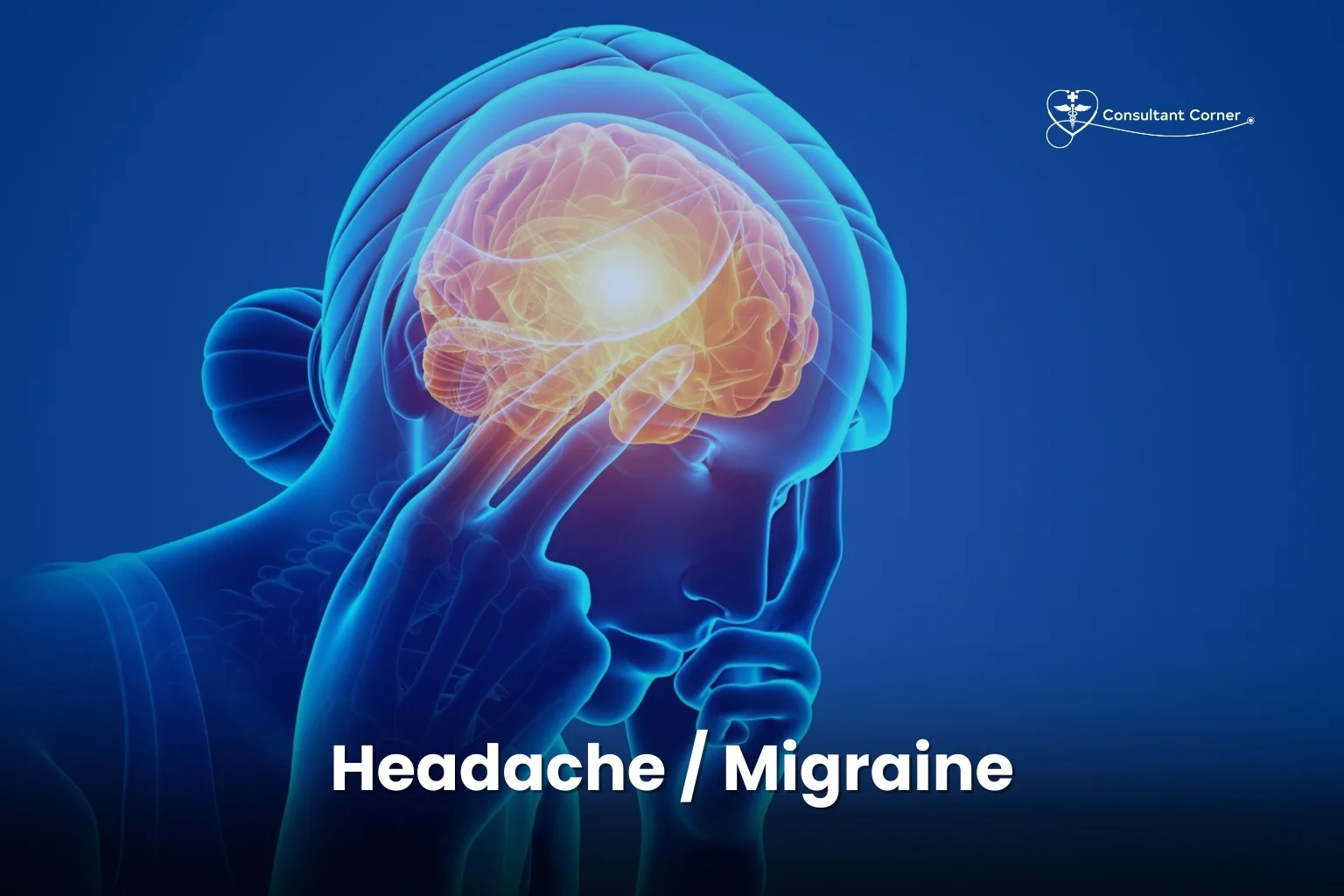
Headache & Migraine – Expert Evaluation & Relief
Headache and migraine pain is one of the most common and most overlooked reasons people delay seeking help. If you’ve been told that your severe headaches, throbbing earaches, or everyday stress are “just stress,” but the pain keeps coming back, it’s time for a real evaluation rather than another generic medication. There’s no need to accept that recurring headaches are normal, and in most cases, they’re not something you have to live with forever.
At Consultant Corner (a neurology care practice in Bloomington, IL), our neurology team evaluates all types of headaches and migraines, from occasional tension headaches to debilitating chronic migraines. Below, we’ll discuss warning signs, the most common types of headaches, why untreated headaches are important, and what a real headache and migraine evaluation actually looks like — as well as how a same-week appointment or walk-in clinic partner can fit into your treatment plan.
Are Headaches Consuming Your Life? We Can Help.
Frequent headaches or migraines aren’t just stressful — they can profoundly impact your work, sleep, mood, and daily life. Whether the pain is dull, sharp, throbbing, or one-sided, you have the right to get answers and relief. At Consultant Corner, we evaluate all types of headaches and help you get back to normal.
Headaches are a very personal thing. Some describe them as a tight band squeezing your skull. Others describe migraines as throbbing, nauseating waves that make light and sound unbearable. No matter how your headache and migraine symptoms manifest, the goal of evaluation is the same: not just to suppress the pain, but to find the underlying cause.

When Headaches Become a Problem
Everyone gets headaches from time to time. A late night, dehydration, or a stressful afternoon can cause a mild headache that goes away on its own. But certain symptoms can indicate a deeper problem, and that’s when a proper evaluation of headaches and migraines becomes important.
If you experience the following symptoms, you may need to see a specialist:
- Pain that comes back every week or every day
- Throbbing headache with nausea or sensitivity to light
- Headache that gets worse with physical activity or stress
- Pressure or tightness in the forehead or along the nerves
- Headache disrupts sleep or work
- Pain around one eye and watery or red eyes
- Headache after a head injury
If any of these sound familiar, your headache is trying to tell you something. If you’ve recently fallen, suffered a sports injury, or been in a car accident, you should also read our article on What is a Head Injury?, as post-traumatic headaches often require a different treatment approach than a simple tension headache or stress headache.
If your headache is affecting your quality of life — even slightly — there’s a cause. And there’s a treatment.
🔍 Common Headaches We Treat
Not all headaches are the same, and treating migraines in the same way as tension headaches is rarely effective. Below is a brief description of the most common headaches we see in our neurology clinics.
Tension Headaches
A persistent pressure or “tight band” feeling around the head, often related to stress, posture, or muscle tension. Tension headaches are the most common type overall and can often be treated with lifestyle changes, posture correction, and stress management.
Migraines
Severe, throbbing pain, often accompanied by nausea, vomiting, sensitivity to light or sound, or vision changes (aura). Migraines can last from a few hours to a few days and significantly limit daily activities. According to the American Migraine Foundation, migraine is not just “a severe headache,” but a disabling neurological disorder, and it requires its own diagnosis and treatment plan. If you’re interested in knowing exactly what’s causing your migraine attacks, our related post, 11 Migraine Triggers That Could Be Causing Your Headaches, discusses the most common causes in more detail.
Cluster Headaches
A severe burning or throbbing pain around the eyes that comes on suddenly and intensely. These headaches are rare but very painful, and are often accompanied by symptoms such as watering of the affected eye, redness, or drooping eyelids.
Secondary Headaches
Headaches caused by an underlying problem, such as sinus problems, high blood pressure, medication overuse, dehydration, or neurological disease. In these cases, it is important to identify and treat the underlying cause, not just the pain.
You don’t need to know what type of headache you have — that’s the purpose of a headache and migraine evaluation.
Here’s a simple side-by-side comparison to help you identify the type that matches your symptoms:
| Headache Type | Common Pain Description | Common Causes | Normal Persistence |
|---|---|---|---|
| Tension Headaches | Dull, tight, ribbon-like pressure | Stress, poor posture, fatigue | 30 minutes – hours |
| Migraines | Throbbing, pulsating, often on one side | Hormones, light, certain foods, stress | 4 hours – 3 days |
| Cluster Headaches | Severe, burning, around one eye | Alcohol, strong odors, sleep changes | 15 minutes – 3 hours (recurrent) |
| Secondary Headaches | Various (dull, sharp, or throbbing) | Sinus problems, medication overuse, high blood pressure | Varies depending on underlying cause |
❗ Why You Shouldn’t Ignore Your Recurring Headaches
Untreated headaches can be related to the following causes:
- Neurological problems
- Stress and sleep problems
- Stress on vision
- High blood pressure
- Post-traumatic effects
- Medication overuse
- Chronic migraine syndrome
Early evaluation helps determine the underlying cause and prevents symptoms from becoming chronic. In some cases, recurring headaches can also be an early warning sign related to blood vessel health. Our vascular neurology team, led by Sakib A. Chowdhury, MD — a Vascular Neurologist and Neuro-intensivist — routinely evaluates patients whose headache patterns are consistent with other neurological risk factors, including those discussed in our articles What Causes Ischemic Stroke? and 12 Early Ischemic Stroke Symptoms That Could Save Your Life.
Headaches can also be an early symptom to watch for in people with a family history of memory loss. If your family has a history of chronic headaches as well as memory problems, our articles Understanding Alzheimer’s Disease and 10 Early Alzheimer’s Disease Symptoms You Should Never Ignore may also be helpful.
The bottom line: Recurring headaches and migraines require a proper diagnosis, not guesswork with over-the-counter medications.

🏥 Why Patients Choose Consultant Corner
We offer comprehensive headache and migraine treatment based on your symptoms and lifestyle. Here’s what sets our evaluation process apart from others.
✓ Expert Neurological Evaluation
We identify the cause of your headaches — not just the symptoms. Our team takes your complete medical history, reviews your symptom pattern, and rules out underlying neurological conditions before developing a treatment plan.
✓ Personalized Treatment Plan
From migraine medications and supplements to trigger management, stress reduction, and advanced therapies, your plan is based on your specific headache type and lifestyle — it’s not a one-size-fits-all approach.
✓ Review of Previous Imaging and Lab Reports
We analyze CT/MRI scans, blood tests, and previous evaluations to give you a clear picture of what’s going on. If you’ve already had tests done elsewhere, we’ll review them so you don’t have to start from scratch.
✓ Chronic or Acute Headache Management
We treat migraines, post-traumatic headaches, tension headaches, cluster headaches, and more. Our treatment plans adapt to your changing symptoms over time.
✓ Same-Week Appointment Convenience
Because living with headache pain isn’t normal — and you don’t have to wait weeks for answers.
Our neurology team also serves patients through Consultant Corner (Neurological Care based in El Paso, Texas), so expert headache and migraine evaluation is within reach, no matter where you live near our Illinois or Texas locations.
🤝 Our Walk-In Care Partner: MyCare Express Care
Not all headaches require an immediate trip to neurology — sometimes you just need a quick doctor’s appointment. That’s why Consultant Corner has partnered with MyCare Express Care, a walk-in clinic in Bloomington, Illinois, to make that first step easier.
MyCare Express Care treats illnesses, injuries, and preventative care, as well as everyday pain and symptoms, including headaches. They have extended hours (Monday–Friday 7am–7pm, weekends 10am–4pm) and DirectCare options for both insurance and self-pay. They also now offer virtual neurology appointments, which can be a convenient first step if you’re not sure whether your headaches require urgent attention or a full neurology exam.
If you come in and are diagnosed with chronic migraines, cluster headaches, or any symptoms related to head trauma or vascular risk, MyCare Express Care can refer you to Consultant Corner for a more in-depth headache and migraine evaluation as described in this article — so you don’t have to choose between “urgent care” and “the right specialist.”
🚨 When You Need Immediate Treatment
Most headaches, even severe headaches, are not medical emergencies. But there are some warning signs that you should seek immediate emergency care. According to the National Institute of Neurological Disorders and Stroke (NINDS), there is a wide range of headache severity, and certain warning signs should never be ignored.
Seek emergency medical attention if your headache is:
- Sudden and severe (“the worst headache of your life”)
- Followed by confusion, weakness, or vision loss
- Followed by fever or stiff neck
- Followed by a head injury
- Followed by seizures or fainting
If you’re not sure, it’s safest to get evaluated. It’s always better to get tested quickly than to wait for symptoms to become an emergency.
How Headache and Migraine Evaluations Work
If you’ve never been to a neurologist for a headache before, here’s a general idea of what to expect:
- History of symptoms — We’ll ask about their recurrence, persistence, cause, location of the pain, and any associated symptoms, such as nausea or sensitivity to light.
- Physical and neurological examination — A direct assessment to check reflexes, vision, coordination, and other neurological function.
- Review of imaging or lab reports (if available) — Previous scans and blood tests help us rule out other causes.
- Diagnosis and treatment plan — Based on the type of headache you have, we will develop a plan that may include medications, lifestyle changes, identifying the cause, or advanced therapy.
- Follow-up and adjustment — Headache treatment is rarely a “one-size-fits-all” treatment. We make adjustments to your plan as your symptoms improve.
This structured approach is what separates a true headache and migraine evaluation from simply hoping another painkiller will work.
Daily Habits That Can Reduce Headache Recurrence
While a medical evaluation is the most important step for recurrent headaches and migraine symptoms, a few daily habits can help with your treatment plan:
- Maintaining a consistent sleep schedule
- Drinking enough water throughout the day
- Limiting caffeine and alcohol, especially if they are known to trigger headaches
- Managing stress through regular breaks, movement, or relaxation techniques
- Keeping track of your headaches in a journal to identify types and triggers
None of these habits are a substitute for a professional evaluation, but when you work with your neurology team to develop a long-term plan, they can significantly reduce headache recurrence.

Understanding Common Causes of Migraines
One of the most important parts of any headache and migraine evaluation is identifying what triggers your symptoms. Causes vary widely from person to person, but some of the most commonly cited factors include:
- Hormonal changes — Many women notice a link between their menstrual cycle, pregnancy, or menopause and migraines.
- Dietary factors — Skipping meals, dehydration, alcohol (especially red wine), aged cheeses, and foods high in nitrates or MSG are common triggers.
- Sleep disturbances — Both too little or too much sleep can trigger migraines in susceptible individuals.
- Environmental factors — Bright or flashing lights, strong smells, loud noises, and changes in weather are often cited as triggers for migraines.
- Stress and emotional changes — Interestingly, migraines can occur not only during times of stress, but also during the “down” period immediately following a stressful event.
Since triggers vary from person to person, keeping a symptom diary for a few weeks before your appointment can make a significant difference in how quickly your neurology team can identify your individual headache and migraine type. For more information on specific triggers, see our full guide: 11 Migraine Triggers That Could Be Causing Your Headaches.
Our Treatment Options
Once your headache type and triggers are well understood, treatment is tailored to your specific situation. Depending on your diagnosis, your plan may include:
- Acute (abortive) medications — Taken at the onset of a headache or migraine to prevent it from getting worse.
- Preventive medications — Taken regularly to reduce the recurrence and severity of chronic migraines or cluster headaches.
- Lifestyle and trigger management — Structured guidance on sleep, adequate hydration, diet, and stress reduction based on your specific triggers.
- Advanced therapies — For patients who have not responded to initial treatment, options such as nerve blocks or newer therapies specifically designed for migraine may be considered.
- Imaging and coordination with other specialists — When needed, we arrange follow-up imaging or make referrals to other specialists to identify or address related conditions.
Because headache and migraine problems often change, your treatment plan is not static. As your response to treatment becomes apparent, we reassess at follow-up visits and change medication doses, medications, or strategies.
Living With Chronic Headaches: Long-Term Management
For patients with chronic migraines or frequent tension-type headaches, the goal is not just to stop the pain today — but to reduce the frequency of headaches in the first place. Long-term management often includes preventive medications, consistent lifestyle habits, and regular check-ins with your neurology team to monitor progress.
Many patients are surprised by how much of an impact small, consistent changes can make when combined with the right treatment. A well-organized plan also helps prevent a common problem: medication-overuse headaches, which can occur when strong painkillers are used too frequently and end up prolonging the very symptoms they are intended to treat. Part of a thorough evaluation for headaches and migraines is making sure your current medication routine isn’t unintentionally working against you.
Frequently Asked Questions About Headache and Migraine Care
How do I know if my headache is a migraine or something else? Migraines usually cause a throbbing or pulsating pain on one side of the head and are accompanied by nausea, sensitivity to light or sound. Tension headaches, or stress headaches, feel like a continuous pressure without these additional symptoms. A neurological evaluation can confirm which type of headache you have.
How often should I see a specialist for headaches? If headaches occur weekly or more frequently, disrupt your sleep or work, or change in type or severity, it’s time to get evaluated rather than self-treating.
Can stress alone cause chronic headaches? Stress is a common cause, but chronic or worsening headaches often involve multiple factors, including sleep problems, posture, hormones, or underlying neurological conditions. An evaluation can help identify all of the causes, not just the obvious one.
Are migraines hereditary? Migraines often run in families, and if a close relative has migraines, you’re more likely to get them. However, the causes and severity can vary significantly from person to person.
What should I bring to my first headache evaluation? Bring any previous imaging (CT/MRI), lab test results, a list of medications you are currently taking, and, if possible, a brief history of your recent headaches, including their frequency, duration, and causes.
Is it normal for headache patterns to change over time? Yes, and this is one reason why regular follow-up is important. Hormonal changes, new stressors, medication changes, and age can all change the pattern of your headaches.
Where can I go for a quick headache evaluation before making an appointment with a neurologist? Our care partner, MyCare Express Care in Bloomington, IL, offers walk-in and virtual neurology services for headaches that require a quick evaluation, and also offers a full Consultant Corner evaluation if needed.
Why Our Approach to Treating Headaches and Migraines Is Different
Many headache treatments end up on a prescription pad. Our approach is not. Because our neurology team also treats complex conditions like ischemic stroke, head trauma, and Alzheimer’s disease, we bring a broad neurological perspective to every headache and migraine evaluation — even when a case appears to be a simple tension headache.
This broad perspective is important because headaches rarely occur in isolation. Sleep problems, blood pressure, previous concussions, drug interactions, and family neurological history — all of these can play a role in why your headaches keep coming back. Rather than treating pain as an isolated symptom, we look at the whole picture, which is why patients who have tried other approaches without success often come to us and find lasting relief.
Whether you’re experiencing your first unexplained headache or have been suffering from chronic migraines for years that haven’t responded to treatment, our goal is the same: a clear diagnosis, a realistic plan, and ongoing support as your symptoms change.
📞 Schedule an Appointment for Your Headache or Migraine Evaluation
A persistent headache isn’t something you have to live with. Whether it’s a migraine, tension headache, or another unknown pain, we can help you find a solution and lasting relief.





10 Comments
Thank you for sharing such practical, actionable tips for relief—this is a must-read for anyone dealing with chronic pain!
So greatful for you information.. I’m suffering since i was 10..bt maintaining these prescription it give me a long relief. God bless you sir
“The ‘Consultant Corner’ is an excellent initiative. Hearing firsthand insights and practical advice from industry experts provides immense value. Thank you for sharing such high-quality knowledge!”
The website provides clear and helpful information about headache and migraine evaluation and relief. The service details are presented professionally, and it’s easy to understand the available support. Overall, it feels informative and reassuring. 👍
This is a must-read for anyone dealing with chronic pain
Thank God i find them. Iam really happy for their hospitality and treatment. As iam a student i was badly suffering from my headache. After seeing you,i got relief. Thanks a lot
Really informative and well-written article. I especially liked the focus on finding the underlying causes of headaches rather than simply treating the symptoms. The approach feels thorough and patient-focused, and the information about when to seek a neurological evaluation was very helpful.
Thank guys for your amazing service i was suffering from my migraine headaches, i was a nightmare for me. specially in my workplace head pain always gives me downgrade. But now it’s just story.Thanks again for helping me out.
Sir, after seeing you my migraine pain has reduced a lot. Now I can read books properly. Thank you, Sir
This is such a comprehensive and well-structured breakdown of headache types and migraine management! Identifying the specific triggers and knowing when to seek professional medical evaluation is crucial, yet so often overlooked. Thank you for sharing such practical, actionable tips for relief—this is a must-read for anyone dealing with chronic pain!