
Back Pain and Sciatica: 7 Warning Signs You Shouldn’t Ignore
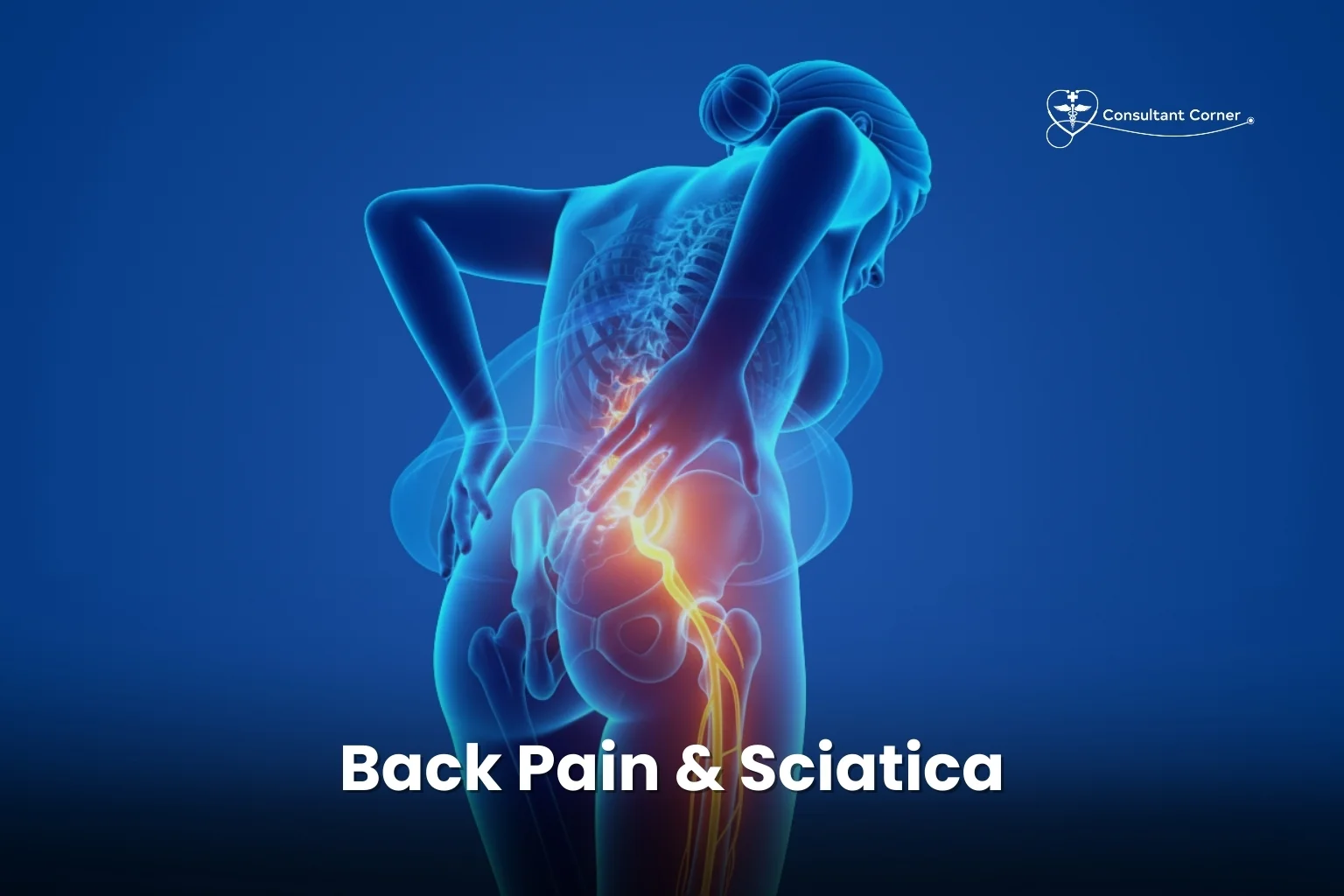
Back pain and sciatica are two of the most common reasons people seek out a neurologist near them — and for good reason. Normal back pain is usually caused by tired muscles or a poor night’s sleep. But back pain and sciatica caused by pressure on a nerve are a completely different problem. This can result in burning sensations in the legs, numbness in the feet, tingling in the toes, or weakness that makes it difficult to stand on your feet while walking.
These symptoms mean that a nerve is being compressed somewhere along its path — and if left untreated, this pressure can cause permanent nerve damage. At Consultant Corner, our neurology team evaluates back pain and sciatica from the root cause, not just the symptoms, so that patients can move around normally without fear of further pain.
If back pain is starting to affect your daily life — such as your ability to sleep, work, stand in front of a sink, or sit in a meeting — you should get it checked out by someone who specifically examines the nervous system, not just the muscles.
Why Back Pain and Sciatica Are Often Misunderstood
Most people think that all back pain is the same, and that it will go away on its own with rest, heat, or simple painkillers. Sometimes that’s true. But sciatic nerve-related back pain and sciatica behave differently than muscle strains. Muscle pain is usually localized — it hurts in one spot and gets better with rest. Nerve-related back pain, on the other hand, is often diffuse. It starts in the lower back, travels through the waist and buttocks, down the back of the leg, and sometimes all the way to the foot.
This diffuse pattern indicates that something is compressing or irritating a nerve root, rather than just a muscle strain. According to the Mayo Clinic’s review of sciatica, sciatic nerve pain most often occurs when a herniated disc or bone spur presses on the nerve, causing inflammation, pain, and numbness along its course. Early detection of these symptoms is one of the most beneficial things a patient can do for their long-term mobility.

7 Warning Signs Your Back Pain Is Nerve-Related
Not every pain in your lower back is a sign of sciatica. But certain types strongly suggest that your back pain and sciatica symptoms are not just muscle-related, but also a nerve-related one.
1. Sharp pain radiating down the leg
This is a major symptom of sciatica. The pain is not limited to the lower back but radiates through the buttocks and thighs, and sometimes reaches the balls of the feet or soles of the feet.
2. Burning, tingling, or numbness
A tingling sensation in the feet or toes, or a burning sensation down the leg, often indicates a nerve problem rather than a muscle strain.
3. Pain that worsens when standing, coughing, or bending over
Nerve-related back pain often worsens with certain movements or changes in pressure, such as coughing, sneezing, or standing for long periods of time.
4. Weakness in one leg
If one leg feels noticeably weaker than the other, or you have difficulty lifting your leg, this may indicate that the nerve signal itself is being disrupted.
5. Pain relief when leaning forward
Some patients find relief when leaning forward or sitting, which can temporarily relieve pressure on the affected nerve root.
6. Difficulty walking due to sudden jerking of the leg
If the leg buckles or feels unbalanced when walking, this is a sign that not only sensation but also movement is being affected by nerve compression.
7. Pain that persists or worsens over several weeks
A simple muscle strain usually resolves within a few days. However, back pain and sciatica caused by nerve compression can be chronic or develop slowly without proper evaluation and treatment.
If any of these symptoms sound familiar, it’s a strong indication that your back pain is caused by nerve compression — most commonly caused by sciatica, a herniated disc, or spinal stenosis — and requires evaluation by a neurologist.
What causes back pain and sciatica?
Back pain and sciatica can stem from a variety of underlying issues, and identifying the exact cause helps a treatment plan work effectively rather than just suppressing symptoms. Common causes we evaluate at Consultant Corner include:
- Herniated disc — when the soft cushion between the bones of the spine bulges or ruptures and puts pressure on a nearby nerve root.
- Pinched nerve — pressure on a nerve from surrounding tissue, bone, or muscle.
- Spinal stenosis — narrowing of the spinal canal, which reduces the space around the nerve.
- Degenerative disc disease — the gradual deterioration of spinal discs, which can cause nerve irritation over time.
- Postural nerve compression — poor posture, especially from sitting, over a long period of time, which puts uneven pressure on the lower spine.
- Muscle spasms that compress the nerve — tight muscles like the piriformis put pressure directly on the sciatic nerve.
- Traumatic or weight-bearing injuries — sudden strain from an accident, fall, or improper lifting technique.
A Cleveland Clinic review of sciatica notes that this type of nerve pain is very common and often improves with a combination of proper medical treatment and self-care — but only when the underlying cause is properly identified.
Many of these causes of back pain and sciatica are treatable without surgery if they are identified and treated early. That’s why a prompt evaluation is so important.
Who is most at risk for back pain and sciatica?
Anyone can develop back pain and sciatica, but certain factors increase the likelihood. Knowing your risk factors can help you recognize symptoms early, rather than dismissing them as “just back pain.”
Age-related changes
As the spine ages, the discs that cushion each vertebra naturally lose some of their height and elasticity. This gradual deterioration, known as degenerative disc disease, is one of the leading causes of back pain and sciatica in adults over 40.
Occupations and daily habits
Jobs that require heavy lifting, frequent twisting, or prolonged driving can put repeated stress on the lower spine. On the other hand, jobs that require sitting for most of the day — especially in poor posture — can also increase stress on the lower back and contribute to nerve discomfort over time.
Weight and physical condition
Excessive body weight increases the pressure on the spine, while weak core and back muscles reduce the support your spine needs during daily activities. Both factors can increase your risk of back pain and sciatica.
Previous back injuries
A history of back injuries, even old injuries that seem to have healed completely, can make the spine more vulnerable to future disc problems and pressure on the nerves.
Diabetes and nerve health
Chronic diseases like diabetes can affect the health of nerves throughout the body, sometimes making nerves more sensitive to pressure and taking longer to heal from inflammation.
If one or more of these risk factors apply to you, you should pay closer attention to any new or recurring back pain, rather than assuming it will go away on its own.
Daily Habits That Can Help Prevent Back Pain and Sciatica
While it’s not possible to prevent every episode of back pain and sciatica, several daily habits can reduce your risk and help maintain a healthy spine over time.
- Maintain good posture, especially when sitting at a desk or in a car for long periods of time.
- Use proper lifting techniques by bending your knees rather than your hips when lifting heavy objects.
- Stay active with light exercise like walking or swimming to keep your supporting muscles strong.
- Stretch regularly, especially your hamstrings and glutes, which can put pressure on your lower back.
- Take occasional breaks to move around and reduce the amount of stress on your spine when sitting for long periods of time.
- Maintain a healthy body weight to reduce overall stress on your lower back.
- Choose supportive shoes, as old or unsupportive shoes can subtly change your posture and spinal alignment.
These practices are not a substitute for medical evaluation for existing nerve pain, but they can significantly reduce the chance of back pain and sciatica recurring or returning after treatment.
Back Pain vs. Sciatica: How to Tell the Difference
To help you understand what your body is trying to tell you, the table below highlights some of the key differences between normal back pain and nerve-related back pain (sciatica).
| Characteristic | Common Back Pain | Back Pain and Sciatica (Nerve-Related) |
|---|---|---|
| Location of pain | Lower back only | Radiates from the back to the waist, legs, and sometimes toes |
| Type of sensation | Dull ache or pain | Sharp, burning, or electric pain |
| Numbness or tingling | Rare | Common, especially in the feet or toes |
| Affected walking | Usually normal | May cause weakness or numbness in the legs |
| Rest response | Often improves within a few days | May persist or get worse without treatment |
| Common causes | Overuse, poor posture, minor strain | Herniated disc, spinal stenosis, nerve compression |
| Suggested next steps | Home care, light stretching | Neurology-focused evaluation and imaging review |
If your symptoms match the column on the right, you should schedule an appointment with our neurology team rather than waiting to see if the condition improves on its own.

Why Patients Trust Consultant Corner for Back Pain and Sciatica
Nerve-Centered Evaluation
Rather than treating “back pain” as a generic problem, we accurately identify which nerves are affected and why, so that the treatment plan is tailored to the real cause of your back pain and sciatica.
Specific Treatment for Sciatica and Nerve Pain
Our approach may include medications, nerve-calming therapies, guided exercises, and pain-relieving techniques tailored to your specific diagnosis.
Personalized Plans for Mobility and Strength
The goal is not just short-term relief — but to help you walk, stand, and move with confidence again.
Imaging Review and Safety Assessment
When needed, we review MRI or CT scan results to help create a safe, evidence-based treatment plan.
Same-Week Appointments
No more waiting weeks for answers to your nerve pain. We prioritize timely evaluation for patients suffering from symptoms of back pain and sciatica.
Our service is led by Sakib A. Chowdhury, MD, a vascular neurologist and neuro-intensivist with extensive experience in the diagnosis and management of complex neurological disorders, including nerve compression disorders that cause back pain and sciatica.
Our Locations for Back Pain and Sciatica Treatment
Consultant Corner offers neurology-focused evaluations for back pain and sciatica in two convenient locations:
- Consultant Corner (Neurology Services in Bloomington, IL) — Neurologists in Bloomington, Illinois
- Consultant Corner (Neurology Services in El Paso, TX) — Health Consultants in El Paso, Texas
Our Collaboration with MyCare Express Care
For patients in the Bloomington, Illinois area, Consultant Corner works with MyCare Express Care, a walk-in clinic providing accessible and affordable healthcare to the local community. MyCare Express Care offers same-day services for a variety of non-emergency needs, including general back pain evaluations, injury care, and virtual neurology appointments. This is a convenient first destination for patients who later require specialized neurology evaluation for back pain and sciatica. This collaboration helps patients move smoothly from initial walk-in care to specific, nerve-focused treatment when needed.
When Back Pain and Sciatica Become a Medical Emergency
While most cases of back pain and sciatica can be managed with timely, nonsurgical care, certain symptoms require immediate attention. Seek emergency medical attention immediately if you experience the following symptoms:
- Loss of bladder or bowel control
- Sudden, severe weakness in one or both legs
- Numbness on the inner thigh, sometimes called “saddle anesthesia”
- Sudden onset of severe pain after an injury or fall
These symptoms may indicate a serious spinal emergency, such as cauda equina syndrome, and should never be left untreated.
Related Neurological Conditions We Treat
Back pain and sciatica often overlap with other nerve-related conditions, or are mistaken for other conditions. If your symptoms do not exactly match those described above, one of these related conditions may be more appropriate for you:
- Neuropathy and nerve pain — for burning or tingling pain that is not limited to the lower back
- Cervical radiculopathy and neck pain — for symptoms of nerve compression that start in the neck rather than the lower back
- Spasticity and muscle stiffness — for chronic muscle stiffness caused by nerve or neurological disease
- Carpal tunnel and nerve entrapment — for nerve compression in the wrist and hand
- Headache/migraine — for recurrent headaches that may accompany or follow a neurological disease
- Head injury — for neurological symptoms caused by trauma
- Alzheimer’s disease — for cognitive changes that fall under our broader neurology services
Reviewing these related conditions may help you understand whether your symptoms are specifically related to back pain and sciatica, or due to another related neurological disease.

How Back Pain & Sciatica Is Typically Treated
Treatment for Back Pain & Sciatica is rarely one-size-fits-all. Depending on the underlying cause, a personalized plan may include:
- Anti-inflammatory or nerve-pain medication to reduce swelling and calm irritated nerve fibers
- Physical therapy and targeted exercises to relieve pressure on the nerve and strengthen supporting muscles
- Posture and ergonomic guidance for patients whose symptoms are linked to prolonged sitting or poor spinal alignment
- Activity modification to avoid movements that aggravate the nerve while healing occurs
- Imaging-guided treatment planning for patients whose symptoms suggest a herniated disc or spinal stenosis
- Referral for advanced care in the rare cases where conservative treatment is not enough
The right combination depends entirely on what’s actually causing your Back Pain & Sciatica, which is why an accurate diagnosis always comes first.
Frequently Asked Questions About Back Pain & Sciatica
Is Back Pain & Sciatica the same thing? Not exactly. Back pain is a general symptom, while sciatica refers specifically to pain caused by irritation or compression of the sciatic nerve. Sciatica is one possible cause of back pain, but not all back pain is sciatica.
How long does sciatica-related back pain usually last? Mild cases may improve within a few weeks with conservative treatment. However, Back Pain & Sciatica caused by ongoing nerve compression can persist or worsen without proper evaluation, which is why early diagnosis matters.
Can Back Pain & Sciatica go away without treatment? Some mild cases improve on their own with rest and activity modification. However, persistent or worsening nerve symptoms — including numbness, tingling, or leg weakness — should be evaluated to prevent long-term nerve damage.
When should I see a neurologist for back pain? If your back pain radiates down your leg, comes with numbness or tingling, causes leg weakness, or hasn’t improved after a couple of weeks of home care, it’s time for a neurology-focused evaluation.
Do I need an MRI to diagnose sciatica? Not always. Many cases can be evaluated through a physical exam and symptom history. Imaging is typically reserved for cases where symptoms are severe, persistent, or suggest a specific structural cause like a herniated disc.
Is surgery required to treat Back Pain & Sciatica? Most cases of Back Pain & Sciatica respond well to non-surgical treatments like medication, physical therapy, and activity changes. Surgery is generally considered only when conservative treatment fails or when there are signs of a serious spinal emergency.
Stop the Cycle of Pain — Get Relief Today
Back Pain & Sciatica caused by nerve compression rarely resolves entirely on its own — but with the right diagnosis and treatment plan, relief can come faster than many patients expect. Whether your symptoms are just starting or have been affecting your daily life for weeks, the team at Consultant Corner is ready to help you understand what’s really causing your pain and get you back to moving with confidence.
Contact Consultant Corner online to schedule your Back Pain & Sciatica evaluation, or call our office directly to speak with our team.




3 Comments
Very helpful and clear information about back pain and sciatica management. Proper medical care makes a huge difference for anyone suffering from these symptoms. Great post!
“This is a very informative service description. Back pain and sciatica can be really debilitating, and having professional neurological care to address these issues is so important. Thank you for sharing these helpful insights!”
This is such a helpful read. It’s easy to dismiss back pain as just ‘tired muscles,’ but learning how nerve compression causes pain to radiate down the leg is a huge eye-opener. The daily preventative tips and the clear comparison table are extremely practical. Thanks for putting together such a clear guide!