
Neuropathy & Nerve Pain – Fast Relief Starts Here
Neuropathy and nerve pain are two of the most common and most misunderstood reasons people see a neurologist. If you’ve ever experienced burning, prickling, electric shocks, or numbness in your hands or feet, you already know how frustrating nerve pain can be. It can rob you of a good night’s sleep, make it difficult to button a shirt, or turn even a simple walk into a struggle to balance. The good news is that neuropathy and nerve pain usually don’t start suddenly, and in many cases the underlying cause is treatable — sometimes even curable — if it’s identified early.
At Consultant Corner, we see patients every week whose nerve symptoms were dismissed as “just getting older” or “probably nothing,” only to discover months later that a treatable disease had been silently damaging their nerves the whole time. This guide discusses what neuropathy is, its warning signs, its most common causes, how it’s diagnosed, and how a thorough neurological evaluation can help you find relief quickly.
⚡ What is neuropathy?
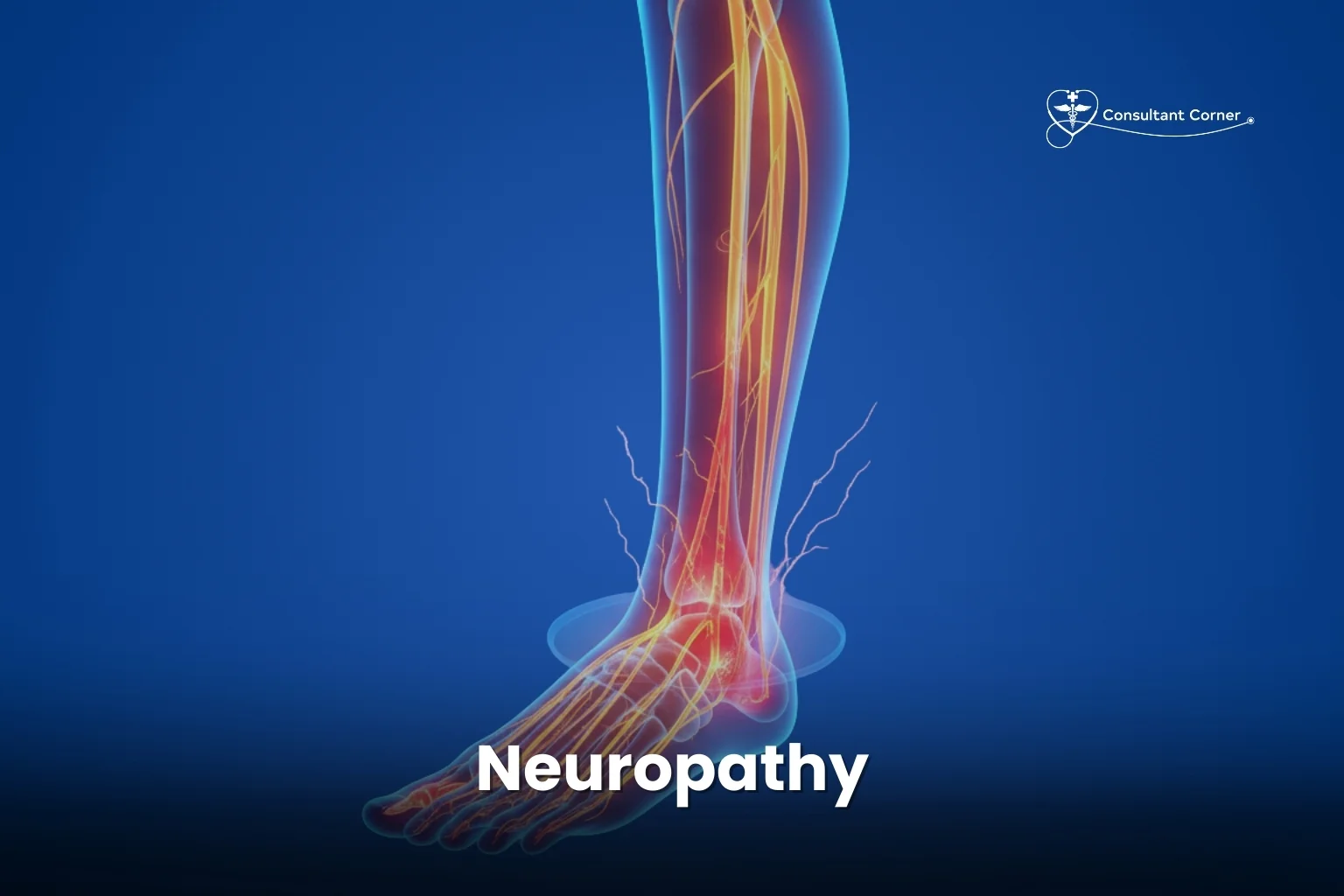
Neuropathy simply means nerve damage. Your peripheral nerves carry signals between your brain, spinal cord, and the rest of your body — like telling your hand that it’s touched something hot, your foot where the ground is, or your bladder is full. When these nerves are damaged, the signals get jumbled up. You may feel sensations that aren’t really there (like burning, tingling, electric shocks), or you may lose the sensations you need (like numbness, loss of balance, cutting, or blistering).
According to the National Institute of Neurological Disorders and Stroke, peripheral neuropathy can affect a single nerve, several nerves, or the entire network of nerves in your body, and more than 100 possible causes have been identified. The spectrum is quite broad — and that’s why when symptoms of neuropathy and nerve pain appear, a proper diagnostic workup should be done instead of guessing or “waiting and seeing.”
It’s also important to understand that nerve pain is different from ordinary pain. Muscle or joint pain usually has a clear cause and resolves within a few days. Neuropathy and nerve pain, on the other hand, often progresses slowly, follows a specific nerve pathway, and tends to be symmetrical — starting in the toes or fingertips and gradually spreading upward. This pattern is one of the clues that a neurologist looks for during an evaluation.
⚠️ When to Suspect Neuropathy and Nerve Pain
The symptoms of neuropathy and nerve pain are not always the same for everyone, but the symptoms usually fall into three well-known categories. If any of the following sound familiar to you, you should have a thorough evaluation by a neurologist.
Changes in sensation
- 🔥 Burning pain, especially in the feet or hands
- ✨ Tingling or pins and needles
- 🧊 Numbness, making it difficult to feel texture, temperature, or pain
- ⚡ Sudden electric shock-like sensations in the hands or feet
Trouble walking
- 🚶♂️ A feeling of wobbling or walking on pillows
- ⚖️ Loss of balance, especially in low light or on uneven ground
- 🦵 Weakness in the legs, or sudden numbness in the legs
Worsening at night
- 🌙 Pain that increases after dark and disrupts sleep
- 💤 Restless, painful, or trembling legs that don’t go away
If symptoms of neuropathy and nerve pain keep coming back — or keep getting worse — this is your body’s signal that it needs attention now. Don’t delay. If left untreated, persistent nerve damage can lead to permanent numbness, chronic imbalance, or unnoticed injuries that turn into serious wounds, especially in people with diabetes.

🔍 Common Causes of Neuropathy and Nerve Pain
One of the most important things to understand about neuropathy and nerve pain is that they are not diseases, but rather symptoms. Identifying the underlying cause can completely change the course of treatment — and in many cases, addressing the cause can help prevent further damage or even reverse it.
| Common Cause | How It Damages Nerves | Is It Curable? |
|---|---|---|
| 🩸 Diabetes / High blood sugar | High glucose damages the small blood vessels that supply blood to nerves | Often improves with strict blood sugar control |
| 💊 Drug side effects | Some chemotherapy or long-term medications are directly toxic to nerves | Often improves after adjusting the dosage of the medication |
| 🧬 Nerve compression (sciatica, carpal tunnel) | Physical pressure on the nerve disrupts its signals | Usually curable with early treatment |
| 🥗 Vitamin deficiencies (B12, B6, folate) | Certain vitamins are needed to maintain the protective covering of nerves | Often curable with supplementation |
| 🧠 Autoimmune diseases | The immune system mistakenly attacks nerve tissue | Controllable with immune-modulating therapy |
| 🍷 Alcohol-related nerve damage | Chronic alcohol consumption causes nutritional deficiencies and is directly toxic to the nerves | Reducing alcohol intake may stabilize or improve the condition |
As this table shows, many causes of neuropathy and nerve pain are treatable with early treatment. This is the main message we want to convey to every patient: waiting is rarely beneficial, and taking action quickly is often beneficial. Diabetes deserves special mention here, because according to the Mayo Clinic, diabetic neuropathy is one of the most common and preventable complications of poor blood sugar control, and it often affects the feet and legs before the hands and arms.
👥 Who is at highest risk for neuropathy and nerve pain?
While anyone can have nerve damage, certain groups are more likely to develop neuropathy and nerve pain and should be especially alert to the early symptoms.
- Adults with type 1 or type 2 diabetes, especially those with long-term high blood sugar levels
- People with a family history of hereditary neuropathy
- People with a diet deficient in B vitamins, including those recovering from bariatric surgery
- Patients undergoing chemotherapy or taking long-term medications known to affect nerves
- People in occupations that require repetitive hand or wrist movements
- People with autoimmune diseases such as lupus or rheumatoid arthritis
- People with a history of heavy drinking
Identifying whether you fall into any of these categories can help you and your neurologist move more quickly toward a correct diagnosis.

🏥 Why Patients Choose Consultant Corner for Neuropathy and Nerve Pain
Consultant Corner is led by Dr. Sakib A. Chowdhury, MD, a vascular neurologist and neuro-intensivist, who has extensive experience in diagnosing and managing complex neurological conditions, including nerve diseases. Below is what a visit to our clinic for neuropathy and nerve pain looks like.
✓ Detailed Neurology Evaluation
We don’t just stop at “you have neuropathy.” We try to find the exact cause of nerve damage through a detailed history, physical exam, and specific tests, if necessary.
✓ Personalized Pain Management
Each patient’s experience of nerve pain and response to treatment is different. We create a plan specifically for you based on medications, nerve-calming therapies, and lifestyle improvements.
✓ Identify the root cause
We don’t just treat the pain — we try to find the underlying cause, whether it’s diabetes, vitamin deficiencies, pressure on the nerve, or any of the other causes listed above.
✓ Balance and mobility support
When nerves in the feet are damaged, the risk of falling increases. We help reduce falls, increase walking confidence, and restore mobility so you can live independently.
✓ Same-week appointments
Getting to a neurologist quickly means getting relief quickly. We prioritize seeing new neuropathy patients quickly, rather than having them wait weeks for an initial evaluation.
📍 Neurology close to home
Consultant Corner offers specialized neurological care in two communities:
- Consultant Corner – Neurology in Bloomington, Illinois, serving patients as a trusted neurologist in Bloomington, Illinois
- Consultant Corner – Neurology in El Paso, Texas, serving patients as a health consultant in El Paso, Texas
No matter where you are, our goal is the same: to provide you with an accurate diagnosis and a treatment plan that addresses the root cause of your neuropathy and nerve pain, rather than just suppressing the symptoms.
🤝 Our Bloomington Partnership: MyCare Express Care
For patients in the Bloomington, Illinois area, Consultant Corner has partnered with MyCare Express Care. It is a walk-in clinic that provides easy access to affordable same-day medical care. MyCare Express Care handles everyday urgent needs — such as treating illnesses and infections, minor injuries, physical exams, and more. It now also offers virtual neurology appointments, making it easier for patients to get an initial assessment and creating a smoother path to specialized neurological treatment when nerve symptoms require more intensive monitoring.
If you’re not sure whether your symptoms require a walk-in visit or a full neurology consultation, this collaboration means you don’t have to figure it out on your own. Our two organizations work together to guide you to the right level of care, so that nerve symptoms don’t get lost between “urgent care” and “specialists.”
🧠 Neuropathy and nerve pain vs. other nerve conditions
Nerve pain can sometimes mimic other nerve problems, or be mistaken for other problems. If your symptoms don’t quite fit the types of neuropathy described above, you may find it helpful to read about related conditions we also treat:
- Head Injury — Nerve-related numbness or weakness due to trauma
- Ischemic Stroke — Sudden numbness or weakness on one side of the body requires emergency treatment, not a routine appointment
- Headache/Migraine — Some migraines cause tingling or sensory “aura” symptoms that can mimic neuropathy
- Alzheimer’s Disease — This is a separate neurological condition, but our team is equally capable of evaluating it
You can also find more educational writing for patients on our Consultant Corner blog, which includes recent posts such as: Neurological Care in Bloomington – Expert Brain Health Services for Illinois Residents, Millions of Americans Suffer from Chronic Neurological Disorders, 11 Migraine Causes That Could Be Causing Your Headaches, and 12 Early Ischemic Strokes Signs that could save your life.
🩺 How Neuropathy and Nerve Pain Are Diagnosed
A thorough neuropathy evaluation usually involves a few steps, and understanding them can make the whole process seem much less daunting.
Step 1: Detailed medical history
Your neurologist will ask about when your symptoms started, where they are located, whether they are getting worse, and what makes them better or worse. Details about diabetes, alcohol use, diet, medications, and family history are important here.
Step 2: Physical and neurological examination
This includes testing reflexes, muscle strength, and the ability to feel light touch, vibration, and temperature in the affected areas. Before any tests are ordered, a physical examination of the hand is often enough to identify the possible cause of neuropathy and nerve pain.
Step 3: Specific tests
Depending on the suspected cause, tests may include blood tests (to check blood sugar, vitamin levels, thyroid function, or signs of autoimmune disease), nerve conduction studies, or imaging to confirm whether a pinched nerve is present.
Step 4: A personalized treatment plan
Once the cause is identified, treatment is tailored to the cause — such as replacing vitamin deficiencies, controlling blood sugar levels, prescribing pain medications, and physical therapy for balance and mobility. Some patients also benefit from external treatments, nerve-stimulation therapy, or physical therapy referrals for gait and balance training.
According to the Mayo Clinic, early diagnosis is one of the best ways to prevent further nerve damage and improve long-term outcomes. That’s why we encourage patients not to wait for persistent tingling or numbness to go away on its own.

💊 How Neuropathy and Nerve Pain Are Treated
Treatment of neuropathy and nerve pain is usually a combination of approaches, rather than relying on a single medication. A typical plan may include:
- Instead of general painkillers, medications that specifically target nerve pain signals
- Correcting any underlying deficiencies, such as vitamin B12 deficiency, through diet or supplementation
- Improved blood sugar management for patients with diabetic nerve damage
- Physiotherapy focusing on strength, balance, and fall prevention
- Wearing braces or supportive shoes to reduce pressure on the damaged nerve
- Lifestyle changes, including reducing alcohol intake and improving nutrition
- In select cases, procedures such as nerve decompression for conditions such as carpal tunnel syndrome
The right combination depends entirely on the cause of your neuropathy and nerve pain, which is why a proper diagnosis is always essential.
💡 Everyday Tips While Waiting for Your Appointment
During the diagnosis process, a few habits can help manage symptoms of neuropathy and nerve pain and protect your nerves during this interim period:
- Check your feet daily for cuts, blisters, or sores that you may not be able to feel
- Wear comfortable, well-fitting shoes to reduce pressure on your feet
- Limit alcohol intake, which can worsen nerve damage
- If you have diabetes or prediabetes, keep your blood sugar levels as stable as possible
- Avoid sitting with your legs crossed or resting in positions that put pressure on your nerves for long periods of time
- Talk to your doctor before starting any new supplements, as excess vitamin B6 can actually cause neuropathy
These steps are not a substitute for a diagnosis, but they can help reduce discomfort and protect nerve health while you wait to see a specialist.
🌙 Living with Chronic Neuropathy and Nerve Pain
For some patients, neuropathy and nerve pain become a problem that is not completely cured, but rather a long-term problem that needs to be managed. Even in these cases, ongoing neurological care makes a big difference. Ongoing management may include continuous monitoring for disease progression, adjusting medications as symptoms change, coordinating with a primary care provider for underlying conditions such as diabetes, and providing support for the emotional distress caused by chronic pain and sleep disturbances. Patients who engage with a neurologist over time generally report better symptom control and fewer complications than those who manage their nerve pain on their own.
❓ Frequently Asked Questions About Neuropathy and Nerve Pain
Are neuropathy and nerve pain the same thing?
Not exactly. Neuropathy refers to nerve damage, and nerve pain or neuropathic pain is a possible symptom of that damage. Not everyone with neuropathy experiences pain — some experience mainly numbness or weakness instead.
Are neuropathy and nerve pain curable?
It depends on the cause. Neuropathy caused by vitamin deficiencies, pressure on the nerves, or side effects of medications often improves significantly or is curable when the underlying problem is addressed. Neuropathy caused by chronic diabetes or certain autoimmune diseases can be managed rather than cured, but symptoms can usually be significantly reduced with proper treatment.
When should I see a neurologist for nerve pain?
If burning, tingling, numbness, or weakness lasts more than a few days, recurs frequently, disrupts your sleep, or affects your balance, it’s time to schedule an evaluation. Sudden numbness or weakness on one side of the body is a medical emergency and requires immediate medical attention.
What tests will I need for neuropathy?
Most patients will first have blood tests to check blood sugar, vitamin levels, and thyroid function. Depending on the test results, your neurologist may also recommend a nerve conduction study or imaging to see if there is pressure on the nerves (nerve compression).
Does Consultant Corner treat neuropathy in both Illinois and Texas?
Yes. Consultant Corner offers neurological treatment for neuropathy and nerve pain at both our Bloomington, Illinois and El Paso, Texas locations. Both places place equal emphasis on diagnosing the root cause and personalized treatment.
How quickly can I get treatment for nerve pain symptoms?
We prioritize same-week treatment for new patients presenting with neuropathy and nerve pain symptoms, because a quick evaluation means faster relief and a better chance of preserving long-term nerve health.
📞 Get Relief from Neuropathy and Nerve Pain Today
Neuropathy and nerve pain symptoms are not something to tolerate indefinitely. They are a signal from your nervous system that something needs attention, and early care protects your long-term nerve health. Whether your symptoms are new or you’ve been living with them for years, a thorough evaluation can uncover the cause and pave the way for real relief.
👉 Book Your Appointment Today 📞 Call +1 (888) 208-2208 or request an appointment online