12 Early Ischemic Stroke Symptoms That Could Save Your Life
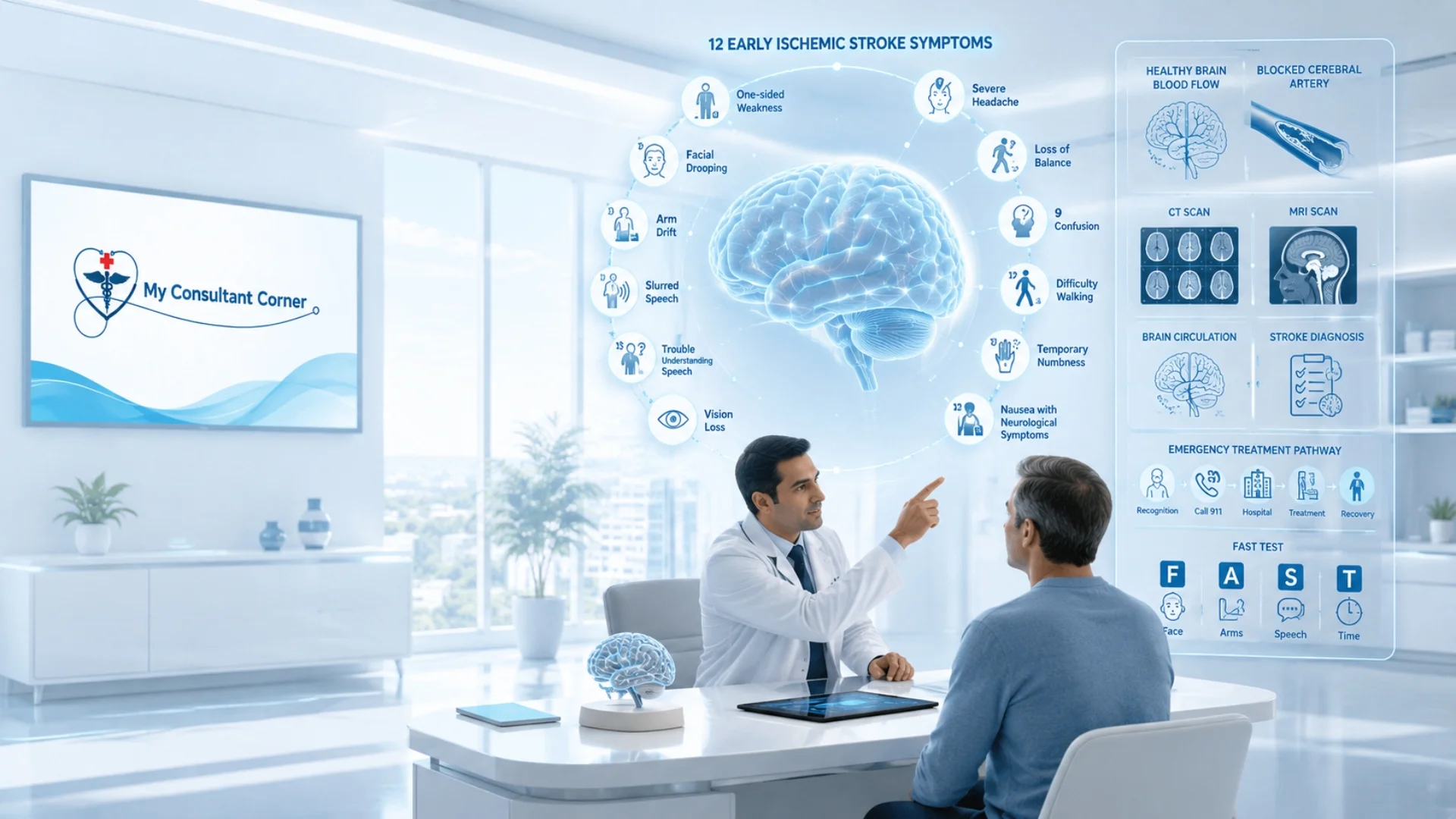
These are the warning signs of ischemic stroke that require immediate attention. Some symptoms occur together, and some occur separately, but any one of them is reason enough to call 911.
1. Sudden numbness or weakness on one side of the body
The most common symptom of ischemic stroke is a sudden loss of feeling or strength, which occurs on only one side of the body—often the face, arm, or leg. This happens because each part of the brain controls the opposite side of the body, so if there is an obstruction on one side, symptoms will occur on the other side.
2. Drooping of the face
One side of the face may suddenly droop, feel numb, or fail to move normally when the person tries to smile. Drooping of the face is one of the three tests used in the FAST test and is often the most visible sign to bystanders.
3. Weakness or drooping of the arms
Ask the person to raise both arms. If one arm droops or cannot be raised at all, this indicates a stroke affecting one side of the brain.
4. Slurred or incoherent speech
Sudden difficulty forming words, slurring speech, or speaking unusually slowly or loudly may indicate that an ischemic stroke is affecting the parts of the brain responsible for language and coordination of movements of the mouth and tongue.
5. Difficulty understanding what others are saying
Some people with ischemic strokes can speak but do not understand what is being said to them, or they respond in words that do not make sense. This is a sign that the area of the brain that processes language has been affected.
6. Sudden loss of vision or blurred vision
Changes in vision, including blurred vision, double vision, or sudden loss of vision in one or both eyes, are common but often overlooked symptoms of ischemic stroke, especially when they are not accompanied by obvious weakness.
7. Sudden, severe headache
A headache that starts suddenly and feels different from any previous headache — often described as “the worst headache of my life” — should never be ignored. While it is usually associated with hemorrhagic strokes, it can also occur with certain ischemic events.
8. Dizziness or imbalance
A sudden inability to walk steadily, an unexplained lack of physical coordination, or a feeling that the room is spinning can be early signs of an ischemic stroke in the brainstem or cerebellum. For more information on other causes of dizziness besides stroke, see Vertigo and Dizziness: 9 Common Causes.
9. Sudden confusion
A sudden change in mental clarity — such as becoming disoriented, forgetting where you are, or having trouble understanding a simple conversation — can be an easily missed sign of an ischemic stroke, especially in the elderly.
10. Difficulty walking
In addition to dizziness, ischemic stroke can cause sudden stumbling, dragging your feet, or difficulty coordinating the steps needed to walk normally without any pain.
11. Occasional numbness or tingling
Symptoms that occur and resolve within a few minutes can also be a serious warning sign. Such symptoms are often the main symptoms of a transient ischemic attack (TIA), which is a short-lived event and often precedes a full-blown ischemic stroke. If you’re experiencing symptoms that come and go, read our full breakdown of TIA warning signs to understand how closely the two conditions are connected.
12. Sudden nausea or vomiting with other symptoms
Nausea alone is not a symptom of stroke, but when it occurs with any of the above symptoms — especially dizziness, confusion, or weakness — it should be immediately alerted to ischemic stroke, rather than dismissing it as a simple stomach problem.

Use the FAST test to detect ischemic stroke
The FAST test is the fastest and most reliable way to detect ischemic stroke in the moment, and it requires no medical training to use.
| Letter | What to Check | What It Means |
|---|---|---|
| F – Face | Ask the person to smile | Is one side of the face drooping? |
| A – Arms | Ask the person to raise both arms | Is one arm drooping or weak? |
| S – Speak | Ask the person to repeat a simple sentence | Is speech slurred, strange, or difficult to understand? |
| T – Time | Write down when the symptoms started | Call 911 immediately — don’t wait or drive yourself |
Some hospitals now teach an extended version, BE-FAST, which adds Balance and Eyes to detect strokes that affect coordination or vision. According to the American Stroke Association, learning and sharing the B.E. F.A.S.T. warning signs of stroke can help save a life. Both versions are effective — the important thing is to act quickly if any of these tests show abnormal results.
Why early action against ischemic stroke saves lives
Treatment of ischemic stroke is largely time-consuming. When a patient gets to the hospital quickly enough, doctors can physically remove the blockage with clot-dissolving drugs or mechanical procedures. Both of these methods are more effective the sooner they are used. The CDC notes that ischemic stroke patients who take clot-dissolving drugs are more likely to recover completely or be less disabled than those who do not take them. They are also less likely to need long-term care in a nursing home.
That’s why a transient ischemic attack, or TIA, should not be ignored just because the symptoms have resolved on their own. A TIA is essentially a precursor to a future ischemic stroke, and ignoring it can miss the opportunity to intervene before something bigger and more serious happens.
Ischemic Stroke vs. Hemorrhagic Stroke
Not all strokes are caused by a blockage in a blood vessel. Understanding this distinction helps explain why the treatments for these two types of strokes vary so much.
| Characteristic | Ischemic Stroke | Hemorrhagic Stroke |
|---|---|---|
| Cause | Arterial blockage (blood clot or plaque) | Ruptured blood vessel |
| Incidence rate | About 87% of strokes | About 13% of strokes |
| Common treatments | Blood clot-dissolving medication, clot removal | Surgery, blood pressure control |
| Major risk factors | High blood pressure, high cholesterol, atrial fibrillation | Uncontrolled high blood pressure, aneurysm |
| Warning signs | Weakness, difficulty speaking, vision changes | Sudden severe headache, vomiting, loss of consciousness |
If you want to manage risk factors related to bleeding in the brain instead of a blood vessel blockage, our Intracerebral Hemorrhage page discusses that condition in more detail.
Who is at highest risk for ischemic stroke?
Certain health conditions and habits significantly increase the risk of ischemic stroke. The most common risk factors include:
- High blood pressure (single leading cause)
- Diabetes
- High cholesterol
- Atrial fibrillation or other heart disease
- Smoking or vaping
- Obesity and a sedentary lifestyle
- Previous stroke or TIA
- Family history of stroke
According to the CDC, high blood pressure is a leading cause of stroke. It occurs when blood pressure in the arteries is too high for a long time, often without any noticeable symptoms. This is one of the reasons why ischemic stroke is so dangerous — the underlying risk factors can build up silently for years before it suddenly occurs. If any of these apply to you, one of the most effective ways to reduce your long-term risk is to see a neurologist right away.
Ischemic Stroke Diagnosis and Treatment
When a person comes to the hospital with possible stroke symptoms, doctors quickly follow a few steps. The goal is to confirm an ischemic stroke and rule out the possibility of a hemorrhagic stroke, as the treatments for both are almost opposite. These usually include:
CT or MRI imaging
A CT scan or MRI shows whether the stroke is caused by a blockage in a blood vessel or a bleed, which determines all subsequent decisions.
Clot-busting drugs (tPA)
When given at the right time after symptoms begin, tissue plasminogen activator (tPA) can dissolve the blood clot and restore blood flow before permanent damage occurs.
Mechanical thrombectomy
For larger blood clots, a specialist can insert a catheter through the blood vessel and physically remove the blockage. This procedure has dramatically improved treatment outcomes for eligible patients.
Long-term preventive treatment
Once the acute stroke is treated, the focus is on preventing another ischemic stroke through blood thinners, blood pressure control, cholesterol control, and lifestyle changes.

Recovery from ischemic stroke
The process of recovering from ischemic stroke is rarely straightforward, and decisions made in the days and weeks following discharge from the hospital have a major impact on long-term outcomes. Physical therapy, speech therapy, and regular follow-up with a neurologist — all of which can help you regain function and reduce your risk of having a second stroke. For detailed guidance on what to do and what to avoid when you return home, see 10 Recovery Tips to Avoid Post-Stroke Pitfalls, which discusses the most common mistakes patients make during recovery.
It’s also important to remember that surviving one ischemic stroke significantly increases your risk of having another stroke. CDC stroke statistics show that approximately 185,000 strokes each year — about 1 in 4 people — occur in people who have had a previous stroke. This statistic alone is a strong argument for continuing treatment under the supervision of a specialist rather than a single follow-up visit.
Why Patients Choose Consultant Corner for Ischemic Stroke Treatment
Recovery from ischemic stroke and prevention of future strokes depend largely on the right specialist involvement from the start. At Consultant Corner, treatment focused on ischemic stroke includes:
Expert Stroke Neurology Evaluation — Evaluation by a specialist experienced in ischemic stroke, TIA, and complex vascular problems, including vascular neurologist and neuro-intensivist Dr. Sakib A. Chowdhury, MD.
Detailed review of imaging and hospital records — a clear explanation of what was seen on the CT or MRI and what it means for long-term health.
Personal Stroke Prevention Plan — A plan that includes a patient’s personal risk factors, medications, lifestyle, and follow-up schedule.
Post-stroke symptom management — Evaluation and treatment of weakness, dizziness, vision problems, memory changes, and speech difficulties.
Same-week appointments — Because worrying about the symptoms of a stroke or TIA should never lead to a waitlist.
You can learn more about this treatment method on our About Us page or learn about all the conditions covered under Our Services.
Two locations, same quality in ischemic stroke treatment
Consultant Corner offers treatment for patients with ischemic stroke, TIA, and related neurological disorders at two locations:
- Consultant Corner (Neurology in Bloomington, Illinois) – Neurologists in Bloomington, Illinois
- Consultant Corner (Neurology in El Paso, Texas) – Health Consultants in El Paso, Texas
No matter where you are in Bloomington or El Paso, both offices offer the same ischemic stroke expertise and same-week appointments.
When should you call 911 for an ischemic stroke?
If you notice the following symptoms, skip the urgent care center and go directly to the emergency department:
- New or worsening weakness
- Sudden difficulty speaking
- Severe, sudden headache
- Lose consciousness
- Repeated vomiting
- Sudden confusion
- Numbness or vision loss on one side of the body
Ischemic stroke is always a medical emergency, even if symptoms seem to be getting better on their own.
Frequently Asked Questions About Ischemic Stroke
What are the main causes of ischemic stroke?
Ischemic strokes are most often caused by a blood clot or fatty plaque buildup, which blocks an artery that supplies blood to the brain and cuts off oxygen to brain tissue.
What is the difference between an ischemic stroke and a TIA?
A TIA or mini-stroke has similar warning signs to an ischemic stroke, but it resolves on its own, usually within minutes to hours, because the blockage is removed before permanent damage occurs. It is also a medical emergency and often a warning sign of a future ischemic stroke.
Is ischemic stroke curable?
If treated quickly enough with clot-dissolving drugs or a clot removal procedure, it is often possible to restore blood flow before permanent damage occurs, which is why it is so important to take action within the first few hours.
What are the long-term effects of an ischemic stroke?
Depending on the size and location of the affected area, its effects can include weakness, difficulty speaking, memory problems, and vision changes. Many patients make significant improvements with therapy and specialist follow-up care.
How can I reduce my risk of ischemic stroke?
Keeping your blood pressure, cholesterol, and blood sugar levels under control, as well as quitting smoking, staying active, and treating conditions like atrial fibrillation, are the most effective ways to reduce your risk of ischemic stroke.
Schedule Your Ischemic Stroke Evaluation
If you have recently experienced a stroke or TIA, or are experiencing new neurological symptoms, the safest next step is to get evaluated by a specialist rather than waiting to see if your condition improves. Consultant Corner helps patients understand their risk, develop a prevention plan, and protect their long-term brain health after an ischemic stroke.
👉 Book your appointment today — call or request an appointment online.