7 TIA (Mini-Stroke) Warning Signs You Should Learn
The warning signs of a TIA are not easy to spot because they disappear almost as quickly as they appear — and that’s exactly why they’re so dangerous. Symptoms like sudden changes in vision, a wave of weakness in one arm, or a sudden inability to speak properly can resolve within minutes and make a person wonder if something has happened. But something has. Recognizing the warning signs of a TIA as soon as they appear, rather than ignoring them after they’ve gone away, is one of the most important things you can do to protect your brain from future strokes.
A transient ischemic attack (TIA), often called a “mini-stroke,” is one of the most important warning signs in neurology. Its symptoms may last only a few minutes, but the risks behind it are very real. Studies have consistently shown that a significant proportion of people who have a TIA go on to have a major stroke, and a large proportion of those strokes occur within the next two days. This narrow time frame is why urgent assessment is so important — not a “wait and see” approach.
At Consultant Corner, we specialize in rapid neurological assessment after a TIA, which can help prevent life-changing strokes. This guide discusses the seven warning signs of a TIA that you should know; why a TIA happens, what causes it, and what to do as soon as symptoms appear — even if they have gone away by the time you read this.
What is a TIA (mini-stroke)?
A TIA occurs when blood flow to a part of the brain is briefly interrupted. This usually happens when a small blood clot forms in an artery and then breaks off or moves away on its own. Unlike a full-blown ischemic stroke, a TIA does not cause permanent tissue damage, so symptoms usually resolve within minutes to an hour. But the underlying problem — such as a blood clot, narrowed artery, irregular heartbeat, or uncontrolled blood pressure — can persist long after symptoms have gone away.
That’s the paradox of a TIA’s warning signs: the body sends a clear signal, then seems to take it back. Many patients feel better within an hour and decide not to seek treatment. This is one of the most common and dangerous mistakes in stroke prevention, because a TIA is actually a signal from the brain that something bigger is about to happen.
Understanding the warning signs of a TIA in advance
Neurologists sometimes describe a TIA as a “warning stroke.” It behaves like a stroke, mimics the symptoms of a stroke, and stems from the same underlying cause as a stroke — the only difference is that it is temporary. This one difference is why many people ignore it.
Why TIA Warning Signs Need Urgent Attention
The statistics behind TIA warning signs are alarming:
- About 1 in 3 people who have a TIA will later have a major stroke.
- About 50% of these strokes occur within the first 48 hours of a TIA.
- The risk remains high for weeks afterward, which is why a well-organized evaluation and prevention plan are just as important as the initial visit.
These statistics explain why both emergency medicine and neurology treat TIAs like active strokes: as a time-sensitive emergency, not as a symptom to monitor at home. According to the National Institute of Neurological Disorders and Stroke (NINDS), the symptoms of a TIA are similar to those of a stroke and usually resolve within an hour, although they can sometimes last up to 24 hours — and without a medical exam, there’s no way to reliably know at that moment whether you’re having a TIA or a full-blown stroke.

7 Warning Signs of TIA You Should Know
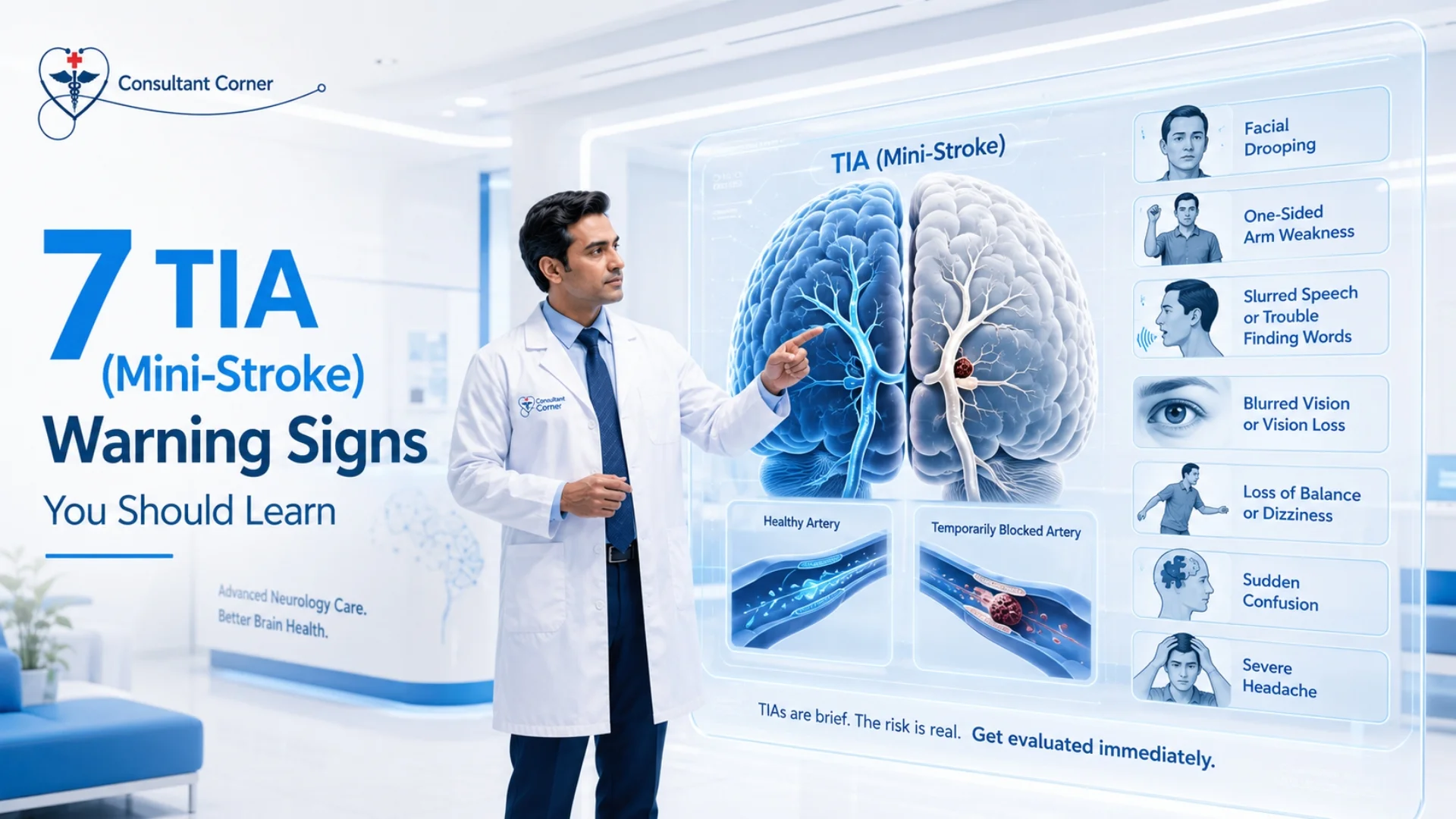
Below are seven major warning signs of TIA, which should prompt you to call for help immediately. The symptoms may only last a few minutes, but no matter how quickly they resolve, consider each one an emergency.
1. Sudden weakness or numbness on one side of the body
This is one of the most easily recognized warning signs of TIA. It usually affects the face, arm, or leg on one side of the body and comes on suddenly for no apparent reason. A drooping face, sudden inability to grasp a cup with your hand, or an unexpected buckling of the leg all fall into this category.
2. Slurred speech or difficulty finding words
Sudden difficulty speaking clearly, understanding what others are saying, or finding the right words in the middle of a sentence is a major neurological warning sign. It often occurs with a drooping face and is one of the quickest ways for bystanders to recognize a possible TIA or stroke.
3. Vision loss, double vision, or temporary blindness in one eye
Sudden changes in vision — such as blurred vision, dimming, double vision, or a loss of vision in one eye — are often overlooked as warning signs of a TIA, as they are often mistaken for pressure in the eye or a migraine aura. When vision changes come on suddenly and resolve just as quickly, they should be given the same attention as any other symptom of a stroke.
4. Dizziness, imbalance, or sudden inability to walk
A sudden loss of balance, a feeling that the room is tilting, or an inability to walk straight may indicate that blood flow to the part of the brain that controls balance has been disrupted. This symptom is sometimes confused with inner-ear vertigo, which is why a proper neurological evaluation is essential — read more about the similarities between the two in our related post Vertigo & Dizziness: 9 Common Causes.
5. Confusion or difficulty understanding speech
Sudden confusion, difficulty following conversation, or not understanding simple instructions can be subtle but important warning signs of a TIA, especially in older adults where confusion is sometimes mistakenly attributed to fatigue or age.
6. Sudden, unexplained headache
A severe headache that starts suddenly without any obvious cause and feels different from a typical headache or migraine can occur with a TIA. If you have recurring headaches and want to understand the difference between a typical migraine and a neurological emergency, it’s worth reviewing the common causes of migraines for comparison.
7. Fainting or loss of consciousness
Some TIAs are accompanied by a brief loss of consciousness or fainting. Since true fainting (syncope) can have many possible causes, it’s important not to dismiss this symptom as harmless — a neurologist can help differentiate between cardiac fainting and neurological fainting. Our related article Syncope and Fainting: 9 Important Facts You Must Know explains the difference in more detail.
Symptoms can last from a few minutes to an hour and then disappear completely — but the danger behind them remains even after they go away.
Quick Reference: Warning Signs of TIA at a Glance
| Warning Sign of TIA | What It May Indicate | Recommended Action |
|---|---|---|
| Weakness/paralysis on one side | Motor pathway disruption | Call 911 immediately |
| Slurred speech | Brain language center disruption | Call 911 immediately |
| Sudden vision loss/double vision | Optic pathway or retina disruption | Call 911 immediately |
| Dizziness/loss of balance | Cerebellum or brainstem disruption | Call 911 immediately; do not drive |
| Confusion | Disruption of blood flow affecting cognitive abilities | Call 911 immediately |
| Sudden severe headache | Possible vascular problem | Call 911 immediately |
| Brief loss of consciousness | Neurological or cardiovascular causes | Get tested urgently |
Why TIAs occur
Understanding what causes the warning signs of TIAs makes it easier to explain why preventive measures should not be limited to going to the emergency department. Common causes include:
- Small blood clots that temporarily block blood flow to the brain
- Carotid artery disease (narrowing of the arteries that supply blood to the brain)
- Atrial fibrillation, an irregular heartbeat that can cause blood clots in the heart
- High blood pressure
- Diabetes and high cholesterol
- Inflammation of the blood vessels
- A history of a previous stroke or TIA
In many ways, a TIA is the body’s “last warning” before a potentially disabling stroke. The CDC’s review of stroke signs and symptoms confirms that, although the symptoms of a TIA are short-lived, they represent a serious underlying condition that will not improve without proper medical management.
Why Consultant Corner treats every warning sign of a TIA as an emergency
Since about one-third of TIA patients subsequently have a major stroke, and since most of this risk is concentrated within the first two days, our approach is based on speed: rapid imaging review, rapid risk factor assessment, and preventive planning within the same week whenever possible.
Why patients trust Consultant Corner after a TIA
Comprehensive neurological assessment
We assess your risk of stroke, review your described symptoms in detail, and create a clear plan for what happens next — not a simple checklist, but a plan tailored to your specific risk factors and medical history.
MRI/CT, carotid imaging, and heart rhythm review
If you have already received treatment elsewhere, we explain your hospital results, or if no tests have been performed, we arrange for appropriate imaging and cardiac studies on an urgent basis. These often include a closer look at risk factors for ischemic stroke, which are directly related to TIA.
Stroke Prevention Plan
The cornerstone of long-term protection after a TIA is optimal use of medications to control blood pressure, cholesterol, and blood clots. This is not a one-time prescription — it is an ongoing plan that changes as your risk factors change.
Personalized lifestyle and risk reduction strategies
Specially tailored guidance on topics such as diet, physical activity, smoking cessation, and chronic disease management can help reduce the risk of future strokes even after the initial visit.
Faster service — same-week appointments
Post-TIA evaluation should never be delayed. Since a significant proportion of strokes following a TIA occur within 48 hours, our priority for scheduling appointments reflects that urgency.
Our priority is simple: stop another stroke before it happens.
Life after TIA: Reducing Long-Term Risk
Recognizing the warning signs of a TIA and getting an urgent evaluation is only the first step. What happens in the weeks and months following a TIA often determines whether a person will have a full-blown stroke or successfully avoid one. This is where an ongoing relationship with a neurologist becomes just as important as the initial emergency visit.
Developing a long-term plan centered around the warning signs of a TIA
A strong post-TIA plan usually includes several layers working together rather than a single prescription. Blood pressure control is often the biggest driver, as high blood pressure is the most common modifiable risk factor associated with both TIA and stroke. Cholesterol management, whether through diet, exercise, or medications like statins, prevents the buildup of plaque that narrows the arteries over time. In patients with atrial fibrillation, blood thinners can significantly reduce the risk of a blood clot forming in the heart and traveling to the brain.
Lifestyle changes are also important, although they may seem less urgent than medications. Quitting smoking, limiting alcohol consumption, closely controlling diabetes, and incorporating regular physical activity — all of these can reduce the risk of recurrent blood vessel problems. None of these changes need to happen all at once.
How follow-up care differs from the initial emergency visit
The purpose of going to the emergency department after the warning signs of a TIA is to confirm that an active stroke has occurred, stabilize the patient, and begin initial testing. It is not intended to manage long-term risk. This is done by specialized neurology follow-up, where imaging results are reviewed in context, medication doses are fine-tuned over time, and any new symptoms — no matter how minor — can be quickly evaluated without a return trip to the emergency department.
Patients who complete a well-organized follow-up plan after a TIA generally have better outcomes than those who receive treatment in the emergency department once and do not return for a specialized visit to reduce risk. If you have recently been discharged from the emergency department after a TIA, scheduling that follow-up quickly — ideally within a few days, not weeks — is one of the most protective steps you can take.

Warning signs of a TIA in a loved one
It’s not just about recognizing the warning signs of a TIA in yourself — friends, family members, and coworkers are often the first to notice the problem, especially when confusion or slurred speech makes it difficult for the person with symptoms to speak for themselves. If someone close to you suddenly experiences a drooping face, slurred speech, weakness on one side of the body, or sudden changes in vision, don’t wait for them to say they’re okay. Call 911, write down the time the symptoms started, and let emergency personnel decide.
When to call 911 immediately for warning signs of a TIA
Call emergency services immediately if symptoms return or get worse, including:
- Sudden weakness
- Slurred speech
- Sudden facial drooping
- Severe headache
- Inability to speak or walk
Even if symptoms last only a few seconds, this is still an emergency. Don’t wait to see if symptoms return and don’t drive yourself to the hospital — call for emergency transportation so that evaluation and treatment can begin as soon as help arrives.
Brain Health Care from Consultant Corner
Consultant Corner is built around a simple idea: neurological care should be accessible, thorough, and focused on early diagnosis rather than crisis management. Patients are treated by Sakib A. Chowdhury, MD, a vascular neurologist and neurointensivist who has extensive experience diagnosing and treating all of the neurological conditions covered in this guide, from stroke and headaches to Parkinson’s disease, epilepsy, and memory problems.
Although this guide focuses on Texas, Consultant Corner’s services in the field of neurological care extend beyond the state’s borders. Patients can also contact Consultant Corner (Neurology in Bloomington, IL), which offers the same quality of care to patients seeking a neurologist in Bloomington, Illinois. Closer to home for many Texas patients, Consultant Corner (Neurology in El Paso, TX) offers the same comprehensive evaluation and treatment as a trusted health consultant in El Paso, Texas.
The goal is the same at each location: accurate testing, effective treatment, and long-term neurological wellness, which identifies problems early rather than reacting to them later.
Frequently Asked Questions about TIA Warning Signs
How long do TIA warning signs typically last?
Most TIA warning signs last from a few minutes to about an hour, although in rare cases, symptoms can last up to 24 hours. This short duration does not make it any less of an emergency — symptoms resolving on their own is not the same as the underlying risk being eliminated.
Can a TIA occur without any obvious symptoms?
TIAs are almost always symptomatic, but the symptoms may be so brief and subtle that people may dismiss them as fatigue, stress, or inner ear problems. That’s why it’s important to know the seven TIA warning signs listed above — recognizing a specific pattern of symptoms early can help you get a life-saving evaluation.
Are TIAs and strokes the same thing?
No. TIAs do not cause permanent damage to brain tissue, whereas a full ischemic stroke does. However, there is no way to reliably distinguish between a TIA and a stroke based on symptoms alone at the time, and both require the same emergency response.
What tests are done to diagnose a TIA?
This evaluation usually includes brain imaging (MRI or CT), carotid artery imaging, and heart rate monitoring to check for atrial fibrillation. Blood tests are also done to check for cholesterol and blood sugar levels, as both are major risk factors.
Can the warning signs of a TIA be prevented from recurring?
In many cases, yes. Lifestyle changes, such as keeping blood pressure, cholesterol, and blood sugar levels under control, taking medications to reduce the risk of blood clots, and quitting smoking, can significantly reduce the chance of having another TIA or a full-blown stroke.
Should I go to the emergency room after a TIA or make an appointment with a neurologist?
If you are currently experiencing symptoms or have recently had them, go to the emergency department or call 911. If you have already been evaluated and discharged from the emergency department, a follow-up appointment with a neurologist is essential to develop a long-term prevention plan.
Don’t wait for a stroke — act as soon as you get the warning signs of a TIA
A TIA is the clearest warning sign that a major stroke is coming. With timely evaluation and proper treatment planning, the risk of stroke can be significantly reduced.
Book your post-TIA evaluation today. Call +1 888 208 2208 or request an appointment online through our contact page.