
Post-Stroke Recovery & Rehabilitation
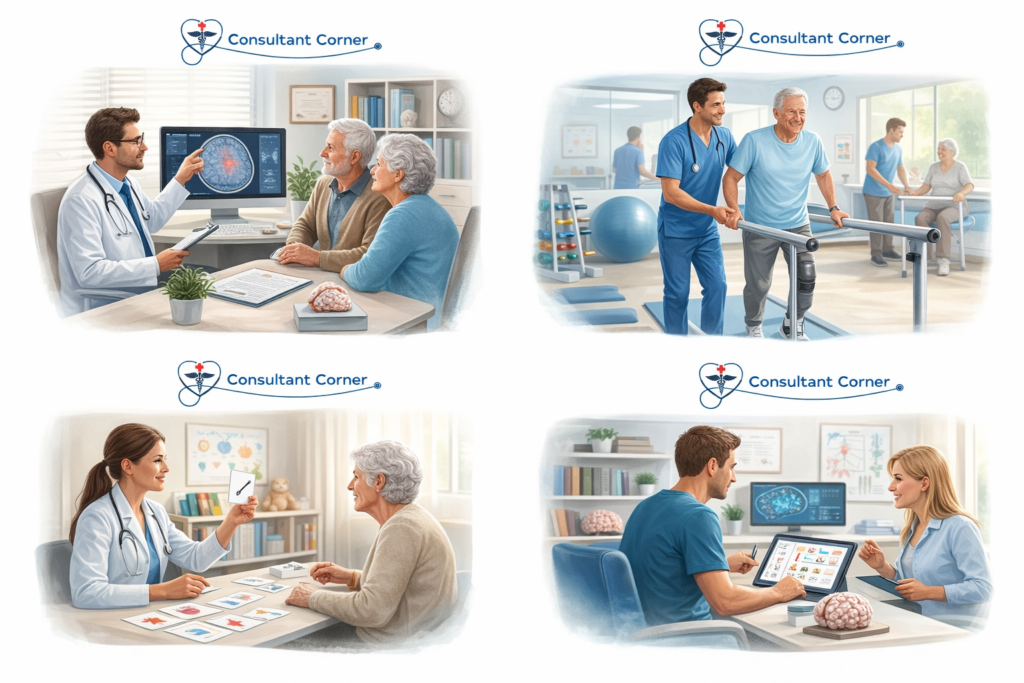
How the Brain Heals and What Truly Drives Recovery A Neurologist-Guided, Patient-Centered Roadmap Stroke Recovery Is a Neurological Process — Not a Waiting Period A stroke is not simply a sudden medical event; it is a neurological injury that disrupts the brain’s ability to control movement, speech, cognition, behavior, and vital bodily functions. Whether caused by an ischemic blockage or an intracerebral hemorrhage, stroke results in acute damage to brain tissue followed by a complex and evolving recovery process. In the United States, nearly 800,000 people experience a stroke each year, making it one of the leading causes of long-term neurological disability. Advances in acute stroke treatment have significantly improved survival. However, survival is only the beginning. What follows is a prolonged and highly individualized process of neurological recovery. For patients and families, this phase is often filled with uncertainty:Will strength return? Will speech improve? How long does recovery take? Is rehabilitation truly effective? From a neurological standpoint, recovery is best understood through two core principles: Stroke recovery is driven by brain plasticity, not time alone Rehabilitation is an active neurological treatment, not supportive care Understanding these principles helps patients and caregivers move forward with clarity, realistic expectations, and hope. How the Brain Heals After Stroke: Understanding Neuroplasticity When a stroke occurs, part of the brain is injured or deprived of blood flow, leading to loss of neurons and disruption of neural networks. Importantly, this injury does not mean the brain is incapable of recovery. Instead, recovery depends on how surviving brain regions adapt over time — a process known as neuroplasticity. What Is Neuroplasticity? Neuroplasticity refers to the brain’s ability to reorganize, strengthen existing connections, and form new neural pathways in response to injury and experience. After a stroke, unaffected areas of the brain can partially assume functions previously handled by damaged regions. This biological adaptability is the foundation of rehabilitation. Crucially, neuroplasticity is activity-dependent. The brain does not reorganize simply with rest or time. Recovery is driven by repetitive, meaningful, task-specific practice, which is why structured rehabilitation is so effective. Early and Late Brain Recovery In the first days to weeks after a stroke, the brain enters a period of heightened plasticity. Swelling subsides, inflammation decreases, and neural signaling stabilizes. During this phase, early improvements may reflect recovery of stunned but viable tissue. While the most rapid gains often occur within the first 3–6 months, recovery does not stop there. Research shows that meaningful improvement can continue for 6–12 months and beyond, particularly when rehabilitation remains progressive and goal-directed. Later recovery often involves: Refinement of motor control rather than large strength gains Improved balance, coordination, and endurance Gradual improvements in language and cognition Development of compensatory strategies that enhance independence The idea that recovery “plateaus” early is often a reflection of reduced therapy intensity or lack of reassessment — not a true limit of neurological potential. Rehabilitation Therapies That Drive Recovery Stroke rehabilitation is not a single therapy or a one-size-fits-all program. It is a multidisciplinary neurological intervention designed to retrain the brain by engaging impaired neural networks repeatedly and purposefully. Physical Therapy: Restoring Mobility and Balance Physical therapy focuses on improving strength, coordination, balance, and gait. Weakness, spasticity, and impaired balance are common after a stroke and significantly affect independence. Through task-oriented and repetitive movement training, physical therapy helps the brain re-map motor pathways, reduce fall risk, and improve functional mobility. Therapy evolves — from basic transfers to higher-level balance, endurance, and community mobility. Occupational Therapy: Regaining Independence in Daily Life Occupational therapy helps patients regain the ability to perform activities of daily living, such as dressing, bathing, eating, writing, and managing household tasks. Stroke often affects fine motor control, visual-spatial processing, and executive function — all critical for daily independence. OT integrates motor, sensory, and cognitive systems, reinforcing purposeful use of affected limbs and promoting functional recovery rather than learned non-use. Speech and Language Therapy: Communication and Swallowing Stroke can affect language (aphasia), speech clarity (dysarthria), cognition, and swallowing (dysphagia). Speech-language therapy addresses: Language comprehension and expression Speech articulation and voice control Cognitive-communication skills Swallowing safety and nutrition Recovery in this domain may be gradual, but meaningful gains can continue long after motor recovery stabilizes. Early swallowing evaluation is essential to reduce aspiration risk and medical complications. Cognitive Rehabilitation: Attention, Memory, and Executive Function Cognitive changes after stroke are common and frequently underrecognized. Patients may struggle with attention, memory, processing speed, or executive skills — even when physical recovery appears strong. Cognitive rehabilitation helps patients develop new strategies to strengthen preserved neural pathways and compensate for deficits. Recovery in this domain often continues later into the recovery process, reinforcing the importance of ongoing reassessment. Early Recovery: The First Weeks Matter — But Don’t Define Everything The first days to weeks after a stroke represent a critical window of opportunity. During this phase, early mobilization and rehabilitation — when medically appropriate — improve functional outcomes and reduce complications. That said, early appearance does not define long-term outcome. Neurologists caution against premature prognostication. Patients may appear severely impaired early on yet make meaningful gains over time, while others with milder strokes may struggle due to secondary complications. Common early challenges include: Fatigue Fluctuating weakness or tone Speech or swallowing difficulty Cognitive slowing or confusion Emotional distress These challenges are common and treatable. Addressing them early improves participation in rehabilitation and long-term outcomes. What Really Predicts Stroke Recovery Recovery is shaped by multiple interacting factors — not a single variable. What Matters Most: Quality, timing, and intensity of rehabilitation Patient engagement and education Ongoing neurological oversight Social and caregiver support Management of medical and neurological complications What Matters Less Than Commonly Believed: Age alone (older adults retain neuroplastic capacity) Early severity as a fixed predictor Arbitrary recovery timelines From a neurologist’s perspective, trajectory over time is far more meaningful than a single snapshot. Cognitive, Emotional, and Behavioral Recovery Physical recovery is often the most visible aspect of stroke rehabilitation, but cognitive and emotional changes can be equally impactful. Cognitive Changes Difficulties with attention, memory, executive function, or visual-spatial processing may affect independence, work, and social engagement. These deficits may emerge
7 Subtle Stroke Signs in Women You Might Be Missing
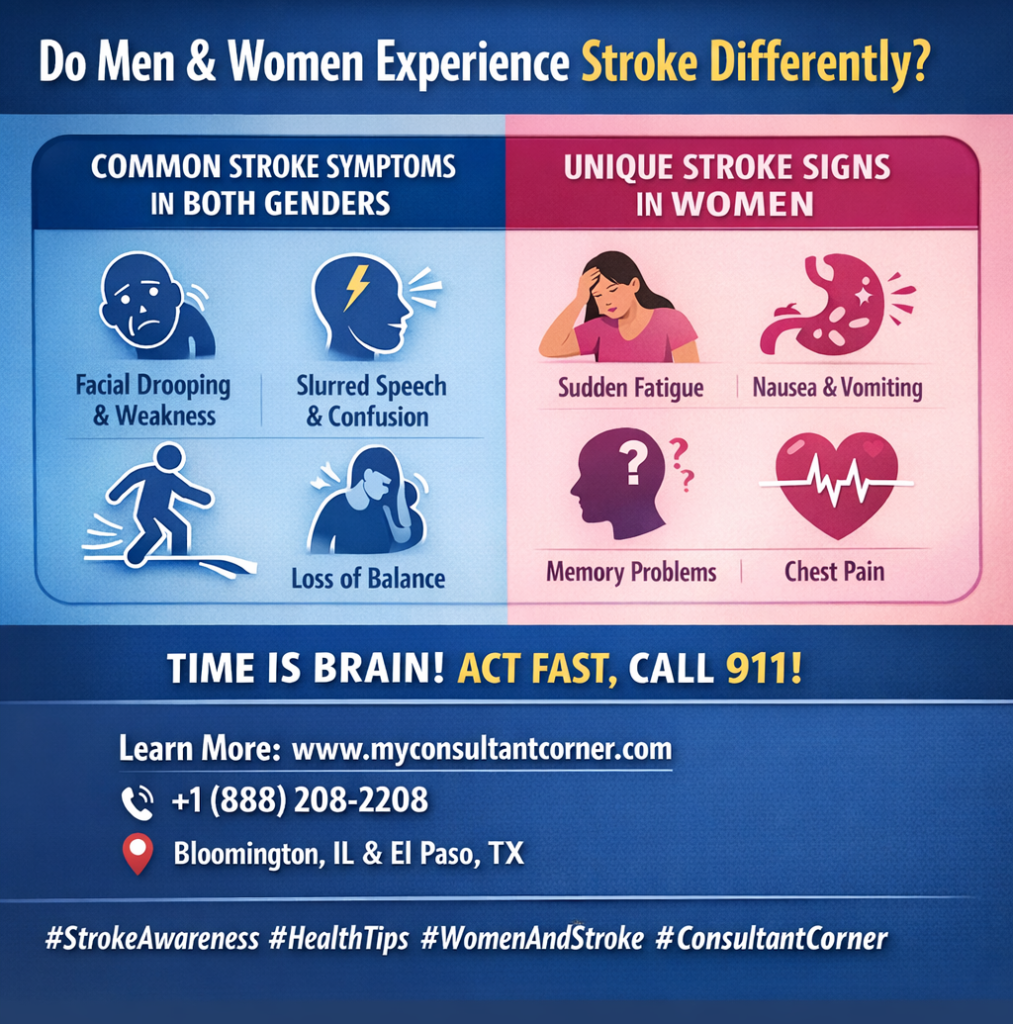
Do Men and Women Experience Stroke Differently? While the core mechanics of a stroke remain the same, clinical data show significant differences in how symptoms manifest based on gender. According to the World Stroke Organization (WSO), women are not only more likely to experience a stroke in their lifetime. Still, they are also 11% more likely to report non-traditional symptoms that lead to delayed diagnosis. Understanding these nuances is vital because every 60 seconds of delayed treatment results in the death of nearly 2 million brain cells. What Common Symptoms Are Shared by Both Genders? In the majority of cases, both men and women will display the “classic” neurological deficits associated with brain cell death. These symptoms are primarily focused on motor skills and sensory processing: Sudden Asymmetry: Drooping of the face, or paralysis of the arm or leg—typically isolated to one side of the body. Cognitive & Sensory Disruptions: Slurred speech, sudden confusion, vision loss, or a severe headache with no identifiable cause. Mobility Issues: Difficulty walking or a sudden loss of balance (the “B” in the BE FAST protocol). Why Are Stroke Signs Frequently Missed in Women? Women are more likely to present with “subtle” or nonspecific symptoms, which are often mistakenly attributed to stress, exhaustion, or other minor ailments. This diagnostic gap is a leading cause of poorer outcomes for female patients. Common “Non-Traditional” Symptoms in Women: Systemic Weakness: A feeling of generalized exhaustion or extreme fatigue that comes on suddenly. Gastrointestinal & Respiratory Signs: Nausea, vomiting, hiccups, or shortness of breath. Altered Mental Status: Disorientation, sudden memory problems, or acting “out of character”. Cardiac Mimics: Chest pain, palpitations, or a racing heartbeat that can sometimes be confused with a heart attack. Which Symptoms Are Relatively More Common in Men? Research suggests men are more likely to exhibit specific coordination and sensory issues. While these are still “classic” signs, they appear with higher frequency in male patients: Ataxia: A sudden, noticeable loss of coordination in the limbs or an unsteady gait. Paresthesia: Distinct sensations of numbness, tingling, or “pins and needles”. Visual Disturbances: Higher reported rates of double vision or sudden dimming of sight in one eye. How Does Gender Affect Treatment Timing and Survival? Feature Statistical Impact on Women Impact on Recovery Recognition Nonspecific signs (nausea, fatigue) lead to frequent misdiagnosis. Delayed treatment. Response Time Women wait an average of 30 to 60 minutes longer to call 911. Increased brain damage. Age of Onset Women typically have strokes at an older age than men. Higher risk of mortality. Disability Risk Women face a higher rate of long-term nursing home placement post-stroke. Reduced independence. When Should You Seek Emergency Help? Regardless of sex, any sudden combination of these symptoms—even if they seem mild or resolve after a few minutes—must be treated as a medical emergency. Call Emergency Services (911): Do not wait for a clinic appointment or try to “sleep it off”. Trust Your Instincts: If a woman reports feeling “not right” combined with sudden fatigue or confusion, seek help immediately. Time is Brain: Accessing clot-busting therapies within the first 3–4.5 hours is the most effective way to prevent permanent disability. Your Recovery Doesn’t End at the Hospital Doors At Consultant Corner, we believe that surviving a stroke is only the beginning. We treat stroke recovery as a continuous journey, not a one-time medical event. Our specialized neurology team offers personalized, data-driven post-stroke care through both convenient virtual consultations and in-person clinic visits. We focus on neuroplasticity, secondary prevention, and restoring your independence. Take the Next Step Toward Healing If you or a loved one needs expert guidance on the path to recovery, our team is ready to support you. Visit: www.myconsultantcorner.com Call: +1 (888) 208-2208 Email: info@myconsultantcorner.com Address: 1404 Eastland Dr, Bloomington, IL 61701, United States Address: 5140 Montana Ave, El Paso, TX 79903, United States
5 Early Stroke Symptoms You Can’t Ignore (2026 Update)

What Are the Main Warning Signs of a Stroke? A stroke happens when blood flow to a part of the brain is interrupted, leading to brain cell damage within minutes. Recognizing the early warning signs can save your life or someone else’s. According to the World Health Organization (WHO), stroke is the second leading cause of death globally, responsible for over 12 million cases every year. Time is critical—knowing the signs and acting fast can reduce the risk of long-term disability and improve recovery outcomes. How Can You Identify Stroke Symptoms Quickly? (Remember: BE FAST) Medical experts use the BE FAST acronym to help people quickly recognize stroke symptoms. Each letter stands for a potential warning sign: B – Balance: Is There Sudden Dizziness or Loss of Coordination? If someone suddenly can’t walk straight, feels dizzy, or loses coordination, it could be an early stroke sign. Research from the American Stroke Association (ASA) suggests that around 40% of stroke patients experience balance problems or sudden dizziness. E – Eyes: Is There Trouble Seeing Clearly? Watch for blurred vision, double vision, or complete vision loss in one or both eyes. About 20% of stroke victims report sudden vision changes, which may appear alongside light sensitivity or visual field loss. F – Face: Is One Side Drooping? Ask the person to smile. If one side droops or feels numb, it’s a red flag. Facial asymmetry is one of the most common early signs of stroke and appears in over 60% of cases according to clinical data. A – Arm: Do the Arms Feel Weak or Numb? Have them raise both arms. If one arm drifts downward or can’t be lifted, that’s a strong indicator of a stroke. This weakness may also affect one leg, typically on the same side. S – Speech: Is the Speech Slurred or Confusing? Speech problems—like slurred words, difficulty understanding, or trouble finding the right words—often signal a stroke. Studies find that nearly 70% of stroke patients present some form of speech impairment at onset. T – Time: Why Is Every Minute Critical? If any of these signs appear, call emergency services immediately. Never wait for the symptoms to improve on their own. Each passing minute can cause an estimated 1.9 million brain cells to die, increasing the risk of permanent brain injury. What Are Other Sudden Symptoms Not to Ignore? Not every stroke follows the same pattern. Some people experience less common, but equally serious symptoms such as: Sudden, severe headache without a known cause—especially if it comes out of nowhere. Loss of consciousness, fainting, or seizure. Nausea, vomiting, or vertigo (a spinning sensation). Sudden confusion or trouble understanding speech. Always treat these as potential emergencies—even if symptoms fade after a few minutes. Why Is Early Recognition of Stroke So Important? When it comes to stroke, every minute truly counts. Each second of delay means more brain cells are lost, and long-term complications become more likely. The World Health Organization (WHO) reports that strokes cause over 6.5 million deaths globally each year, and the risk of severe disability rises sharply with every lost minute of treatment time. In short, the faster a stroke is recognized and treated, the better the outcome. Why Does Fast Action Improve Access to Treatments? Stroke treatments are highly time-sensitive. Clot-busting drugs (known as thrombolytics, such as tPA) and mechanical clot removal procedures must be given within 3 to 6 hours from symptom onset to be most effective. When strokes are recognized quickly: Patients reach CT scans faster, helping doctors confirm the stroke type (ischemic or hemorrhagic). Life-saving therapies can be started sooner, limiting brain damage. Supportive care (like managing blood pressure, oxygen, and glucose) can prevent secondary complications such as brain swelling or infection. In contrast, delayed recognition may mean missing the treatment window entirely, reducing the chance of recovery. How Does Early Recognition Improve Survival and Recovery? Evidence is clear: faster diagnosis leads to better survival and long-term independence. A large-scale study in The Lancet Neurology found that patients treated within the first 90 minutes of a stroke were three times more likely to recover without major disability. Prompt recognition and treatment also mean: Lower mortality rates. Fewer hospital complications, such as blood clots and pneumonia. Greater chances of walking and speaking normally after recovery. Essentially, time to treatment predicts quality of life after stroke. When Should You Go to the ER for a Stroke? If you suspect a stroke—even slightly—call emergency services immediately. Don’t wait to see if symptoms improve, and don’t try to drive yourself. Stroke is a time‑critical medical emergency, and fast action can mean the difference between full recovery and permanent disability. According to the American Heart Association, early treatment within the first few hours can reduce disability by up to 30% and significantly improve survival. The Consultant Corner Approach to Ischemic Stroke At Consultant Corner, we view ischemic stroke as an ongoing recovery process, not a single event. Our neurology team provides personalized post-stroke care through both in-clinic and virtual visits, focusing on recovery, prevention, and long-term brain health. Take the Next Step If you or a loved one is recovering from an ischemic stroke, we’re here to help.Visit www.myconsultantcorner.com, call: +1 (888) 208-2208, or Email: info@myconsultantcorner.com to get started. Address: 1404 Eastland Dr, Bloomington, IL 61701, United States Address: 5140 Montana Ave, El Paso, TX 79903, United States
Syncope & Fainting Spells: Neurological vs Non-Neurological Causes and Expert Care
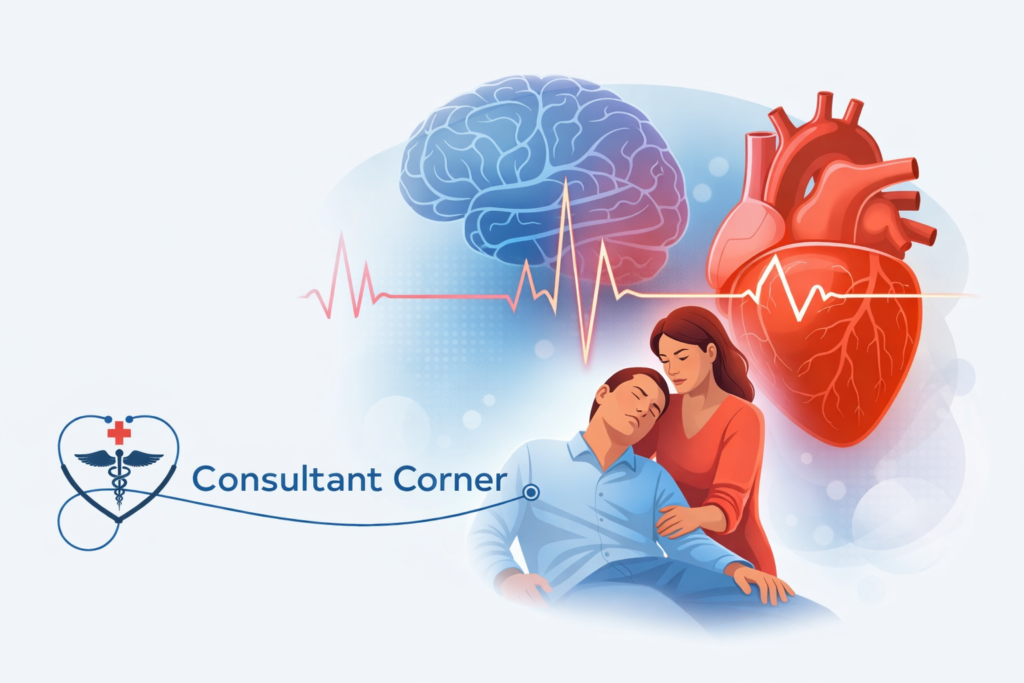
Syncope & Fainting Spells Neurological vs Non-Neurological Causes, Diagnostic Evaluation, and Expert Care A Comprehensive, Patient-Centered Guide from Consultant Corner Passing out—even briefly—is one of the most unsettling experiences a person can have. Patients often describe fainting spells as sudden, unpredictable, and frightening, while families immediately worry about what it might mean: Was it a seizure? A heart rhythm problem? A stroke? That uncertainty is understandable, because “passing out” can represent everything from a benign reflex episode to a potentially life-threatening cardiac condition—or a neurological event that was mistaken for fainting. Clinically, syncope is common and frequently prompts urgent medical evaluation. It accounts for approximately 1–3% of emergency department visits and up to 6% of hospital admissions, highlighting both its prevalence and the challenge of safely identifying high-risk patients. Over a lifetime, at least one-third of individuals will experience syncope, with incidence rising again in older adulthood—precisely the population at greatest risk for injury, medication interactions, autonomic dysfunction, and cardiac disease. In many cases, patients are reassured quickly and discharged without a clear explanation. Sometimes that reassurance is appropriate. In other cases, however, premature diagnostic closure can miss a serious underlying condition or delay appropriate follow-up. The central challenge is that syncope is not a diagnosis—it is a symptom. It reflects a brief, reversible reduction in blood flow to the brain, and the clinician’s task is to determine why that reduction occurred and whether the patient is at risk of recurrence, injury, or sudden deterioration. From a neurologist’s perspective, fainting spells sit at the crossroads of neurology, cardiology, and autonomic physiology. Many events described as “fainting” are not true syncope at all, but rather neurological mimics such as seizures or transient alterations in awareness. At the same time, some of the most dangerous causes are cardiac and may present with little or no warning. The goal of evaluation is to separate neurological from non-neurological causes, identify red flags early, and pursue targeted—not excessive—testing. At Consultant Corner, we approach syncope as a diagnostic problem that deserves clarity, evidence-based reasoning, and individualized care. Whether an episode represents vasovagal syncope, orthostatic hypotension, arrhythmia, seizure, or autonomic dysfunction, our focus is on helping patients understand what happened, what risks matter, and how to move forward safely. What Is Syncope — and Why the Brain Is Central Syncope is defined as a transient loss of consciousness due to temporary, global cerebral hypoperfusion, followed by rapid and complete recovery. In practical terms, fainting occurs when the brain is briefly deprived of sufficient oxygen and glucose to maintain consciousness. Unlike coma or traumatic brain injury, syncope does not involve permanent brain damage; however, it signals a failure in the systems that normally sustain cerebral perfusion. The brain is uniquely sensitive to even small changes in blood pressure and cardiac output. Consciousness depends on tightly regulated interactions between the heart, blood vessels, and autonomic nervous system. When these systems fail—due to sudden hypotension, abnormal heart rhythm, impaired autonomic reflexes, or volume depletion—cerebral perfusion can fall below a critical threshold within seconds, resulting in collapse. What makes syncope challenging is that it represents a final common pathway rather than a single disease. Unlike seizures or strokes, syncope does not originate from intrinsic electrical or structural brain pathology. Instead, it reflects failure of the physiological support systems that maintain brain function. In clinical practice, however, this distinction is often blurred, as neurological disorders may mimic syncope, trigger syncope, or coexist with non-neurological causes. Neurological vs Non-Neurological Causes: Why the Distinction Matters One of the most important steps in evaluating fainting spells is determining whether the underlying cause is neurological or non-neurological. This distinction directly shapes diagnostic testing, treatment decisions, long-term risk assessment, and patient counseling. From a neurologist’s standpoint, the priority is not merely confirming that syncope occurred, but ensuring that neurological conditions are not overlooked, particularly those that masquerade as syncope or present with transient loss of consciousness as a secondary manifestation. At the same time, it is equally important to recognize when fainting is driven by cardiac or systemic disease that carries its own risks. Because symptoms often overlap and witness descriptions are frequently incomplete, fainting spells require a structured, neurologist-led approach that integrates neurological, cardiovascular, and autonomic factors rather than evaluating them in isolation. Neurological Causes and Neurologic Mimics of Syncope Seizures: The Most Clinically Significant Mimic Distinguishing syncope from epileptic seizures is one of the most consequential challenges in evaluation. Both can present with sudden collapse and loss of consciousness, but the safety implications, driving restrictions, employment, and long-term management differ substantially. Seizures arise from abnormal, hypersynchronous electrical activity in the brain and are typically followed by a post-ictal period characterized by confusion, fatigue, headache, or focal neurological deficits. Syncope, in contrast, results from transient cerebral hypoperfusion and is usually followed by rapid recovery once blood flow is restored. In practice, overlap is common. Syncope may be accompanied by brief involuntary movements due to brainstem hypoxia (convulsive syncope), while some seizures may be brief or subtle and lack dramatic convulsions. Because missing a seizure diagnosis carries serious consequences, careful neurological assessment is essential, and EEG or prolonged monitoring may be required when history alone is insufficient. Autonomic Nervous System Disorders and Neurogenic Syncope The autonomic nervous system continuously regulates blood pressure, heart rate, and vascular tone in response to posture, stress, and exertion. Disorders affecting this system can impair the body’s ability to maintain cerebral perfusion, leading to recurrent or unexplained syncope. Neurological conditions associated with autonomic failure include Parkinson’s disease and related neurodegenerative disorders, multiple system atrophy, diabetic autonomic neuropathy, small fiber neuropathies, and other disorders involving peripheral or central autonomic pathways. In recent years, post-viral and post-COVID dysautonomia have emerged as increasingly recognized causes of syncope and orthostatic intolerance, particularly in younger patients without structural heart disease. Neurogenic syncope is often posture-dependent, recurrent, and accompanied by other autonomic symptoms such as heat intolerance, gastrointestinal dysmotility, urinary dysfunction, or abnormal sweating. Diagnosis frequently requires specialized autonomic testing and longitudinal neurological care, rather than episodic reassurance. Structural and Cerebrovascular Neurological Considerations Although uncommon, certain structural or vascular neurological conditions can present with transient loss of consciousness.
Hand Numbness & Carpal Tunnel Syndrome | When to See a Neurologist

Carpal Tunnel Syndrome & Nerve Entrapment Disorders Understanding Symptoms, Diagnosis, and When Neurological Evaluation Matters A Patient-Centered, Evidence-Based Guide from Consultant Corner Numbness, tingling, pain, or weakness in the hands and arms are among the most common neurological complaints encountered in outpatient practice. Patients often describe their hands “falling asleep,” waking at night with burning or pins-and-needles sensations, dropping objects unexpectedly, or struggling with fine motor tasks such as typing, writing, or buttoning clothes. These symptoms can be disruptive, frightening, and persistent — and they often raise an important question: Is this something serious? Carpal tunnel syndrome is frequently the first diagnosis patients encounter when they search for answers online. It is indeed common, affecting an estimated 3–6% of adults, and it represents the most frequent peripheral nerve entrapment disorder. However, not all hand numbness is carpal tunnel syndrome, and not all nerve symptoms originate at the wrist. From a neurologist’s perspective, symptoms involving the hands and arms sit at the intersection of peripheral nerve anatomy, spinal health, systemic disease, occupational factors, and individual anatomy. This complexity explains why nerve entrapment disorders are sometimes dismissed too quickly — or, conversely, overdiagnosed and overtreated. Accurate diagnosis requires careful localization, clinical reasoning, and, in many cases, objective testing. At Consultant Corner, we approach carpal tunnel syndrome and related nerve entrapment disorders with a structured, evidence-based neurological framework designed to provide clarity, reassurance, and appropriate care. Understanding Nerve Entrapment: A Neurological Perspective Peripheral nerves travel long distances from the spinal cord to the muscles and skin, passing through narrow anatomical corridors formed by bones, ligaments, and soft tissue. At certain predictable locations, these nerves are vulnerable to compression. Even modest increases in pressure — due to inflammation, fluid retention, repetitive motion, or structural crowding — can disrupt nerve blood flow and electrical signaling. This process, known as nerve entrapment, typically develops gradually. Early symptoms are often sensory, such as intermittent tingling or numbness. If compression persists, symptoms may become constant and progress to weakness, coordination difficulty, or muscle atrophy. Importantly, symptoms are not always felt at the site of compression, which is why localization based on anatomy — rather than symptom location alone — is central to diagnosis. Carpal Tunnel Syndrome: Common, but Often Misunderstood Carpal tunnel syndrome results from compression of the median nerve as it passes through the carpal tunnel at the wrist. This tunnel is a rigid, confined space, and it has very little capacity to accommodate swelling or structural change. As pressure increases, the median nerve becomes vulnerable to dysfunction. Patients with carpal tunnel syndrome typically experience numbness, tingling, or burning sensations in the thumb, index finger, middle finger, and part of the ring finger. Symptoms often worsen at night or during activities involving sustained wrist positioning. Many patients report relief by shaking or repositioning the hand — a classic feature that reflects temporary restoration of nerve blood flow. As compression progresses, patients may develop weakness of thumb movements, difficulty with fine motor tasks, or frequent dropping of objects. These signs suggest more advanced nerve involvement and warrant timely evaluation. A key anatomical clue is that carpal tunnel symptoms usually spare the little finger, which is supplied by a different nerve. Carpal tunnel syndrome may exist on its own, but it can also coexist with cervical spine disease or generalized neuropathy — a phenomenon sometimes referred to as double crush syndrome. In these cases, symptoms may be more severe or less responsive to isolated wrist treatment, reinforcing the importance of a comprehensive neurological assessment. Other Nerve Entrapments That Mimic Carpal Tunnel Syndrome While carpal tunnel syndrome is the most common diagnosis, many patients referred for “carpal tunnel–like” symptoms ultimately have nerve compression at a different site, or at multiple sites. The ulnar nerve, for example, is frequently compressed at the elbow in cubital tunnel syndrome. This condition typically causes numbness in the ring and little fingers, hand weakness, and symptoms worsened by prolonged elbow flexion or pressure. Compression can also occur at the wrist in Guyon’s canal, producing a different but related symptom pattern. The radial nerve may be compressed in the forearm, leading to pain or weakness of wrist and finger extension, often without prominent sensory symptoms. In the lower extremities, compression of the peroneal nerve near the knee can cause foot drop, while tarsal tunnel syndrome involves compression of the posterior tibial nerve at the ankle, producing burning or tingling in the sole of the foot. These conditions illustrate why accurate localization matters. Treatments that help carpal tunnel syndrome may not improve symptoms caused by ulnar or radial nerve compression, and unnecessary procedures can be avoided with careful neurological evaluation. Neurological, Orthopedic, and Systemic Contributors: Why Symptoms Overlap Hand and limb symptoms do not always arise from focal nerve entrapment. Orthopedic conditions such as arthritis or tendon disease may cause pain and stiffness that limit function but do not follow nerve distributions. Systemic conditions — including diabetes, thyroid disease, vitamin deficiencies, autoimmune disorders, and medication effects — can produce diffuse nerve dysfunction that mimics entrapment. Neurologists differentiate these possibilities by focusing on pattern recognition: nerve-specific sensory changes, reflex alterations, weakness patterns, and progression over time. This distinction is critical because treating a single compression site will not resolve symptoms driven by a systemic process. When Symptoms Should — and Should Not — Raise Concern Many nerve entrapment symptoms are intermittent and reversible, especially early in their course. Tingling that occurs primarily at night, symptoms triggered by certain positions, or discomfort relieved by rest or splinting are often signs of functional nerve compression rather than permanent damage. However, persistent numbness, progressive weakness, visible muscle thinning, or loss of fine motor control warrant earlier neurological evaluation. Rapid progression, involvement of multiple limbs, or symptoms extending beyond a single nerve distribution raise concern for more proximal or systemic conditions. From a neurological standpoint, duration and progression matter more than intensity alone. Early evaluation allows for intervention before nerve injury becomes irreversible. How Nerve Entrapment Is Diagnosed A careful neurological examination remains the cornerstone of diagnosis. By assessing sensation, strength, reflexes, coordination, and muscle bulk, neurologists can often localize nerve
Epilepsy and Seizures: Diagnosis, Treatment, and Quality of Life

What Is Epilepsy and How Can It Change Your Life? Hey there, if you’ve ever wondered about epilepsy, you’re not alone. It’s one of the most common neurological conditions out there, affecting around 50 million people worldwide according to the World Health Organization. In the US alone, about 2.9 million adults live with active epilepsy—that’s roughly 1% of the adult population, per CDC data from 2021-2022. And get this: 1 in 26 people will develop epilepsy at some point in their life. But epilepsy isn’t just about dramatic seizures; it’s a complex brain disorder that touches everything from your daily routine to your long-term health. Let’s break it down in a way that’s easy to follow, like we’re chatting over coffee. Understanding Seizures vs. Epilepsy: What’s the Real Difference? First things first—seizures and epilepsy aren’t the same thing, and mixing them up can lead to confusion. A seizure is like a sudden electrical storm in your brain, often triggered by things like infections, injuries, or even alcohol withdrawal. But epilepsy? That’s when you have an ongoing tendency for unprovoked seizures. Research shows the annual incidence of epilepsy is about 61-68 cases per 100,000 people globally, based on meta-analyses from studies like those in the Neurology journal. If you’ve had just one seizure, it doesn’t automatically mean epilepsy. In fact, rushing to that label could mean unnecessary meds and stress. On the other hand, delaying a diagnosis may leave you vulnerable to additional risks. Think about it: accurate diagnosis helps predict recurrence—studies indicate that after a first unprovoked seizure, the risk of another can be as high as 40-50% without treatment. Why Is Epilepsy Considered a Brain Network Disorder? Epilepsy isn’t about one rogue neuron; it’s a whole network gone haywire. Your brain’s excitability increases, leading to those abnormal syncs. Causes vary—structural issues like strokes or tumors, genetic factors, inflammation, or even unknowns. Data from the Global Burden of Disease Study 2021 estimates 51.7 million people globally deal with this, with a prevalence of around 658 per 100,000. This network view explains why epilepsy looks different for everyone. Some have focal seizures starting in one brain area, while others are more widespread. Personalized care is key because, as research highlights, treating it like a one-size-fits-all just doesn’t cut it. How Do Epilepsy Seizures Really Show Up in Everyday Life? Forget the movie stereotypes—epilepsy seizures aren’t always full-body convulsions. Many are subtle: a brief stare, lip smacking, or that weird déjà vu feeling. Absence seizures in kids might just look like daydreaming, lasting seconds. These can mimic other issues like anxiety or migraines, leading to misdiagnosis. Witness accounts and your own story often tell more than tests. And stats back this: epilepsy affects all ages, but in older adults, new seizures often signal strokes or medication interactions. Early recognition matters because uncontrolled seizures disrupt work, school, and safety. Diagnosing Epilepsy: How Do We Get It Right Over Time? Diagnosing epilepsy is more art than science sometimes—it’s clinical, backed by tools like EEGs and MRIs. A normal EEG doesn’t rule it out, though; up to 50% of people with epilepsy have normal readings between seizures. Genetic tests or video monitoring help in tough cases. The process evolves with follow-ups. Longitudinal studies show that precise diagnosis boosts outcomes, reducing unnecessary treatments and improving life quality. Treating Epilepsy: Why Medication Adherence Is Your Best Friend For most with epilepsy, meds are the go-to. About 70% of people can achieve seizure freedom with proper treatment, per WHO findings. We pick based on your seizure type, age, and lifestyle—considering side effects and even pregnancy plans. But adherence? That’s huge. Missing doses causes breakthrough seizures, a top reason for ER visits. Research from longitudinal cohorts shows 50.5% get seizure-free on the first med, but consistency keeps it that way. Let’s talk openly about side effects; adjusting thoughtfully prevents bigger issues. How Do Anti-Seizure Meds Work in Managing Epilepsy? These meds tweak brain excitability—some block sodium channels to calm firing, others boost calming signals like GABA. Newer ones target multiple paths, expanding options for better control with fewer side effects. Data from 30-year studies: After the first med, about half achieve freedom; second tries bump it up. But lapses drop blood levels, spiking risks. Addressing adherence early avoids labeling as “drug-resistant” prematurely. What Happens with Drug-Resistant Epilepsy and Next Steps? If two meds fail—defining drug-resistant epilepsy, affecting 25-30% per NINDS—don’t just swap endlessly. That’s when specialized centers shine. Early referral cuts side effects and boosts chances. Studies show continued med tweaks alone rarely lead to freedom; advanced options do better. Advanced Epilepsy Treatments: From VNS to Surgery For tough epilepsy cases, tech steps in. Vagus nerve stimulation (VNS) cuts seizures by 50%+ over time, improving mood too. Responsive neurostimulation (RNS) or deep brain stimulation (DBS) disrupts bad activity on demand. Surgery? For focal epilepsy, it offers 70-75% seizure freedom rates, per Yale Medicine research, higher than laser ablation’s 60%. Advances in imaging make it safer, expanding who qualifies. Living with Epilepsy: Boosting Cognition, Safety, and Quality of Life Epilepsy hits more than seizures—it affects your mind, mood, and daily vibe. Quality of life (QoL) scores for people with epilepsy average around 55-60 out of 100, lower than norms, per studies like those in BMJ Open. Factors? Frequent seizures, med side effects, and comorbidities like depression (40% more likely in new diagnoses, AES research). Anxiety, fatigue, and sleep issues are common. Driving bans or job worries add stress, but planning helps. Proactive check-ins maintain independence—data shows better QoL with controlled seizures. Epilepsy Across Your Lifespan: Tailored Care for Every Stage Epilepsy shifts with age. Kids face school hurdles; adults, work and health links; seniors, higher risks from strokes. Age-standardized data from the Lancet show varying burdens, so reassess regularly for safety. Future Advances in Epilepsy Care: What’s on the Horizon? Epilepsy care is booming—high-res imaging, genetics, AI for EEGs, wearables for detection. Research from UCB and others targets refractory cases, aiming for precision. Stats: 75% now control seizures with
How to Achieve the Best Night’s Sleep: Science-Backed Tips That Work

How Can You Achieve the Best Night’s Sleep Possible? Hey there, if you’re tossing and turning at night or waking up feeling like you barely rested, you’re not alone. More than one in three U.S. adults doesn’t get enough sleep, which can lead to serious health issues like increased risk of depression and anxiety. But the good news? With some simple tweaks backed by science, you can unlock the best night’s sleep and wake up energized. Let’s break it down step by step, drawing from research like CDC guidelines and studies from the Sleep Foundation, to make this feel like a chat over coffee rather than a lecture. Why Does a Consistent Schedule Deliver the Best Night’s Sleep? Sticking to the same bedtime and wake-up time every day—even on weekends—is like training your body’s internal clock for peak performance. This aligns with your circadian rhythm, making it easier to drift off and stay asleep. Research from the National Sleep Foundation shows that irregular sleep patterns increase the odds of metabolic syndrome by 23% for every hour of variability in sleep timing. In fact, about 70% of U.S. adults aren’t getting consistent sleep, leading to higher risks of obesity, heart disease, and even poorer mental health. So, pick times that give you 7-9 hours (the sweet spot for most adults, per CDC data), and watch how your energy levels soar. How Can Light Exposure Boost the Best Night’s Sleep? Picture this: starting your day with bright sunlight isn’t just refreshing—it’s a science-backed hack for better rest. Morning light helps strengthen your circadian rhythm, making you feel alert during the day and sleepy at night. Harvard studies emphasize getting natural light early to regulate melatonin, the hormone that signals bedtime. On the other hand, dim the lights in the evening and avoid bright screens, as blue light can reduce melatonin production by up to 50% in some cases. Data shows this simple swap can cut time to fall asleep and increase deep sleep stages. What Makes the Ideal Environment for the Best Night’s Sleep? Your bedroom should feel like a cozy sanctuary, not a cluttered office. Keep it cool—around 60-68°F—as studies from the Sleep Foundation link lower temps to faster sleep onset and fewer wake-ups. Block out light with blackout curtains and noise with earplugs or white noise machines. Research indicates that a quiet, dark space can improve sleep quality by 20-30%, reducing risks like high blood pressure. Don’t forget a supportive mattress and pillows; discomfort is a top culprit for poor rest, affecting up to 25% of adults with chronic sleep issues. How Does a Relaxing Routine Set You Up for the Best Night’s Sleep? Wind down like a pro—think of it as signaling to your brain that it’s time to chill. Spend 30-60 minutes on calm activities like reading or gentle stretching, avoiding thrillers or work emails. A 2013 study found that scents like lavender can calm the nervous system, helping you relax and fall asleep faster. If your mind races, try journaling or deep breathing; techniques like these have been shown to reduce insomnia symptoms by up to 50% in clinical trials. And if you’re still awake after 20 minutes? Get up and do something boring until drowsiness hits—it’s a proven way to avoid associating bed with frustration. Can Exercise Help You Unlock the Best Night’s Sleep? Absolutely—moving your body during the day is a game-changer, but time it right. Regular moderate aerobic exercise, like walking or cycling, is linked to better sleep quality and a 30-50% lower risk of insomnia, according to epidemiologic studies. Aim for activity earlier in the day, as evening workouts can rev you up. Data from chronic exercise research shows it boosts deep sleep stages, improving overall restoration and even mood the next day. What Diet Choices Promote the Best Night’s Sleep? What you eat and drink plays a huge role—skip caffeine after noon, as it can linger and disrupt sleep for hours. Alcohol might knock you out initially, but it fragments rest later, leading to poorer quality, according to Sleep Foundation findings. Opt for light snacks if hungry before bed, avoiding heavy meals that can cause discomfort. Studies show that limiting these can increase sleep efficiency by 10-15%, helping you feel more refreshed. How Do Naps and Screens Impact the Best Night’s Sleep? Short naps (20-30 minutes early in the day) can recharge you without messing up nighttime rest, but long ones? They steal from your sleep drive. As for screens, cut them off an hour before bed—blue light suppresses melatonin, and research ties it to delayed sleep onset in 80% of users. Use night mode or blue-light glasses if you must scroll. Wrapping It Up: Your Path to the Best Night’s Sleep Consistency is your best friend here—start with one or two changes, like a fixed schedule or better light habits, and build from there. If issues persist, chat with a doctor, as conditions like sleep apnea affect millions and can be treated. Prioritizing the best night’s sleep isn’t just nice; it’s essential for health, with data showing it cuts chronic disease risks and boosts mental well-being. Sweet dreams—you’ve got this! When Sleep Problems Persist, Expert Care Matters If you’re experiencing ongoing sleep problems—such as insomnia, excessive daytime fatigue, restless sleep, or suspected sleep disorders—it may be time to seek expert medical guidance. At My Consultant Corner, we provide specialized, patient-centered care led by an experienced Neurologist, focused on identifying the root cause of your sleep concerns and creating an effective, personalized treatment plan. We proudly serve patients in Bloomington, Illinois, and across Texas, offering expert neurological evaluation for sleep disorders in a supportive and professional setting. Don’t let poor sleep affect your health, focus, or quality of life.Take the first step toward better rest and long-term well-being today. 👉 Schedule your consultation with My Consultant Corner now 🌐 Visit: https://myconsultantcorner.com to schedule your sleep‑focused neurology consultation today. 📍 Address: 1404 Eastland Dr, Bloomington, IL 61701, United States 📍 Address:
What Causes Sleep Disorders? 7 Key Reasons (Backed by Science)
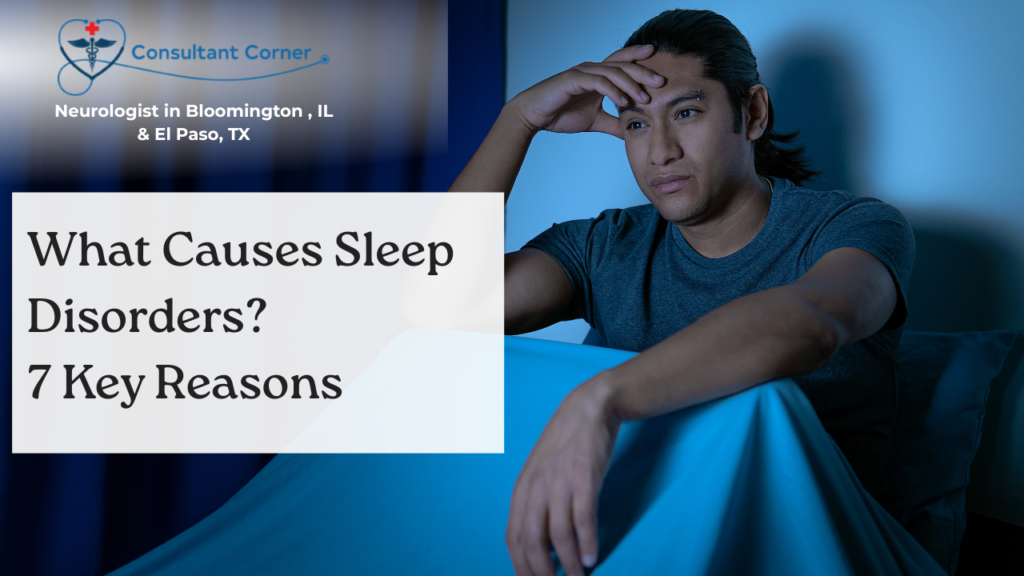
What causes sleep disorders? (And what the research really says) If you’ve ever tossed and turned at night, woken up exhausted, or struggled to stay awake during the day, you’re not alone. Around 50–70 million adults in the U.S. have a chronic sleep disorder, and poor sleep costs the economy an estimated $411 billion a year in lost productivity and health issues (CDC, Sleep Foundation). But what’s really behind sleep disorders? It’s rarely just “stress” or “bad habits.” Real causes run deep — from medical conditions and mental health to genes, meds, and even your bedroom setup. Let’s break it down, with real data and practical insights. What medical conditions cause sleep disorders? Many physical health problems directly mess with your ability to sleep well. In fact, studies show that over 80% of people with chronic pain also suffer from insomnia or disrupted sleep (Mayo Clinic, Sleep Medicine Reviews). Chronic pain (arthritis, back pain, fibromyalgia, migraines) makes it hard to fall asleep and stay asleep. Pain signals keep the brain alert, even when the body is tired. Breathing issues like asthma, COPD, allergies, and sinus problems can cause frequent awakenings, especially at night. Heart and lung conditions (heart failure, atrial fibrillation, COPD) are strongly linked to central sleep apnea, where breathing stops and starts during sleep. Neurological disorders such as Parkinson’s, multiple sclerosis, and stroke often disrupt normal sleep patterns and increase the risk of REM sleep behavior disorder. Obesity is a major driver of obstructive sleep apnea. Research shows that people with a BMI over 30 are 5–10 times more likely to develop OSA than those with a healthy weight (American Academy of Sleep Medicine). Diabetes, GERD, and thyroid issues (like hypothyroidism) also contribute to poor sleep quality and nighttime awakenings. Bottom line: If you have a long‑term health condition, it’s worth asking your doctor, “Could this be affecting my sleep?” How mental health affects sleep disorders Mental health is one of the biggest triggers of sleep problems, especially insomnia. Studies show that: 75–90% of people with depression report trouble sleeping. 50–70% of people with anxiety disorders have chronic insomnia. PTSD sufferers are 2–3 times more likely to have nightmares, insomnia, and sleep apnea (Journal of Clinical Sleep Medicine). Common psychological causes include: Stress and anxiety – Work pressure, money worries, relationship issues, or big life changes can keep the mind racing at night. Depression – Often linked to early morning awakenings, trouble falling asleep, and non‑restorative sleep. Trauma and PTSD – Nightmares, night sweats, and hypervigilance make deep, restful sleep nearly impossible. Bipolar disorder and mood disorders – These often come with irregular sleep patterns, like sleeping too much during depressive episodes or too little during manic phases. The cycle is real: poor sleep worsens mental health, and poor mental health worsens sleep. That’s why treating both together (therapy + sleep hygiene) works best. Medications and substances that disrupt sleep Many common drugs and substances interfere with sleep quality, timing, and depth. Research shows that: Up to 30% of chronic insomnia cases are linked to medications or substances (Sleep Medicine Clinics). 20–30% of people with sleep apnea report worsening symptoms after drinking alcohol. Here’s what to watch for: Prescription meds – Some antidepressants, blood pressure drugs, corticosteroids, and ADHD stimulants can cause insomnia or daytime sleepiness. Over‑the‑counter drugs – Cold and allergy medicines, decongestants, and weight‑loss pills often contain stimulants that delay sleep. Caffeine – Even moderate intake (coffee, tea, energy drinks) after 2–3 PM can delay sleep onset by 30–60 minutes and reduce deep sleep. Alcohol – It may help you fall asleep faster, but it fragments sleep, reduces REM sleep, and worsens sleep apnea. Nicotine and recreational drugs – These act as stimulants and can cause frequent awakenings and lighter sleep. Tip: If you’re on any regular meds and having sleep issues, ask your doctor whether they could be contributing. Lifestyle and schedule habits that cause sleep disorders Your daily routine plays a huge role in whether you develop a sleep disorder. Data shows that: Shift workers are 2–3 times more likely to have insomnia or circadian rhythm disorders. People with irregular sleep schedules (bedtime varying by 2+ hours) are 40% more likely to report poor sleep quality (Sleep Health Journal). Key lifestyle causes: Shift work and jet lag – Working nights or rotating shifts throws off your internal body clock, leading to shift work sleep disorder. Inconsistent sleep schedule – Going to bed and waking up at very different times (even on weekends) confuses your circadian rhythm. Poor sleep hygiene – Using phones/tablets in bed, eating heavy meals late, or exercising too close to bedtime can all make it harder to fall and stay asleep. Simple fix: Aim for a consistent bedtime and wake‑up time, even on weekends, and create a relaxing pre‑sleep routine. Environmental and situational factors behind sleep disorders Your bedroom and life events can trigger or worsen sleep problems. Research shows that: Noise, light, and uncomfortable temperatures are among the top reasons people report poor sleep. Acute stress (job loss, moving, divorce, grief) is a common trigger for short‑term insomnia. Common environmental causes: Noise and light – Street noise, snoring partners, or bright screens can prevent deep sleep and cause frequent awakenings. Uncomfortable sleep environment – A bad mattress, wrong pillow, or room that’s too hot or too cold can make it hard to stay asleep. Life stress and trauma – Big life changes, financial stress, or emotional trauma often lead to short‑term insomnia, which can become chronic if not addressed. Quick wins: Keep the bedroom cool, dark, and quiet. Use blackout curtains, earplugs, or a white noise machine if needed. Avoid screens (phones, TV) at least 30–60 minutes before bed. Genetic and biological causes of sleep disorders Some sleep disorders run in families or are tied to brain chemistry. Science shows that: Narcolepsy is strongly linked to a loss of brain cells that produce hypocretin (orexin), and about 10–25% of people with narcolepsy have a family history. Restless legs syndrome (RLS) has a genetic component; if a parent has RLS, the child’s risk is 3–6 times higher. Circadian rhythm disorders (like
How to Wake a Heavy Sleeper (Science-Backed & Easy Tips)
Why Is Waking a Heavy Sleeper So Hard, Honestly? Okay, first things first — it’s not laziness.When someone is a heavy sleeper, their brain is literally offline in the deepest repair mode. During deep sleep (called Stage N3), the brain produces super slow waves. At this point, even loud alarms, shouting, or shaking can feel like background noise to the brain. It’s doing its thing and does not want interruptions. That’s why some people sleep through alarms as if nothing happened. What’s Actually Going On During Deep Sleep? Here’s the behind-the-scenes stuff: Deep sleep makes up about 25% of total sleep The first deep sleep phase lasts 45–90 minutes It mostly happens in the first half of the night During this time: Heartbeat and breathing are at their slowest Muscles are completely relaxed The brain raises its “ignore everything” shield So yeah… waking someone up here is like trying to boot a laptop during a system update. Are Heavy Sleepers Really That Common? Way more than you’d think. Only about 56% of people get the healthy 7–8 hours of sleep.On top of that, sleep disorders affect millions, and the numbers keep rising. Basically, a LOT of people struggle with poor sleep quality — which makes mornings rough, no matter how early the alarm goes off. So if mornings feel like a daily battle, you’re definitely not alone. Why Does Light Work Better Than Sound for Waking Up? Because light speaks the body’s language 🌅 Gradual light exposure tells your brain: “Hey… morning’s coming… time to wake up.” It boosts cortisol naturally (the good, wake-you-up kind), instead of shocking your system. Sunrise alarm clocks or natural sunlight over 15–30 minutes work beautifully — especially if you’re someone who feels dead in the mornings. No jump scare. Just a smooth wake-up. Are Loud Alarms Actually Making Things Worse? Short answer: yes. Studies show that melodic alarms work way better than harsh beeping.People wake up feeling: More alert Less cranky Less foggy Your sleep cycles run in 90–120 minute loops, so if your alarm hits right in deep sleep, you’ll feel awful no matter how loud it is. Timing + gentle sound > aggressive noise. Why Does Getting Out of Bed Help So Much? Movement flips the “wake up” switch fast. Try this: Put your alarm across the room Force yourself to stand up to turn it off Once your body moves: Blood circulation increases Brain alertness rises Sleep fog starts breaking It’s annoying, yes — but effective. Do Vibrating Alarms Actually Work? Surprisingly… yes. Vibration triggers touch receptors, not hearing.That means your brain can’t just ignore it the way it ignores sound. They’re especially good if: You sleep through noise You’re a super deep sleeper Regular alarms do absolutely nothing Think of it as a physical nudge instead of yelling at your ears. Can Temperature or Touch Help Wake Someone Up? Absolutely. Gentle strategies work best: Light pressure on the shoulders or arms Cool air or opening a window Lower room temperature slightly Your body naturally warms up when waking, so temperature contrast helps signal “okay, time to move.” No drama. Just biology doing its job. Do Smells Really Wake People Up? Yes — and it’s kind of cool. The smell system connects directly to the brain’s alert centers.Fresh air, citrus, or minty scents can gently pull someone out of sleep without shocking them. It’s subtle, but when combined with light or movement, it works surprisingly well. Why Do Abrupt Wake-Ups Feel So Terrible? Because your body panics 😬 Sudden alarms can: Spike stress hormones Jolt the heart Leave you groggy for 30–60 minutes That foggy, zombie feeling?That’s sleep inertia, and it’s strongest when you’re dragged out of deep sleep. Which is why smoother wake-ups feel 10x better. So… What’s the Best Way to Wake a Heavy Sleeper? Best-friend advice?Don’t fight the body — work with it. The magic combo: Gradual light Soft or melodic sound Physical movement Cool air or gentle touch Optional scent boost Together, these gently guide the brain out of sleep instead of ripping it awake. When Heavy Sleeping Signals a Sleep Disorder Occasionally sleeping deeply is normal—but consistently struggling to wake up, sleeping through alarms, feeling mentally foggy for hours, or remaining exhausted despite adequate sleep may point to an underlying sleep disorder rather than “just being a heavy sleeper.” Conditions such as insomnia, circadian rhythm disorders, sleep apnea, hypersomnia, and other neurological sleep disturbances can disrupt normal sleep architecture, keeping the brain stuck in deep sleep or preventing restorative rest. Over time, this can affect concentration, mood, work performance, cardiovascular health, and overall quality of life. How MyConsultantCorner Can Help At MyConsultantCorner, we connect patients with experienced neurology specialists who evaluate sleep-related neurological patterns, identify contributing factors, and develop personalized treatment plans—not just quick fixes. Your care may include: A detailed sleep and symptom assessment Review of sleep schedules, fatigue patterns, and morning inertia Evaluation for neurological or circadian rhythm disorders Guidance on evidence-based behavioral and medical treatments Ongoing support through virtual neurology consultations If waking up feels like a daily struggle, or if deep sleep is interfering with your ability to function, early evaluation can make a meaningful difference. Many sleep disorders are highly treatable once properly identified. Take the Next Step Toward Better Sleep You don’t have to accept exhaustion as normal. If heavy sleeping, morning grogginess, or poor sleep quality is affecting your life, professional neurology care can help you regain balance and clarity. Contact MyConsultantCorner today to schedule a sleep-focused neurology consultation and start working toward healthier, more restorative sleep. 🌐 Visit: https://myconsultantcorner.com 📍 Address: 1404 Eastland Dr, Bloomington, IL 61701, United States📞 Call: +1 (888) 208–2208📧 Email: info@myconsultantcorner.com Expert care. Personalized guidance. Better sleep starts here.
How Do You Get Rid of a Migraine Fast?
How Do You Get Rid of a Migraine Fast? Migraine relief can come quickly with a few targeted steps, but effectiveness varies by person. Here are practical, often-cited approaches you can try right away: What Are Some Quick Relief Strategies for Migraines? Create a Dark, Quiet EnvironmentDim lights or rest in a dark room to reduce sensory triggers. If you’re in a bright or noisy setting, use an eye mask or earplugs. This helps many people calm nervous activity and ease pain. Apply Cold or Warm TherapyA cold pack to the forehead or temples can reduce throbbing for some, while others find a warm shower or neck heat relaxes tense muscles. Experiment to see which feels better for you. Hydration and Light NutritionSip water or an electrolyte beverage; skipping meals can worsen migraines. A small, balanced snack with protein can help stabilize blood sugar. Caffeine in Small AmountsA modest caffeine boost can help some people early in an attack or enhance the effect of nonprescription pain relievers. Avoid excess caffeine to prevent rebound headaches. Over-the-Counter Pain ReliefAcetaminophen, ibuprofen, or naproxen can be effective for many. Take only the recommended dose and consider food to avoid stomach upset. If you have frequent migraines or medical conditions, check with a clinician before using these regularly. Gentle Neck and Scalp MassageMassage temples, the base of the skull, and neck muscles to relieve muscle tension that can accompany migraines. Slow, Deliberate BreathingPractice deep breathing—inhale for 4 seconds, hold for 4, exhale for 6. This can reduce sympathetic arousal and ease pain. Ginger or Other Anti-Nausea AidsIf nausea accompanies the migraine, ginger tea or ginger capsules may help some people. When Should You Seek Medical Help for a Migraine? If the migraine is unusually severe, lasts longer than 72 hours, or is a first-time event with atypical features. If you experience weakness, confusion, fever, stiff neck, slurred speech, or loss of coordination. If you have frequent or very disabling migraines, or if OTC measures don’t help, see a healthcare professional for a personalized plan, which may include prescription medications or preventive therapy. What is the Quick-Reference Comparison for Migraine Relief? Environment Changes (Dark, Quiet Room) vs. Pharmacologic Relief (OTC Meds): Both can reduce pain quickly, but environment changes are universally accessible and carry minimal risk. Cold Pack vs. Warm Compress: Cold is often cited for throbbing, warm for tense necks; select based on what feels better for you. Caffeine Use: Can help early in attacks or boost OTC meds, but risks dependence or rebound headaches if overused. Need Help with Your Migraines? If your migraines are frequent or disabling and over-the-counter remedies aren’t helping, it’s time to seek professional care. Schedule an appointment with our specialists at MyConsultantCorner today to explore advanced treatments and get relief that works for you. Call MyConsultantCorner now to get personalized care and take control of your migraine pain. Our team is here to help you find the best solution for lasting relief. Don’t wait—start your journey toward a life without migraines today! 🌐 Visit: https://myconsultantcorner.com 📍 Address: 1404 Eastland Dr, Bloomington, IL 61701, United States📞 Call: +1 (888) 208–2208📧 Email: info@myconsultantcorner.com
Biggest Cause of Migraines: Genetics, Stress & Brain Sensitivity
What Is the Biggest Cause of Migraines? The biggest underlying cause of migraines is a genetic predisposition that makes the brain more excitable and sensitive to internal and external triggers. This inherited sensitivity means the nervous system reacts more strongly to everyday changes such as stress, sleep disruption, or hormonal fluctuations, leading to migraine attacks. Rather than having one single cause, migraines usually develop when a genetically sensitive brain is exposed to specific triggers. Is Migraine Primarily a Genetic Condition? Yes, migraine is strongly influenced by genetics. Research and family studies show that around 60% of migraine susceptibility is inherited, which explains why migraines often run in families. People who inherit migraine-related genes tend to have: Increased baseline brain excitability Over-responsive pain pathways A lower threshold for triggering head pain This genetic setup makes the brain more likely to react intensely to changes that would not affect someone without migraine susceptibility. How Does Brain Sensitivity Lead to Migraine Pain? In migraine-prone individuals, the brain’s pain networks are easier to activate. Genes linked to migraine are thought to affect how nerve cells communicate, especially within pain pathways such as the trigeminovascular system. Because of this heightened sensitivity: Minor stimuli can trigger severe pain Sensory signals (light, sound, smell) are amplified Pain pathways remain active longer during an attack This explains why migraines are often intense, long-lasting, and accompanied by nausea or sensory sensitivity. What Are the Most Common Everyday Migraine Triggers? Triggers do not cause migraines on their own; they activate an already sensitive nervous system. Why Is Stress the Most Common Trigger? Stress is one of the most frequently reported migraine triggers, particularly sudden changes in stress levels. Many people experience migraines: During stressful periods After stress ends (“let-down” migraines) Stress affects brain chemicals, sleep patterns, and muscle tension, all of which lower the migraine threshold. What Other Daily Triggers Commonly Set Off Migraines? 8 Common Daily Triggers That Set Off Migraines: Lack of sleep or irregular sleep schedules Skipping meals or fasting Dehydration Bright or flickering lights Strong smells Weather or barometric pressure changes Alcohol consumption Excess caffeine or caffeine withdrawal Each trigger slightly lowers the brain’s tolerance until a migraine attack is initiated. Why Do Hormones Play Such a Big Role in Migraines? Hormonal fluctuations, especially changes in estrogen, are a major migraine trigger for many women. Migraines often worsen: Around menstruation During perimenopause With hormonal contraceptive changes Estrogen directly influences pain pathways and brain excitability. When estrogen levels drop, the brain becomes even more sensitive, making migraine attacks more likely during certain phases of the hormonal cycle. What Happens in the Brain During a Migraine Attack? Migraine is a neurological process, not just a headache. What Is Cortical Spreading Depression? In many people, particularly those with migraine aura, a wave of electrical and chemical activity spreads across the brain’s cortex. This phenomenon, called cortical spreading depression, can: Trigger aura symptoms Activate pain-sensitive structures Start inflammation in the meninges How Does This Lead to Migraine Pain? Once activated, the trigeminovascular system becomes sensitized. This results in: Throbbing head pain Sensitivity to light, sound, and touch Nausea and vomiting The longer this system remains activated, the more severe and prolonged the migraine becomes. Is There One Single Cause of Migraines? No. Migraines almost never have one single cause. They occur due to a combination of inherited brain sensitivity and multiple triggers acting together. The same trigger may cause a migraine one day and not another, depending on sleep, stress, hormones, and overall brain load. How Can You Identify Your Biggest Migraine Triggers? Because migraines are highly individual, identifying personal triggers is essential. Keeping a migraine diary can help track: Stress levels Sleep patterns Meals and hydration Hormonal cycles Environmental exposures Recognizing patterns allows better prevention strategies and helps guide medical treatment when needed. Key Takeaway: What Is the Biggest Cause of Migraines? The biggest cause of migraines is an inherited migraine-prone nervous system, with triggers like stress, sleep disruption, and hormonal changes determining when attacks occur. Managing migraines effectively means addressing both: The underlying neurological sensitivity The personal triggers that push the brain past its threshold Take Control of Your Migraines — Get Expert Neurology Care Today Migraines Affect More Than Your Head Living with migraines isn’t just about headaches—it’s about missed workdays, disrupted family time, anxiety over the next attack, and constantly planning your life around pain. When migraines interfere with your ability to think clearly, work productively, or enjoy everyday moments, it’s a sign that you need more than short-term relief. Personalized Neurology Care That Looks at the Whole Picture At MyConsultantCorner, we connect you with experienced neurology specialists who focus on identifying the root cause of your migraines—not just suppressing symptoms. Our care is tailored to you, whether you’re dealing with chronic migraines, visual changes, vestibular symptoms, hormonal triggers, or migraines that haven’t responded to standard medications. What Your Migraine Evaluation May Include We believe migraine care should never be one-size-fits-all. Your consultation may involve: A detailed review of your symptoms and migraine history Trigger identification and pattern analysis Medication review and optimization Preventive strategies, including CGRP therapies or Botox when appropriate Practical guidance on lifestyle factors that truly influence migraine control Most importantly, we take the time to listen—because effective migraine treatment starts with understanding your experience. Why Early Specialist Care Matters If your migraines are becoming more frequent, more intense, or harder to manage, waiting can allow them to progress into a chronic, disabling pattern. Early care from a neurology specialist can: Reduce the number of migraine days Improve focus, productivity, and quality of life Help prevent long-term migraine progression You don’t have to plan your life around migraines. With the right expert care, better control is possible. 👉 Schedule your neurology consultation today and take the first step toward fewer migraine days, better symptom control, and a clearer path forward. 🌐 Visit: https://myconsultantcorner.com 📍 Address: 1404 Eastland Dr, Bloomington, IL 61701, United States 📍 Address: 5140 Montana Ave, El Paso, TX 79903,
Are Migraines a Good Reason to Skip a Meeting?
Are Migraines a Good Reason to Skip a Meeting? Yes. A true migraine is generally a valid medical reason to miss or leave a meeting—especially when symptoms are severe enough that you cannot see clearly, think straight, tolerate light or sound, or prevent nausea or vomiting. Migraines are not “just headaches.” They are a neurological condition that can temporarily disable normal functioning. When Is It Reasonable to Skip a Meeting Due to a Migraine? Skipping a meeting is reasonable when migraine symptoms are functionally disabling, including: Moderate to severe head pain Nausea or vomiting Sensitivity to light or sound Visual disturbances or aura Brain fog or slowed thinking Migraine attacks commonly last 4–72 hours, and many people require a dark, quiet environment or medical treatment. This makes attending meetings—especially screen-based or high-focus ones—unsafe or unrealistic. Workplace research consistently shows migraine is a leading cause of: Sick leave Presenteeism (being present but unable to perform) Forcing attendance during severe attacks often worsens symptoms and leads to more lost work overall. Is Migraine a Legally Recognized Reason to Miss Work or Meetings (U.S.)? Yes, in many cases. Does Migraine Qualify Under FMLA? Under the Family and Medical Leave Act (FMLA), migraine may qualify as a serious health condition if it: Requires ongoing medical care, or Causes episodic incapacity This distinguishes migraine from ordinary tension headaches. Is Migraine Covered by the ADA? Migraines can meet the Americans with Disabilities Act (ADA) definition of a disability when they substantially limit activities such as: Working Thinking Seeing Walking This supports reasonable accommodations like: Leaving meetings early Skipping meetings during attacks Flexible scheduling Remote participation How Should You Communicate Skipping a Meeting Due to Migraine? Many people feel pressure to downplay migraines, but medical and advocacy guidance recommends being clear and factual. What’s the Best Way to Say It? Effective communication usually includes: Stating you are experiencing a migraine attack Clarifying it’s a medical condition, not a routine headache Proposing alternatives (reschedule, send notes, follow up later) Should You Inform HR or a Manager in Advance? If migraines are recurrent: Have an advanced conversation with your manager or HR Consider a brief doctor’s note Establish expectations for last-minute cancellations or early exits This prevents repeated explanations and reduces stigma. When Should You Still Attend a Meeting If You Can? In some situations, attendance may be possible if symptoms are mild and manageable. What Accommodations Can Help You Attend? Camera off Dimmed screen or reduced brightness Shortened meetings Frequent breaks Audio-only participation What About High-Stakes Meetings? For critical meetings (e.g., disciplinary hearings or essential negotiations), some people attend in a reduced role, then leave if symptoms escalate. However, repeatedly forcing attendance during severe attacks is linked to: Increased migraine frequency Higher long-term disability Greater overall work disruption Medical guidance favors protecting health first. What Are the Key Takeaways for Migraine and Meetings? A severe, documented migraine is a medically and legally valid reason to skip or leave a meeting Planning with HR or management simplifies communication Tracking migraine frequency and impact helps guide treatment and accommodations Frequent meeting absences may signal the need for better preventive care or workplace adjustments Take Control of Your Migraines With Expert Neurology Care If migraines are forcing you to miss meetings, cancel plans, or push through pain just to get through the day, it’s a sign your condition deserves expert attention—not dismissal. Migraines are a real neurological disorder, and effective treatment starts with the right evaluation. At Consultant Corner, our experienced neurologists specialize in diagnosing and treating migraines that interfere with work, focus, and quality of life. We take the time to understand your symptoms, triggers, and how migraines affect your daily responsibilities. From personalized treatment plans and preventive therapies to documentation for workplace accommodations when needed, we’re here to support you every step of the way. You don’t have to “power through” another attack or wonder whether your migraines are serious enough to seek care. Early, targeted treatment can reduce attack frequency, improve productivity, and help you regain confidence in your day-to-day life. 👉 Schedule your neurology consultation today athttps://myconsultantcorner.com/
Botox for Chronic Migraine | How It Works, Benefits & Eligibility
What Is Botox for Chronic Migraine? Botox (onabotulinumtoxinA) is an FDA-approved treatment for chronic migraine, a condition defined as 15 or more headache days per month, with at least 8 having migraine features. Botox treats chronic migraine by injecting small, controlled doses into specific muscles of the head, neck, and shoulders every 12 weeks to reduce headache frequency and severity. How Does Botox Work for Chronic Migraine? Botox works by blocking pain signaling pathways, not by simply relaxing muscles. It inhibits the release of acetylcholine at nerve endings and reduces inflammatory neurochemicals such as CGRP, which play a key role in migraine pain. By acting on sensory nerves, Botox prevents pain signals from reaching the brain’s pain centers. Treatment follows a standardized protocol from the PREEMPT clinical trials, targeting 31 injection sites across the forehead, temples, back of the head, neck, and shoulders. Rather than masking symptoms, Botox helps interrupt central sensitization, the process that drives chronic migraine. How Long Does Botox Take to Work? Initial improvement may begin after the first treatment Most patients see meaningful benefit after 2–3 treatment cycles (about 6 months) Maximum benefit often appears by the third cycle, as the migraine cycle is gradually broken Botox is a preventive treatment, so consistency is key. How Effective Is Botox for Chronic Migraine? FDA-approved since 2010 for chronic migraine Clinical trials show an average reduction of 8–9 headache days per month About 50% of patients achieve at least a 50% reduction in headache frequency after two treatment cycles Long-term studies show sustained benefit for 5 years or longer Reduces disability, emergency visits, and overuse of acute pain medications Botox is especially effective for patients who have not responded to 2–3 oral preventive medications. Who Is a Good Candidate for Botox? You may be a candidate if you: Have chronic migraine (15+ headache days/month) Have tried and not tolerated or benefited from oral preventive medications Keep a headache diary documenting frequency and severity Are treated by a neurologist or headache specialist Botox is not approved for episodic migraine (fewer than 15 headache days per month). What Is the Botox Treatment Process Like? Performed in an outpatient setting Takes 10–15 minutes No anesthesia or recovery time needed Patients return to normal activities the same day Side effects are uncommon and usually mild: Temporary neck soreness Mild headache after injections Eyelid drooping in less than 5% of patients Side effects tend to decrease with repeated treatments. Monitoring Results and Long-Term Use About 70% of patients benefit in the long term Around 30% may discontinue due to limited response Effectiveness is monitored using headache diaries and quality-of-life improvements Treatment is typically continued if there is: ≥50% reduction in headache days or Significant functional improvement Botox is considered safe, cost-effective, and well-tolerated when used long-term, especially with insurance coverage. Can Botox Be Combined With Other Migraine Treatments? Yes. Botox is often combined with: Acute migraine medications (triptans, gepants) Lifestyle modifications Physical therapy for neck involvement CGRP-targeted therapies for partial responders A neurologist can tailor combination therapy for optimal results.
How Are the Neck, Jaw, and Nerves Connected to Migraines?
How Are the Neck, Jaw, and Nerves Connected to Migraines? Neck, jaw, and nerve-related migraines usually involve irritation of shared pain pathways between the trigeminal nerve (which supplies the face and jaw) and the upper cervical nerves (C1–C3) in the neck. Because these nerves converge in the brainstem, problems in one area can trigger or worsen migraine attacks rather than acting as separate conditions. What Role Does the Trigeminal Nerve Play in Migraine Pain? The trigeminal nerve is the primary sensory nerve of the face, jaw, teeth, and front of the head, and is a central pathway in migraine. When activated, it releases pain-mediating chemicals such as CGRP (calcitonin gene-related peptide) that drive migraine inflammation and sensitivity. This is why migraine pain may be felt around the eyes, temples, jaw, teeth, or face—even when the origin is neurological rather than dental or muscular. Why Does Neck Pain Often Occur With Migraines? Sensory fibers from the upper cervical spine (C1–C3) and the trigeminal nerve converge in a brainstem region called the trigeminocervical nucleus. This overlap allows pain signals from the neck to be interpreted as head pain and vice versa. Because of this shared pathway: Neck muscle tension, joint dysfunction, or poor posture can lower the migraine threshold Neck pain may act as a trigger, prodrome, or part of the migraine itself Is Neck Pain a Symptom of Migraine or a Separate Headache? Many people with migraine experience neck pain as an early warning sign or during the attack itself, not just as muscle soreness. However, a condition called cervicogenic headache originates directly from the cervical spine and has different features: Neck stiffness and reduced range of motion Pain worsened by specific neck movements or pressure Less nausea and light/sound sensitivity compared to migraine Overlap is common, and some patients have both migraine and cervicogenic headache, which is why evaluating posture, neck mobility, and muscle tenderness is important for treatment planning. Can TMJ or Jaw Problems Trigger Migraines? Yes. Temporomandibular joint (TMJ) disorders can contribute to migraines by causing muscle tension, inflammation, and nerve irritation around the jaw. TMJ-related issues may: Refer pain to the temples, face, and head Increase central sensitization Trigger or worsen migraine attacks in susceptible individuals Research shows people with TMJ disorders have a higher risk of migraines. Treating jaw dysfunction—through splints, jaw physiotherapy, bite correction, and relaxation techniques—can reduce headache frequency in some patients, especially when combined with migraine-specific treatment. How Is Trigeminal Neuralgia Different From Migraine Pain? Trigeminal neuralgia (TN) is a separate neurological condition involving damaged or compressed trigeminal nerve fibers. Key differences include: TN pain is brief, electric shock–like, and lasts seconds It is triggered by talking, chewing, or light touch Migraine pain lasts hours to days, is throbbing, and often includes nausea, light sensitivity, and fatigue People with migraine with aura may have a higher risk of developing trigeminal neuralgia, so new, sharp, electric facial or jaw pain should always prompt neurological evaluation. How Are Neck-, Jaw-, and Nerve-Related Migraines Evaluated? When neck or jaw symptoms are prominent, clinicians typically: Take a detailed headache and pain history Perform neurological and musculoskeletal exams Rule out conditions such as trigeminal neuralgia, TMJ disorders, cervicogenic headache, or dental issues Order imaging when red flags or atypical features are present Proper diagnosis ensures treatment targets both the migraine and its contributing triggers. What Treatments Help When Neck or Jaw Issues Worsen Migraines? Management often combines multiple strategies, including: Migraine-specific medications (triptans, CGRP blockers, preventives) Physical therapy for posture, neck mobility, and muscle dysfunction Dental or TMJ interventions when indicated Ergonomic adjustments and stress reduction Sleep optimization and clenching avoidance This multimodal approach is often more effective than treating migraines alone. When Should Neck or Jaw Pain With Migraine Be Urgently Evaluated? Seek urgent medical assessment if you experience: Sudden electric or stabbing facial pain New severe one-sided neck pain with neurological symptoms Rapid or unexplained change in headache pattern Weakness, numbness, or vision changes These symptoms may indicate structural, nerve, or vascular conditions that require prompt care. Struggling With Migraines Linked to Neck or Jaw Pain? If your migraines are worsening with neck stiffness, jaw tension, facial pain, or nerve symptoms, it’s time for a neurological evaluation. At Consultant Corner, our neurologists specialize in identifying migraine triggers involving the trigeminal nerve, cervical spine, and TMJ pathways—so treatment targets the root cause, not just the pain. 👉 Speak with a neurologist and get a personalized migraine plan today.🌐 https://myconsultantcorner.com/
What Is Ocular Migraine? Vision Changes & Migraine Types
What Is an Ocular Migraine? An ocular migraine, also known as retinal migraine, is a rare subtype of migraine that causes temporary visual disturbances in one eye, often followed by a headache.It is different from typical migraine aura, which affects both visual fields and originates in the brain rather than the eye. Ocular migraines are usually short-lived and reversible, but because they involve temporary vision loss, proper evaluation is important to rule out more serious conditions. Learn More: Migraine Headaches: Causes, Symptoms, Types, and Treatment Options Key Symptoms of Ocular Migraine Visual symptoms typically affect only one eye and may include: Blind spots (scotoma) Flashing or flickering lights Zigzag or shimmering patterns Partial or complete vision loss in one eye Symptoms usually: Last 5–60 minutes Resolve completely May be followed by a migraine headache Associated headache symptoms (when present) can include: Throbbing head pain Nausea or vomiting Sensitivity to light Fatigue Some people experience visual symptoms without any headache. What Causes an Ocular Migraine? Ocular migraine is thought to result from temporary spasms or reduced blood flow in retinal blood vessels or the optic nerve. Risk Factors & Triggers Triggers often overlap with general migraine triggers, including: Stress or emotional strain Dehydration Hormonal changes Caffeine or alcohol Bright or flickering lights High blood pressure Family history of migraine (genetic factors play a role in ~50% of cases) Learn More : Migraine Headaches: Causes, Symptoms, Types and Treatment Options Ocular Migraine vs Migraine Aura: What’s the Difference? Feature Ocular Migraine Migraine Aura Affects One eye Both visual fields Origin Retina / optic nerve Brain (visual cortex) Vision loss Monocular Binocular Rarity Rare Common (25–30%) Understanding this distinction is important for diagnosis and safety. When Should You Seek Medical Care? Most ocular migraines resolve without lasting harm. Urgent evaluation is needed if: Vision loss lasts longer than 60 minutes Symptoms occur frequently Vision loss is sudden and severe Symptoms are accompanied by: Weakness Speech difficulty Confusion New neurological symptoms These signs require evaluation to rule out stroke, TIA, or retinal conditions. How Is Ocular Migraine Diagnosed? Diagnosis is based on: Detailed symptom history Eye examination Neurological evaluation when needed A neurologist or ophthalmologist may be involved to ensure accurate diagnosis and exclusion of serious causes. Management & Treatment Options Treatment focuses on trigger control and prevention. Lifestyle Management Stay well hydrated Maintain regular sleep and meals Manage stress Avoid known triggers Medications Over-the-counter pain relievers for headache relief Preventive medications (e.g., beta-blockers) for frequent episodes Keeping a migraine diary helps identify patterns and triggers. What Is a Silent Migraine? A silent migraine, also called migraine aura without headache, involves typical migraine aura symptoms without head pain. Common Symptoms Visual disturbances (flashing lights, zigzag lines, blind spots) Tingling or numbness Speech difficulty Dizziness Fatigue or brain fog afterward (postdrome) Diagnosis focuses on ruling out stroke or TIA, especially for new or atypical episodes. What Are Dizziness and Vertigo Migraines? Vestibular migraine causes dizziness or vertigo linked to migraine processes, even without head pain. Key Symptoms Spinning or falling sensation Motion sensitivity Nausea Balance problems A headache may or may not be present It is one of the most common causes of recurrent vertigo. Management Regular sleep and meals Hydration and stress control Preventive migraine medications Vestibular rehabilitation therapy Migraine With Vision Changes: What Does It Mean? Most migraine-related vision changes are due to migraine aura, affecting both eyes’ visual fields. Common Visual Features Shimmering zigzag lines Flashing lights or sparkles Blind spots or tunnel vision Distorted or wavy vision Symptoms typically: Last 5–60 minutes Resolve fully Are followed by headache in many cases When Vision Changes Are an Emergency Seek immediate care for: Vision loss lasting over 60 minutes Sudden one-sided blindness Vision loss with weakness or speech difficulty When to See a Neurologist You should seek specialist care if you experience: Recurrent visual disturbances New or worsening migraine symptoms Vision changes with neurological symptoms Uncertainty between ocular migraine and aura A neurologist can confirm the diagnosis, guide treatment, and reduce future risk. Get Expert Neurology Care for Migraines — From Consultant Corner Whether you’re experiencing ocular migraines, silent migraines, vertigo, or visual aura, you don’t have to manage it alone. Consultant Corner provides modern, patient-centered neurology care to help you move forward with confidence. 📞 Phone: +1 (888) 208-2208📧 Email: info@myconsultantcorner.com🌐 Website: https://myconsultantcorner.com/ 👉 Speak With a Neurologist About Your Migraine Symptoms Today
Migraines Explained: Causes, Triggers & Neurology Care
Can Stress Cause Migraines? Yes. Stress is one of the most common migraine triggers, but it is usually a trigger rather than the root cause. Migraine itself is a neurological disorder, and stress tends to set off attacks in people who are already susceptible. How Are Stress and Migraines Linked? Studies show that 70–80% of people with migraine report stress as a trigger. Both: High stress, and The “let-down” period after stress (such as weekends or after exams/work deadlines) are associated with increased migraine risk. Stress alters brain chemicals and pain-processing pathways, lowering the brain’s threshold for migraine activation. Repeated or severe stress may also contribute to the transition from episodic migraine to chronic migraine in some individuals. Does Stress Directly Cause Migraines? Current evidence shows a strong association but not a simple cause-and-effect relationship. Stress does not “create” migraine in people without the condition, but it can: Trigger attacks Worsen severity Increase disability A vicious cycle often develops: migraines increase stress, which in turn promotes more migraines. Does Weather Change Cause Migraines? Yes, weather changes are a commonly reported migraine trigger, though scientific evidence shows variability between individuals. Common Weather-Related Migraine Triggers Reported triggers include: Barometric pressure drops (storms) High humidity Extreme heat or cold Bright sunlight Windy conditions Surveys suggest over one-third of migraine sufferers notice weather-related attacks. Research has shown, for example, a 26.5% increase in migraine odds with rising humidity in warmer months. What Does Research Say? Large reviews show that: Weather changes can increase migraine frequency and severity in some people Effects vary by location, season, and individual biology Weather often acts in combination with stress, sleep disruption, or dehydration Tracking personal patterns is more reliable than assuming universal sensitivity. Does Alcohol Cause Migraines? Alcohol is a frequent migraine trigger, but it does not cause migraine as a disease and affects only about 30–35% of people with migraine. How Alcohol Triggers Migraines Alcohol may trigger migraines through: Dehydration (diuretic effect) Blood vessel expansion Inflammation via histamines Breakdown into migraine-provoking metabolites Darker drinks (especially red wine) are most often reported due to congeners, sulfites, and biogenic amines. How Common Is Alcohol as a Trigger? ~30–35% report alcohol as an occasional trigger Only ~10% report consistent triggering Red wine is the most common, but beer and spirits may also trigger attacks Low to moderate intake may not affect everyone and, in some studies, showed no clear association. Can Certain Foods Cause Migraines? Yes, certain foods can trigger migraines, but they usually affect 10–30% of people and rarely act alone. Common Food Triggers Frequently reported triggers include: Aged cheeses (cheddar, blue, Parmesan) Cured/processed meats (nitrates) Chocolate Caffeine Artificial sweeteners (aspartame) MSG Fermented or pickled foods Alcohol (especially red wine) Skipping meals or irregular eating can further lower blood sugar, increasing vulnerability. Why Do Foods Trigger Migraines? Trigger foods may: Alter serotonin levels Promote inflammation Affect nitric oxide signaling Increase dehydration Evidence is mostly self-reported, and individual variation is high, so blanket food avoidance is not recommended. Can Heat or Cold Trigger Migraines? Yes. Extreme heat or cold can trigger migraines in susceptible individuals, often as part of broader weather sensitivity. How Heat Triggers Migraines Heat can contribute by: Causing dehydration Increasing glare and light sensitivity Disrupting sleep Raising stress hormones like cortisol Emergency visits for migraines increase during hot, humid conditions, though tolerance varies. How Cold Triggers Migraines Cold exposure may trigger migraines through: Blood vessel constriction Neck and facial muscle tension Dry indoor air from heating Reduced sunlight affects serotonin Sudden temperature changes and winter barometric shifts may amplify risk. Can Hormonal Changes Trigger Migraines? Yes. Hormonal fluctuations—especially estrogen changes—are major migraine triggers, particularly in women. Menstrual Migraines: Up to two-thirds of women with migraine experience attacks around menstruation due to estrogen drops. These migraines are often: More severe Longer lasting Less responsive to treatment Some women experience pure menstrual migraines, occurring only during periods. Pregnancy, Postpartum & Menopause: Pregnancy: Migraines often improve mid-pregnancy Postpartum: Rapid estrogen drop may worsen migraines Perimenopause: Irregular estrogen fluctuations can increase frequency Menopause: Symptoms often stabilize and improve Hormonal Medications Birth control pills or hormone therapy with estrogen withdrawal (pill-free weeks) may trigger migraines. Continuous formulations may help some individuals. How Can You Manage Trigger-Related Migraines? Practical, Evidence-Based Strategies Keep a migraine diary (stress, sleep, weather, food, hormones) Maintain regular sleep and meals Stay well hydrated Use sunglasses and glare protection Practice stress-reduction techniques Consider CBT, mindfulness, or biofeedback Discuss preventive medications if triggers cause frequent attacks Because triggers often combine, management is most effective when medical and lifestyle strategies are used together. When to Seek Medical Advice If migraines become: Frequent Severe Disabling Unpredictable Or if triggers are difficult to control, a neurologist can help identify patterns and build a personalized prevention plan. Speak With a Neurologist About Your Migraines If stress, weather, hormones, or lifestyle triggers are causing frequent or severe migraines, expert neurological care can help. Migraines are a medical condition, and identifying patterns early can prevent attacks from becoming chronic or disabling. At MyConsultantCorner, our neurologists evaluate migraine triggers, confirm diagnosis, and create personalized treatment plans to reduce frequency, severity, and long-term impact. 👉 Schedule a neurology consultation today🌐 https://myconsultantcorner.com/
Alzheimer’s Disease: Early Signs, Brain Changes, Modern Treatments & Comprehensive Memory Care
A patient-centered guide- from Consultant Corner Alzheimer’s disease is the most common cause of dementia worldwide and one of the fastest-growing public health challenges of our time. More than 6.7 million Americans are currently living with Alzheimer’s disease, and that number is projected to rise sharply over the coming decades as the population ages. Despite its prevalence, Alzheimer’s disease is still widely misunderstood, frequently underdiagnosed, and often identified later than it should be. Many families dismiss early symptoms as “normal aging,” while others delay evaluation because of fear or uncertainty. However, research and clinical experience consistently show that early recognition, early diagnosis, and early intervention can improve outcomes, providing more time to plan, reducing avoidable complications, and allowing eligible patients to access modern treatment strategies sooner. At Consultant Corner, we believe Alzheimer’s care should be proactive, personalized, and compassionate. Through expert neurology care, cognitive testing coordination, caregiver education, and virtual neurology access, we help patients and families navigate memory concerns with clarity and confidence. 🧬 What Is Alzheimer’s Disease? Alzheimer’s disease is a progressive neurodegenerative disorder that gradually damages brain cells and disrupts the networks responsible for memory, learning, reasoning, and behavior. Unlike temporary forgetfulness or reversible cognitive conditions, Alzheimer’s causes ongoing brain changes that worsen over time. 🧠 What Happens in the Brain (Pathophysiology) Alzheimer’s disease is closely associated with two abnormal protein processes that interfere with normal brain function: · Amyloid‑beta plaques: Sticky protein fragments accumulate between neurons (brain cells), disrupting communication and triggering inflammation. · Tau protein tangles: Abnormal tau builds up inside neurons, damaging the internal “support structure” and leading to cell dysfunction and death. As these proteins accumulate and spread, the brain experiences loss of synapses (connections), reduced neurotransmitter signaling, and progressive shrinkage (atrophy) of key regions, especially the hippocampus, which is crucial for forming new memories. Over time, these changes impair the brain’s ability to store new information, retrieve details, regulate emotions, and perform complex tasks. Importantly, Alzheimer’s-related brain changes can begin years (sometimes decades) before noticeable symptoms appear, which is why early evaluation and baseline cognitive testing can be so valuable. 🚨 Early Signs of Alzheimer’s Disease Alzheimer’s disease often begins subtly. Symptoms may appear mild at first and can be mistakenly attributed to stress, sleep problems, depression, or normal aging. But early changes represent a crucial window for evaluation, when education, safety planning, risk factor optimization, and treatment decisions can make a meaningful difference. Short‑term memory loss that disrupts daily life (forgetting recent conversations or appointments) Repeating questions, statements, or stories without realizing it Word-finding difficulty or trouble following conversations Struggling with finances, medications, or multi-step tasks Getting lost in familiar places or increased disorientation Changes in judgment, problem-solving, or decision-making Withdrawal from social activities, hobbies, or work responsibilities New or worsening anxiety, depression, irritability, or apathy As Alzheimer’s disease progresses, symptoms can expand to include confusion about time or place, changes in personality or behavior, visual‑spatial problems, hallucinations or delusions, difficulty with basic daily activities, and increased dependence on caregivers. Important: Not all memory problems are Alzheimer’s disease. Depression, sleep disorders, vitamin deficiencies, thyroid issues, medication side effects, hearing loss, and other neurological conditions can mimic dementia, which is why expert evaluation matters. 🧠 How Alzheimer’s Disease Is Diagnosed Accurate diagnosis requires a structured, multidimensional approach-not just a single memory screen. A high-quality evaluation looks for reversible causes, identifies patterns of cognitive change, and clarifies whether symptoms fit Alzheimer’s disease or another condition. A comprehensive memory evaluation may include: Detailed neurological exam and review of symptoms over time Medical history (including medications) and family history Cognitive screening tools as an initial assessment Formal neuropsychological testing for deeper, domain-specific evaluation Laboratory testing to rule out reversible contributors (e.g., vitamin deficiencies, thyroid dysfunction) Brain imaging (MRI or CT) to evaluate structural brain changes and rule out other causes Advanced biomarkers (when appropriate) to support diagnostic clarity and treatment planning 🧠 Neuropsychological Testing: Why It’s So Helpful Neuropsychological testing is one of the most valuable tools in modern memory care. It provides a detailed map of brain function across multiple domains, such as memory, attention, language, executive function, processing speed, and visual‑spatial skills. This helps clinicians: Differentiate Alzheimer’s disease from other dementias and cognitive disorders Establish a baseline to track progression over time Identify strengths that can be leveraged for daily functioning Guide personalized treatment, safety planning, and caregiver education Through virtual neurology, Consultant Corner can help coordinate early memory evaluations, testing referrals, and longitudinal follow-up-even for patients who have difficulty traveling. 💊 Current & Emerging Treatments for Alzheimer’s Disease While there is not yet a cure for Alzheimer’s disease, today’s treatment strategy is more robust than ever. Modern care focuses on three pillars: symptom-targeted medications, disease-modifying therapies for appropriate patients, and comprehensive supportive care. 1️⃣ Symptomatic Medications (Cognition & Function) Traditional FDA-approved medications are commonly used to support memory and daily functioning. These may help stabilize symptoms for some patients and slow functional decline: · Cholinesterase inhibitors (e.g., donepezil, rivastigmine, galantamine) — support acetylcholine signaling important for learning and memory · NMDA receptor antagonist (memantine) — helps regulate glutamate signaling, which can influence cognition and behavior 2️⃣ Disease‑Modifying Therapies (A New Era of Memory Care) In recent years, disease‑modifying therapies targeting amyloid‑beta have changed the Alzheimer’s landscape. These therapies aim to slow progression in select patients, typically those in earlier symptomatic stages and with appropriate biomarker confirmation. Because these treatments can require careful monitoring and shared decision‑making, a neurology-guided evaluation is essential. Not every patient is a candidate — selection depends on stage, overall health, and testing results Treatment often requires ongoing monitoring and follow-up Risk-benefit discussions should include patients and caregivers Consultant Corner helps patients and families understand candidacy, coordinate evaluations, and build a safe, realistic long-term plan. 🌱 Beyond Medications: Comprehensive Alzheimer’s Care The most effective Alzheimer’s care goes beyond prescriptions. Comprehensive care focuses on maintaining independence, reducing complications, and supporting caregivers. This may include structured routines, cognitive stimulation, environmental modifications, and managing medical conditions that can worsen cognition (sleep
Migraine Headaches: Causes, Symptoms, Types & Treatment Options
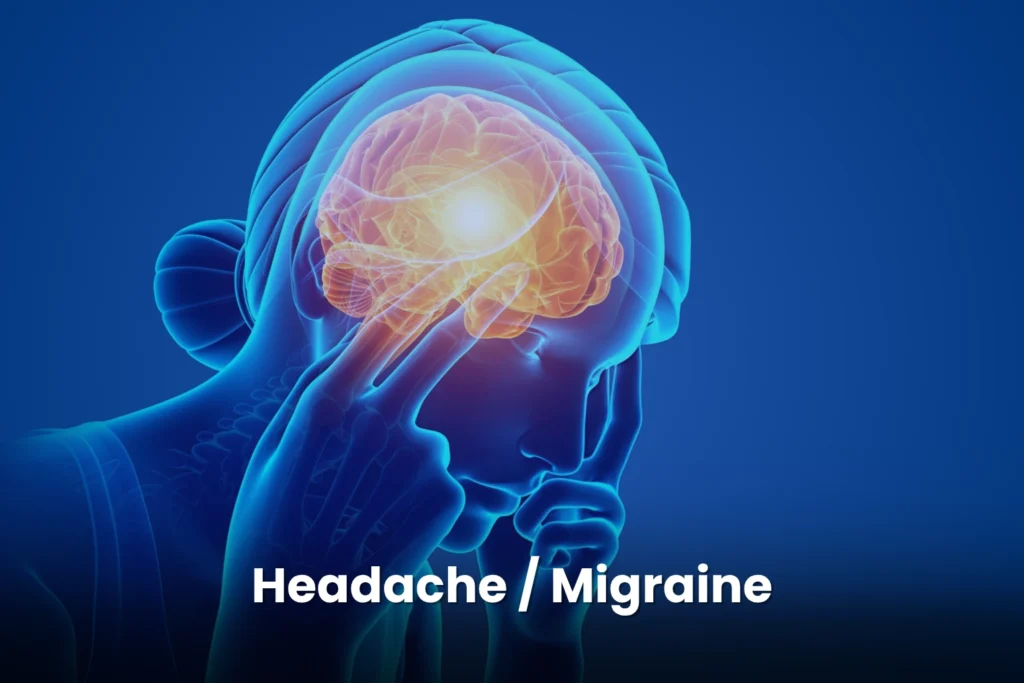
What Is a Migraine? A migraine is a complex neurological disorder marked by repeated episodes of moderate to severe head pain, often throbbing or pulsating. Pain usually affects one side of the head but can occur on both sides and typically lasts from several hours up to three days. Migraines are commonly accompanied by nausea, vomiting, and sensitivity to light, sound, and smell, making daily activities difficult or impossible during an attack. How Do Migraines Affect the Brain? Migraines are more than headaches. They involve changes in nerve signaling, brain chemicals, and blood vessels. Pain is believed to result from inflammation of the dura mater (the membrane between the brain and skull) and activation of pain-sensitive nerves in the brain’s protective layers. These neurological changes explain why migraines cause intense pain along with widespread physical and cognitive symptoms. What Is a Migraine Aura? Some people experience an aura, which consists of temporary neurological symptoms that occur before or during a migraine attack. Aura may include: Visual disturbances (flashing lights, zigzag lines, blind spots) Tingling or numbness in the face or limbs Speech or language difficulties Not everyone with migraines experiences aura, and its presence varies between individuals. What Symptoms Occur Beyond Head Pain? Migraines often cause symptoms beyond head pain, including: Mood changes Extreme fatigue Brain fog Digestive issues Certain rare types, such as hemiplegic migraine, can cause temporary weakness or paralysis on one side of the body, which can mimic a stroke but is usually reversible. What Is the Difference Between Episodic and Chronic Migraine? Migraine is a long-term neurological condition that can be episodic or chronic: Episodic migraine: Fewer headache days per month Chronic migraine: 15 or more headache days per month, with at least 8 having migraine features Chronic migraine significantly affects quality of life and daily functioning. What Are the Most Common Migraine Symptoms? Common migraine symptoms include: Intense, throbbing head pain (usually one-sided) Nausea and vomiting Sensitivity to light (photophobia) Sensitivity to sound (phonophobia) Sensitivity to smells (osmophobia) Pain typically lasts 4–72 hours and can interfere with work, school, and daily life. What Symptoms Can Occur Before, During, or After a Migraine? Additional symptoms may appear at different stages of a migraine attack: Mood changes Difficulty concentrating Fatigue Frequent yawning Food cravings Some individuals experience aura symptoms such as visual changes, tingling, or speech difficulty. What Other Body-Wide Symptoms Can Migraines Cause? Migraines may also cause: Dizziness or vertigo Neck and shoulder pain Sinus pressure or ear pain Increased urination Sensitivity to touch or temperature Gastrointestinal symptoms (stomach pain, diarrhea, constipation) Symptom combinations and severity vary widely between individuals. What Are the Phases of a Migraine Attack? Migraine symptoms often occur in phases: Prodrome: Early warning signs (fatigue, mood changes, food cravings) Aura: Temporary neurological symptoms (when present) Headache phase: Severe pain and associated symptoms Postdrome: Lingering fatigue, brain fog, or mood changes Not everyone experiences every phase. What Types of Migraines Exist? 1. Migraine Without Aura The most common type, featuring moderate to severe one-sided headaches lasting 4–72 hours with nausea and light/sound sensitivity. 2. Migraine With Aura Includes temporary neurological symptoms such as visual, sensory, or speech disturbances before or during the headache. 3. Chronic Migraine Headaches on 15 or more days per month, with at least 8 migraine days. 4. Vestibular Migraine Characterized mainly by dizziness, vertigo, and balance problems, with or without head pain. 5. Hemiplegic Migraine A rare migraine with aura causing temporary weakness or paralysis on one side of the body. 6. Migraine With Brainstem Aura Includes brainstem symptoms such as vertigo, slurred speech, and double vision—without motor weakness. 7. Abdominal Migraine More common in children, causing abdominal pain, nausea, and vomiting. 8. Menstrual Migraine Triggered by estrogen fluctuations during the menstrual cycle. Learn More: What Is Ocular Migraine? Vision Changes & Migraine Types What Causes Migraines? Migraines result from a complex interaction of neurological, vascular, genetic, and environmental factors. A key mechanism is nerve inflammation in the dura mater, leading to altered pain signaling and blood flow. Genetics plays a major role, as migraines often run in families. Learn More: Migraines Explained: Causes, Triggers, and Neurology Care What Are Common Migraine Triggers? Hormonal & Lifestyle Triggers Menstrual cycle, pregnancy, menopause Stress Irregular sleep Skipping meals Physical exertion Sensory & Environmental Triggers Bright or flickering lights Loud noises Strong smells Weather or barometric pressure changes Dietary Triggers Alcohol (especially wine) Caffeine Aged cheeses Processed foods Artificial additives Often, multiple triggers combine to provoke an attack. How Are Neck, Jaw, and Nerves Related to Migraines? Neck-, jaw-, and nerve-related migraines often involve the trigeminal nerve, which supplies sensation to the face, jaw, and head and connects with blood vessels and meninges. Irritation of this nerve can cause pain in the eyes, temples, jaw, or neck. How Are TMJ Disorders Linked to Migraines? TMJ disorders can trigger migraines because the trigeminal nerve supplies the jaw. TMJ inflammation or dysfunction can: Cause jaw or ear pain Trigger migraines Increase migraine frequency through central sensitization How Does Neck Pain Contribute to Migraines? Cervical nerves (C2–C4) connect with the trigeminal nerve at the brainstem, allowing pain signals to overlap. Poor posture, muscle strain, or cervical spine issues can worsen migraines or mimic conditions like cervicogenic headache or occipital neuralgia. What Treatment Options Are Available for Migraines? Migraine treatment focuses on stopping attacks and preventing future episodes. What Medications Treat Acute Migraines? NSAIDs (ibuprofen, aspirin) Acetaminophen Triptans Gepants Anti-nausea medications What Medications Prevent Migraines? Beta-blockers Antidepressants Anticonvulsants CGRP inhibitors How Does Botox Treat Chronic Migraine? Botox is FDA-approved for chronic migraine and involves 31 injections every 12 weeks. It blocks pain signaling and reduces migraine frequency by approximately 50% in responders, with effects typically starting within 2–3 weeks. What Is Infusion Therapy for Migraines? Infusion therapy delivers medication intravenously for severe or refractory migraines. Options include: DHE Ketorolac Antiemetics Preventive infusions like eptinezumab (Vyepti) are given every 12 weeks. When Do Migraines Become a
Head Injury & Concussion Care | Early Neurology Evaluation
Head Injury & Concussion Care Head injuries are far more common than most people realize—and even what seems like a “mild” injury can disrupt brain function, trigger neurological symptoms, and impact long-term cognitive and emotional health. Whether your head injury came from a car accident, fall, sports impact, workplace incident, or even a minor bump, symptoms may appear immediately or develop over hours or days. Because head injuries are unpredictable, early evaluation by a neurologist is critical. At Consultant Corner, our board-certified neurologists specialize in concussion, traumatic brain injury (TBI), and post-concussion syndrome. We provide comprehensive in-clinic and tele-neurology evaluations, recovery planning, and long-term neurological support to ensure every patient heals safely and fully. ⚠️ WARNING SIGNS AFTER A HEAD INJURY Head injuries affect people differently, and symptoms vary widely. Some patients feel “fine” after the incident, while others experience immediate discomfort. Key symptoms to watch for include: • Persistent or worsening headache• Dizziness, vertigo, or imbalance• Nausea or vomiting• Brain fog, slowed thinking, difficulty concentrating• Short-term memory problems or confusion• Sensitivity to light or noise• Blurred or double vision, trouble focusing• Sleep disturbances or extreme fatigue• Irritability, mood swings, or emotional changes Many of these symptoms indicate a concussion or functional brain disruption. Even if imaging appears “normal,” concussion symptoms can still be present because concussions rarely show up on CT or MRI scans. ❗ WHY EARLY NEUROLOGY CARE MATTERS Early neurology involvement after a head injury is crucial because concussions and mild TBIs are common, frequently under-recognized, and often undertreated. Without timely, targeted care, a significant minority of patients go on to develop prolonged or disabling symptoms. A neurologist can: • Diagnose concussion or mild traumatic brain injury• Identify early signs of post-concussion syndrome• Detect internal bleeding risks such as subdural or epidural hematoma• Identify skull fractures or nerve involvement• Evaluate vision, balance, memory, and cognitive deficits• Assess whiplash-related neurological symptoms• Provide medical clearance for return to work, school, or sports Early intervention improves outcomes, shortens recovery time, and reduces the risk of chronic headaches, vertigo, cognitive decline, and emotional instability. 📊 STATS & FACTS: WHY CONCUSSIONS REQUIRE EXPERT CARE The numbers clearly show why early neurological evaluation is essential after a head injury: • In the U.S., there are approximately 2.8 million traumatic brain injury–related emergency department visits, hospitalizations, and deaths each year, with many involving concussions or mild TBIs. • National data suggest around 3% of Americans report a history of traumatic brain injury, affecting both adults and children. • About 1 in 100 children aged 9–10 sustains a concussion in a single year—representing tens of thousands of pediatric cases annually. • While about 90% of concussion symptoms resolve within 10–14 days, an estimated 10–30% of patients develop persistent symptoms lasting weeks or months (post-concussion or persisting symptoms). • Studies show that 14–40% of patients still report post-concussion symptoms at 3 months, highlighting how easily recovery can be delayed without early identification and management. 🧠 HOW THESE FACTS SUPPORT EARLY NEUROLOGY INVOLVEMENT Because millions of TBIs occur each year—and up to one-third of concussion patients may experience lingering headaches, dizziness, cognitive fog, sleep problems, or mood changes—early specialist evaluation plays a critical role. Neurology care helps to: • Identify patients at higher risk for prolonged recovery• Detect complications such as intracranial bleeding• Diagnose and manage post-concussion syndrome early• Coordinate vestibular and vision rehabilitation• Guide safe, graded return to work, school, or sports• Prevent symptoms from becoming chronic or disabling Early neurological care is not just treatment—it’s protection for long-term brain health. 🏥 WHY PATIENTS TRUST CONSULTANT CORNER Our neurology team is highly experienced in evaluating and treating head injuries of all types. Patients choose Consultant Corner for: ✔ Comprehensive concussion & TBI assessment✔ Thorough review of CT/MRI imaging & ER discharge reports✔ Personalized recovery & graded return-to-activity plans✔ Expert management of headaches, dizziness, cognitive fog, and visual problems✔ Treatment for sleep disturbances, mood changes, and persistent symptoms✔ Tele-neurology options for fast, accessible care from home✔ Same-week appointments—because early care matters We provide clear communication, evidence-based care, and step-by-step recovery guidance designed to rebuild neurological stability and restore quality of life. ⚕️ WHAT RECOVERY LOOKS LIKE Neurological recovery is highly individualized. Your customized treatment plan may include: • Cognitive rest and screen-time modifications• Vestibular therapy for dizziness or balance issues• Vision rehabilitation exercises• Headache and migraine-focused therapies• Sleep hygiene optimization and circadian rhythm support• Stress-reduction and symptom-trigger management• Gradual, monitored return to physical activity Our goal is to help you regain clarity, comfort, and confidence as you return to normal life. 🚨 WHEN TO SEEK EMERGENCY CARE Go to the ER or call 911 immediately if you experience: • Loss of consciousness• Severe or sudden “worst headache” of your life• Repeated vomiting• Weakness, numbness, or tingling on one side• Seizure• Difficulty waking up or severe drowsiness• Clear fluid leaking from the nose or ears• Unequal pupils• Significant confusion or abnormal behavior These symptoms may indicate a medical emergency requiring immediate imaging and intervention. 📞 CONTACT CONSULTANT CORNER If you’ve had a recent head injury and don’t feel like yourself, trust your instincts. Your brain is too important to ignore symptoms. 📱 Phone: +1 888 208 2208📧 Email: info@myconsultantcorner.com🌐 Website: https://myconsultantcorner.com Consultant Corner — Expert Neurology Care When It Matters Most.
What Diabetic Neuropathy Is
What Diabetic Neuropathy Is Diabetic neuropathy refers to a group of nerve disorders that occur in people with diabetes, affecting sensory, motor, and autonomic nerves. Over time, high glucose levels damage blood vessels and the metabolic pathways that support nerves, leading to progressive dysfunction. The American Diabetes Association describes diabetic neuropathies as the most prevalent chronic complications of diabetes, encompassing diffuse forms like DSPN (symmetrical, length-dependent sensorimotor polyneuropathy due to chronic hyperglycemia and cardiovascular risks) and autonomic neuropathies affecting cardiovascular, gastrointestinal, or urogenital systems. Main Types of Diabetic Neuropathy Peripheral neuropathy:The most common form. It affects the feet and legs first and sometimes the hands, causing pain, tingling, numbness, or loss of sensation in a “stocking-glove” pattern. Autonomic neuropathy:Affects automatic body functions such as heart rate, blood pressure, digestion, bladder control, and sexual function. Proximal (radiculoplexus) neuropathy and focal neuropathies:Causes sudden pain or weakness in specific areas such as the thighs, hips, chest wall, or eye muscles. Common Symptoms Symptoms depend on which nerves are affected, but may include: • Burning, stabbing, or electric-like pain• Numbness or tingling in feet or hands• Reduced ability to feel heat, cold, or injuries• Balance and walking difficulty• Foot ulcers that may not cause pain• Digestive issues such as nausea, bloating, or diarrhea• Dizziness when standing up (orthostatic hypotension)• Bladder control issues• Sexual dysfunction in men and women Loss of protective sensation is especially dangerous because it increases the risk of unnoticed injuries, infections, and amputations. Causes and Risk Factors The primary cause is prolonged high blood sugar, which damages nerves and the small blood vessels that supply them.Additional risk factors include: • Long duration of diabetes• Poor glucose control• High cholesterol• High blood pressure• Kidney disease• Smoking• Obesity• Heavy alcohol use The more risk factors present, the faster nerve damage can progress. Prevention and Self-Care Strategies Preventing or slowing diabetic neuropathy focuses on protecting nerves through comprehensive diabetes management: • Keep blood sugar levels within the target range using medication, nutrition, and physical activity• Maintain healthy cholesterol and blood pressure• Avoid smoking and limit alcohol• Maintain a healthy weight• Perform daily foot checks for cuts, redness, or swelling• Wear comfortable, well-fitting shoes• Schedule regular podiatry visits to prevent ulcers and infections Good foot care is critical to reducing the risk of complications. Treatment Basics Good blood glucose management is the most important treatment to slow nerve damage and may improve symptoms, especially in the early stages.Painful diabetic neuropathy can be managed with: • Certain antidepressants or anticonvulsants• Topical treatments such as capsaicin or lidocaine• Physical therapy• Exercise programs• Non-drug therapies such as TENS (nerve stimulation) Treatment plans are personalized based on symptom severity, medical history, and patient goals. Statistics and Key Facts • Over 50% of people with diabetes develop some form of neuropathy• About 25% experience painful diabetic peripheral neuropathy• Neuropathy increases the risk of foot ulcers and amputations• Early management dramatically reduces complications Quick Reference Guide Aspect Key Points What it is Diabetes-related nerve damage affects peripheral, autonomic, and other nerves Main symptoms Burning or stabbing pain, numbness, tingling, balance issues, and autonomic dysfunction Main causes Long-term high blood sugar plus factors like cholesterol issues, hypertension, obesity, smoking, and kidney disease Prevention focus Safe glucose control, blood pressure, and lipid management, foot care, smoking/alcohol reduction How common it is Over 50% of people with diabetes develop neuropathy; about 25% experience painful neuropathy Telehealth Evaluation for Diabetic Neuropathy in Bloomington, IL. At Consultant Corner, your neurologist provides a complete virtual assessment, including: • Review of symptoms and medical history• Neurological screening by video• Differentiating neuropathy from other nerve disorders• Foot risk assessment and preventive guidance• Medication recommendations for nerve pain• Lifestyle and nutrition strategies that support nerve health• Referrals for additional testing if needed• Ongoing follow-up and treatment adjustments Telehealth makes expert neurological care accessible, convenient, and personalized. When to Seek Urgent Evaluation Seek immediate medical help if you experience: • Worsening weakness or inability to walk• Foot wounds that are not healing• Severe or sudden pain in thighs, hips, or chest• New bladder control problems• Signs of infection in the feet• Rapid progression of numbness These may indicate severe nerve damage or complications that require prompt care. Get Expert Neuropathy Care From Consultant Corner If you are experiencing nerve pain, numbness, tingling, or foot problems related to diabetes, do not wait. Early treatment can prevent serious complications and improve your long-term quality of life. 👉 BOOK TELEHEALTH APPOINTMENT👉 CONTACT CONSULTANT CORNER TODAY
What Is Cervical Radiculopathy?
What Is Cervical Radiculopathy? Cervical radiculopathy happens when one of the cervical spinal nerve roots is irritated or compressed. This often results from cervical disc herniation, degenerative disc disease, cervical spondylosis (arthritis), or foraminal stenosis (narrowing of the nerve root canal). When a nerve root is compressed, inflammation develops, leading to neurological symptoms that follow the exact path of the affected nerve (C5, C6, C7, etc.). This condition is a common cause of neck pain with arm symptoms, especially in adults aged 30–60. According to the National Center for Biotechnology Information, “Neck pain is a common condition that can cause significant discomfort and disability in patients of different ages. Workers who have experienced neck pain account for up to 40% of work absenteeism. Cervical radiculopathy, on the other hand, is a condition in which the nerve root of a spinal nerve is compressed or impaired, causing pain and symptoms to spread beyond the neck and radiate to other areas of the body, such as the arms, neck, chest, upper back, and shoulders. Due to the nerve impingement, muscle weakness and impaired deep tendon reflexes are often observed. Cervical radiculopathy is a common neck disorder that reduces function, productivity, and quality of life. The natural course is generally favorable. However, significant pain, progressive neurologic loss, or myelopathic signs warrant escalation of care.” Common Symptoms of Cervical Radiculopathy Symptoms typically include both neck discomfort and arm-related neurological signs, such as: • Sharp, burning, throbbing, or electric-like pain• Radiating pain into the shoulder, upper arm, forearm, or hand• Numbness or “pins and needles” sensations• Muscle weakness, such as difficulty lifting or gripping objects• Reduced reflexes• Pain that worsens with neck rotation or extension• Relief when resting or supporting the arm These symptoms distinguish radiculopathy from simple mechanical neck pain. What Causes Cervical Radiculopathy? The two leading causes include: Cervical Disc Herniation: More common in younger adults. A bulging or ruptured disc presses on the nerve root. Cervical Spondylosis (Arthritis): Age-related degeneration leads to bone spurs or narrowing of the foramina, compressing the nerve root. Less common causes include trauma, tumors or cysts, congenital narrowing, postural strain, and vascular abnormalities. Risk Factors That Increase Neck Nerve Compression Certain lifestyle and workplace factors significantly increase risk: • Long hours of computer use with poor posture• Repetitive neck flexion or extension• Heavy lifting or jobs that strain the neck• Operating vibrating equipment• Smoking• Obesity• Weakened neck and upper-back muscles These factors accelerate wear and tear on the cervical spine over time. Cervical Radiculopathy vs Simple Neck Pain Aspect Cervical Radiculopathy Simple Mechanical Neck Pain Main issue Pinched/irritated nerve root Muscle or ligament strain Pain pattern Radiates down the arm, often below the elbow Stays in the neck/shoulder Neurological signs Tingling, numbness, weakness, reflex loss Rare Typical causes Disc herniation, arthritis, and foraminal stenosis Poor posture, overuse Severity Can impair daily function Usually mild to moderate How to Help Prevent Cervical Radiculopathy Prevention focuses on spinal health, posture support, and reducing repetitive strain. Improve posture and ergonomics: Keep screens at eye level, avoid hunching, and take short movement breaks every 20–30 minutes. Strengthen neck and upper-back muscles: Stretching, light resistance exercises, and aerobic conditioning help stabilize the spine. Use safe lifting techniques: Bend at the hips and knees, keep loads close to your body, and avoid overhead lifting when possible. Optimize sleep position: Use a supportive pillow, maintain a neutral neck posture, and avoid extreme rotation during sleep. Key Facts & Statistics About Cervical Radiculopathy Population studies show: • Affects 80–85 people per 100,000 each year• Incidence in men is approximately 107 per 100,000• Incidence in women is around 63 per 100,000• Most commonly occurs in people aged 40–55• The C7 nerve root is affected in over 50% of cases• The C6 nerve root is involved in about 25% of cases These numbers demonstrate how common cervical nerve compression is among adults with spinal degeneration or neck strain. When Cervical Radiculopathy Requires Urgent Evaluation Seek immediate medical attention if you experience: • New or worsening arm weakness• Difficulty walking or balancing• Loss of coordination• Sudden, severe neck pain• Bladder or bowel changes• Pain that does not improve with rest• Symptoms following trauma or injury These can indicate severe nerve or spinal cord compression. Telehealth Evaluation for Cervical Radiculopathy Through telehealth, your neurologist can perform a thorough virtual assessment, including: • Detailed symptom evaluation• Neurological screening• Differentiating radiculopathy from other causes• Medication recommendations• Physical therapy and posture guidance• Imaging referrals (MRI, CT, X-ray)• Follow-up monitoring and adjustments Early treatment leads to faster recovery and prevents long-term complications.
Neurological Disorders Affect Half of Americans
Neurological Disorders Now Affect Over Half of Americans, New Research Shows Abstract Neurological and nervous-system disorders are a major source of disability in the United States. GBD 2021 data show 180.3 million Americans (54.2%) had at least one nervous system disorder in 2021. The analysis covered 36 conditions, including neurological, congenital, systemic, and infectious disorders. These conditions caused 16.6 million DALYs nationwide. The greatest disability burden came from stroke, Alzheimer’s and dementias, diabetic neuropathy, and migraine. Prevalence was highest among adults 80 years and older. State-level DALY rates varied widely. Since 1990, prevalence has stayed stable, mortality has declined, and YLDs have increased, indicating more chronic disability. Findings emphasize the need for better research, stronger public health planning, and improved resources to address the rising neurological burden in the U.S. Neurological and nervous-system–related disorders have become one of the most significant contributors to disability in the United States, according to new findings published in JAMA Neurology. Researchers report that more than 54% of the U.S. population — approximately 180 million people — live with at least one condition affecting the brain, spinal cord, or peripheral nerves. Lead investigator Dr. John P. Ney of Yale University explained that the burden extends well beyond classic neurological illnesses. Many systemic and developmental conditions, including diabetic neuropathy, autism spectrum disorders, and metabolic diseases, also play a major role in shaping nervous system health. Key Data From the Global Burden of Disease (GBD) 2021 Analysis Using cross-sectional U.S. data from 1990–2021, researchers evaluated 36 nervous system–related disorders, including neurological, congenital, neonatal, infectious, and systemic conditions. The study assessed disability-adjusted life-years (DALYs), years lived with disability (YLDs), years of life lost (YLLs), prevalence, and state-level variations. Most Common Nervous-System Conditions in 2021 Tension-type headache: 121.9 million people Migraine: 57.7 million people Diabetic neuropathy: 17.1 million people These conditions are major drivers of chronic disability and reduced productivity. Leading Causes of Neurological Disability Stroke: 3.9 million DALYs Alzheimer’s disease & dementias: 3.3 million DALYs Diabetic neuropathy: 2.2 million DALYs Migraine disorders: 2.1 million DALYs Stroke and dementia remain dominant, but neuropathy and chronic headache disorders contribute heavily to daily functional impairment. Geographic Differences in Neurological Health Burden Highest DALY rates were recorded in: Mississippi Missouri Alabama Indiana Iowa Louisiana South Carolina Lowest rates were found in: California New York Washington New Jersey Age and Sex Trends Adults 80+ years had the highest DALY rates (32,928). Children under 5 years experienced a higher burden than those aged 5–19. Burden increased 2x–4x across adult age categories. Women showed slightly higher prevalence, but men had more deaths and YLLs. Long-Term Trend (1990–2021) Overall prevalence remained stable Mortality declined 14.6% YLDs increased 9.8%, indicating more people survive but live with chronic impairment Dr. Ney emphasized that understanding this expanding burden is essential for shaping U.S. research funding, neurotherapeutic development, and clinical resource allocation. Expert Neurological Care at My Consultant Corner My Consultant Corner is a trusted neurology clinic serving patients in Bloomington, IL. The practice is dedicated to providing compassionate, evidence-based neurological care through both in-person visits and convenient telehealth neurology services. Whether you’re dealing with migraines, neuropathy, cognitive concerns, or long-term neurological conditions, their specialist team ensures timely assessment, personalized treatment plans, and ongoing support to improve your quality of life. Take the Next Step Toward Better Neurological Health If you need reliable neurological services in Bloomington—or prefer flexible care from home—My Consultant Corner is here to help.👉 Schedule your neurology or telehealth appointment today and get the expert care you deserve.
2025’s Final Supermoon Arrives Tonight — What Makes the Cold Moon Special

December’s Cold Moon: How to Watch the Last Supermoon of 2025 Key Points December’s Cold Moon is the last supermoon of 2025. It will rise on Thursday, December 4, appearing larger and brighter. A supermoon occurs when the full Moon aligns with perigee, its closest point to Earth. UK moonrise times range from 14:29 to 15:05 GMT, depending on the city. The Cold Moon will appear near the Pleiades, Aldebaran, Jupiter, and Orion. Early clouds may affect parts of the UK, but clear skies are expected overnight. December’s full Moon is traditionally called the Cold Moon, Long Night Moon, and Moon Before Yule. The event aligns with anniversaries of Apollo 8 and Apollo 17. The Moon rises during a Major Lunar Standstill, giving it a higher and more northern path. Viewers can watch live online via the Virtual Telescope Project and Griffith Observatory. Cold Moon 2025: Exact Time, Weather Forecast, and How to Watch Live Stargazers have one final lunar spectacle to look forward to in 2025. December’s Cold Moon, which also happens to be the year’s final supermoon, will rise on Thursday, 4 December, lighting up the sky with an unusually bright and enlarged glow. This event marks the third consecutive supermoon of the year — a sequence that won’t occur again until early 2026. What Makes the Cold Moon a Supermoon? The Moon becomes a supermoon when it reaches perigee, the closest point in its elliptical orbit around Earth. If that moment coincides with the full Moon phase — an alignment astronomers call syzygy — the Moon appears noticeably bigger and shines more intensely. While supermoons are relatively common, appearing several times a year, seeing three back-to-back adds an extra layer of rarity to this December event. Exact Time to Spot the Cold Moon On 4 December, the Cold Moon will begin its ascent in the northeastern sky, offering skywatchers across the UK a long viewing window. Moonrise Schedule London: 14:52 GMT Edinburgh: 14:29 GMT Belfast: 14:52 GMT Cardiff: 15:05 GMT The Moon will remain visible until around 8–9 a.m. the next morning, giving plenty of time for night photography or casual viewing. Night-Sky Companions As it climbs higher, the Cold Moon will appear near: The shimmering Pleiades The red star Aldebaran Brilliant Jupiter The winter constellation Orion This natural lineup creates ideal conditions for both stargazers and photographers hoping to capture a dramatic scene. Weather Outlook for Viewing A band of cloud and rain is forecast to push eastward across parts of the UK on Thursday. Northern and eastern regions may experience reduced visibility early in the evening. However, skies are expected to clear overnight, with misty patches and frosty temperatures developing in some locations. Checking your local weather report before heading outside is recommended. Why December’s Full Moon Is Called the “Cold Moon” The name “Cold Moon” has deep roots in traditional seasonal calendars. Long before modern timekeeping, Indigenous cultures and early societies named each Moon based on seasonal cues. December’s Moon is associated with: Cold Moon — marking winter’s arrival Long Night Moon — reflecting the lengthy winter nights Moon Before Yule — tied to pre-solstice traditions Snow Moon (Cherokee) Winter Maker Moon (Abenaki) This full Moon appears just weeks before the winter solstice, the darkest and shortest day of the year. A Celestial Event with NASA History December’s full Moon also aligns with significant anniversaries from NASA’s lunar program. Apollo 8 Launched on 21 December 1968, it was the first crewed mission to orbit the Moon. Apollo 17 Lifted off on 7 December 1972, marking humanity’s last landing on the lunar surface. NASA’s Noah Petro, project scientist for Artemis III, notes that the Cold Moon offers a meaningful opportunity to reflect on past exploration and the missions ahead. The Cold Moon and the Future of Artemis This final supermoon appears only months before the scheduled launch window of Artemis II, expected between February and April 2026. The mission will send astronauts on a journey around the Moon — the first human trip beyond low Earth orbit in more than five decades. Petro says the Cold Moon is a fitting reminder of how close humanity is to returning astronauts to deep space. How to Watch the Supermoon Online If clouds or city lights limit your view, several livestreams will broadcast the Cold Moon in real time. 🌕 Virtual Telescope Project (Italy) Dec 4 at 3 p.m. EST / 20:00 GMTAstronomer Gianluca Masi will share live telescopic visuals from Italy, along with some of his best lunar photos. 🌕 Griffith Observatory (Los Angeles) Dec 5 at 8:27 p.m. EST / 01:27 GMT (Dec 6)Watch the Moon rise over Los Angeles from the iconic observatory on Mount Hollywood. A Rare Alignment: The Major Lunar Standstill December’s Cold Moon rises during the final stage of a Major Lunar Standstill, a rare 18.6-year cycle when the Moon’s orbit tilts at its maximum angle. This makes the Moon: Rise farther north Reach a higher altitude Follow a more dramatic path across the sky It’s one of the most photogenic lunar moments of the decade. Tips for the Best Viewing Experience To make the most of the Cold Moon: Choose a spot with an open view of the eastern horizon Bring binoculars or a telescope for enhanced detail Photograph the Moon during moonrise for the largest apparent size Compare live views with livestreams for a richer experience Bottom Line December’s Cold Moon isn’t just the last full Moon of the year — it’s the final supermoon of 2025, arriving with astronomical significance, cultural meaning, and historical ties to NASA’s lunar missions. Whether you catch it in person or through online broadcasts, this supermoon is one of the year’s most captivating astronomical events.
Daily Orange Juice May Reduce Inflammation, Study Finds

A Daily Glass of Orange Juice May Reduce Inflammation and Support Heart Health, New 2025 Study Finds A new 2025 study is reshaping what we know about orange juice. Scientists say a daily glass of pure orange juice may do far more than boost energy — it may help lower inflammation, improve blood pressure regulation, and support long-term heart health. A Simple Drink With a Big Impact Researchers asked adults to drink 500 ml of pasteurised orange juice every day for 60 days. The results surprised them: thousands of genes inside immune cells changed their activity. Several key inflammation-related genes — NAMPT, IL6, IL1B, NLRP3 — became less active. Another gene, SGK1, which influences sodium retention and blood pressure, also quieted down. These changes align with earlier studies showing orange juice can gently reduce blood pressure in young adults. Why Orange Juice Works Experts point to hesperidin, a natural citrus flavonoid with antioxidant and anti-inflammatory properties. It supports: Blood vessel relaxation Cholesterol balance Healthier sugar metabolism This may explain why orange juice has shown consistent heart-health benefits across studies. Metabolism, Weight, and Gut Health The response isn’t the same for everyone. Overweight participants showed larger changes in fat-metabolism genes. Lean participants experienced stronger reductions in inflammation genes. Other research adds to the picture. In 639 people across 15 trials, orange juice lowered insulin resistance and LDL cholesterol. Studies also show it may: Improve endothelial function Support healthy gut bacteria Reduce inflammatory markers Improve blood flow Even small improvements in these areas can add up over years. More Than a Breakfast Drink Orange juice is part of daily routines and cultural traditions around the world — and now science suggests it may also serve as a functional food offering measurable cardiovascular benefits. Researchers emphasize that whole fruit is still the best option due to fibre, but a modest daily serving of pure orange juice appears to support: Lower inflammation Better blood pressure control Improved metabolic health A simple, familiar drink may be more powerful than we ever imagined. references: https://theconversation.com/your-daily-orange-juice-could-be-helping-your-heart-270492 https://www.euronews.com/health/2025/12/02/orange-juice-found-to-affect-thousands-of-genes-in-immune-cells-study-says
can cervical radiculopathy cause headaches

Can cervical radiculopathy cause headaches? Yes. Cervical radiculopathy can be associated with headaches, often called cervicogenic headaches when the pain is referred from the neck into the head. How it causes headaches? When a nerve root in the cervical spine is compressed or irritated (from a disc herniation, arthritis, or foraminal narrowing), pain signals can travel along the nerve’s pathway and be perceived in the head as a headache. This is especially recognized with involvement of the upper cervical levels (roughly C1–C4), which share connections with nerves that supply sensation to parts of the head and face. Typical headache features Headaches linked to cervical radiculopathy or other neck pathology often: Start in the back of the neck or base of the skull and radiate upward into the head. Are more on one side, usually the same side as the neck and arm symptoms. May be accompanied by neck pain, reduced neck motion, and arm pain, tingling, or weakness When to seek evaluation? Red flags that should prompt prompt medical evaluation include: New or worsening severe headache, especially with neurological symptoms (weakness, trouble speaking, vision changes, balance problems, confusion). Headache after trauma, fever or stiff neck, or a sudden “worst headache of life.” Common Symptoms of Cervicogenic Headaches in Cervical Radiculopathy If you’re experiencing any of the following symptoms, your headaches may be originating from your cervical spine rather than the head itself: Pain that begins at the base of the skull or back of the neck and then radiates upward Head pain on one side, often matching the side of neck or arm discomfort Neck stiffness or reduced ability to turn or move the neck Arm pain, tingling, numbness, or weakness, especially when a cervical nerve root is irritated Pain that worsens with neck movement, posture, or prolonged positioning These features help distinguish cervicogenic headaches from migraines, tension headaches, or sinus-related headaches, which typically have different patterns. When to Seek Medical Evaluation Headaches linked to cervical issues are often treatable, but certain warning signs mean you should seek medical evaluation promptly. Get checked if you experience: A sudden, severe headache unlike any you’ve had before Headache accompanied by weakness, vision changes, speech difficulty, or balance problems Headache with fever, neck stiffness, or occurring after an injury or accident Persistent headaches that do not improve with rest or common medications Neck pain that radiates into the shoulder, arm, or hand Many people delay seeking care until symptoms worsen, but early evaluation helps pinpoint the cause and leads to more effective treatment. Treatment Options for Cervical Radiculopathy–Related Headaches Individuals experiencing headaches linked to cervical radiculopathy may benefit from several treatment approaches designed to reduce nerve irritation, improve mobility, and relieve pain. 1. Physical Therapy Targeted exercises can help improve posture, strengthen cervical muscles, and reduce pressure on irritated nerves. 2. Posture Correction & Ergonomics Adjusting daily posture and optimizing work or home ergonomics are essential, especially for people who sit for long periods or engage in repetitive neck movements. 3. Medications Anti-inflammatory drugs, muscle relaxants, or neuropathic pain medications may be used to manage pain and decrease nerve irritation. 4. Interventional Procedures For more persistent or severe symptoms, options such as nerve blocks or epidural steroid injections may provide relief and reduce inflammation around the affected cervical nerve root. 5. Telehealth Support Many individuals now choose virtual consultations for convenience, follow-up care, and faster access to healthcare guidance, especially when managing chronic neck or nerve-related symptoms. How to differentiate cervicogenic headache from migraine? Cervicogenic headache and migraine can look similar, but they differ in what triggers them, associated neck findings, and classic migraine features. Key clinical differences Cervicogenic headache usually starts in the neck or back of the head and is clearly linked to neck movement, sustained posture, or pressure over specific cervical/occipital areas; the neck is often stiff and tender, with reduced range of motion. Migraine usually starts in the head (often in the frontotemporal region or around one eye), are not consistently triggered by neck movement, and often have a pulsating or throbbing quality. Laterality and pain quality Cervicogenic headache is typically one‑sided, on the same side as neck or shoulder/arm pain, and the pain is often steady, non‑throbbing, and can radiate from the neck upward in a “ram’s horn” pattern. Migraine is also commonly one‑sided but may switch sides between attacks and is classically throbbing, moderate to severe, and worsened by routine physical activity. Neurologic and sensory symptoms Cervicogenic headache usually lacks migraine aura, prominent nausea, or strong light and sound sensitivity; when these occur, they are typically milder and secondary to pain rather than defining features. Migraine often includes nausea, vomiting, photophobia, and phonophobia, and some patients have aura (visual or sensory disturbances such as flashing lights, zigzags, or numbness) developing before or with the headache. Physical exam and diagnostic clues In cervicogenic headache, examination often shows a reproducible pattern of cervical musculoskeletal impairment: reduced neck movement, painful or stiff upper cervical joints, and muscle dysfunction; symptoms may be provoked by neck tests or pressure on facet joint/occipital regions, and may improve with diagnostic cervical nerve or joint blocks. In migraine, the neck exam may be normal or show only nonspecific tenderness; diagnosis is clinical, using headache history that meets International Classification of Headache Disorders criteria (recurrent attacks, duration 4–72 hours, pulsating quality, associated nausea or photophobia/phonophobia, etc.). Practical table: cervicogenic vs migraine Feature Cervicogenic headache Migraine headache Primary source Neck (joints, discs, soft tissues) Primary brain-based disorder Onset/location Begins in neck/occiput, spreads to head Begins in head (often frontotemporal/periorbital) Triggered by Neck movement, posture, or palpation Stress, hormones, certain foods, sleep, stimuli Pain quality Steady, dull, non‑throbbing usually Pulsating/throbbing common Associated neck signs Marked stiffness, reduced ROM, focal tenderness Neck may feel tight but exam often nonspecific Aura Absent Often present in migraine with aura Nausea/photophobia Uncommon or mild Common and often prominent Diagnostic confirmation Response to cervical blocks/targeted PT Clinical criteria; no specific physical trigger If your headaches change with neck movement, posture, or pressure
What Causes Alzheimer’s Disease?

What Causes Alzheimer’s Disease? Alzheimer’s disease is a complex condition with multiple contributing factors. It doesn’t arise from a single cause, but rather from a combination of abnormal brain changes and influences from genetics, health, and lifestyle factors over an extended period. Brain Changes in Alzheimer’s In Alzheimer’s disease, two key proteins, beta-amyloid and tau, undergo abnormal changes in the brain. Beta-amyloid forms sticky clumps, known as plaques, which accumulate between neurons (nerve cells). Tau, on the other hand, creates tangles inside neurons. These plaques and tangles disrupt normal communication between brain cells, depriving them of essential nutrients, ultimately leading to cell death and the shrinkage of the brain over time. 7 Common Signs of Alzheimer’s Disease The early signs of Alzheimer’s can be subtle and might initially be mistaken for typical aging. However, as the disease progresses, these symptoms become more noticeable and affect daily life: Memory loss that disrupts daily life: For example, forgetting important dates or repeatedly asking for the same information. Challenges in planning or problem-solving: This may include difficulty concentrating or managing numbers (e.g., balancing a checkbook). Difficulty completing familiar tasks: Routine tasks at home, work, or leisure (such as driving to a familiar location) can become hard to manage. Confusion with time or place: A person might lose track of dates, seasons, or even forget where they are. Trouble understanding visual images and spatial relationships: This can impact the ability to read, judge distance, or recognize faces. Problems with language: Difficulty finding the right words or following and participating in conversations. Changes in mood and personality: Individuals may become more depressed, withdrawn, or irritable. There may also be mood swings, aggression, or loss of inhibitions. These signs typically worsen over time and can severely impact the person’s daily functioning and independence. When to Seek a Doctor It’s important to seek a doctor if someone shows multiple signs of Alzheimer’s, especially if the symptoms: Are noticeable and worsening over time Interfere with daily life and routine activities Include memory loss, confusion, trouble completing familiar tasks, or changes in personality or behavior Cause concern for the individual or their family members Early evaluation by a healthcare professional is recommended because prompt diagnosis can help manage symptoms, rule out other causes, and provide support and planning options. Underlying Causes and Risk Factors Alzheimer’s is thought to develop due to a mix of factors, including age-related brain changes, genetic predispositions, cardiovascular health, and lifestyle choices. While no single factor causes Alzheimer’s, certain risk factors significantly increase the likelihood of developing the disease: Age: The greatest known risk factor. Alzheimer’s typically affects those over 65, with risk increasing significantly as individuals age. Genetics: Variants of the APOE ε4 gene are strongly linked to a higher risk of Alzheimer’s. Family History: Having close relatives with Alzheimer’s increases the risk. Down Syndrome: Individuals with Down syndrome are at higher risk due to an extra copy of chromosome 21. Traumatic Brain Injury: Past head injuries are associated with a higher risk of Alzheimer’s. Lifestyle Factors: Factors such as heavy alcohol use, poor sleep, smoking, and obesity are linked to increased risk. Chronic Health Conditions: Conditions like high blood pressure, high cholesterol, and type 2 diabetes (especially if poorly controlled) increase vulnerability. Environmental Factors: Exposure to air pollution is also considered a potential risk factor. Hereditary vs. Sporadic Alzheimer’s The majority of Alzheimer’s cases are sporadic, meaning the disease arises due to a combination of genetic, environmental, and lifestyle factors. These cases don’t have a guaranteed genetic link and typically develop later in life. However, around 1–2% of Alzheimer’s cases are genetic and due to rare inherited mutations in specific genes such as APP, PSEN1, and PSEN2. These cases are often linked to early-onset Alzheimer’s, typically occurring before the age of 65. Known and Unknown Aspects of Alzheimer’s Research indicates that protein buildup, inflammation, and vascular problems (related to blood vessels) begin many years—sometimes decades—before symptoms like memory loss or cognitive decline emerge. However, the exact reasons why these abnormal protein changes occur in one person and not another are not fully understood. Additionally, how various risk factors interact in each individual is still an area of ongoing research. Can Alzheimer’s Risk Be Reduced? While no method is proven to completely prevent Alzheimer’s, certain lifestyle changes can lower the risk of developing the disease: Heart and vascular health: Maintaining a healthy heart and blood vessels is crucial for brain health. Physical activity: Regular exercise has been shown to have protective effects on the brain. No smoking: Smoking accelerates brain aging and contributes to Alzheimer’s risk. Moderate alcohol consumption: Limiting alcohol intake is linked to a lower risk of cognitive decline. Healthy diet: Following a Mediterranean-style diet, rich in fruits, vegetables, and healthy fats, may help reduce Alzheimer’s risk. Good sleep: Adequate and restful sleep is essential for maintaining cognitive function. Mental and social engagement: Staying intellectually and socially active is linked to a reduced risk of dementia. Although these measures are associated with a lower risk of Alzheimer’s, it’s important to note that they cannot guarantee prevention. Conclusion Alzheimer’s disease is a multifactorial condition, influenced by both genetic and environmental factors. Although much is still unknown about why some people develop Alzheimer’s and others do not, lifestyle modifications aimed at improving heart and brain health may significantly reduce the risk. Regular medical checkups and early intervention remain vital for managing the disease and supporting brain health throughout life. Seek Expert Alzheimer’s Care in Bloomington, IL If you or a loved one is experiencing symptoms of Alzheimer’s disease, early intervention is key. At My Consultant Corner, we specialize in Alzheimer’s treatment and management in Bloomington, IL, providing comprehensive care to help manage symptoms and improve quality of life. Our team of neurological experts is dedicated to offering personalized care plans, ensuring that patients receive the support they need. Don’t wait — schedule an appointment with our specialists today and take the first step toward
5 Ways to Improve Mental Health Naturally & Effectively

5 Proven Ways to Improve Mental Health Naturally Mental health is a core part of overall well-being, yet it’s often overlooked in the busy routines of daily life. The good news is this: you don’t need drastic changes to support your mind. Small, evidence-backed daily habits can dramatically improve emotional balance, reduce stress, and build long-term resilience. In this guide, we explore five science-supported ways to improve mental health—including physical activity, mindfulness, sleep habits, nutrition, social connections, and daily practices that nurture emotional well-being. Why Daily Habits Matter for Mental Health Mental health is shaped by lifestyle, environment, relationships, biology, and daily routines. Research consistently shows that building healthy habits can: Reduce anxiety and stress Boost mood and happiness Strengthen emotional regulation Support cognitive function Improve overall life satisfaction These small habits don’t replace therapy or medical care, but they make excellent foundational practices that support better mental well-being. 1. Build and Strengthen Social Connections Human connection is one of the strongest protective factors for mental health. People with meaningful social bonds experience less stress, better emotional stability, and stronger feelings of belonging. Why Social Connection Supports Mental Health Reduces loneliness and isolation Boosts emotional support Strengthens self-esteem Improves resilience during tough times Ways to Strengthen Social Relationships Talk to family or friends regularly Join a club, community group, or interest class Stay connected through shared activities Reach out when you’re feeling overwhelmed Even one supportive relationship can make a significant difference. 2. Stay Physically Active for a Healthier Mind Exercise is one of the most reliable natural antidepressants. Physical activity releases endorphins—your brain’s “feel-good chemicals”—while reducing cortisol, the stress hormone. Mental Health Benefits of Exercise Improves mood and emotional balance Reduces anxiety and stress Enhances sleep quality Increases confidence and energy levels Simple Activities to Start With 20–30 minutes of brisk walking Yoga or stretching Light home workouts Dancing, cycling, and swimming Consistency matters more than intensity. 3. Practice Mindfulness and Present-Moment Awareness Mindfulness is the practice of focusing on the present moment without judgment. This simple habit helps reduce overthinking, improve emotional regulation, and create a sense of calm. Why Mindfulness Helps Reduces stress and tension Improves focus and clarity Lowers anxiety and overwhelm Helps manage negative thoughts Easy Mindfulness Practices Guided meditation (5 minutes a day) Deep breathing exercises Body-scan relaxation Journaling your thoughts Mindful walking Mindfulness trains the brain to respond calmly rather than react automatically. 4. Engage in Acts of Kindness and Gratitude Giving to others is linked to greater happiness, emotional well-being, and improved mental health. Acts of kindness activate areas of the brain associated with pleasure and reward. Benefits of Kindness Increases positive emotions Strengthens social bonds Improves self-worth Reduces stress Simple Ways to Practice Kindness Help a friend or neighbor Donate or volunteer Write a message of appreciation Perform a small anonymous act of kindness Gratitude also shifts focus from problems to the positives in life. 5. Prioritize Quality Sleep and Healthy Nutrition Sleep and nutrition directly influence the brain, mood, and emotional stability. Poor sleep or nutrient deficiencies often worsen symptoms of anxiety or depression. Why Sleep Matters Supports mood regulation Improves memory and focus Reduces irritability and low motivation Sleep Hygiene Tips Maintain a consistent sleep schedule Limit screens before bed Create a relaxing bedtime routine Nutrition for Mental Health Include omega-3 fatty acids (salmon, walnuts) Eat fresh fruits and vegetables Choose whole grains Limit sugar and processed foods Nourishing your body also nourishes your mind. Long-Term Benefits of Healthy Mental Health Habits By incorporating these simple actions daily, you can experience: Greater emotional stability Better stress tolerance Higher energy and motivation Improved relationships Stronger overall well-being Mental wellness is built through steady, consistent habits—not perfection. Reference: https://www.nhs.uk/mental-health/self-help/guides-tools-and-activities/five-steps-to-mental-wellbeing/ FAQ What are the best daily habits for improving mental health? Regular exercise, mindfulness practice, quality sleep, healthy nutrition, social connection, and acts of kindness are among the most effective evidence-based habits for improving mental health. How does exercise help mental health? Physical activity releases endorphins, reduces stress hormones, improves mood, and supports better sleep, making it one of the most effective natural ways to improve mental well-being. Why is sleep important for mental health? Good sleep helps regulate mood, reduce anxiety, improve focus, and support emotional resilience. Poor sleep is strongly associated with higher stress and depressive symptoms. Can mindfulness reduce anxiety? Yes. Mindfulness and deep-breathing practices reduce stress, calm racing thoughts, and improve the brain’s ability to handle anxiety. Does helping others improve mental health? Acts of kindness and gratitude release positive brain chemicals, improve mood, and create a sense of purpose—boosting emotional well-being.
Cervical Radiculopathy & Neck Pain
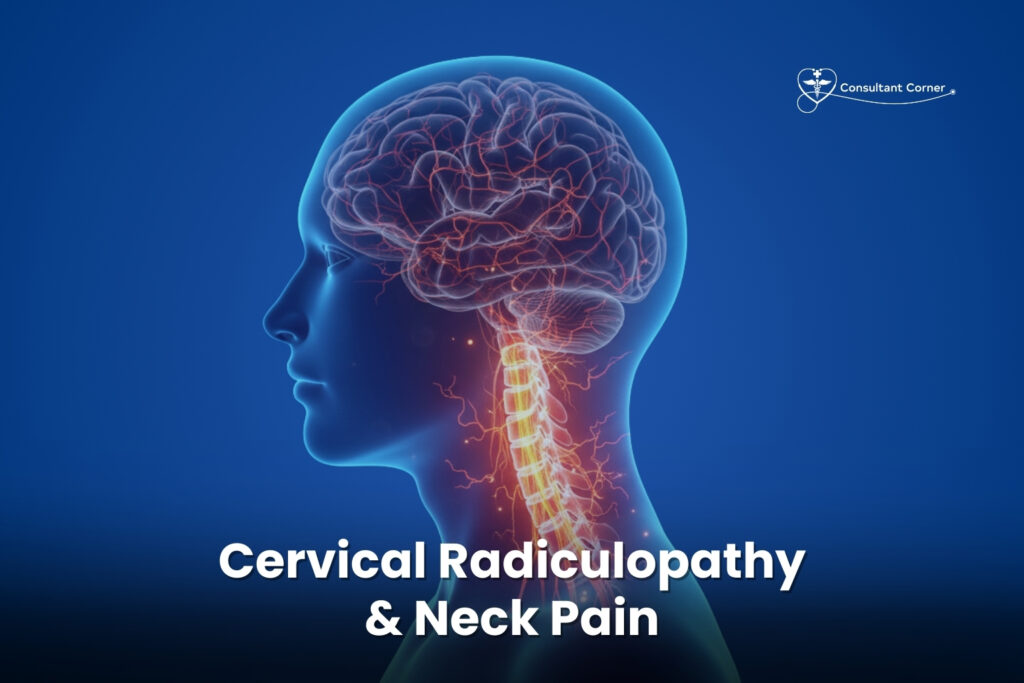
⚡ Cervical Radiculopathy & Neck Pain Neck Pain With Arm Numbness or Tingling? You May Have a Pinched Nerve — We Can Help. A pinched nerve in the neck (cervical radiculopathy) can cause neck pain that shoots into the shoulder, arm, or hand. Patients often describe burning, numbness, tingling, electric pain, or weakness — symptoms that rarely improve without proper neurological care. At Consultant Corner, we specialize in diagnosing and treating nerve-related neck pain so you can get relief fast. 👉 If your neck pain travels down your arm, it’s time for a specialist. ⚠️ Key Symptoms of Cervical Radiculopathy 🟣 Neck pain radiating to shoulder or arm 🔵 Numbness, tingling, or “pins and needles” 🟢 Burning or electric shocks down the arm 🟠 Weakness in the arm or hand 🟡 Pain worse with head turning or looking down 🔺 Difficulty gripping or dropping objects These symptoms point to compression of the C5–C8 nerves — and often require targeted treatment. 🔍 Common Causes (SEO-Friendly Terms) Herniated cervical disc Bulging disc in neck Cervical spinal stenosis Degenerative disc disease Arthritis of the neck Tech neck / posture strain Nerve compression from muscle spasm Search engines favor these exact terms — and so do your patients. 🏥 Why Patients Choose Consultant Corner This is where your differentiators matter. Patients want fast answers and real relief. 🧠 ✓ Neurology Expertise in Pinched Nerves We identify which nerve is affected — and why. 💥 ✓ Targeted, Non-Surgical Treatment Options Nerve pain medications, muscle relaxation strategies, posture correction, ergonomic planning. 📉 ✓ Imaging Review by Neurology We interpret MRIs, CTs, and X-rays to create a clear, actionable plan. 🎯 ✓ Personalized Recovery Strategy Reduce pain, restore movement, prevent long-term nerve damage. ⏱️ ✓ Same-Week Appointments Because nerve pain should never wait. 👉 Our goal: fast relief, long-term stability, and preventing permanent nerve injury. 🚨 When Neck Pain Requires Urgent Care Seek immediate evaluation if you experience: Sudden weakness New numbness spreading down the arm Loss of balance or coordination Loss of bladder/bowel control Severe neck pain after trauma These may indicate a serious spinal issue. 📞 Get Relief From Neck & Arm Pain Today Cervical radiculopathy is highly treatable, especially when caught early.Don’t wait for numbness or weakness to become permanent. 👉 Book Your Neck Pain / Pinched Nerve Evaluation 📞 Call or Request Online
Diabetic Neuropathy (Nerve Damage)
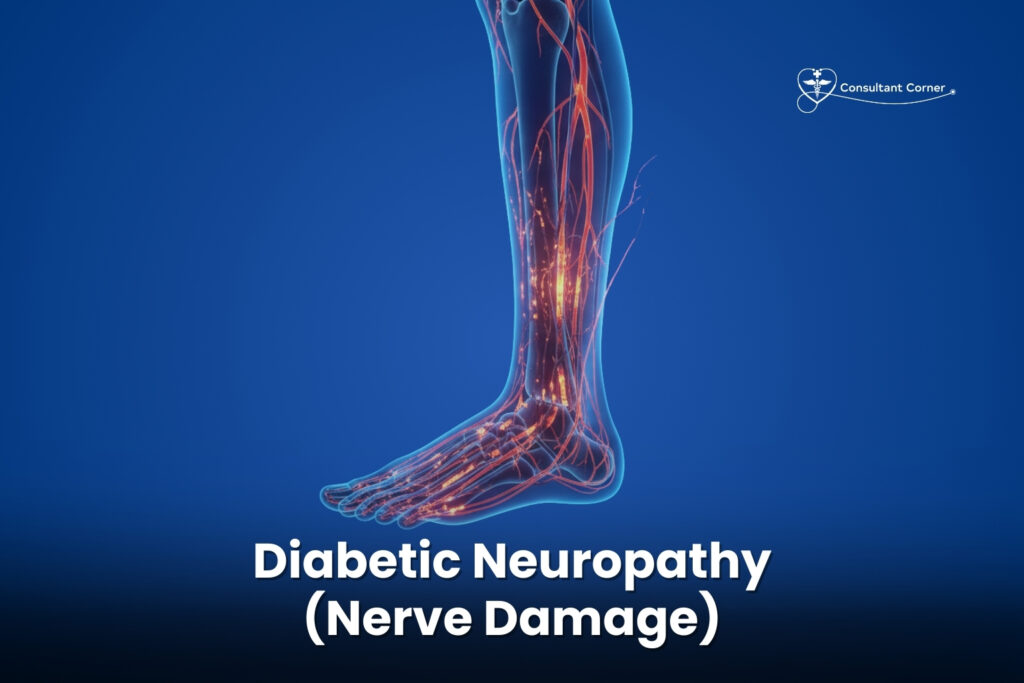
🦶🔥 Diabetic Neuropathy (Nerve Damage) Numbness? Burning? Tingling? Pain in Feet or Hands? Don’t Ignore It. Diabetes can quietly damage the nerves — especially in the feet and legs — long before symptoms become severe. What starts as tingling or burning can progress to numbness, balance problems, foot wounds, and even dangerous infections. But early neurological care can slow progression, reduce pain, and protect long-term nerve health. At Consultant Corner, we specialize in diagnosing and treating all forms of diabetic neuropathy. 👉 If you have diabetes AND any foot symptoms — call us. Early treatment matters. ⚠️ Symptoms of Diabetic Neuropathy You Shouldn’t Ignore 🔥 Burning or stabbing pain in feet or legs 🦶 Tingling, pins-and-needles, or crawling sensations ❄️ Numbness or loss of feeling (especially at night) ⚡ Electric-shock sensations 🏃 Weakness or difficulty walking 💤 Restless, painful, or “hot” feet at night 🩹 Slow-healing wounds or unnoticed injuries Even mild symptoms can indicate significant nerve damage. 🔍 Why Does Diabetic Neuropathy Happen? Common causes include: High blood sugar damaging nerves Poor circulation to the legs and feet Chronic inflammation Vitamin deficiencies Metabolic changes from long-term diabetes High triglycerides Smoking or alcohol use There are multiple forms of neuropathy — and each needs different management:Peripheral neuropathy, autonomic neuropathy, proximal neuropathy, focal neuropathy. 🏥 Why Patients Choose Consultant Corner 🧠 ✓ Detailed Neurologic Nerve Testing We identify how much nerve damage is present — and whether it’s reversible. 💊 ✓ Personalized Treatment for Burning, Pain, and Numbness Targeted nerve medications, supplements, and strategies tailored to your symptoms. 🦶 ✓ Foot & Balance Safety Evaluation Reduce fall risk and prevent dangerous foot complications. 📉 ✓ Lab & Diabetes Optimization Support We check B12, thyroid, inflammation, and metabolic markers that worsen nerve damage. ⚠️ ✓ Prevention-Focused Approach We help slow or stop progression with a long-term nerve health plan. ⏱️ ✓ Same-Week Appointments Available 👉 Early treatment = better nerve protection + less pain long-term. 🚨 When Diabetic Nerve Symptoms Require Urgent Care Call a doctor right away if you have: Sudden severe foot pain Loss of feeling in entire foot Open wounds, redness, or swelling Signs of infection Foot deformity or inability to walk These are emergencies for diabetic patients. 📞 Protect Your Nerves — Relieve Pain — Prevent Complications Diabetic neuropathy is common — but it is NOT something you should wait on. With the right neurological care, patients often experience significant improvement in pain, balance, and long-term nerve function. 👉 Book Your Diabetic Neuropathy Evaluation Today 📞 Call or Request Online
Facial Pain & Trigeminal Neuralgia
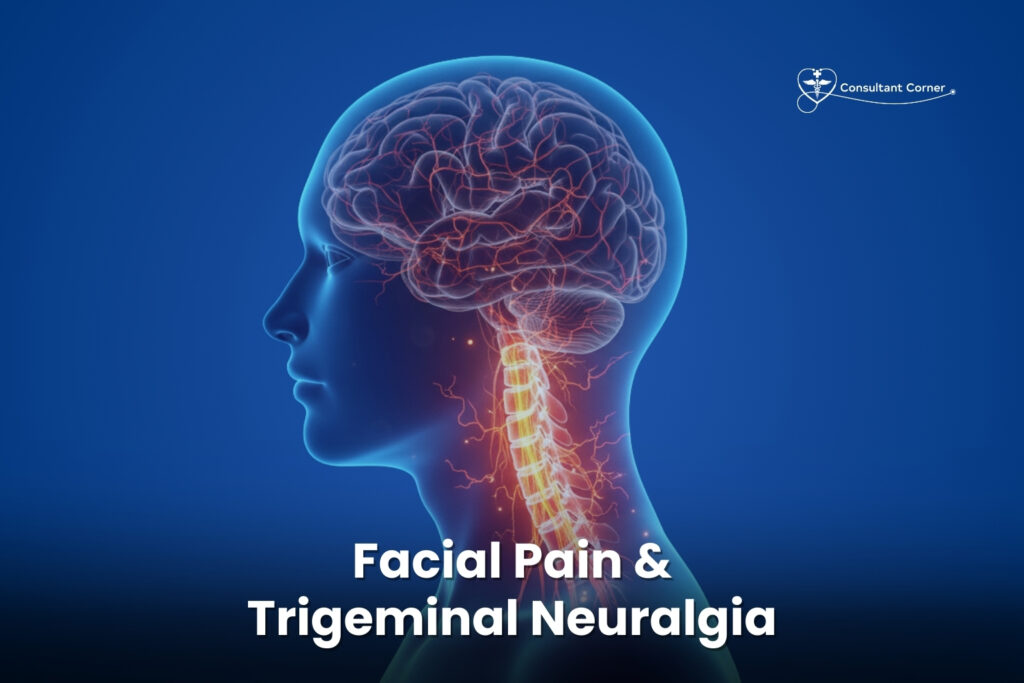
Facial Pain & Trigeminal Neuralgia Sharp, Electric Face Pain? Stabbing Pain While Eating or Talking? We Can Help. Facial pain can be frightening — but Trigeminal Neuralgia (TN) is uniquely severe. Patients describe it as electric shocks, stabbing pain, or lightning bolts across the face. Even simple actions like brushing teeth, chewing, smiling, or wind touching the skin can trigger unbearable pain. The good news? Trigeminal neuralgia is treatable.With the right neurological care, patients often experience dramatic relief. At Consultant Corner, we specialize in diagnosing facial pain and stopping the attacks. 👉 If you’re experiencing sudden, electric, stabbing facial pain — call us immediately. ⚠️ Symptoms of Trigeminal Neuralgia You Shouldn’t Ignore 🔌 Sudden electric-shock facial pain ⚡ Stabbing or shooting pain lasting seconds to minutes 🌀 Pain triggered by chewing, talking, brushing teeth, or touching the face 🥶 Pain triggered by cold air, wind, or light touch 😣 Episodes that come in waves or attacks 🔺 Pain on one side of the face only These symptoms are classic for trigeminal nerve irritation — a condition that often worsens without specialist care. 🏥 Why Patients Choose Consultant Corner 🧠 ✓ Expert Diagnosis of Facial Pain We differentiate TN from TMJ, dental causes, sinus issues, migraine, and neuropathic pain. 💊 ✓ Effective Non-Surgical Treatment Options We use nerve-calming medications and targeted therapies that often bring rapid relief. 🧪 ✓ Imaging Review to Confirm Diagnosis MRI to assess nerve compression or MS involvement. 🎯 ✓ Personalized Pain-Control Strategy Trigger management, medication optimization, and long-term relief planning. ⚡ ✓ Advanced Options When Needed Botox therapyReferral for microvascular decompression (only when appropriate)Neuromodulation options ⏱️ ✓ Same-Week Appointments Because severe facial pain is urgent, not optional. 👉 Our goal: Stop the pain quickly and give you your life back. 🚨 When Facial Pain Requires Urgent Evaluation Seek immediate care if facial pain is accompanied by: Vision changes Facial droop Weakness or numbness Fever Severe headache Difficulty speaking These may indicate stroke or infection. 📞 Get Relief From Trigeminal Neuralgia Today Facial pain is overwhelming — but with the right treatment, relief can be fast and life-changing.You don’t have to live with the fear of the next pain attack. 👉 Book Your Facial Pain Evaluation Today 📞 Call or Request Online
Gait & Balance Disorders
🚶♂️⚖️ Gait & Balance Disorders Feeling Unsteady? Walking Slower? Losing Balance? We Can Help. Gait and balance problems can make everyday life feel unsafe — worrying about falls, holding onto walls, avoiding stairs, or feeling “off” when walking. These changes are not a normal part of aging and often signal a neurological issue that can be treated. At Consultant Corner, we identify the cause of your imbalance and build a personalized plan to restore confidence, mobility, and safety. 👉 If walking feels unsteady or you’re afraid of falling, call us today. ⚠️ Symptoms You Shouldn’t Ignore 🟣 Unsteady or wobbly walking 🔵 Walking slower or shuffling steps 🟢 Trouble standing without holding onto something 🟠 Feeling “off balance” or drifting to one side 🟡 Frequent stumbles or near-falls 🔺 Trouble turning, rising from a chair, or climbing stairs 🟤 Legs feeling weak, heavy, or uncoordinated These symptoms often worsen over time without proper neurological care. 🔍 What Causes Gait & Balance Disorders? (SEO-Rich Terms) Common causes we evaluate include: Peripheral neuropathy Parkinson’s disease Stroke or TIA-related imbalance Cerebellar disorders Normal pressure hydrocephalus (NPH) Cervical spine issues Muscle weakness / ALS concerns Inner ear (vestibular) problems Medication side effects Age-related nerve degeneration Many are treatable — especially when diagnosed early. 🏥 Why Patients Choose Consultant Corner 🧠 ✓ Expert Neurological Evaluation We determine whether your imbalance comes from the brain, spine, nerves, cerebellum, or inner ear. 🚶 ✓ Gait & Mobility Assessment We identify abnormal patterns in walking and posture that others often miss. 🎯 ✓ Personalized Treatment Plan Exercises, balance training, nerve treatments, mobility strategies, medication optimization. ⚖️ ✓ Fall Prevention & Safety Planning Reduce fall risk, improve stability, and protect independence. 📉 ✓ Review of MRIs, CT Scans & Labs We interpret your imaging to guide a precise recovery plan. ⏱️ ✓ Same-Week Appointments Walking and balance issues deserve urgent attention — not months of waiting. 👉 Our priority is keeping you safe, confident, and mobile. 🚨 When Gait Problems Are an Emergency Call 911 or seek urgent evaluation if gait changes occur with: Sudden weakness Facial droop Slurred speech Severe dizziness Sharp headache Loss of vision Sudden inability to walk These may signal a stroke or spinal emergency. 📞 Improve Your Balance — Reduce Fall Risk — Restore Confidence You don’t have to live with fear of falling or declining mobility.With the right neurological care, balance and gait can improve significantly. 👉 Book Your Gait & Balance Evaluation Today 📞 Call or Request Online
Muscle Weakness & ALS Screening

⚡ Muscle Weakness & ALS Screening Feeling Weaker Than Usual? Losing Strength? Don’t Ignore It — We Can Help. Muscle weakness can be caused by many conditions — most of them treatable. But when weakness is progressive, one-sided, or unexplained, it’s important to rule out serious neurological causes, including ALS. At Consultant Corner, we evaluate muscle weakness with expert precision to identify the cause quickly and give you a clear plan forward. 👉 If you’ve noticed weakness that’s new or worsening — call us immediately. ⚠️ Red Flags in Muscle Weakness 🟣 One arm or leg becoming weaker 🔵 Difficulty lifting objects or gripping 🟢 Foot drop or tripping 🟠 Trouble raising your arms or climbing stairs 🟡 Muscle twitching (fasciculations) 🟤 Unexplained fatigue with simple tasks 🔺 Handwriting becoming smaller or shakier These symptoms may signal nerve or muscle disease — and early evaluation matters. 🔍 What Causes Muscle Weakness? Most muscle weakness is NOT ALS.Common causes include: Pinched nerves Neuropathy Cervical or lumbar radiculopathy Stroke or TIA-related weakness Myopathies (muscle diseases) Thyroid disorders Vitamin deficiencies Autoimmune neuromuscular conditions Medication side effects We screen for all of these — not just ALS. 🧠 ALS Screening — What We Look For ALS is rare, but early signs must be taken seriously.Typical ALS-related symptoms include: Progressive weakness (worsening over weeks–months) Muscle twitching or cramping Weakness spreading from one area to another Difficulty speaking, swallowing, or breathing Most patients with these symptoms don’t have ALS — but screening helps provide clarity and peace of mind. 🏥 Why Patients Choose Consultant Corner 🧠 ✓ Expert Neurological Evaluation We identify the exact location and cause of weakness — brain, nerve, or muscle. ⚡ ✓ ALS Screening & Neuromuscular Testing Focused assessments to rule out serious disorders. 🧪 ✓ Lab Testing & Imaging Review We assess metabolic, autoimmune, and structural causes of weakness. 🎯 ✓ Personalized Treatment Plan We address reversible causes and protect long-term function. ⏱️ ✓ Same-Week Appointments New weakness should never wait. 👉 Our priority: answers, safety, and early treatment. 🚨 When Weakness Is an Emergency Go to the ER if weakness is accompanied by: Facial droop Difficulty speaking Sudden numbness Loss of balance Difficulty breathing Sudden inability to walk These may indicate stroke or spinal emergencies. 📞 Get Answers for Your Weakness — Fast Whether your symptoms are mild or frightening, you deserve clarity.We help determine the cause quickly and start the right treatment early. 👉 Book Your Muscle Weakness / ALS Screening Today 📞 Call or Request Online
Post-Stroke Recovery & Rehabilitation
🧠💪 Post-Stroke Recovery & Rehabilitation Life After a Stroke Is Challenging — But With the Right Care, Recovery Can Be Life-Changing. A stroke doesn’t end when you leave the hospital. Weakness… coordination issues… balance problems… memory change… fatigue… speech difficulty… emotional swings… These symptoms can last weeks, months, or years — but with specialized neurological follow-up, patients recover faster, stronger, and safer. At Consultant Corner, we guide patients through the critical post-stroke period with expert evaluation, rehabilitation planning, and long-term neurological support. 👉 If you or your loved one is recovering from a stroke, expert follow-up is essential. ⚠️ Common Post-Stroke Symptoms We Help Treat 🟣 Weakness in one side of the body 🔵 Difficulty walking or balancing 🟢 Trouble speaking or finding words 🟠 Memory problems or slowed thinking 🟡 Numbness, tingling, or spasticity 🟤 Vision problems or dizziness 🔺 Personality or mood changes (anxiety, depression) 🟣 Fatigue or difficulty completing daily tasks Recovery is possible — but only with the right plan. 🔍 Why Ongoing Stroke Care Matters Even after hospital discharge, the brain continues healing for 12–24 months.Without proper guidance, patients often experience: Slow recovery Persistent weakness High risk of falls Repeat strokes Unmanaged spasticity Decline in independence Early outpatient neurology care makes a major difference in regaining strength, speech, memory, and confidence. 🏥 Why Patients Choose Consultant Corner for Stroke Recovery 🧠 ✓ Expert Neurological Follow-Up Detailed evaluation of strength, balance, speech, cognition, and safety. 🎯 ✓ Personalized Recovery Plan Tailored strategies to improve walking, coordination, and daily functioning. 💬 ✓ Speech, Memory & Cognitive Support Focused interventions to improve thinking, communication, and recall. 💪 ✓ Mobility, Strength & Spasticity Management Medications, exercises, Botox therapy (if needed), and movement retraining. 📉 ✓ Review of Imaging & Stroke Risk Reduction We interpret your MRI/CT, assess risk factors, and help prevent future strokes. 🤝 ✓ Family & Caregiver Guidance Education + strategies to make recovery safer at home. ⏱️ ✓ Same-Week Availability Recovery shouldn’t stall because of delayed appointments. 👉 Our mission: restore strength, independence, and quality of life. 🚨 When Post-Stroke Symptoms Need Immediate Attention Seek emergency care if you notice: New weakness, numbness, or slurred speech Sudden confusion or trouble understanding Severe headache Loss of vision Difficulty walking Chest pain or irregular heartbeat These may signal a second stroke. 📞 Start Your Post-Stroke Recovery Today A strong recovery requires early, specialized follow-up.We help patients regain function, prevent complications, and rebuild confidence. 👉 Book Your Post-Stroke Recovery Visit Today 📞 Call or Request Online
Sleep Disorders & Restless Legs Syndrome (RLS)
⚡ Sleep Disorders & Restless Legs Syndrome (RLS) Trouble Sleeping? Restless Legs? Exhausted During the Day? We Can Help. Sleep problems affect everything — mood, energy, focus, work, and overall health.Whether you can’t fall asleep, wake up throughout the night, or feel your legs “won’t stay still,” you’re not alone — and it’s not something you need to live with. At Consultant Corner, we specialize in neurological sleep disorders and restless legs syndrome (RLS).With the right treatment, sleep can improve dramatically. 👉 If your sleep is broken or your legs keep you up at night — call us. ⚠️ Symptoms of Sleep Disorders You Shouldn’t Ignore 😵 Trouble falling asleep or staying asleep 😴 Feeling unrefreshed even after a full night’s sleep 🛌 Restless, kicking, or uncomfortable legs at night ⚡ Urge to move legs — especially at night 🌀 Nighttime twitching or jerking 🌙 Frequent waking, vivid dreams, or night confusion 💤 Daytime fatigue, brain fog, difficulty concentrating If sleep issues are affecting daily life, it’s time for a specialist evaluation. 🔍 What Causes Sleep Disorders & Restless Legs? (SEO-Friendly Terms) Common causes include: Restless Legs Syndrome (RLS) Periodic Limb Movement Disorder (PLMD) Insomnia Neuropathy or nerve pain Iron or vitamin deficiencies Sleep apnea–related agitation Medication side effects Anxiety or stress-related sleep disruption Circadian rhythm problems These conditions often overlap — which is why a neurological approach is essential. 🏥 Why Patients Choose Consultant Corner 🧠 ✓ Expert Evaluation of Neurologic Sleep Disorders We determine whether your symptoms are due to RLS, insomnia, neuropathy, or another neurological cause. 💊 ✓ Targeted Treatment for RLS & Sleep Disruption Medications, supplements, and sleep-focused strategies tailored to your symptoms. 🧪 ✓ Lab Testing for Deficiencies That Affect Sleep Iron, ferritin, B12, thyroid, and metabolic markers. 😴 ✓ Better Sleep Without Dependency We guide you toward safe, sustainable sleep solutions — not sedatives. 📈 ✓ Lifestyle & Sleep Hygiene Optimization Custom routines to improve sleep quality and reduce nighttime symptoms. ⏱️ ✓ Same-Week Appointments Faster answers → faster, deeper sleep. 👉 Our focus: Fix the root cause so you can finally sleep again. 🚨 When Sleep Problems Need Urgent Attention Seek immediate help if sleep issues occur with: Sudden weakness Sleep paralysis with hallucinations Nighttime confusion or wandering Breathlessness Violent or unsafe sleep behaviors These may indicate serious neurological or sleep-related emergencies. 📞 Take Back Your Nights — and Your Energy Poor sleep doesn’t have to control your days.Restless legs, insomnia, and disrupted sleep are highly treatable with the right care. 👉 Book Your Sleep / Restless Legs Evaluation Today 📞 Call or Request Online
TIA (Mini-Stroke)
TIA (Mini-Stroke) Sudden Vision Change? Weakness? Slurred Speech? Don’t Ignore It — A TIA Is a Warning. A Transient Ischemic Attack (TIA), often called a “mini-stroke,” is one of the most important warning signs in neurology.Symptoms may last only minutes — but the risk is real: 🚨 1 in 3 patients who experience a TIA will have a major stroke. 🚨 Up to 50% occur within the first 48 hours. That’s why urgent evaluation is critical. At Consultant Corner, we specialize in rapid neurological assessment after a TIA to prevent a life-changing stroke. 👉 If you had sudden neurologic symptoms that resolved — treat it as an emergency and call us immediately. ⚠️ Common TIA Symptoms 😵 Sudden weakness or numbness (usually one side of the body) 🗣️ Slurred speech or trouble finding words 👁️ Vision loss, double vision, or temporary blindness in one eye ⚖️ Dizziness, imbalance, or sudden inability to walk 🧠 Confusion, difficulty understanding speech 🤕 Sudden, unexplained headache Symptoms may last minutes to an hour — then disappear.But the danger remains. 🔍 Why TIAs Happen (SEO-Friendly Explanation) Common causes include: Small blood clots temporarily blocking brain blood flow Carotid artery disease Atrial fibrillation (irregular heartbeat) High blood pressure Diabetes and high cholesterol Vascular inflammation History of stroke or previous TIA A TIA is the body’s “last warning” before a potentially disabling stroke. 🏥 Why Patients Trust Consultant Corner After a TIA 🧠 ✓ Comprehensive Neurology Evaluation We assess stroke risk, review symptoms, and plan next steps. 📉 ✓ Review of MRI/CT, Carotid Imaging & Heart Rhythm We interpret your hospital results — or order studies urgently if none were done. 💊 ✓ Stroke Prevention Plan Medication optimization for blood pressure, cholesterol, and clot prevention. 🎯 ✓ Personalized Lifestyle & Risk Reduction Strategy Tailored guidance to prevent a future stroke. 🌟 ✓ Fast Access — Same-Week Appointments Post-TIA evaluation should never be delayed. 👉 Our priority: stopping the next stroke before it happens. 🚨 When TIA Symptoms Require Immediate 911 Call emergency services if symptoms return or worsen: Sudden weakness Slurred speech Drooping face Severe headache Inability to speak or walk Even if symptoms last seconds — it’s still an emergency. 📞 Don’t Wait for a Stroke — Take Action After a TIA A TIA is the clearest possible warning that a major stroke may be coming.With timely evaluation and the right treatment plan, stroke risk can be dramatically reduced. 👉 Book Your Post-TIA Evaluation Today 📞 Call or Request Online
Neuropathy & Nerve Pain
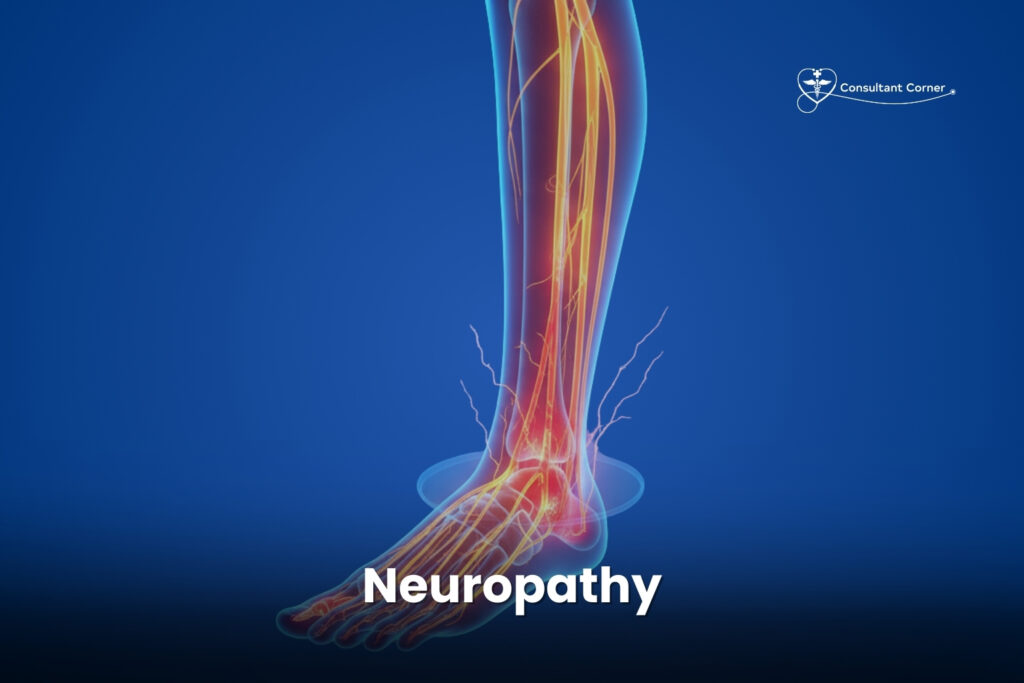
🔥 Neuropathy & Nerve Pain – Fast Relief Starts Here ⚡ Burning, Tingling, or Numbness? Don’t Ignore the Signs. Neuropathy can feel like burning, pins-and-needles, electric shocks, or numbness in your hands or feet. These symptoms often progress — but with the right neurological care, they don’t have to. At Consultant Corner, we find the cause and help you feel better quickly. ⚠️ When to Suspect Neuropathy 🟣 Sensation Changes 🔥 Burning✨ Tingling🧊 Numbness⚡ Electric shock feelings 🔵 Mobility Problems 🚶♂️ Unsteady walking⚖️ Loss of balance🦵 Weakness or legs giving out 🟠 Night-Time Worsening 🌙 Pain that disrupts sleep💤 Restless feet If symptoms keep coming back — or keep getting worse — it’s time to act. 🔍 Common Causes We Treat 🩸 Diabetes 💊 Medication side effects 🧬 Nerve compression (sciatica, carpal tunnel) 🥗 Vitamin deficiencies 🧠 Autoimmune conditions 🍷 Alcohol-related nerve damage Many causes are reversible with early treatment. 🏥 Why Patients Choose Consultant Corner 🧠 ✓ Neurology Evaluation Find out exactly what’s causing the nerve damage. 💥 ✓ Personalized Pain Treatment Medications, nerve-calming therapies, lifestyle optimization. 🔧 ✓ Root-Cause Diagnosis We don’t just treat pain — we fix what’s driving it. 🚶 ✓ Help With Balance & Mobility Reduce falls, improve walking, restore confidence. ⏱️ ✓ Same-Week Availability Fast access → faster relief. 📞 Get Relief From Nerve Pain Today Neuropathy symptoms are not normal — and early care protects long-term nerve health. 👉 Book Your Appointment Today 📞 Call or Request Online
Spasticity & Muscle Stiffness

💪🧠 Spasticity & Muscle Stiffness Tight, Stiff, or Painful Muscles? Difficulty Moving? We Can Help. Spasticity is more than “tight muscles.”It’s a neurological condition where the muscles become stiff, rigid, painful, or uncontrollable, often after a stroke, brain injury, spinal cord issue, MS, or other nerve-related problems. This stiffness can make walking, using your arms, getting dressed, sleeping, or even sitting comfortably very difficult. At Consultant Corner, we help patients regain comfort, mobility, and independence. 👉 If muscle stiffness is limiting your movement — call us today. ⚠️ Signs of Spasticity You Shouldn’t Ignore 🟣 Tight, rigid, or “locked” muscles 🔵 Painful spasms or muscle cramps 🟢 Difficulty bending or straightening a limb 🟠 Walking stiffness or dragging a leg 🟡 Arm stiffness after stroke or injury 🔺 Joints feeling “frozen” or difficult to move If these happen after a stroke, MS, spinal cord injury, or brain injury — early treatment can dramatically improve recovery. 👉 Don’t wait for stiffness to worsen — spasticity is treatable. 🔍 What Causes Spasticity? Common neurological causes include: Stroke Multiple Sclerosis (MS) Spinal cord injury Brain injury Cerebral palsy Neuropathy or nerve damage Neurodegenerative disease Spasticity rarely improves on its own — but improves significantly with correct treatment. 🏥 Why Patients Trust Consultant Corner 🧠 ✓ Special Expertise in Neurological Spasticity We identify which muscles and nerves are causing the stiffness. 💉 ✓ Targeted Treatment Options Medications, muscle relaxants, botulinum toxin (Botox) therapy, nerve blocks, and rehabilitation strategies. 🎯 ✓ Personalized Mobility & Function Plan Improve walking, reduce pain, ease dressing, improve independence. 🤝 ✓ Post-Stroke & MS Spasticity Care Ongoing support to prevent long-term contractures. ⏱️ ✓ Same-Week Appointments Faster relief → better long-term function. 👉 Our goal is simple: help you move with less pain and more freedom. 🚨 When Spasticity Can Be Dangerous Seek urgent evaluation if you experience: Sudden increase in stiffness Painful muscle spasms that don’t stop Redness, warmth, or swelling in stiff limbs Inability to move a limb Severe difficulty walking New weakness or numbness These may signal complications that need immediate care. 📞 Regain Comfort, Mobility & Control Spasticity can be frustrating, painful, and disabling — but it is treatable.The right neurological care can dramatically improve your movement and quality of life. 👉 Book Your Spasticity Evaluation Today 📞 Call or Request Online
Concussion & Post-Concussion Syndrome
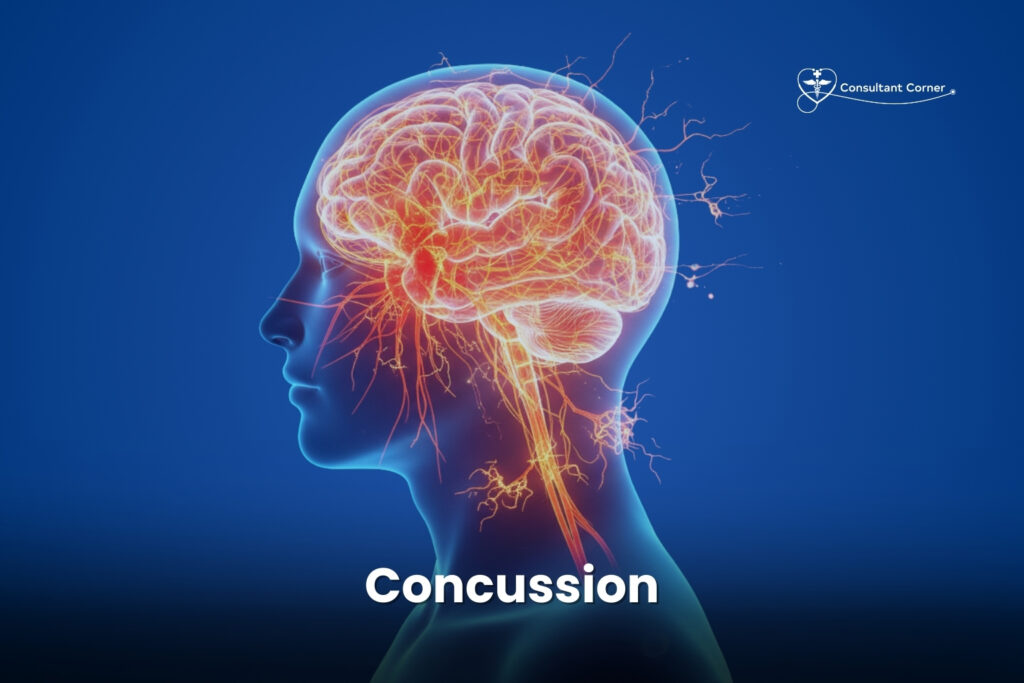
🧠💥 Concussion & Post-Concussion Syndrome Still Not Feeling “Right” After a Head Injury? We Can Help You Recover. A concussion is more than “just a bump.” Even a mild head injury can disrupt memory, focus, balance, sleep, mood — sometimes for weeks or months.If you’re still dealing with symptoms after a fall, car accident, sports injury, or head hit, you may have Post-Concussion Syndrome (PCS). At Consultant Corner, we help patients recover faster, safer, and more completely. 👉 If you’re not back to normal after a concussion — don’t wait. Call us today. ⚠️ Signs Your Concussion Needs Specialist Care 🟣 Headaches that won’t go away 🔵 Dizziness, vertigo, or balance issues 🟢 Memory or concentration problems 🟠 Blurry vision or sensitivity to light 🔺 Mood changes — irritability, anxiety, depression 🟡 Fatigue, brain fog, slowed thinking 🟤 Sleep problems If these symptoms last more than 10–14 days, or if they’re getting worse, you need a neurological evaluation. 👉 You don’t have to live with lingering concussion symptoms. We can help. 🔍 What Causes Post-Concussion Symptoms? After a concussion, your brain may struggle to: Process information quickly Manage balance and coordination Regulate mood and sleep Handle visual or noise stimulation Recover from inflammation and micro-injury Without proper guidance, symptoms can linger for months — but with expert care, recovery is much faster. 🏥 Why Patients Choose Consultant Corner for Concussion Care 🧠 ✓ Expert Neurological Evaluation We determine the severity of your concussion and identify what’s driving your symptoms. 🎯 ✓ Personalized Recovery Plan Rest, activity pacing, hydration, sleep guidance, and targeted therapies. ⚖️ ✓ Balance, Dizziness & Vision Management Specialized support for vertigo, eye-tracking issues, and motion sensitivity. 💡 ✓ Cognitive & Headache Treatment Medications, supplements, and strategies to reduce brain fog and headaches. 🏃 ✓ Safe Return-to-Work / Return-to-Sport Guidance We help students, athletes, workers, and professionals get back safely. ⏱️ ✓ Same-Week Appointments Because concussion recovery shouldn’t wait. 👉 Patients feel better faster when they get proper concussion care — and that’s what we provide. 🚨 When a Concussion Is an Emergency Go to the ER immediately if you have: Worsening headache Repeated vomiting Weakness or numbness Slurred speech Loss of consciousness Confusion or unusual behavior Seizure These may indicate a serious brain injury. 📞 Still Not Back to Normal? Let Us Help You Recover. Lingering concussion symptoms are not normal — and the faster you get evaluated, the faster you heal. 👉 Book Your Concussion Evaluation Today 📞 Call or Request Online
Back Pain & Sciatica
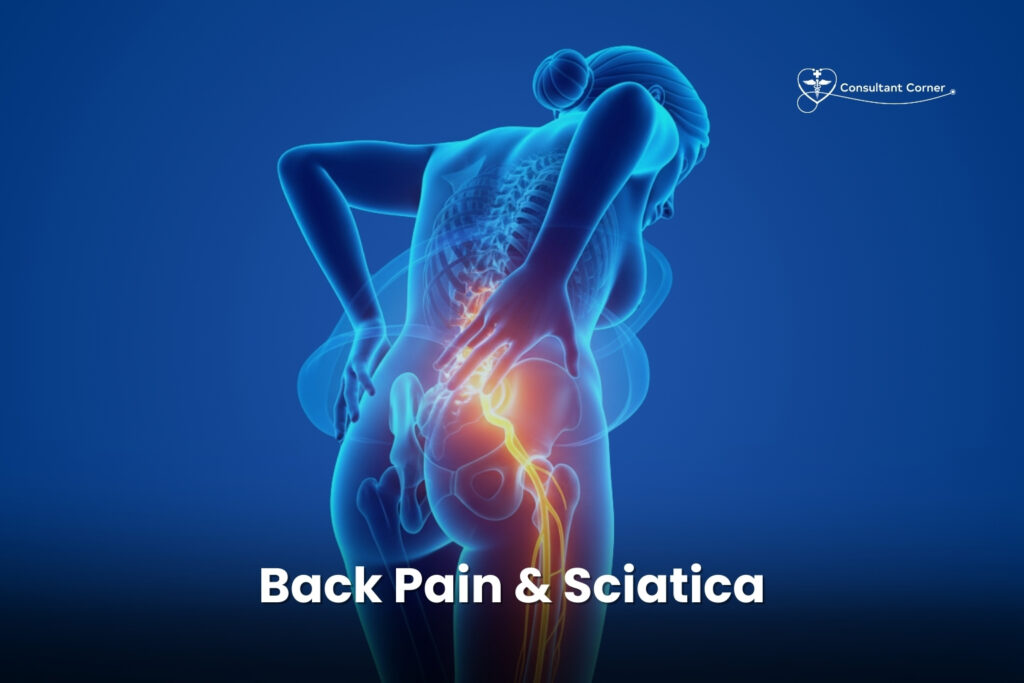
⚡ Back Pain & Sciatica Sharp Back Pain? Shooting Leg Pain? Pins & Needles? We Can Help. Back pain is common — but nerve-related back pain (including sciatica) is different.It can feel like burning, shooting pain down the leg… numbness… tingling… or weakness that makes walking difficult. These symptoms usually mean the nerve is being compressed — and if not treated early, it can become permanent. At Consultant Corner, we diagnose the cause and help you return to normal movement without fear or pain. 👉 If back pain is affecting your daily life, it’s time to get evaluated. ⚠️ Signs Your Back Pain Is Nerve-Related 🟣 Sharp pain shooting down the leg 🔵 Burning, tingling, or numbness in the foot or toes 🟢 Pain worse when standing, coughing, or bending 🟠 Weakness in one leg 🟡 Pain that improves when leaning forward 🔺 Trouble walking because the leg “gives out” These symptoms often indicate sciatica, herniated disc, or nerve compression. 👉 Don’t wait for nerve damage — call Consultant Corner today. 🔍 What Causes Sciatica & Nerve Back Pain? Common causes we evaluate: Herniated disc Pinched nerve Spinal stenosis (narrowing of the spine) Degenerative disc disease Posture-related nerve strain Muscle spasm compressing the nerve Trauma or lifting injuries Many of these are treatable without surgery when addressed early. 🏥 Why Patients Trust Consultant Corner 🧠 ✓ Neurology-Focused Back Pain Evaluation We identify exactly which nerve is affected and why. 💥 ✓ Targeted Sciatica & Nerve Pain Treatment Medication, nerve-calming therapies, exercises, and pain-relief strategies. 🎯 ✓ Personalized Plan for Mobility & Strength Reduce pain, improve walking, and restore confidence. 📉 ✓ Imaging Review & Safety Assessment We review MRI/CT results to guide safe, effective care. ⏱️ ✓ Same-Week Appointments Because nerve pain shouldn’t wait. 👉 We focus on restoring mobility, comfort, and confidence — fast. 🚨 When Back Pain Is an Emergency Seek immediate help if you have: Loss of bladder/bowel control Sudden severe weakness Numbness in the inner thighs (“saddle anesthesia”) Severe pain after trauma These may indicate a serious spinal emergency. 📞 Stop the Cycle of Pain — Get Relief Today Back and leg pain from nerve compression rarely improves on its own — but with the right plan, relief can be fast and life-changing. 👉 Book Your Back Pain / Sciatica Evaluation Today 📞 Call or Request Online
Carpal Tunnel & Nerve Entrapment
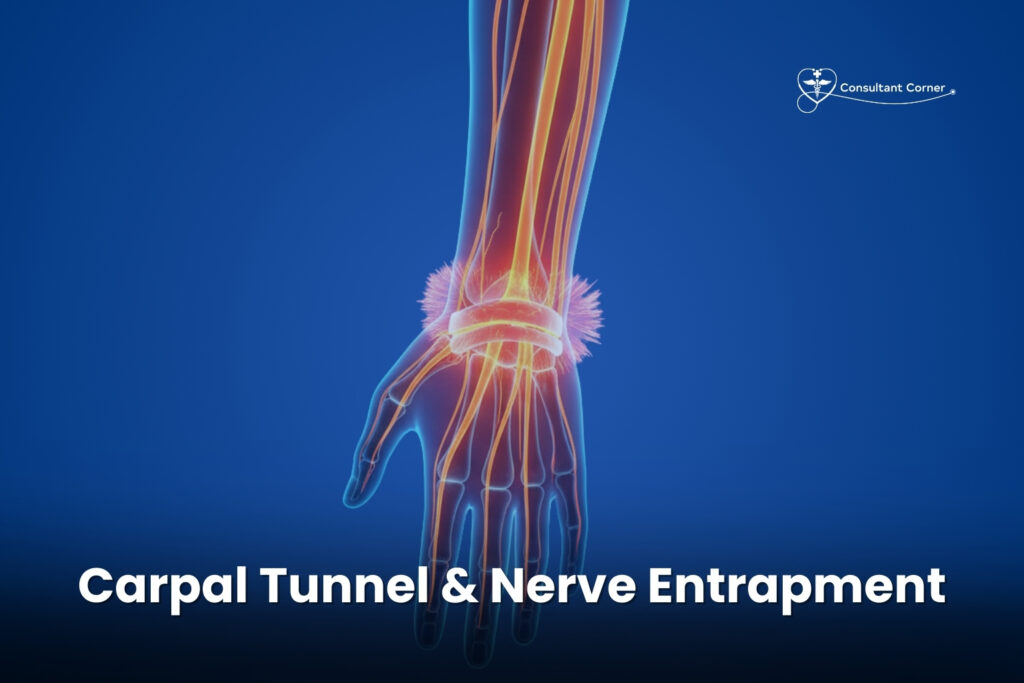
✋⚡ Carpal Tunnel & Nerve Entrapment Hand Numbness? Wrist Pain? Fingers Tingling? Your Nerves May Be Trapped — And We Can Fix It. Carpal tunnel and other nerve entrapment conditions can make simple tasks painful: typing, holding your phone, gripping objects, opening jars, or even sleeping without hand numbness waking you up. The good news?Most nerve entrapment issues are treatable — and often reversible with the right care. At Consultant Corner, we diagnose exactly where your nerve is being compressed and help restore normal hand function fast. 👉 If your hand goes numb or tingles — it’s time to call us. ⚠️ Signs of Carpal Tunnel or Nerve Entrapment 🟣 Numbness or tingling in thumb, index, or middle finger 🔵 Wrist pain radiating into the hand or forearm 🟢 Weak grip or dropping objects 🟠 Symptoms worse at night 🟡 Burning or electric pain with typing or driving 🔺 Hand “falling asleep” during routine tasks These symptoms often get worse over time without treatment. 👉 Early care leads to better outcomes — call Consultant Corner today. 🔍 Common Nerve Entrapments We Treat ✋ Carpal Tunnel Syndrome (Median Nerve) Numbness, tingling, burning in thumb + first three fingers. 💪 Cubital Tunnel Syndrome (Ulnar Nerve) Tingling ring + pinky fingers, elbow pain, weak grip. 🦵 Radial Nerve Entrapment Wrist drop, hand weakness. 🧠 Cervical Radiculopathy (Pinched Nerve in Neck) Pain from neck → arm → hand. Nerve testing + neurological evaluation = precise diagnosis. 🏥 Why Patients Choose Consultant Corner 🧠 ✓ Neurology Expertise in Nerve Disorders We pinpoint exactly which nerve is compressed and why symptoms occur. ⚡ ✓ Non-Surgical Treatment Options First Splints, activity modifications, medications, targeted nerve therapies. 🎯 ✓ Personalized Plan for Pain, Numbness & Weakness Reduce symptoms, improve hand function, prevent long-term damage. 📉 ✓ Review of Past Imaging / EMG Studies We interpret your scans and nerve tests to guide treatment. ⏱️ ✓ Same-Week Appointments Faster diagnosis → faster relief. 👉 Most patients feel improvement quickly when the right nerve is identified. 🚨 When Hand or Wrist Symptoms Are Serious Call urgently if you have: Constant numbness Increasing weakness Visible muscle shrinking Loss of hand function Severe pain after injury These may indicate advanced nerve damage. 📞 Get Relief From Carpal Tunnel & Nerve Pain Don’t wait for numbness, tingling, or wrist pain to become permanent.The right evaluation can protect your nerves — and your function. 👉 Book Your Carpal Tunnel / Nerve Entrapment Evaluation Today 📞 Call or Request Online
Syncope & Fainting Spells
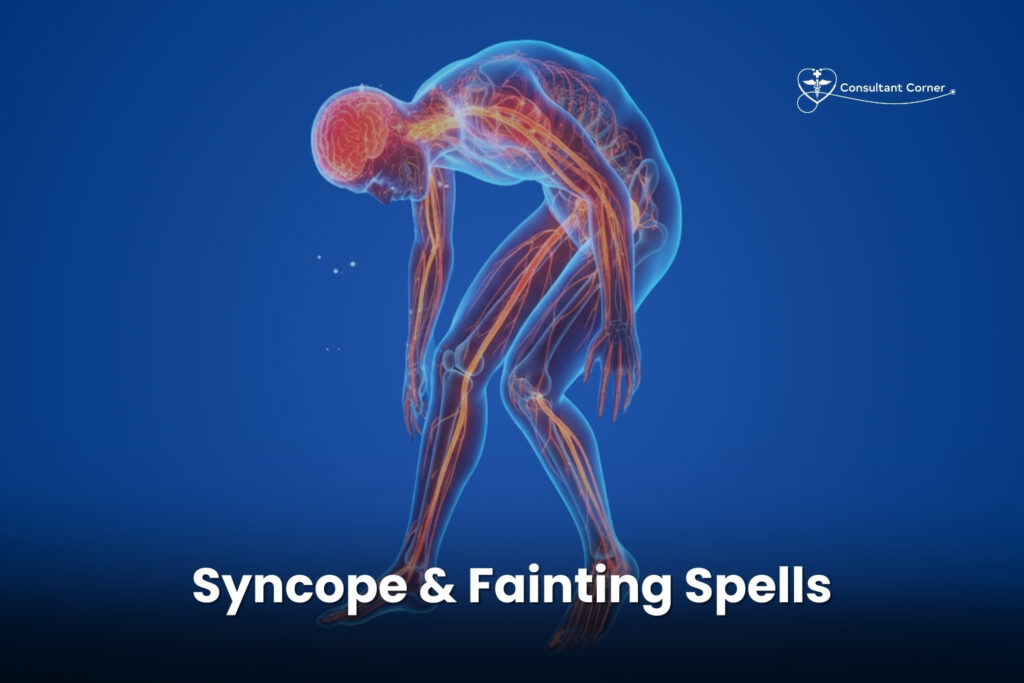
Syncope & Fainting Spells Fainting, Near-Fainting, Sudden Dizziness? Your Body Is Warning You — Let Us Help. Fainting (syncope) is never “normal.”Whether you passed out completely or felt like you almost did — dizziness, blacking out, sudden weakness, or vision dimming are signs your brain briefly didn’t get enough blood or oxygen. At Consultant Corner, we uncover the cause and prevent dangerous recurrences. 👉 If you fainted or nearly fainted — you need a neurological evaluation. Call us today. ⚠️ Symptoms You Should Never Ignore 🟣 Sudden fainting or loss of consciousness 🔵 Feeling like you’re about to pass out 🟢 Vision going dark or blurry 🟠 Heart racing, pounding, or irregular beats 🟡 Dizziness when standing up 🔺 Weakness, nausea, or sweating before fainting Even one episode can signal something serious. 👉 Don’t brush it off — fainting is a warning sign. 🔍 What Causes Syncope? (Many Are Treatable.) Common causes we evaluate: Vasovagal syncope (stress, pain, dehydration) Orthostatic hypotension (blood pressure drops when standing) Cardiac rhythm issues Neurological causes Postural blood-flow problems Medication side effects Blood sugar drops Autonomic nervous system dysfunction You don’t need to figure it out — that’s our job. 🏥 Why Patients Choose Consultant Corner 🧠 ✓ Neurology-Focused Syncope Evaluation We determine whether the cause is neurological, cardiovascular, or autonomic. 💓 ✓ Testing & Review of Prior Workups Imaging, heart rhythm studies, blood pressure changes, labs, medication review. 🎯 ✓ Personalized Plan to Prevent Future Spells Hydration guidance, medications, compression strategies, autonomic support. ⚠️ ✓ Fall & Safety Planning Prevent injuries from future episodes. ⏱️ ✓ Same-Week Appointments Because fainting is serious — and shouldn’t wait. 👉 Our goal: Stop fainting episodes before they become dangerous. 🚨 When Fainting Is a Medical Emergency Go to the ER if fainting is paired with: Chest pain Shortness of breath Irregular heartbeat Severe headache Weakness or numbness Speech difficulty Fainting during exercise These may indicate stroke or cardiac emergency. 📞 Don’t Ignore Fainting or Near-Fainting Syncope is a warning sign, not a coincidence.Let’s find out what’s causing it — and stop it from happening again. 👉 Book Your Syncope / Fainting Evaluation Today 📞 Call or Request Online
Tremor & Essential Tremor

✨ Tremor & Essential Tremor – Get Your Hands (and Life) Steady Again Shaking Isn’t “Just Aging.” It’s a Treatable Neurological Condition — And We Can Help. If your hands shake when you hold a cup…When you write a check…When you eat, type, or try to text…You’re not alone — and you’re not stuck with it. Tremor can be embarrassing, frustrating, and life-limiting, but with expert care it can dramatically improve. At Consultant Corner, we find the exact cause of your tremor and give you a plan to regain confidence and control. 👉 If shaking is affecting your daily life — call us now. There is help. ⚠️ Tremor Symptoms You Shouldn’t Ignore 🟣 Hands shaking when you try to use them (eating, writing, lifting a cup) 🔵 Tremor at rest — especially one-sided (may indicate Parkinson’s) 🟡 Shaking that gets worse with stress, fatigue, or caffeine 🟢 Head, voice, or jaw tremor 🟠 Difficulty with fine tasks (buttoning clothes, holding utensils) 🔺 A family history of tremor These symptoms rarely “go away” on their own — but the right treatment can make a life-changing difference. 👉 Call Consultant Corner early for the best results. 🔍 What’s Causing Your Tremor? (Most People Don’t Know.) Common causes we evaluate: Essential Tremor (most common) 🙌 Parkinson’s Tremor 🧠 Medication-related shaking 💊 Thyroid, metabolic, or vitamin issues 🧬 Post-stroke tremor ⚡ Stress or anxiety tremor 😣 Genetic or neurological conditions 🧠 Each type is treated differently — which is why seeing a specialist matters. 🏥 Why Patients Choose Consultant Corner 🧠 ✓ Tremor Experts We distinguish between Essential Tremor, Parkinson’s, and other causes with precision. 💊 ✓ Targeted Treatment That Actually Works From medications to tremor-calming strategies and lifestyle adjustments. 🎯 ✓ Clear, Accurate Diagnosis We review your medications, labs, imaging, and symptoms to pinpoint the cause. 👐 ✓ Improve Daily Function Eating, writing, working, and socializing become easier again. ⏱️ ✓ Same-Week Visits No waiting months while your symptoms worsen. 👉 We help patients get their hands — and confidence — back. 🚨 When Tremor May Be a Serious Warning Seek urgent evaluation if your tremor is associated with: New weakness Difficulty speaking Sudden imbalance Facial droop Severe headache These may signal a stroke or neurologic emergency. 📞 Ready to Get Your Tremor Under Control? You don’t have to hide your hands.You don’t have to struggle through simple tasks.You don’t have to wait for tremor to get worse. The sooner you’re evaluated, the faster we can help. 👉 Book Your Tremor Appointment Today 📞 Call or Request Online
Vertigo & Dizziness

Vertigo & Dizziness – Get Answers. Get Your Balance Back. Feeling Unsteady, Spinning, or Lightheaded? You’re Not Alone — and You Don’t Have to Live With It. Vertigo and dizziness can feel terrifying: the room spinning, sudden imbalance, nausea, faintness, or the sense you might fall at any moment. These symptoms may come and go — but they almost always mean something is wrong with your inner ear, brain, or nervous system. At Consultant Corner, we diagnose the cause and help you feel steady again. 👉 If dizziness is affecting your daily life, it’s time to call us. ⚠️ When Dizziness Becomes a Serious Warning Sign 🟣 Sudden spinning (vertigo) 🔵 Feeling like you’re about to faint 🟠 Trouble walking or keeping balance 🟢 Nausea, vomiting, or motion sensitivity 🔺 Head pressure, vision changes, or ringing in the ears 🔸 Spells that come out of nowhere — and keep returning If you’ve had even a few of these episodes, you should be evaluated. Many dizziness causes are treatable, but only if diagnosed correctly. 👉 Don’t wait until you fall — call Consultant Corner today. 🔍 Common Causes of Vertigo & Dizziness Vertigo doesn’t come from “getting older.” It usually comes from something specific: Inner ear disorders (BPPV, vestibular neuritis, Ménière’s) Migrainous vertigo Low blood pressure or dehydration Medication side effects Nerve/brain issues Stroke warning signs Neck-related dizziness (cervicogenic) Finding the exact cause is the key to stopping it. 🏥 Why Patients Choose Consultant Corner? We focus on fast, clear answers and long-lasting relief. 🧠 ✓ Neurology Evaluation for Balance & Dizziness We identify whether the issue is inner ear, nerve, or brain related. 🔄 ✓ Vertigo Repositioning & Maneuvers (if needed) BPPV can often be relieved the same day. 📉 ✓ Treatment for Migraine-Related Vertigo A major cause of dizziness many patients never realize. ⚖️ ✓ Balance, Walking & Fall Prevention Plan Reduce fall risk and restore confidence. 🏡 ✓ Personalized Recovery Plan Exercises, therapies, medications, lifestyle adjustments. ⏱️ ✓ Same-Week Appointments Because dizziness disrupts everything — and shouldn’t wait. 🚨 When Vertigo or Dizziness Is an Emergency Call 911 if dizziness is accompanied by: ⚡ Sudden weakness or numbness 🗣️ Trouble speaking 👁️ Vision loss or double vision 🧠 Severe headache 😵 Sudden inability to walk These could be signs of a stroke. 📞 Take Control of Your Balance Again You shouldn’t have to tiptoe through your day worried about the next dizzy spell.A proper evaluation can give you clarity, stability, and relief. 👉 Book Your Vertigo & Dizziness Appointment Today 📞 Call or Request Online
Parkinson’s Disease
🧠 Parkinson’s Disease & Movement Disorders – Expert Evaluation & Care Is Tremor, Slowness, or Stiffness Starting to Affect Your Life? Parkinson’s disease and movement disorders often start subtly — a small tremor, trouble with buttons, a slower walk, stiffness, or changes in handwriting. Over time, these symptoms can impact independence, daily tasks, and quality of life. Early evaluation by a movement-disorder specialist can help slow progression, improve symptoms, and keep you active longer. ⚠️ Early Warning Signs You Shouldn’t Ignore If you notice ANY of the following, it may be time to see a specialist: 🟣 Motor Symptoms ➤ Tremor in the hands or fingers, especially at rest ➤ Slowed movement (bradykinesia) or difficulty starting tasks ➤ Stiffness in arms, legs, or neck ➤ Balance issues or frequent falls ➤ Shuffling gait, reduced arm swing, or “freezing” while walking 🔵 Non-Motor Symptoms (often overlooked) ➤ Sleep problems or acting out dreams ➤ Anxiety, depression, or loss of motivation ➤ Constipation or bladder issues ➤ Lightheadedness when standing ➤ Loss of smell ➤ Memory or concentration problems These symptoms often appear years before a diagnosis — and early intervention makes a difference. 🔍 What Causes Parkinson’s? Parkinson’s disease occurs when dopamine-producing brain cells gradually decline, affecting movement and coordination. But not all tremors or slowness mean Parkinson’s — many treatable conditions can look similar. We evaluate a full range of movement disorders, including: Parkinson’s disease Essential tremor Drug-induced movement disorders Atypical Parkinsonism (PSP, MSA, CBD) Gait disorders Restless leg syndromes Post-stroke movement disorders You don’t have to self-diagnose — that’s our job. ❗ Why Early Diagnosis Matters The sooner Parkinson’s or a related disorder is identified, the more effectively we can: Start medications that improve movement Slow progression with targeted therapy Reduce fall risk Improve stamina, balance, and daily functioning Manage mood, sleep, and non-motor symptoms Support independence for as long as possible Waiting often leads to more rapid decline. 🏥 Why Patients Choose Consultant Corner We provide comprehensive, personalized care for Parkinson’s and movement disorders. ✓ Expert Neurology Evaluation Precise assessment of tremor, stiffness, gait, and neurological function. ✓ Review of MRI / Imaging & Previous Reports We interpret scans to rule out stroke, structural issues, and atypical causes. ✓ Medication Optimization Including levodopa, dopamine agonists, MAO-B inhibitors, and more. ✓ Non-Medication Therapies Lifestyle adjustments, exercise plans, physical therapy, and mobility strategies. ✓ Advanced Treatments Assessment for Deep Brain Stimulation (DBS) or referral if appropriate. ✓ Support for Families & Caregivers Education, safety planning, and long-term guidance. ✓ Same-Week Appointments Because movement symptoms shouldn’t wait. 🚨 When to Seek Immediate Medical Attention Go to the ER if symptoms appear suddenly with: ⚡ Weakness or numbness 🗣️ Trouble speaking 🚶 Sudden severe balance problems 🤕 Severe headache 😵 Confusion or behavior change These may indicate a stroke or urgent neurological issue. 📞 Schedule Your Parkinson’s or Movement Disorder Evaluation If you’re noticing tremor, stiffness, slowness, balance issues, or changes in movement, getting evaluated early can dramatically improve your outcome. 👉 Book Your Appointment Today(Call or Request Online)
Multiple Sclerosis
🧠 Multiple Sclerosis (MS) – Expert Neurology Evaluation & Care Living With Unpredictable Symptoms? We’re Here to Help. Multiple Sclerosis can cause fatigue, weakness, vision changes, numbness, or balance problems that come and go — or slowly worsen over time. Whether you’re newly diagnosed, worried about symptoms, or seeking better control, early evaluation by a neurology specialist can make a meaningful difference in your long-term health. At Consultant Corner, we help patients understand their symptoms, create stability, and take back control. ⚠️ Early Symptoms of MS You Shouldn’t Ignore MS affects everyone differently. But certain patterns are warning signs: 🟣 Sensory Changes ➤ Numbness or tingling ➤ Electric-shock sensations ➤ Weakness in arms or legs 🔵 Vision Problems ➤ Blurry or double vision ➤ Pain with eye movement ➤ Partial or temporary vision loss 🟠 Mobility Challenges ➤ Balance issues ➤ Trouble walking ➤ Leg stiffness or spasms 🟢 Cognitive & Energy Symptoms ➤ Brain fog, slower thinking, memory issues ➤ Fatigue that doesn’t improve with rest 🔺 Bladder/Bowel Changes ➤ Urgency, frequency, or incontinence ➤ Constipation If symptoms appear in episodes or flares, or if they’re gradually worsening, you may need specialist care. 🔍 What Exactly Is Multiple Sclerosis? MS is an autoimmune condition where the immune system mistakenly attacks the protective coating (myelin) around nerves in the brain, spinal cord, and optic nerves. This leads to disrupted nerve communication — causing unpredictable symptoms and flare-ups. We diagnose and manage all MS types: Relapsing-Remitting MS (RRMS) Secondary Progressive MS (SPMS) Primary Progressive MS (PPMS) Clinically Isolated Syndrome (CIS) You don’t need to know which one you have — that’s why you see a specialist. ❗ Why Early Diagnosis and Treatment Matter Starting treatment early can: Reduce the number of flare-ups Slow disease progression Protect mobility and independence Improve energy, mood, and daily functioning Preserve brain volume and nerve pathways Reduce long-term disability MS cannot be cured yet — but it CAN be controlled with the right plan. 🏥 Why Patients Trust Consultant Corner for MS Care We provide long-term, expert management for MS and related conditions. ✓ Comprehensive Neurology Evaluation Full review of symptoms, history, triggers, and lifestyle factors. ✓ MRI & Diagnostic Review We interpret your MRI, identify MS lesions, and rule out similar conditions. ✓ Personalized MS Treatment Plan Including Disease-Modifying Therapies (DMTs), flare management, and symptom control. ✓ Supportive & Lifestyle Therapies Physical therapy for strength and balance Cognitive strategies for memory & focus Fatigue management Sleep and nutrition guidance ✓ Long-Term Monitoring Regular follow-up to prevent flare-ups and maintain stability. ✓ Same-Week Appointments Available Because MS symptoms shouldn’t wait. 🚨 When to Seek Immediate Care Call 911 or go to the ER if MS symptoms suddenly include: ⚡ New weakness or numbness 👁️ Sudden vision loss 🚶 Severe balance problems 🗣️ Trouble speaking 🤒 High fever or confusion These may signal a relapse, severe inflammation, or another urgent condition. 📞 Schedule Your MS Evaluation or Second Opinion Whether you’re newly diagnosed, seeking a second opinion, or struggling with ongoing symptoms, we’re here to provide clarity, stability, and a personalized plan for long-term brain and nerve health. 👉 Book Your Appointment Today(Call or Request Online)
What Causes Ischemic Stroke?
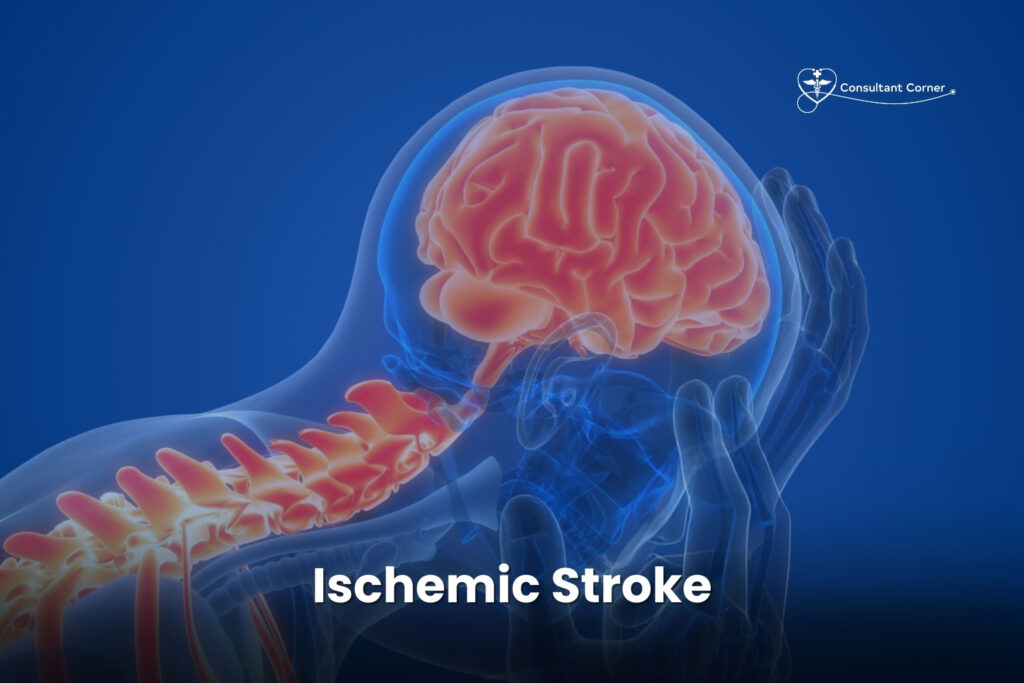
🧠 Ischemic Stroke – Act Fast. Get the Right Care. Stroke Symptoms? Every Minute Matters. An ischemic stroke occurs when a blood vessel supplying the brain becomes blocked. Without oxygen, brain cells begin dying within minutes, making this one of the most dangerous medical emergencies. If anything feels suddenly weak, numb, blurry, or difficult to speak, don’t wait — your brain depends on quick action. ⚠️ Recognize the Warning Signs Early Ischemic strokes strike suddenly. If you notice any of these symptoms — even if they come and go — get emergency help: • Sudden weakness or numbness on one side of the face, arm, or leg • Trouble speaking or understanding words • Sudden vision loss or blurriness • Dizziness, imbalance, or sudden trouble walking • Intense, sudden headache with no known cause Use the FAST test 🚨: Face drooping • Arm weakness • Speech difficulty • Time to call 911 These symptoms are your body’s alarm system — don’t ignore them. ❗ Why Immediate Stroke Evaluation Saves LivesActing quickly can determine whether you’re eligible for: Clot-busting medication (tPA) Mechanical clot removal (thrombectomy) Advanced stroke prevention therapy Even brief symptoms can represent a TIA (mini-stroke), which is often the final warning before a major stroke. A fast evaluation can prevent lifelong disability. 📌 Are You at Risk for an Ischemic Stroke?Some of the most common risk factors include: High blood pressure (No. 1 cause) Diabetes High cholesterol Atrial fibrillation or heart disease Smoking or vaping Obesity / sedentary lifestyle Previous stroke or TIA Family history of stroke If you have any of these, an early neurology consultation truly matters. 🏥 Why Patients Choose Consultant Corner Your recovery — and your future risk — depends on the right specialist. At Consultant Corner, we provide: ✓ Expert Stroke Neurology Evaluation By a specialist experienced in ischemic stroke, TIA, and complex vascular conditions. ✓ Comprehensive Review of CT/MRI & Hospital Reports We explain what happened and what it means for your long-term health. ✓ Personalized Stroke Prevention Plan We address your risk factors, medications, lifestyle, and follow-up strategy. ✓ Management of Post-Stroke Symptoms Weakness, dizziness, vision issues, memory problems, speech difficulty — all evaluated and treated. ✓ Same-week Appointments Available Because stroke symptoms and TIA concerns cannot wait. You get clarity, expert care, and long-term protection for your brain. 🚨 When You MUST Call 911Skip urgent care — go straight to the ER if you experience: New or worsening weakness Sudden speech difficulty Severe headache Loss of consciousness Repeated vomiting Sudden confusion One-sided numbness or vision loss A stroke is always an emergency. 📞 Schedule Your Stroke Evaluation If you recently had a stroke or TIA, or you’re experiencing new neurologic symptoms, the safest next step is a specialist evaluation.We help you understand your risks, create a prevention plan, and protect your long-term brain health. 👉 Book Your Appointment Today(Call or Request Online)
What Causes Intracerebral Hemorrhage?
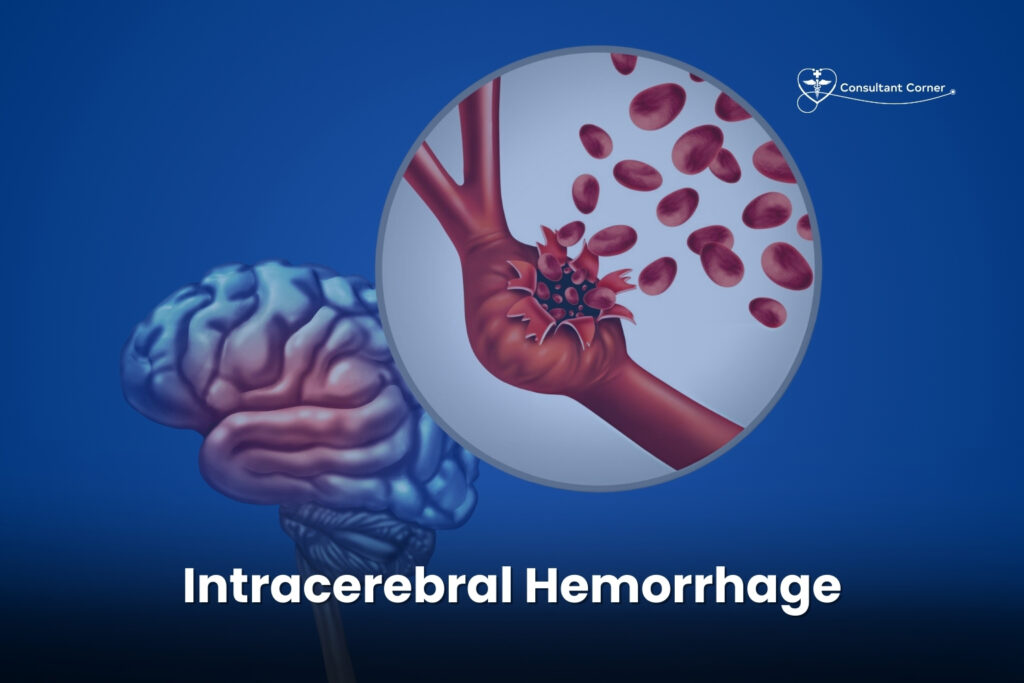
🧠 Intracerebral Hemorrhage (ICH) 🌟 Post-Stroke Recovery & Neurology Follow-Up That Truly Matters Survived a Brain Bleed? Your Recovery Starts Now. An intracerebral hemorrhage is one of the most serious types of stroke — and leaving the hospital is only the beginning. Even after discharge, many patients struggle with weakness, dizziness, memory problems, mood changes, or seizure risk. The right outpatient neurology care can protect your brain and help you regain independence. At Consultant Corner, we guide you through every step of your recovery. ⚠️ Post-ICH Symptoms That Need Neurology Follow-Up 🟣 Physical Changes Weakness or numbness Difficulty walking or frequent falls Persistent headaches 🔵 Cognitive Changes Memory issues Slow thinking or confusion Trouble focusing 🟠 Speech & Swallowing Slurred speech Word-finding difficulty Difficulty swallowing 🔺 Seizures or “Spells” If any of these continue after your ICH —👉 It’s time to see a stroke recovery specialist. 💥 Why Follow-Up After an ICH Is Critical Even weeks or months later, patients remain at risk for: 🔴 Re-bleeding ⚡ Seizures (post-stroke epilepsy) 🧩 Cognitive decline 💔 Emotional changes 📉 High blood pressure complications 👣 Balance / fall risks Consistent neurology care dramatically improves long-term outcomes. 🏥 What Consultant Corner Does for ICH Survivors 🩺 ✓ Full Review of Hospital Records & Imaging We explain what happened — clearly, simply, and with a plan. 💊 ✓ Medication & Blood Pressure Optimization Preventing another bleed starts here. ⚡ ✓ Seizure Monitoring & Treatment We adjust medications and watch for warning signs. 🏃♂️ ✓ Tailored Rehab Guidance Physical • Occupational • Speech therapy — customized to you. 🧠 ✓ Cognitive & Emotional Recovery Support Memory, mood, irritability, brain fog — all addressed. 🏡 ✓ Safety & Lifestyle Planning Driving clearance, fall prevention, return to work, daily routines. ⏱️ ✓ Same-Week Appointments Because recovery shouldn’t wait. Designers can turn these ✓ blocks into cards. 🚨 When to Call 911 After an ICH 🔴 New weakness or numbness 🗣️ New trouble speaking ⚡ A seizure 🤕 Severe headache 😵 Sudden confusion or drowsiness These may indicate a repeat bleed or stroke. 📞 Ready for Your Post-ICH Neurology Visit? Your brain needs expert follow-up — not guesswork. Let us help you recover safely, confidently, and with the support you deserve. 👉 Book Your Post-Stroke Appointment Today(Call or Request Online)
Understanding Headaches
Headache & Migraine – Expert Evaluation & Relief Headaches Taking Over Your Life? We Can Help. Frequent headaches or migraines aren’t “just stress” — they can deeply affect your work, sleep, mood, and daily life. Whether the pain is dull, sharp, throbbing, or one-sided, you deserve answers and relief. At Consultant Corner, we evaluate all types of headaches and help you get back to feeling like yourself again. ⚠️ When Headaches Become a Problem Everyone gets headaches. But certain patterns mean something deeper may be going on. You may need a specialist if you experience: • Pain that returns weekly or daily • Throbbing headaches with nausea or light sensitivity • Headaches that worsen with activity or stress • Pressure or tightness around the forehead or temples • Headaches that disrupt sleep or work • Pain around one eye with tearing or redness • Headaches after a head injury If headaches are affecting your quality of life — even a little — there is a reason. And there is treatment. 🔍 Common Headache Types We Treat Tension Headaches A constant pressure or “tight band” around the head, often linked to stress, posture, or muscle tension. Migraines Severe, pulsating pain often with nausea, vomiting, light sensitivity, sound sensitivity, or vision changes (aura). Migraines can last hours to days and significantly limit daily functioning. Cluster Headaches Intense burning or piercing pain around one eye, occurring in sudden, severe bursts. These headaches are rare but extremely painful. Secondary Headaches Headaches caused by underlying problems such as sinus issues, high blood pressure, medication overuse, dehydration, or neurological disorders. You don’t need to know the type — that’s our job. ❗ Why You Shouldn’t Ignore Recurring HeadachesUntreated headaches may be related to: Neurological issues Stress and sleep problems Vision strain High blood pressure Post-concussion effects Medication overuse Chronic migraine syndrome Early evaluation helps determine the root cause and prevents symptoms from becoming chronic. 🏥 Why Patients Choose Consultant Corner We provide comprehensive headache & migraine care designed around your symptoms and lifestyle. ✓ Expert Neurology Evaluation We identify the cause of your headaches — not just the symptoms. ✓ Personalized Treatment Plans From migraine medications and supplements to trigger management, stress reduction, and advanced therapies. ✓ Review of Prior Imaging & Labs We interpret CT/MRI scans, blood work, and previous evaluations to give you a clear understanding of what’s happening. ✓ Management of Chronic or Severe Headaches We treat migraines, post-concussion headaches, tension headaches, cluster headaches, and more. ✓ Same-week appointments available Because living with headache pain is not normal — and you shouldn’t have to wait. 🚨 When You Need Immediate Care Seek emergency attention if your headache is: Sudden and severe (“worst headache of your life”) Followed by confusion, weakness, or vision loss Associated with fever or neck stiffness Occurring after a head injury Accompanied by seizures or fainting If you’re unsure, it’s safest to get evaluated. 📞 Schedule Your Headache or Migraine Evaluation Constant headaches are not something you have to live with. Whether it’s migraines, tension headaches, or unexplained pain, we can help you find answers and long-lasting relief. 👉 Book Your Appointment Today(Call or Request Online)
What is a Head Injury?
🧠 Head Injury Evaluation & Expert Neurology Care Had a Head Injury? Don’t Take Chances. A head injury can seem minor at first, but symptoms often develop hours—or even days—later. If you’ve had a fall, accident, or any blow to the head, it’s important to get checked by a specialist. At Consultant Corner, we help you understand what’s happening, rule out dangerous complications, and guide you safely through recovery. ⚠️ Warning Signs You Should Never Ignore A head injury can affect how your brain functions—even if there’s no visible wound. Pay attention to symptoms such as: Headache that won’t go away or keeps getting worse: This can be an early sign of concussion or bleeding inside the skull. Dizziness, imbalance, or feeling “off”: These symptoms often signal disruption in brain pathways that control coordination. Nausea or vomiting: A common indicator of increased pressure in the brain. Trouble focusing, remembering, or processing: Many patients describe feeling “foggy” or unusually slow after a head injury. Sensitivity to light or blurry vision: These can appear even days later and suggest irritation of the brain after trauma. If any of these symptoms appear or worsen, it’s safest to be evaluated promptly. ❗ Why Getting Checked Matters Head injuries are unpredictable. What feels like a simple bump can sometimes lead to: Concussion and lingering post-concussion symptoms Internal bleeding (epidural or subdural hematoma) Skull fractures Persistent headaches, memory issues, mood changes, or sleep problems Early evaluation can prevent dangerous complications and dramatically improve recovery outcomes. 🏥 Why Patients Trust Consultant Corner We understand that head injuries are frightening. Our goal is to offer reassurance, clarity, and expert medical guidance. When you come to Consultant Corner, you receive: Specialist Neurology Assessment: Your evaluation is performed by a neurologist experienced in concussion and brain injury care. Review of Scans & ER Reports: If you’ve already visited the ER, we help interpret your CT/MRI findings and explain what they really mean. Personalized Recovery Plan: We guide your next steps—whether that’s rest, gradual return to work, or further testing. Management of Ongoing Symptoms: Headaches, dizziness, concentration issues, sleep problems, and memory lapses can be treated. Same-week Appointments: You shouldn’t have to wait when brain health is involved. Your care is thorough, compassionate, and tailored to your needs. 🚨 When to Go to the ER Immediately Some symptoms require emergency attention. Call 911 if you experience: Loss of consciousness Sudden severe headache Repeated vomiting Weakness or numbness on one side Seizure Confusion or unusual behavior Clear fluid from the nose or ears If you’re unsure, it’s always safer to get evaluated. 📞 Schedule Your Head Injury Evaluation If you recently had a head injury and aren’t feeling like yourself, trust your instincts—your brain is too important to ignore symptoms. Consultant Corner is here to help you get answers, feel better, and recover safely. 👉 Book Your Appointment Today(Call or Request Online)
What is Epilepsy?
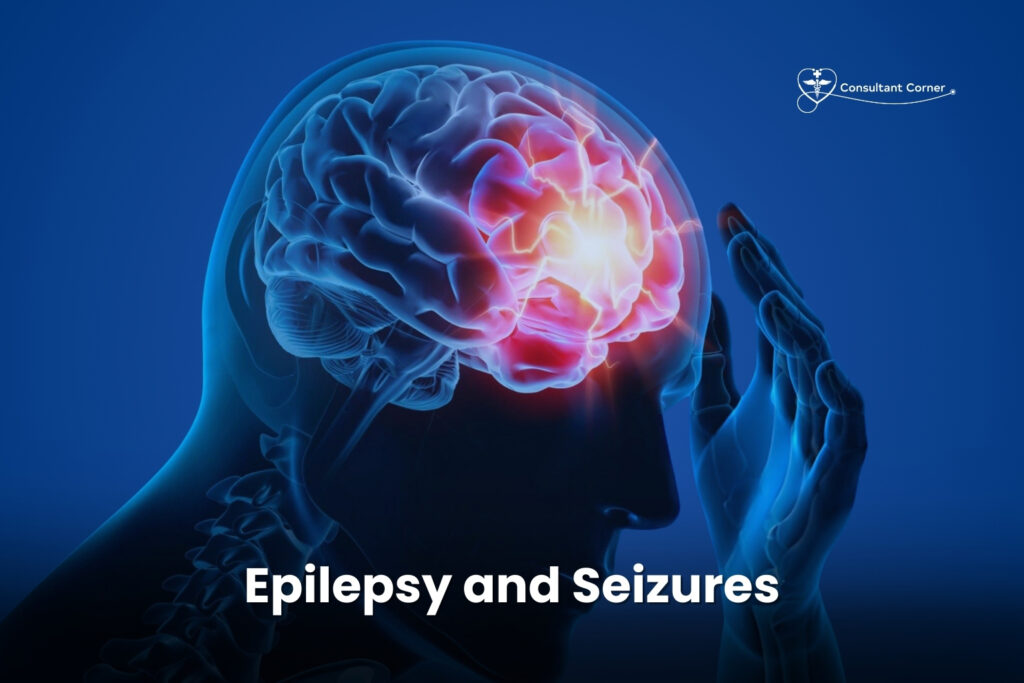
⚡ Epilepsy & Seizure Disorders – Expert Evaluation & Treatment Experiencing Seizures or Sudden Episodes? We Can Help. Epilepsy can be frightening, unpredictable, and disruptive — whether it causes brief “blank” moments, sudden jerking movements, or full seizures. If you’ve had even one unexplained seizure, it’s important to get evaluated by a neurology specialist. At Consultant Corner, we diagnose the cause of seizures, create personalized treatment plans, and help you regain safety, confidence, and control. ⚠️ Signs of Possible Seizures Seizures can look very different from person to person. You may need an evaluation if you’ve had: 🟣 Sudden “blank staring” or unresponsive moments 🟠 Repetitive movements (lip smacking, picking at clothes) 🔵 Jerking or shaking of arms or legs 🟢 Loss of consciousness or blackout spells 🟤 Strange sensations (smells, tastes, tingling, déjà vu episodes) 🟣 Sudden confusion or disorientation 🔺 Unexplained falls or collapses Even one episode can be a sign of a neurological disorder that needs attention. 🔍 What Is Epilepsy? Epilepsy is a chronic neurological condition where the brain produces sudden bursts of abnormal electrical activity — causing recurrent, unprovoked seizures. But not all seizures mean epilepsy. We evaluate: Epileptic seizures Non-epileptic episodes Fainting vs seizure events Metabolic or medication-related spells Sleep-related seizure activity You do not need to know the type — that’s our role. ✨ Types of Seizures We Diagnose & Treat🧠 Focal Seizures May cause tingling, jerking, emotions, déjà vu May or may not involve loss of awareness ⚡ Generalized Seizures Tonic–clonic (grand mal): stiffening, jerking, collapse Absence: brief staring spells Atonic: sudden loss of muscle tone (“drop attacks”) Myoclonic: quick body jerks Tonic/Clonic only: stiffness or rhythmic jerking Knowing the type helps us choose the right treatment. ❗ Why Early Treatment Matters Getting help early can: Prevent future seizures Improve safety and reduce injuries Allow driving clearance sooner Improve focus, energy, and daily functioning Lower long-term complications Identify treatable causes (tumors, infection, metabolic issues, stroke) Seizures should never be ignored — or left untreated. 🏥 Why Patients Choose Consultant Corner We offer comprehensive, expert seizure and epilepsy care, including: ✓ Advanced Neurology Evaluation Thorough review of symptoms, triggers, and medical history. ✓ EEG & Video EEG Review To identify abnormal electrical brain activity. ✓ MRI / CT Scan Interpretation To rule out tumors, stroke, scarring, or structural causes. ✓ Personalized Medication Plans Based on seizure type, age, lifestyle, and safety needs. ✓ Evaluation for Advanced Therapies VNS, RNS, epilepsy surgery referral if needed. ✓ Lifestyle, sleep, and safety guidance Stress, sleep, medication adherence, driving rules, activity restrictions. ✓ Same-week appointments available Because seizures shouldn’t wait. 🚨 When to Seek Emergency Care Call 911 if a person: Has a seizure lasting >5 minutes Has repeated seizures without waking Is not breathing or turning blue Is injured during a seizure Has fever or severe headache with seizure Experiences a first-time seizure Seizures can be dangerous — quick action saves lives. 📞 Schedule Your Epilepsy & Seizure Evaluation Whether this is your first seizure or you’ve lived with epilepsy for years, we’re here to help you get answers, stabilize symptoms, and regain control of your life. 👉 Book Your Appointment Today(Call or Request Online)
Alzheimer’s Disease
🧠 Alzheimer’s Disease & Memory Loss – Early Action Can Change Everything 🔵 Is Forgetfulness Starting to Impact Daily Life? Memory loss can be overwhelming — especially when it begins affecting conversations, appointments, familiar places, or personal routines.What feels like “normal aging” may actually be an early sign of Alzheimer’s disease, Mild Cognitive Impairment (MCI), or another neurological condition. Early evaluation can slow decline, protect independence, and give families clarity. ⚠️ Red Flags You Should Never Ignore If you notice ANY of the following, a neurological evaluation is recommended: 🟣 Memory Changes ➤ Forgetting recent events or conversations ➤ Misplacing items and unable to retrace steps 🟠 Thinking & Communication Problems ➤ Trouble finding words ➤ Repeating the same questions ➤ Difficulty following conversations 🔵 Daily Function Decline ➤ Problems managing bills, medications, or appointments ➤ Getting lost in familiar places 🔺 Behavioral or Mood Changes ➤ Irritability, anxiety, depression, or withdrawal ➤ Suspicion, paranoia, or unusual decisions These early warning signs often appear months or years before a clear diagnosis. 🧩 Memory Loss Isn’t Always Alzheimer’s There are many treatable causes of memory loss. Our job is to uncover the reason. 🔹 Common Causes We Evaluate 🧠 Alzheimer’s disease 🔄 Mild Cognitive Impairment (MCI) 💉 Vitamin deficiencies (B12, folate) ⚡ Thyroid disorders 😔 Depression & anxiety 🌙 Sleep disorders (including apnea) 💊 Medication side effects 🩸 Mini-strokes (TIAs) or vascular dementia 🩹 Past concussion or head injury Finding the cause early makes treatment more effective. ✨ Why Early Diagnosis Matters Early action means: ⭐ Better symptom control ⭐ Slower cognitive decline ⭐ Safer daily functioning ⭐ Time to plan and prepare ⭐ More effective medications ⭐ Support for caregivers & family members Waiting often means more rapid decline and fewer treatment options. 🏥 Why Families Trust Consultant Corner We provide comprehensive, compassionate, expert care for memory loss and Alzheimer’s. 🧪 ✓ Full Neurology Evaluation Detailed review of symptoms, medications, mood, sleep, and risk factors. 📝 ✓ Cognitive Testing Quick, effective in-office tests to pinpoint the type and severity of memory changes. 🖥️ ✓ Review of CT/MRI Brain Scans We explain changes clearly and identify signs of Alzheimer’s, strokes, or other causes. 🧭 ✓ Personalized Treatment & Care Plan Medications, lifestyle changes, memory strategies, and safety guidance. 💬 ✓ Support for Families & Caregivers Education, resources, and step-by-step recommendations. ⏱️ ✓ Same-Week Appointments Because memory concerns shouldn’t wait. 🚨 When Memory Loss Is an Emergency Call 911 or go to the ER if memory changes come with: ⚡ Sudden confusion 💔 Weakness or numbness 🗣️ Trouble speaking 👁️ Vision changes 🤕 Severe headache ⚠️ Loss of consciousness 😵 Sudden behavior change These may signal a stroke or acute neurological emergency. 📞 Schedule Your Memory or Alzheimer’s Evaluation If something feels “off,” trust your instincts. You don’t have to navigate this alone. We help you find answers, build a plan, and protect long-term brain health. 👉 Book Your Appointment Today(Call or Request Online)
Types of Headaches Explained: Causes, Symptoms, and Duration
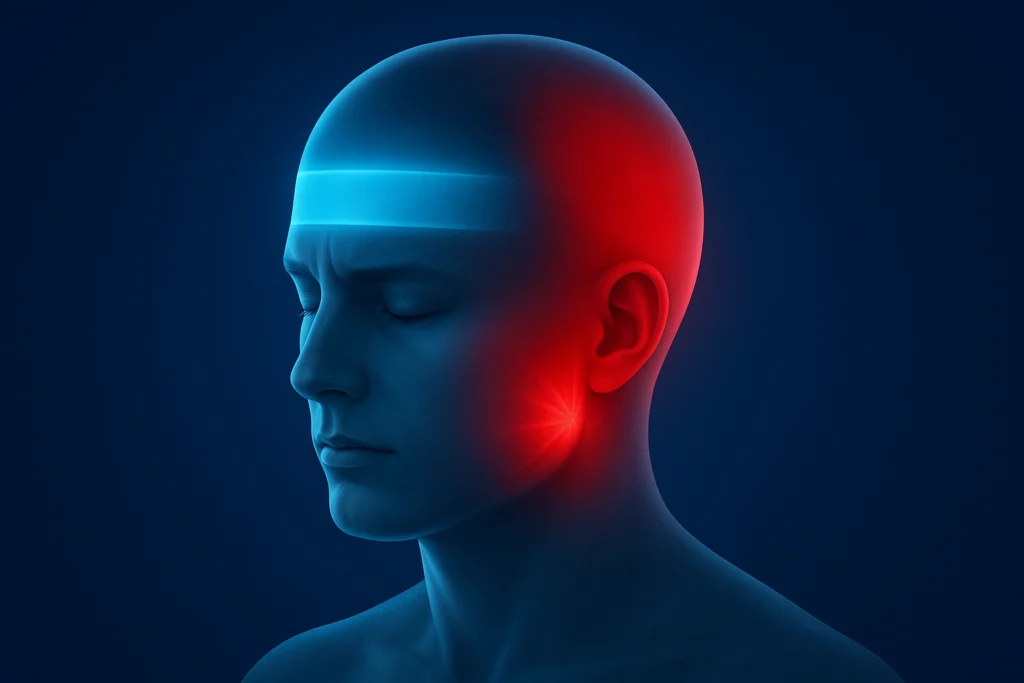
Types of Headaches Explained: Causes, Symptoms, and Duration Understanding the different types of headaches can help you identify what you’re experiencing and when to seek medical help. Headaches are broadly classified into primary headaches (not caused by another condition) and secondary headaches (caused by underlying health issues). Primary Headaches These occur independently and are not a symptom of another disease. 1. Tension Headaches Most common headache type Feels like a tight band or pressure around the head Pain level: mild to moderate Common triggers: stress, poor posture, muscle tension Duration: Minutes to several days 2. Migraine Headaches Severe, often one-sided pain May include nausea, vomiting, sensitivity to light or sound Can be preceded by an aura (vision changes, tingling sensations) Duration: Hours to days Migraines may significantly impact daily life and often require treatment. 3. Cluster Headaches Extremely painful, stabbing headache on one side, usually around the eye Occur in “clusters” – multiple attacks per day over weeks or months May cause watery eyes, nasal congestion, or eyelid drooping Duration: 15 minutes to 3 hours 4. Other Primary Headaches Triggered by specific actions such as coughing, exercise, or sleep (hypnic headaches) Symptoms and duration vary depending on the trigger Secondary Headaches These are caused by another health issue, such as: Infections Head or neck injuries Medication side effects Underlying medical conditions Summary Table: Common Primary Headaches Headache Type Description Common Symptoms Duration Tension Band-like pressure Mild to moderate pain Minutes to days Migraine One-sided, severe Nausea, aura, light/sound sensitivity Hours to days Cluster Stabbing pain near one eye Watery eyes, nasal congestion 15 min – 3 hrs Other (cough, exercise, hypnic) Triggered by actions Varies Varies When to See a Doctor Seek immediate medical attention if you experience headaches: Become more frequent or severe Are accompanied by weakness, confusion, or vision loss Follow an injury or sudden health change About Our Telehealth Neurology Services: We are Neurological Care Specialists, dedicated to providing expert evaluation and treatment exclusively through telehealth services. Our care covers a wide range of neurological conditions, including: Head Injury Ischemic Stroke Headache / Migraine Alzheimer’s Disease Parkinson’s Disease Multiple Sclerosis Epilepsy and Seizures Intracerebral Hemorrhage If you are located in Illinois or nearby areas, you can access our specialized neurological care conveniently from your home. 📞 Book your telehealth consultation today and take the first step toward better neurological health.
What is a Lenticulostriate Stroke?
Sore Back and Dizziness | Telehealth Neurologist in Bloomington
Why Do I Have a Sore Back and Dizziness at the Same Time? Experiencing back soreness with dizziness can be unsettling. These symptoms often occur together due to problems in the spine, muscles, posture, or nervous system. In some cases, they may even signal an underlying neurological or vascular condition. Here’s a detailed look at what might be causing it — and when to seek medical help. Can Cervical Spine Problems Cause Dizziness? Yes. Conditions affecting the cervical spine (neck and upper back)—such as herniated discs, cervical spondylosis (arthritis of the neck), or muscle strain—can interfere with nerves and blood vessels responsible for balance. When these structures are compressed or irritated, it can lead to neck pain, upper back soreness, and dizziness. This condition is sometimes known as cervical vertigo, where neck-related issues trigger balance disturbances or lightheadedness. Can Poor Posture Lead to Dizziness and Back Pain? Absolutely. Spending long hours in poor posture—like slouching or forward head position—strains the muscles in your back and neck. This muscle tension can reduce blood flow to the brain and affect your vestibular system (which controls balance), resulting in both back soreness and dizziness. Modern lifestyles, which often involve computer work, phone use, or prolonged sitting, are common culprits behind this posture-related discomfort. Learn More: Can Bad Posture Cause Headaches Can Problems in the Spine or Neck Cause Dizziness? Yes — spinal and neck issues are among the most common causes of dizziness combined with back pain. When nerves in the neck or upper spine become compressed or irritated, they can interfere with the body’s balance centers in the brain. Conditions such as: Cervical herniated discs Cervical spondylosis (arthritis of the neck) Pinched nerves in the neck or upper back can lead to both neck soreness and dizziness, a condition often called cervicogenic dizziness or cervical vertigo. Can Poor Posture or Muscle Tension Cause Dizziness? Absolutely. Poor posture — especially forward head posture or slouching — puts excessive strain on the neck, shoulder, and upper back muscles. Over time, this muscle tension can compress nerves or reduce blood flow to the brain, resulting in lightheadedness, imbalance, and pain. This is common in people who sit for long hours at computers or look down at phones, and it may cause what’s known as postural or tension-related dizziness. Could Spinal Injuries or Trauma Be the Cause? Yes. Spinal cord injuries, whiplash, or severe back trauma can disrupt nerve signaling and balance mechanisms in the brainstem and inner ear. This can lead to symptoms such as: Back pain or stiffness Vertigo or spinning sensation Loss of coordination or unsteadiness Anyone who experiences dizziness after an accident or fall should seek medical care immediately to rule out spinal cord injury or concussion. How Do Muscle Tension and Nerve Irritation Contribute? When the upper back, neck, or shoulder muscles tighten excessively, they can press on nearby nerves and blood vessels, disrupting circulation and nerve signals. This tension may cause a combination of headaches, dizziness, muscle stiffness, and soreness. Chronic stress, lack of movement, or repetitive strain often worsen these symptoms. Can Whiplash or Spine Injuries Cause Dizziness? Yes. Traumatic injuries—such as whiplash from a car accident or sports injuries—can strain or damage neck muscles, ligaments, and spinal structures. These injuries may alter how your brain processes signals from your neck and inner ear, leading to pain, dizziness, and imbalance. Post-traumatic dizziness can persist for weeks or months if untreated. What Other Conditions Can Cause Dizziness with Back Pain? Some systemic or musculoskeletal conditions can also cause dizziness and back soreness, including: Osteoarthritis or sciatica Fibromyalgia Pregnancy (due to posture changes and circulation shifts) Dehydration or low blood sugar Vascular disorders affecting blood flow Since these symptoms can overlap with those of many conditions, accurate diagnosis is crucial. How Is Dizziness with Back Pain Treated? Treatment depends on the underlying cause but may include: Posture correction and ergonomic adjustments Physical therapy to strengthen neck and back muscles Stretching and muscle relaxation techniques Pain relievers or muscle relaxants (if prescribed) Vestibular rehabilitation for dizziness related to balance disorders If your dizziness is severe, persistent, or accompanied by numbness, vision problems, or difficulty walking, seek urgent medical attention. These could indicate a neurological or vascular emergency. What Symptoms Should I Watch For? Along with back pain, dizziness may appear as: Lightheadedness or faintness Feeling “off-balance” or unsteady Spinning sensation (vertigo) Blurred vision or disorientation Difficulty maintaining coordination If these symptoms are persistent, severe, or worsening, or if they occur with numbness, weakness, or vision changes, urgent medical evaluation is necessary. Such signs could indicate stroke, nerve compression, or vascular problems. When Should I See a Doctor? You should contact a healthcare provider or neurologist if you experience: Recurrent or worsening dizziness Severe neck or upper back pain Unsteadiness or balance loss Headaches, blurred vision, or confusion Recent trauma or whiplash Early evaluation can help identify treatable causes and prevent complications. How Can MyCornerConsultant Help? At MyCorner Consultant, we provide neurologist telehealth consultations for patients experiencing back pain, dizziness, and balance problems in Bloomington and all nearby cities. We specialize in identifying and treating neurological causes, including: Cervical vertigo and balance disorders Headache and migraine Spine-related nerve compression Stroke and vascular issues Traumatic head or neck injuries Through secure telehealth sessions, patients across Bloomington and all nearby cities can access expert neurological care without the need for in-person visits. Take the First Step Toward Relief If you’re struggling with persistent back soreness and dizziness, don’t ignore the signs — they could point to an underlying neurological or spinal condition. Our goal at MyCornerConsultant is to help you understand your symptoms, identify the cause, and create a clear recovery plan — all through accessible, patient-centered telehealth care. Schedule your online neurology consultation today and connect with a trusted Bloomington neurologist dedicated to your brain and spine health.
How Big of a Problem Are Headaches in the U.S
How Big of a Problem Are Headaches in the U.S.? Headaches are one of the most common—and often overlooked—public health issues in America. Affecting millions each year, they significantly impact quality of life, healthcare systems, and workplace productivity. From mild tension headaches to chronic migraines, these conditions remain underdiagnosed and undertreated, despite their growing burden on society. How Many Americans Experience Headaches? Headaches are nearly universal, but recent studies highlight the true scale: Around 78 million Americans experience migraines or severe headaches in their lifetime. Migraines alone affect about 12% of the population, or roughly 38 million people. Tension-type headaches occur in up to 80% of adults, typically linked to stress, fatigue, and posture. The National Headache Foundation reports that 1 in 6 Americans experiences headaches regularly. These figures confirm that headaches affect people of all ages, backgrounds, and lifestyles. How Much Do Headaches Cost the U.S. Economy? Headaches come with a high economic price tag—estimated at over $13 billion annually.This includes: Direct costs: physician visits, diagnostics, and medications Indirect costs: absenteeism, reduced performance, and lost productivity Every year, headaches are responsible for approximately 157 million lost workdays, making them a major driver of workplace inefficiency and absenteeism. How Do Headaches Strain the Healthcare System? Headaches rank among the top 15 reasons for emergency department visits in the United States.Millions of people seek urgent medical care for sudden or severe headaches, concerned about conditions such as stroke or meningitis. Chronic headache sufferers—particularly migraine patients—require frequent consultations, neurological care, and long-term management, driving up overall healthcare utilization and costs. Who Is Most Affected by Headaches? Headaches do not discriminate, but certain groups face a higher risk: Women are three times more likely than men to experience migraines, largely due to hormonal changes. Prevalence peaks between ages 30 and 50, coinciding with high work and family responsibilities. Children and older adults can also experience headaches, though diagnosis and treatment may differ by age. These demographic insights show the importance of tailored headache care across life stages. How Do Headaches Affect Daily Life and Well-Being? For many, headaches are more than just pain—they disrupt daily routines, relationships, and emotional health.Chronic or frequent headaches can lead to: Difficulty focusing or completing work Reduced participation in social or family activities Increased stress, anxiety, and sleep issues Lower overall quality of life Migraine sufferers, in particular, often experience significant disability during attacks, which may last from hours to days. Why Are Headaches a Major Public Health Concern? Headaches—especially migraines and tension-type headaches—affect tens of millions of Americans and cost billions in healthcare and lost productivity.They remain among the top neurological complaints and a major source of preventable disability. Increasing awareness, improving diagnosis, and promoting early management strategies are essential steps toward reducing this hidden but widespread public health burden. Expert Neurology Care — Available Across Bloomington and Beyond At My Corner Consultant, we bring compassionate, evidence-based neurology care directly to your screen — no long drives, no crowded waiting rooms, and no delays in getting answers. Our Bloomington-based neurologist offers trusted telehealth consultations for patients throughout Bloomington and all surrounding cities, ensuring everyone has access to specialized brain and nerve care, wherever they are. We diagnose and manage a wide range of neurological conditions, including: Head Injury & Concussion Management – Comprehensive evaluation and follow-up care. Ischemic Stroke & Post-Stroke Recovery – Expert guidance to prevent recurrence and improve function. Headache & Migraine Disorders – Tailored treatment plans to reduce frequency and intensity. Alzheimer’s Disease & Memory Disorders – Early detection, cognitive assessment, and ongoing support. Parkinson’s Disease & Movement Disorders – Medication management and quality-of-life care. Multiple Sclerosis (MS) – Symptom management and long-term care planning. Epilepsy & Seizures – Diagnosis, medication optimization, and lifestyle support. Intracerebral Hemorrhage & Brain Bleeds – Specialist consultation for recovery and prevention. Wherever you live in Bloomington or nearby areas, expert neurological care is just a video call away.Our goal is to make high-quality neurology accessible, personal, and convenient for every patient — because your brain health deserves nothing less. Telehealth Appointments Available in Bloomington and All Nearby Cities
Can Bad Posture Cause Headaches
Can Bad Posture Cause Headaches? Yes, bad posture can cause headaches. Poor posture strains muscles in the neck, upper back, and shoulders, causing muscle tightness, spasms, and inflammation. This tension, especially around the base of the skull and neck, can irritate nerves and trigger cervicogenic headaches, which often start in the neck and radiate to the forehead, temples, or behind the eyes. Forward head posture, slumping, or hunching puts extra pressure on the cervical spine, forcing the neck muscles to overwork in support of the head’s weight. This leads to muscle fatigue and joint stress, which contribute to headaches. In addition, bad posture can restrict blood flow and compress nerves, worsening headache symptoms. Also, abnormal posture can alter breathing patterns, further exacerbating headaches. What Are the Symptoms of Bad Posture Headaches? Pain starting at the base of the skull, radiating to the temples, forehead, or behind the eyes Neck pain and stiffness worsen with head or neck movement Muscle tightness or spasms in the upper back and neck Possible tingling or numbness in the arms due to nerve compression Lightheadedness and difficulty concentrating in some cases Poor posture also reduces blood flow and may compress nerves, aggravating headache symptoms. Both slouching and overly rigid upright posture can contribute to creating muscle imbalances or improper breathing patterns. How Does Bad Posture Cause Headaches? Introducing structural imbalances such as forward head posture and a hyperkyphotic thoracic spine Causing muscle tension and spasms, particularly in the neck and upper back muscles Irritating nerve pathways that refer pain to the head, mimicking migraine or tension headaches How Can You Treat or Prevent Bad Posture Headaches? Treatment typically involves improving posture through: Physical therapy and ergonomic adjustments Stretching and strengthening exercises for neck and upper back muscles Correcting spinal alignment and maintaining neutral posture while sitting or standing Taking regular breaks from screens or desks to reduce strain How Poor Posture Contributes to Headaches? Poor posture is a significant contributor to headaches, with research highlighting its impact on neck pain and headache frequency. Forward head posture (FHP), a common form of bad posture, places excessive strain on the cervical spine and associated muscles, leading to cervicogenic headaches—a type of headache originating from the neck. Key Statistics and Research Findings Studies show a moderate negative correlation between forward head posture angle and neck pain intensity (correlation coefficient r = −0.536, p < 0.01). The prevalence of cervicogenic headache among healthcare workers, such as nurses, is approximately 27.1%, with neck disability reported in 31.4% of subjects in one study. Forward head posture increases the odds of headaches by about 4.9% for every 1 cm of head displacement from normal alignment. Around 45.4% of dentists experience cervicogenic headaches, linked to postural abnormalities like upper crossed syndrome. Overall, cervicogenic headaches affect between 0.4% and 42% of the general population, depending on study cohorts and diagnostic criteria. Mechanisms Linking Posture and Headache Development Poor posture-related headaches stem from muscle fatigue, nerve irritation, and joint stress in the cervical region. These headaches often present with neck pain, stiffness, and radiating pain from the neck to the head, and they can mimic tension or migraine headaches. How to Reduce Headaches Caused by Poor Posture Addressing posture through ergonomic interventions, physical therapy, and strengthening exercises for the neck and upper back has been shown to effectively reduce headache frequency and intensity associated with poor posture. Final Insights Bad posture is a well-documented yet under-recognized factor in headache prevalence. It’s strongly associated with neck pain and cervicogenic headaches in both general and occupational populations, emphasizing the need for postural awareness and preventive care. Telehealth Neurology Services in Illinois At MyConsultantCorner, we provide expert telehealth neurology services across Illinois, helping patients receive quality care without the need to travel. Whether you’re dealing with headaches, migraines, dizziness, neuropathy, or other neurological conditions, our board-certified neurologists are here to help through secure, convenient online consultations. We focus on understanding your symptoms, offering personalized treatment plans, and guiding you toward better brain and nerve health—all from the comfort of your home. Book your telehealth neurology appointment in Illinois today and get the professional care you deserve—anytime, anywhere.
What is a headache?
What is a headache? A headache is pain or discomfort that occurs in any part of the head, including the face, scalp, or upper neck. It is one of the most common physical complaints and can range from mild to severe in intensity. Headaches can be classified as primary, meaning they are not caused by another medical condition (such as tension headaches, migraines, or cluster headaches), or secondary, meaning they result from an underlying medical issue such as injury, infection, or other diseases. The pain in a headache comes from irritation or dysfunction of pain-sensitive structures around the skull, including muscles, nerves, blood vessels, and tissues. The brain itself does not have pain receptors. Headaches can feel like throbbing, pressure, tightness, or sharp pain, and symptoms may vary depending on the type of headache. Most headaches are not signs of serious illness, but severe, persistent, or unusual headaches warrant medical evaluation. What are the types of headaches? Headaches are generally classified into two main types: primary and secondary headaches. Primary Headaches Primary headaches are disorders themselves without an underlying cause. They arise from dysfunction or overactivity of pain-sensitive structures in the head. Major types include: Migraine: Characterized by moderate-to-severe throbbing pain, often with nausea, sensitivity to light/sound, and sometimes preceded by aura. Tension-type headaches: The most common type, presenting as a bilateral, pressing, or tightening pain often related to muscle tension, stress, or fatigue. Trigeminal autonomic cephalalgias (TACs): Includes cluster headaches, paroxysmal hemicrania, and SUNCT syndrome, usually unilateral with autonomic symptoms like tearing or nasal congestion. Other primary headaches: Include less common types such as hypnic headaches (which wake people from sleep), primary stabbing headaches (“ice pick headaches”), cough headaches, and exercise headaches. Some primary headaches are set off by certain habits or circumstances, including : Alcohol, particularly red wine. Certain foods, like processed meats with nitrate preservatives. Nicotine exposure. Too little sleep or disrupted sleep patterns. Poor posture. Strenuous activity or heavy exercise. Missing meals or long gaps between eating. Straining actions, such as coughing, sneezing, forceful nose blowing, bearing down (e.g., during a bowel movement), or intense laughing/crying. Primary headaches constitute over 90% of headache cases seen in clinical practice. Secondary Headaches Secondary headaches are caused by an underlying medical condition or disorder. Causes include: Trauma or injury to the head or neck Vascular disorders (e.g., stroke, aneurysm) Intracranial infections (e.g., meningitis) Substance use or withdrawal (e.g., medication-overuse headache) Disorders of homeostasis (e.g., hypertension) Disorders of the head or neck structures (e.g., sinus infection, dental problems) Psychiatric disorders Secondary headaches can be life-threatening and require identifying the underlying cause for proper treatment. Summary Table of Headache Types Headache Type Description Example Subtypes Primary Headaches No underlying cause; disorder itself Migraine, Tension-type, Cluster, Hypnic, Ice-pick Secondary Headaches Due to another medical condition Trauma-related, Vascular, Infection, Medication-overuse This classification is crucial for diagnosis and treatment decision-making, given the vast diversity in headache causes and presentations. What’s the difference between a headache and a migraine? Headaches affect nearly everyone, with about 90% of people experiencing them at some point, while migraines affect approximately 12% of the global population, disproportionately impacting women and young to middle-aged adults. The primary difference between a headache and a migraine lies in the severity, symptoms, and impact on daily life. A headache generally refers to any pain or discomfort in the head or upper neck area. It usually involves mild to moderate, steady, pressing, or tightening pain often felt on both sides of the head. Most headaches, such as tension-type headaches, do not include additional symptoms and rarely cause significant disruption to daily activities. A migraine is a neurological disorder characterized by recurrent episodes of moderate to severe throbbing or pulsating pain, primarily on one side of the head. Migraines are accompanied by symptoms like nausea, vomiting, and increased sensitivity to light, sound, or smell. An aura, including visual or sensory disturbances, may also precede them. Migraines typically last 4 to 72 hours and can severely affect daily functioning. Key Differences: Feature Headache Migraine Pain Type Dull, pressing, or tightening Throbbing or pulsating Pain Location Usually, both sides of the head Often, one side of the head Associated Symptoms Generally none Nausea, vomiting, aura, sensitivity to light/sound Duration Minutes to hours 4 to 72 hours or longer Impact on Daily Life Usually mild, occasional disruption Often severe, with significant disruption Migraines tend to be more complex and debilitating than common headaches, requiring specific treatment approaches. What is the main cause of a headache? The main causes of headaches vary depending on the type but generally involve irritation or dysfunction of pain-sensitive structures in the head, such as nerves, blood vessels, muscles, or chemical activity in the brain. Common Causes of Headaches Tension headaches: Caused primarily by muscle tightening in the head and neck due to stress, fatigue, poor posture, or anxiety. Migraine headaches: Triggered by a combination of genetic predisposition and environmental factors such as stress, hormonal changes, certain foods (e.g., processed meats, chocolate, alcohol), changes in sleep patterns, sensory stimuli (bright lights, strong smells), and caffeine withdrawal. Lifestyle factors: Include alcohol consumption (especially red wine), skipped meals, dehydration, lack of or irregular sleep, and excessive screen time. Secondary causes: Underlying medical conditions such as sinus infections, eye strain, dental problems, ear infections, head injury, medication side effects, or severe illnesses like meningitis and hypertension. Most headaches are primary, caused by overactivity or problems with pain-sensitive structures rather than a serious underlying disease, though secondary headaches can indicate an emergency when related to infections, trauma, or vascular problems Are migraines and other headaches hereditary? Yes, headaches—particularly certain types like migraines and cluster headaches—can be hereditary. Genetic factors often contribute to the susceptibility to these headaches, combined with environmental influences. Hereditary Factors in Headaches: Migraines: Up to 60-80% of the risk for migraines is estimated to be genetic. Migraines tend to run in families, with many people having a first-degree relative (parent or sibling) who also experiences migraines. Certain gene mutations and family patterns suggest that
Types of Headaches Explained | Tension, Migraine & Cluster Symptoms
Types of Headaches Explained: Causes, Symptoms, and Duration Understanding the different types of headaches can help you identify what you’re experiencing and when to seek medical help. Headaches are broadly classified into primary headaches (not caused by another condition) and secondary headaches (caused by underlying health issues). Primary Headaches These occur independently and are not a symptom of another disease. 1. Tension Headaches Most common headache type Feels like a tight band or pressure around the head Pain level: mild to moderate Common triggers: stress, poor posture, muscle tension Duration: Minutes to several days 2. Migraine Headaches Severe, often one-sided pain May include nausea, vomiting, sensitivity to light or sound Can be preceded by an aura (vision changes, tingling sensations) Duration: Hours to days Migraines may significantly impact daily life and often require treatment. 3. Cluster Headaches Extremely painful, stabbing headache on one side, usually around the eye Occur in “clusters” – multiple attacks per day over weeks or months May cause watery eyes, nasal congestion, or eyelid drooping Duration: 15 minutes to 3 hours 4. Other Primary Headaches Triggered by specific actions such as coughing, exercise, or sleep (hypnic headaches) Symptoms and duration vary depending on the trigger Secondary Headaches These are caused by another health issue, such as: Infections Head or neck injuries Medication side effects Underlying medical conditions Summary Table: Common Primary Headaches Headache Type Description Common Symptoms Duration Tension Band-like pressure Mild to moderate pain Minutes to days Migraine One-sided, severe Nausea, aura, light/sound sensitivity Hours to days Cluster Stabbing pain near one eye Watery eyes, nasal congestion 15 min – 3 hrs Other (cough, exercise, hypnic) Triggered by actions Varies Varies When to See a Doctor Seek immediate medical attention if headaches: Become more frequent or severe Are accompanied by weakness, confusion, or vision loss Follow an injury or sudden health change