
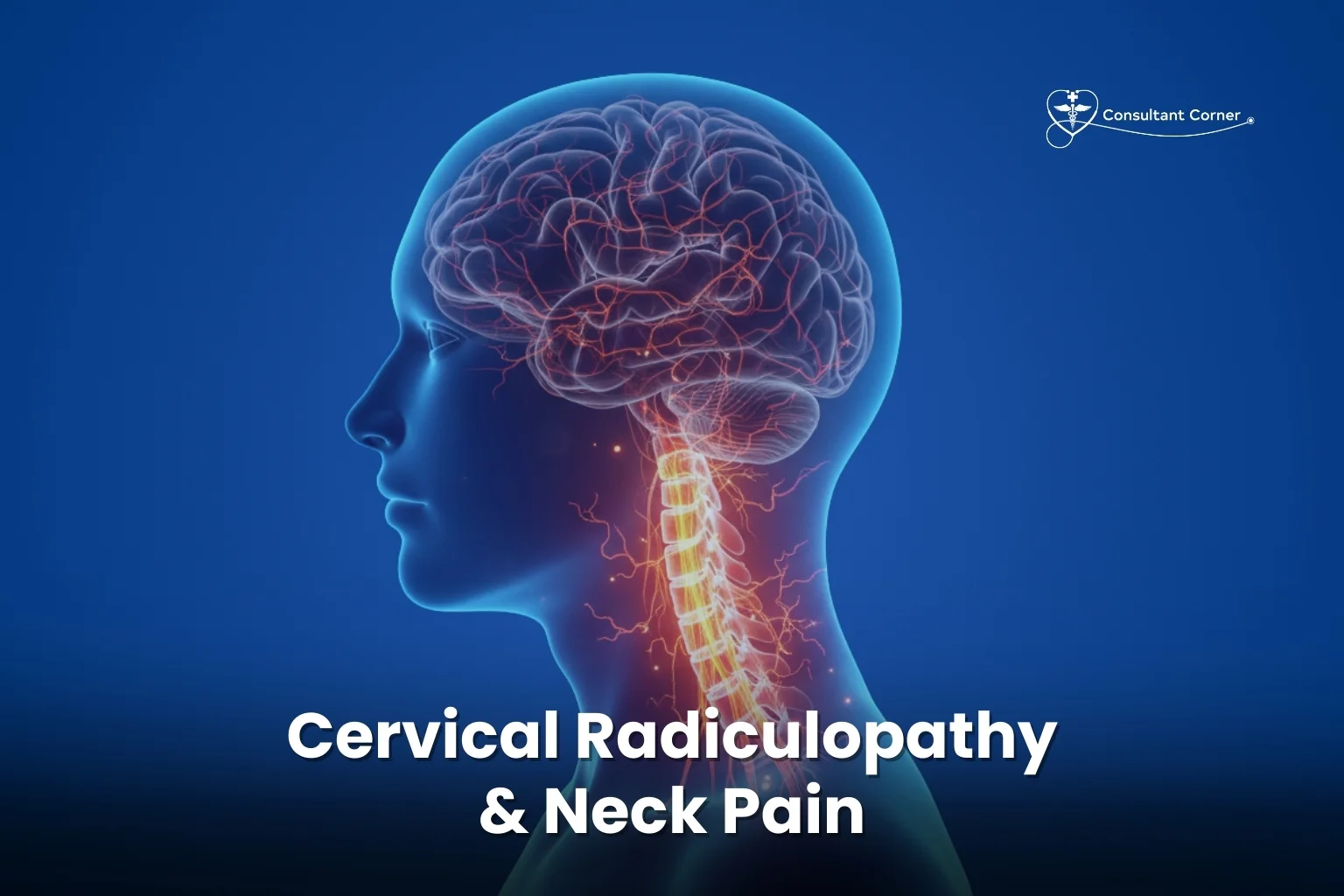
Cervical Radiculopathy & Neck Pain: Why That Shooting Pain in Your Arm Starts in Your Neck
Cervical radiculopathy and neck pain are one of the most common — and most misunderstood — reasons people seek out a neurologist at 2 a.m. It usually starts with mild symptoms: a stiff neck, a dull ache between the shoulder blades, or maybe a slight tingling in the fingers. Then, overnight, it turns into a severe burning pain that radiates from the neck to the shoulder, down the arm, and into the hand. If this description sounds familiar, you may be suffering from a pinched nerve in the neck, medically known as cervical radiculopathy.
Once a nerve root is truly compressed or inflamed, cervical radiculopathy and neck pain rarely get better on their own, which is why many patients spend weeks — sometimes months — going through heating pads, over-the-counter painkillers, and massage appointments before getting a proper diagnosis. At Consultant Corner, we can accurately identify which nerve is affected and why, so you can start the right treatment without the guesswork.
This guide discusses what cervical radiculopathy actually is, what the warning signs are that distinguish it from a simple muscle strain, what its most common causes are, when it becomes a true emergency, and how our neurology team treats it. You will also find a brief table comparing radiculopathy and common neck pain, a Frequently Asked Questions (FAQ) section for questions we often hear in the clinic, and information about the neurological services we provide throughout Bloomington, Illinois and El Paso, Texas
Your neck (cervical spine) is made up of seven small vertebrae stacked on top of each other, from which nerve roots branch out through small openings called neuroforamen. Each of these nerve roots — usually labeled C5 through C8 — carries signals between your brain and a specific part of your shoulder, arm, or hand. When one of these nerve roots becomes compressed or irritated, usually due to a herniated disc, bone spur, or general damage, it results in cervical radiculopathy.
According to the American Academy of Orthopaedic Surgeons, cervical radiculopathy is more common in older adults due to degenerative changes such as arthritis, while in younger patients, sudden disc herniation is more likely to cause it. Similarly, the Cleveland Clinic describes it as a neurological dysfunction caused by compression of the cervical nerve root, which causes pain, weakness, and numbness that radiates down the arm.
In other words, cervical radiculopathy and neck pain are not just neck pain — they are a problem with nerve signaling. This distinction is important because treating a pinched nerve is completely different from treating a muscle strain.

7 Warning Signs of Cervical Radiculopathy and Neck Pain That You Shouldn’t Ignore
Normal neck stiffness is usually confined to the neck. Cervical radiculopathy and neck pain, on the other hand, tend to spread from one location to another. Here are seven symptoms we often ask about during evaluations:
- Neck pain that radiates to the shoulder or arm — it is often described as sharp, burning, or electric shock-like rather than dull ache.
- Numbness or pins and needles in the arm, hand, or specific fingers.
- Burning or electric shock-like sensations that travel down the arm, especially in certain positions of the neck.
- Weakness in the arm or hand — difficulty holding a coffee cup, opening a jar lid, or holding a phone.
- Pain that worsens when you turn your head or look down, such as when reading, driving, or looking at a phone screen.
- Difficulty gripping or dropping objects unexpectedly, which may be a sign of nerve-related weakness rather than general fatigue.
- Pain that disrupts sleep, especially when lying on one side or bending the neck backward.
Since each cervical nerve root supplies nerves to slightly different areas, the exact pattern of numbness or weakness can help pinpoint which level of the spine is affected. This is why a proper neurological exam, in addition to an X-ray, is so important for a proper diagnosis.
Common Causes of Cervical Radiculopathy and Neck Pain
Search engines and patients commonly use the same terms to describe this condition, and there are good reasons for this — here are the real, medically recognized causes:
- Herniated cervical disc
- Swelling of the disc in the neck
- Cervical spinal stenosis (narrowing of the spinal canal)
- Degenerative disc disease
- Neck arthritis (cervical spondylosis)
- Stress from “tech neck” and forward head posture
- Pressure on nerves from muscle spasm or whiplash
The Mayo Clinic and other academic medical centers consistently identify disc herniation and degenerative changes in the spine as the two leading causes, and cite sudden trauma, such as whiplash from a car accident, as an additional cause. Repetitive forward head posture — which is caused by staring at a phone or laptop for hours on end — is becoming increasingly common, even among younger patients.
How “Tech Neck” Contributes to Cervical Radiculopathy and Neck Pain
Every inch your head leans forward increases the load on your cervical spine many times over. When your head is in a normal position, your neck carries roughly the weight of a bowling ball. When you lean your neck forward to look at your phone, this effective load can increase dramatically. Doing this for hours a day, five or six days a week, for years, builds up pressure on the discs and joints in your neck. Over time, this can accelerate the same degenerative changes — such as disc thinning, bone spurs, and narrowing of the neuroforamen — that can lead to nerve compression later in life. This is why cervical radiculopathy and neck pain are becoming increasingly common among office workers, students, and those who use phones, tablets, or laptops for long periods of time.
Who Is Most at Risk for Cervical Radiculopathy and Neck Pain?
Although anyone can develop a pinched nerve in the neck, certain factors increase the risk:
- Adults over 40, when disc degeneration and arthritis are more common
- Those who have physically demanding jobs that require repetitive neck movements or heavy lifting
- Office workers and students, who sit in front of a screen for long periods of time and tilt their heads forward
- Athletes who play contact sports, or who are recovering from whiplash-like injuries
- Smokers, as smoking has been linked to accelerated disc degeneration
- Those with a family history of degenerative disc disease
Identifying these risk factors does not guarantee prevention, but it helps explain why cervical radiculopathy and neck pain appear years earlier in some patients than in others.
Cervical Radiculopathy vs. Simple Neck Strain
Since the initial symptoms can be similar, patients often cannot be sure whether they are suffering from a pinched nerve or a simple muscle strain. This table highlights the key differences.
| Characteristic | Cervical Radiculopathy (Pinched Nerve) | Simple Neck Strain |
|---|---|---|
| Location of pain | Spreads to the shoulder, arm, and hand | Confined to the neck and upper back |
| Feelings | Burning, electrical, tingling, numbness | Dull, aching, stiff |
| Weakness | Weakness in the arm/hand or possibility of dropping an object | Rare |
| Causes | Pressure on the nerve due to a disc, bone spur, or stenosis | Overuse of muscles, poor posture, sleeping incorrectly |
| Typical behavior | May be permanent or worsen without treatment | Usually improves within a few days |
| Recommended care | Neurological evaluation and imaging review | Rest, light stretching, over-the-counter (OTC) painkillers |

Some Self-Care Tips While Waiting for an Appointment for Cervical Radiculopathy and Neck Pain
If you are suffering from cervical radiculopathy and neck pain and are waiting for an evaluation, here are some simple steps that may provide some relief in the interim:
- Avoid leaning your head forward for long periods of time. Bring your phone or laptop screen to eye level rather than looking down.
- Use a comfortable pillow. A pillow that keeps your neck in a normal position while you sleep can help reduce the severity of your pain at night.
- Apply ice or heat. Ice can help reduce acute inflammation, while heat can help reduce muscle tension around the affected area.
- Limit heavy lifting and reaching your arms overhead, as these can put pressure on an already irritated nerve root.
- Avoid activities that aggravate arm symptoms, such as excessive neck rotation or straightening, until you are evaluated.
These steps are not a substitute for a neurological evaluation, but they may provide some temporary relief while you wait for your appointment.
What to Expect During Your Cervical Radiculopathy and Neck Pain Evaluation
A typical visit to Consultant Corner for cervical radiculopathy and neck pain begins with a detailed history — when the pain started, what makes it worse or better, and exactly where the numbness, tingling, or weakness occurs. This is followed by a specific neurological exam, which tests reflexes, strength, and sensation along specific nerve pathways in the arm and hand. If there are previous imaging reports, our team reviews them directly, rather than relying solely on written reports; if new imaging is needed, we help coordinate it. From there, we create a treatment plan based on which nerve roots are involved and how severe the compression appears to be, with clear next steps and a realistic time frame for improvement.
Why Patients Choose Consultant Corner for Cervical Radiculopathy and Neck Pain
Neurology’s Expertise in Treating Pinched Nerves
Diagnosing cervical radiculopathy and neck pain doesn’t just mean getting an MRI — it involves combining imaging results with a direct neurological exam to confirm exactly which nerve root is affected and why.
Specific, Non-Surgical Treatment Options
Most patients respond well to conventional treatments: such as nerve pain medications, muscle relaxation techniques, posture correction, and ergonomic plans for work and daily activities.
Imaging Review by Neurologist
We personally review MRIs, CT scans, and X-rays to create a clear and effective treatment plan, rather than relying solely on radiology reports.
Personalized Treatment Strategies
Each plan is tailored to your specific nerve problem, with the goal of reducing pain, restoring normal movement, and preventing long-term nerve damage.
Same-Week Appointments
You shouldn’t have to wait weeks for answers to your nerve pain, which is why we prioritize scheduling appointments quickly for new evaluations.
Meet Your Neurologist
Cervical radiculopathy and neck pain evaluations at Consultant Corner are overseen by Sakib A. Chowdhury, MD, a vascular neurologist and neuro-intensivist. He has experience in the diagnosis and management of a wide range of neurological conditions, from nerve compression syndromes to stroke and traumatic brain injury.
Neurological Care Near You
Consultant Corner offers complete neurology services, including neurological evaluations for cervical radiculopathy and neck pain, at two locations:
- Consultant Corner – Neurological Care in Bloomington, IL — Neurologists in Bloomington, Illinois
- Consultant Corner – Neurological Care in El Paso, TX — Health Consultants in El Paso, Texas
Our Partnership with MyCare Express Care in Bloomington, IL
Consultant Corner, a walk-in clinic located at 1404 Eastland Drive, Suite 103 in Bloomington, IL, is proud to partner with MyCare Express Care. MyCare Express Care offers same-day walk-in evaluations for acute pain and injuries — including neck pain, back pain, sprains, and minor injuries — seven days a week, during extended hours. Patients who come in with new or worsening symptoms in the neck and arms are seen quickly and, when nerve involvement is suspected, are referred directly to our neurology team at Consultant Corner for a focused evaluation of possible cervical radiculopathy. MyCare Express Care also offers virtual neurology visits, making it easy for patients in the Bloomington area to connect with specialized care without unnecessary delays.
Can Cervical Radiculopathy and Neck Pain Be Prevented?
While it is not possible to prevent all cases of cervical radiculopathy and neck pain — because degenerative changes are a normal part of aging in many cases — there are a few habits that can help reduce your risk or slow its progression:
- Practice good posture at your desk, in the car, and when using your phone, keeping your ears straight over your shoulders rather than leaning forward.
- Take breaks from screens. Every 30 to 60 minutes, look up, roll your shoulders back, and gently stretch your neck.
- Strengthen your neck and upper back. Deep neck flexor exercises and strengthening your shoulder blades help support the cervical spine.
- Warm up before lifting heavy objects or playing contact sports, and use good posture to avoid sudden stress on your neck.
- Create an ergonomic workstation, with your monitor at eye level and your keyboard positioned so your shoulders can rest comfortably.
- Don’t ignore early symptoms. It’s much easier to treat a problem like mild neck stiffness or occasional tingling in the early stages than to treat cervical radiculopathy once it’s developed.
These practices won’t completely eliminate the risk, but early evaluation as soon as new symptoms appear gives you the best chance of keeping your neck healthy in the long term.

When Neck Pain Requires Emergency Treatment
Cervical radiculopathy and neck pain can be treated, but in some cases, immediate evaluation is needed instead of a scheduled appointment. Seek emergency medical attention if you experience the following symptoms:
- Sudden weakness in the arm or hand
- New numbness spreading down the arm
- Lack of balance or coordination
- Loss of bladder or bowel control
- Severe neck pain after an injury, such as a fall or car accident
These symptoms may indicate a more serious spinal problem and should not wait for a routine checkup.
Related Neurological Conditions We Treat
Nerve and brain health are closely linked, and many patients who come in for cervical radiculopathy and neck pain also have questions about other neurological symptoms. These related articles may also be helpful to you:
- What Causes Ischemic Stroke
- 12 Early Signs of Ischemic Stroke That Could Save Your Life
- Understanding Headaches
- 11 Causes of Migraines That Could Be to Blame for Your Headaches
- What is a Head Injury
- 10 Early Signs of Alzheimer’s Disease That You Should Never Ignore
Frequently Asked Questions About Cervical Radiculopathy and Neck Pain
Are cervical radiculopathy and herniated discs the same thing?
Not exactly. A herniated disc is a possible cause of cervical radiculopathy, but radiculopathy can also be caused by bone spurs, spinal stenosis, or general degenerative changes in the neck.
Can cervical radiculopathy be cured without surgery?
Yes. Most cases of cervical radiculopathy and neck pain improve with conservative treatments, such as medication, posture correction, and physical therapy, and do not require surgery.
How long does it take for a pinched nerve in the neck to heal?
Recovery time varies depending on the cause and severity, but many patients notice improvement within a few weeks of starting an appropriate treatment plan, while others may require long-term treatment.
What tests are done to diagnose cervical radiculopathy?
Diagnosis usually begins with a neurological exam, followed by imaging tests such as an MRI, CT scan, or X-ray to identify the source of nerve compression.
When should I see a neurologist without waiting?
If neck pain spreads to your arms or hands, is accompanied by numbness, tingling, or weakness, or has lasted more than a week or two, it’s time to see a neurologist instead of continuing to care for yourself at home.
Is poor posture really the cause of neck nerve pain?
Yes. Prolonged forward head tilt from staring at a phone or laptop — often called “tech neck” — puts extra stress on the cervical spine and can contribute to nerve compression over time.
Can cervical radiculopathy return after treatment?
It’s possible, especially if the underlying cause — such as degenerative disc disease or persistent poor posture — isn’t addressed. That’s why Consultant Corner’s treatment plans focus on both symptom relief and long-term prevention strategies.
Is it safe to exercise with cervical radiculopathy?
Gentle, guided movements are often a part of treatment, but certain exercises can make a pinched nerve worse. A neurologist or physical therapist can help identify which movements are safe and which ones should be avoided until the nerve heals.
Book Your Cervical Radiculopathy and Neck Pain Evaluation Today
Cervical radiculopathy and neck pain are easily treatable, especially if detected early — but the longer the numbness and weakness are left untreated, the harder it becomes to get rid of. If your neck pain is radiating to your shoulders, arms, or hands, don’t wait for it to get worse.
👉 Contact Consultant Corner online to book your neck pain and nerve compression evaluation, or call our office directly to schedule an appointment within the same week.