Brain Health Care in Texas: 10 Warning Signs You Shouldn’t Ignore
Brain health care is something most Texans don’t think about until a symptom makes them think about it — like a sudden, ongoing headache, a constantly shaking hand, or a parent who suddenly forgot their way home. But it’s not just for emergencies. It’s an ongoing process to stay healthy, and millions of people across Texas need this type of neurological care every year.
As the state’s population grows and ages, neurological illnesses are becoming one of the leading reasons for visits to specialists. Headaches, strokes, memory loss, Parkinson’s disease, neuropathy, seizures, dizziness, and spinal nerve problems affect people in every corner of the state, from large metro areas to small rural towns. Many of these illnesses develop slowly and silently, which is why proactive action based on early diagnosis can make the difference between a manageable diagnosis and a life-changing illness.
This guide explains why this is so important now, with ten warning signs every Texan should know, a detailed discussion of the most common neurological diseases behind them, when a symptom is an emergency and when it’s just time to make an appointment, and how to find the right specialist no matter where you live in Texas. In addition, we’ll discuss the diagnostic tools neurologists rely on and answer questions patients often ask.
Why Brain Health Care in Texas Is More Important Than Ever
Texas is growing rapidly, and its population is aging along with it. This combination — more people, living longer — means that the demand for neurological care overall is increasing every year. Neurological disease does not discriminate by ZIP code, but it becomes more common with age, and Texas now has one of the largest elderly populations in the country. Rural counties face an additional challenge: fewer specialists per capita, which often results in long trips and long waits before a patient can see a neurologist.
The numbers help explain why. Nationally, someone in the United States has a stroke about every 40 seconds, and more than 795,000 people suffer from it each year. According to the Alzheimer’s Association’s “Facts and Figures” report, Texas ranks third in the country in terms of the number of residents living with Alzheimer’s disease, with millions of Texans over the age of 65 currently living with the disease. Migraines, epilepsy, Parkinson’s disease and peripheral neuropathy—all of which add up to millions more—when you count every Texan with a chronic neurological condition.
None of this means that every headache is a stroke or every forgotten name is Alzheimer’s. But it does mean that regular health checkups, early screenings, and prompt attention to new symptoms—the same priority that Texans already give to heart health or cancer screening—deserve to be included in that same conversation.
10 Warning Signs for Brain Health
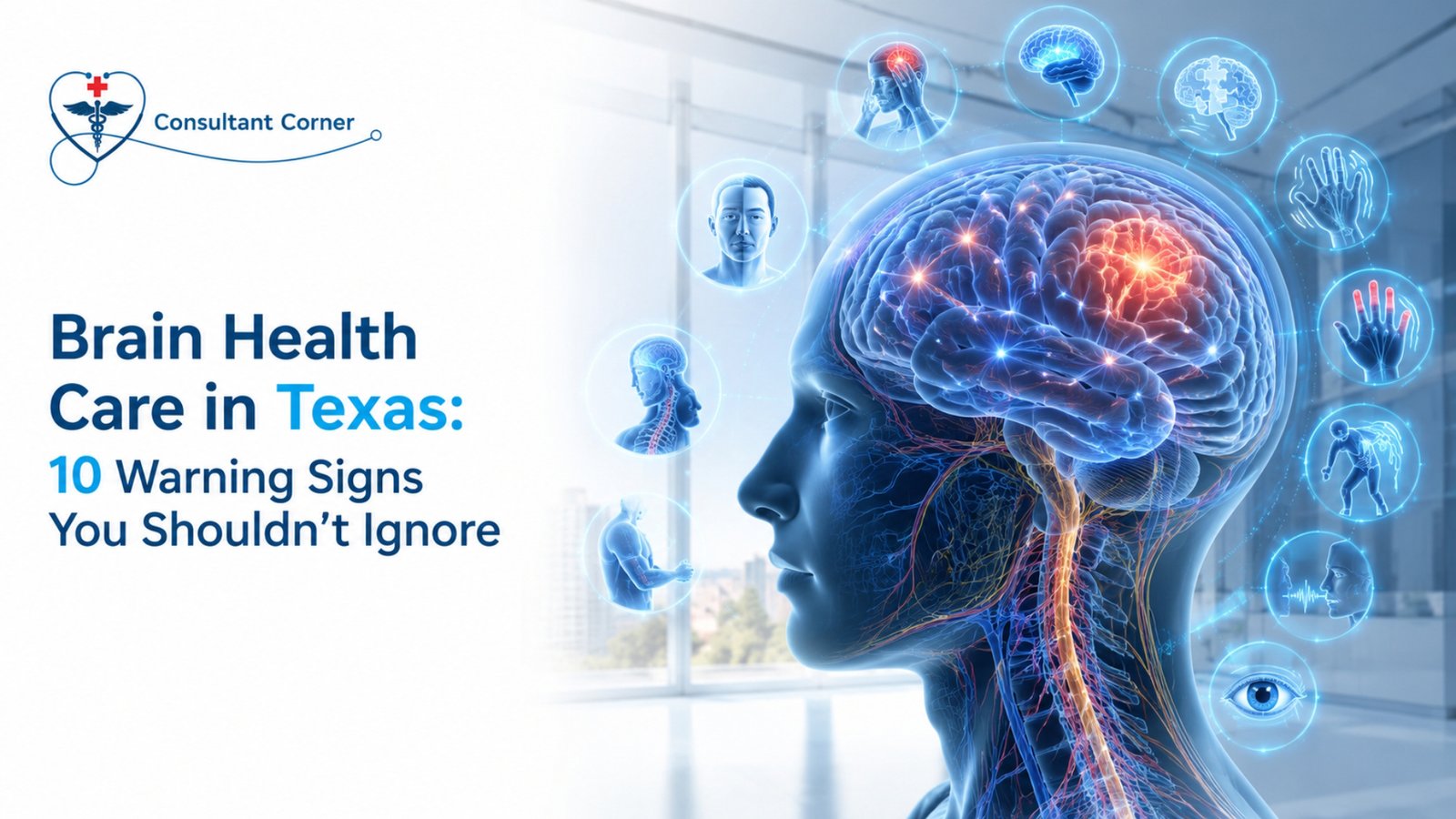
Many neurological diseases don’t manifest in a single dramatic event. Instead, they develop gradually, which is why early diagnosis is so important. The table below details ten common warning signs, what they might indicate, and how urgently they should be evaluated.
| Warning Sign | What It Might Mean | How Urgent? |
|---|---|---|
| Sudden weakness (face, arm, or leg) | Stroke, TIA (mini-stroke) | Emergency — Call 911 |
| Persistent headaches | Migraine, tension headache, or other causes | See a doctor within a few days |
| Memory loss | Alzheimer’s disease, other dementia | Schedule an evaluation |
| Tremors | Essential tremor, Parkinson’s disease | Schedule an evaluation |
| Numbness or tingling | Neuropathy, stroke, spinal nerve compression | Same day or same week |
| Balance problems | Vertigo, cerebellar or inner ear problems | Schedule an evaluation |
| Difficulty speaking | Stroke, TIA | Emergency — Call 911 |
| Vision changes | Migraine, stroke, optic nerve problems | Same day evaluation |
| Chronic back or neck pain | Spinal nerve problems, disc disease | Schedule an evaluation |
| Muscle weakness | ALS, neuropathy, muscle problems | Schedule an evaluation |
If any symptoms come on suddenly — especially sudden weakness, difficulty speaking, or vision loss — consider it an emergency. As with everything else on this list, proactive steps toward your nerve health work best when they are taken early, before a slowly developing problem becomes permanent.

A Detailed Discussion of the Conditions Behind These Symptoms
Ischemic Stroke
Ischemic stroke occurs when a blood vessel supplying blood to the brain becomes blocked, cutting off oxygen to brain tissue within minutes. It is one of the most time-sensitive medical emergencies — every minute of delay can result in brain cell loss. Our detailed guide to the causes of ischemic stroke discusses risk factors, treatment timelines, and recovery in detail. Also, be sure to read our related post on 10 recovery tips to avoid post-stroke complications, especially for those caring for a loved one after a stroke. For milder and temporary forms of stroke symptoms, check out our article on 7 TIA (mini-stroke) warning signs — these “warning strokes” are a great opportunity for early intervention before a full-blown stroke develops.
Headaches and Migraines
Headaches are one of the most common reasons people delay seeking medical attention, as they often assume the pain will go away on its own. But migraines are a distinct neurological condition, not just “a severe headache,” and are associated with a number of triggers, types, and treatable processes that a neurologist can help diagnose. According to the National Institute of Neurological Disorders and Stroke, migraines are also associated with an increased risk of other health conditions, including sleep problems and mood disorders. Read our post to learn more about headaches and migraines.
Alzheimer’s Disease and Memory Loss
It’s easy to dismiss memory loss as “a normal part of aging,” but when it starts to interfere with communication, daily activities, or personal safety, it’s a serious sign. Our full article on Alzheimer’s disease discusses some early warning signs families should look out for and how a neurologist evaluates memory problems. Early evaluation in these cases can help families plan ahead, get early treatment, and reduce the shock of a late diagnosis.
Head Injury
Head injuries can occur from falls, car accidents, sports, or workplace incidents, and can range from mild concussions to severe traumatic brain injuries. Even a “mild” head injury requires proper evaluation, as symptoms such as confusion, headaches, or loss of balance may develop or worsen in the days following. Learn more in our guide to what a head injury is.
Parkinson’s Disease and Tremors
The symptoms of Parkinson’s disease rarely come on suddenly. It usually starts slowly — like a slight tremor in a finger, small handwriting, or a slow walking pace. Our post on the symptoms of Parkinson’s disease discusses its early signs in detail. However, not all tremors are Parkinson’s — essential tremor is a separate and relatively common condition, and our article on essential tremor treatment explains how to tell the two apart and what treatment options are available.
Epilepsy and Seizures
Epilepsy and seizure disorders affect people of all ages, and are often misunderstood by those who have not experienced them firsthand. Having one seizure does not necessarily mean you have epilepsy, but repeated seizures require a full neurological examination. Our article on what is epilepsy explains its causes, triggers, and treatments.
Multiple Sclerosis, Neuropathy and Muscle Weakness
Fatigue, tingling, vision changes and chronic fatigue can be symptoms of multiple sclerosis, which manifest themselves differently in almost every patient affected. Our guide to the symptoms and treatment of multiple sclerosis discusses its various manifestations. Pay special attention to increasing muscle weakness, as it can sometimes be a sign of ALS — as explained in our post on muscle weakness signs that may need ALS screening, a symptom worth evaluating within a week rather than waiting.
Dizziness, Vertigo and Sleep-Related Disorders
Balance and dizziness are among the most common reasons people visit a neurologist, and their causes can range from inner ear problems to more complex neurological disorders. Our article on vertigo and dizziness discusses nine common causes. Sleep problems and restless legs syndrome can also point to an underlying neurological problem rather than simple insomnia — see our post on sleep disorders and restless legs syndrome for more information.
Intracerebral Hemorrhage
Unlike ischemic stroke, intracerebral hemorrhage occurs when a blood vessel in the brain bursts and bleeds into surrounding tissue. It is a separate and equally urgent condition. Our article on the causes of intracerebral hemorrhage explains its risks and warning signs.
How Neurologists Diagnose These Conditions
One of the most common questions patients ask before their first visit to the doctor is: What exactly will happen at this appointment? A thorough neurological evaluation usually begins with a detailed history of the patient — such as when symptoms began, how often they occur, and what makes them better or worse — followed by a hands-on neurological examination to check reflexes, strength, coordination, and sensation.
Next, tests are performed depending on the suspected condition. Imaging tests such as MRI or CT scans can detect damage from a stroke, structural abnormalities, or the aftereffects of a head injury. Electroencephalography (EEG) helps evaluate seizures and epilepsy, while nerve conduction studies and electromyography (EMG) can accurately diagnose neuropathy or muscle weakness. Before considering a diagnosis like Alzheimer’s disease, blood tests and cognitive tests often play an important role in evaluating memory loss and ruling out treatable causes. According to the Texas Department of State Health Services, early assessment is so important that the state now tracks Alzheimer’s prevalence at the county level, so that resources can be allocated to areas where it is most needed.
None of these tests need to be scary. A good neurologist explains in detail to patients why each test is being performed and what the results will mean for their treatment plan — which is a key part of making an early and accurate diagnosis possible.
When Brain Health Becomes an Emergency
Some symptoms should never wait for a scheduled appointment. If you or someone around you experiences the following symptoms, call 911 immediately or go to the nearest emergency department:
- Sudden weakness or numbness on one side of the body
- Sudden difficulty speaking or understanding speech
- Sudden vision loss or double vision
- A sudden, severe headache that you have never had before
- Sudden loss of balance or coordination
- Seizures that last more than five minutes, or repeated seizures
In everything else — such as gradual memory changes, chronic pain, tremors, or persistent dizziness — the right thing to do is to schedule an evaluation with a neurologist, rather than waiting for symptoms to become severe.

Brain Health Care from Consultant Corner
Consultant Corner was founded on a simple idea: Neurology should be accessible, thorough, and focused on early diagnosis rather than crisis management. Patients are treated by Sakib A. Chowdhury, MD, a vascular neurologist and neurointensivist who has extensive experience diagnosing and treating the neurological conditions covered in this guide, from stroke and headaches to Parkinson’s disease, epilepsy, and memory problems.
While this guide focuses on Texas, Consultant Corner’s approach to neurology extends beyond the state’s borders. Patients can also contact Consultant Corner (Neurology in Bloomington, IL), where people looking for a neurologist in Bloomington, Illinois will find the same quality of care. Closer to home for many Texas patients, Consultant Corner (neurology in El Paso, TX) offers the same comprehensive evaluation and treatment as a trusted health consultant in El Paso, Texas.
The goal is the same at each location: accurate testing, effective treatment, and long-term neurological wellness, which is identified early rather than delayed.
Brain Health Care Across Texas
Neurological diseases are not limited to big cities, and neither is the demand for quality neurological care. Consultant Corner serves patients throughout Texas, including patients in Houston, Dallas, Austin, San Antonio, Fort Worth, El Paso, Corpus Christi, Lubbock, Amarillo, Tyler, Plano, Brownsville, McAllen, Midland, Beaumont, College Station, Waco, Galveston, Abilene, and Laredo.
Whether you live in a major metro area or a small community, the path to good neurological treatment should be the same: thorough patient information gathering, proper testing, a clear diagnosis, and a treatment plan based on your specific condition — not a generic treatment approach.
Frequently Asked Questions About Brain Health Care
What does “brain health care” actually include?
Brain health care includes the full range of neurological evaluation and treatment — everything from headache and migraine management to stroke care, memory and dementia evaluation, movement disorders like Parkinson’s and tremors, epilepsy management, and treatment of nerve and spinal conditions. This includes both emergency care for sudden symptoms and ongoing management for chronic neurological conditions.
How do I know if my symptoms need a neurologist instead of a primary care doctor?
If a symptom is sudden and severe — such as weakness on one side of the body, slurred speech, or seizures — go to the emergency department first. For symptoms that develop slowly, such as memory changes, tremors, chronic headaches, numbness, or balance problems, a primary care doctor can help rule out common causes, but persistent or worsening symptoms usually require a referral to a neurologist for a more specialized evaluation.
At what age should I start paying attention to my brain health?
There is no specific age to start. Illnesses like migraines and epilepsy can occur in younger adults, while stroke, Alzheimer’s, and Parkinson’s disease are more common after age 60. Regardless of age, it is important to get tested if you have warning signs.
Can neurological diseases be prevented?
Some risk factors are controllable. Controlling blood pressure, controlling diabetes, quitting smoking, being physically active, and treating sleep problems can reduce your risk of stroke and some other neurological diseases. There are no clear prevention strategies for other diseases, such as Parkinson’s disease or multiple sclerosis, which makes early diagnosis through regular neurological exams particularly valuable.
Does Consultant Corner treat patients outside of Texas?
Yes. In addition to the Texas cities listed above, Consultant Corner also provides neurological care in Bloomington, Illinois and El Paso, Texas, under the same comprehensive and early diagnosis-focused service.
How quickly can I get treatment for neurological problems?
Appointment availability depends on the urgency of your symptoms and your location. In the case of urgent symptoms, you should always go to the nearest emergency department. For scheduled evaluations, the fastest way to check availability is to contact us directly via the contact page below.
Take the Next Step in Your Brain Health Care
Neurological symptoms rarely get better by waiting, and early diagnosis is one of the most powerful tools a neurologist has. If you or a loved one experiences any of the warning signs mentioned in this guide, don’t wait until your next annual health check to report it.
You can learn more about our doctors on the ‘Our Doctors’ page, see our full list of diseases on the ‘Our Services’ page, or read the Consultant Corner blog for more such guides.
When you’re ready to talk to someone, contact Consultant Corner online to schedule an assessment, or call +1 888 208 2208. Brain health care starts with a single conversation — and that conversation can change everything.