
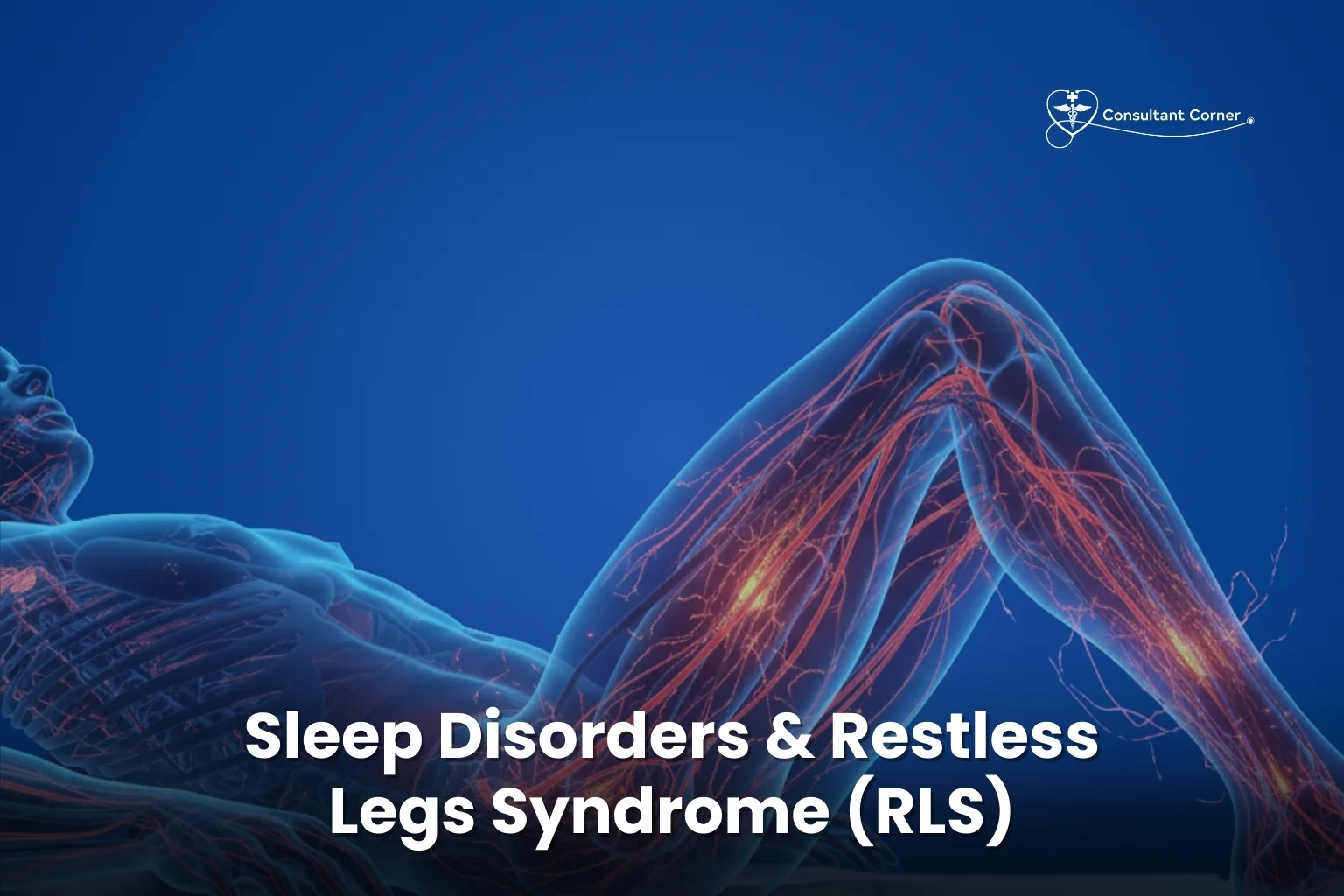
Sleep Problems and Restless Legs Syndrome (RLS): 7 Warning Signs You Shouldn’t Ignore
Sleep problems affect nearly every aspect of your daily life — mood, energy, attention, performance, and long-term health. If you can’t sleep, wake up repeatedly at night, or feel like your legs won’t stay still after you lie down, you’re not alone, and you don’t have to live your life this way. Sleep problems, including restless legs syndrome (RLS), are among the most common — and most treatable — neurological problems we see at Consultant Corner.
Millions of adults suffer from inadequate sleep for years without ever talking to a specialist. Many people think that fatigue is just a part of getting older, a result of a stressful job, or that they can overcome the problem by drinking more caffeine. In reality, chronic sleep problems are often a symptom of an underlying neurological problem, which can be treated very well with the right diagnosis and treatment plan.
At Consultant Corner, our team — led by board-certified vascular neurologist and neuro-intensivist Dr. Sakib A. Chowdhury — specializes in identifying the root cause of sleep disturbances and restless legs, rather than just prescribing sleeping pills and hoping for the best. With the right approach, sleep can improve dramatically within just a few weeks of starting treatment.
👉 If you’re having trouble sleeping or staying up all night due to leg problems, it’s time to talk to a specialist who treats the nervous system, not just the symptoms.
Why a Neurological Evaluation Is Necessary for Sleep Problems
Sleep is a neurological process. It’s regulated by a delicate balance of neurotransmitters in the brainstem, the circadian rhythm center in the hypothalamus, and dopamine, serotonin, and melatonin. When any part of this system is disrupted — whether due to nerve irritation, iron deficiency, medication side effects, or a movement disorder like RLS — the result is fragmented and unrefreshing sleep.
That’s why it’s best to have sleep disorders evaluated by a neurologist, rather than simply treating them with common sleep medications. A specialist can differentiate between insomnia caused by stress, RLS caused by a dopamine or iron imbalance, and sleep disturbances caused by a completely different neurological condition, such as neuropathy or circadian rhythm disorders.
Many patients spend months or even years trying various common remedies, but never ask themselves why their sleep is being disrupted. Melatonin gummies, white-noise machines, and sleep-tracking apps can all help, but none of them address the underlying neurological imbalance. If your body produces too little dopamine at night, or your body stores too little iron to support normal dopamine signaling, then simply practicing “sleep hygiene” will not completely eliminate this restlessness. A neurological evaluation is done to fill this gap.
It is also important to note that sleep disorders do not only affect the night. Chronic sleep disturbances are associated with anxiety, depression, high blood pressure, weight gain, and poor memory and attention during the day. In patients who already suffer from other neurological problems, such as migraines, neuropathy, or a previous stroke, it becomes more difficult to control the underlying problems if the sleep disorders are not treated. Early treatment of sleep disorders is not only about feeling more refreshed; it is an important part of maintaining long-term neurological and overall health.

Signs of Sleep Problems You Shouldn’t Ignore
If any of the following sound familiar, it’s time to get checked out:
- Trouble falling asleep or staying asleep through the night
- Not feeling refreshed after a full eight hours in bed
- Restlessness, kicking, or discomfort in your legs after lying down
- A constant urge to move your legs, especially in the evening
- Cracking, jerking, or muscle movements at night that you don’t understand unless your partner mentions them
- Frequent waking up, having vivid or disturbing dreams, or feeling confused after waking
- Daytime fatigue, lack of focus, irritability, or difficulty concentrating on work
Sleep problems rarely manifest with a single obvious symptom. In most cases, they gradually build up — a few minutes longer to fall asleep here, restless legs there — until the cumulative effect on your daily energy and mood becomes impossible to ignore.
What Causes Sleep Problems and Restless Legs?
Sleep problems can result from a variety of neurological, metabolic, and lifestyle factors. In our experience treating patients throughout Illinois and Texas, the most common causes include:
- Restless Legs Syndrome (RLS) — an irresistible urge to move the legs, which is usually worse in the evening or during periods of rest
- Periodic Limb Movement Disorder (PLMD) — repeated jerking of the legs during sleep, which is often unnoticed by the patient
- Insomnia — difficulty falling or staying asleep, which is often related to stress or anxiety
- Neuropathy, or nerve pain, which can mimic or exacerbate the symptoms of Restless Legs Syndrome
- Iron or vitamin deficiencies, particularly low ferritin levels, which directly affect dopamine regulation
- Sleep apnea-related restlessness, where breathing is interrupted for short periods of time repeatedly and wakes up
- Medication side effects, including certain antihistamines, antidepressants, and antipsychotics
- Sleep disturbances due to anxiety or stress
- Circadian rhythm problems, where the body’s internal clock can’t keep up with the normal sleep-wake schedule
These conditions often overlap. For example, a patient with RLS due to iron deficiency may also have underlying anxiety that makes the condition worse — and for this reason, a holistic neurological treatment approach, rather than addressing just one symptom, is likely to yield better long-term results.
Common Causes of Sleep Disorders at a Glance
| Underlying Cause | Common Nighttime Symptoms | Initial Evaluation |
|---|---|---|
| Restless legs syndrome (RLS) | Intense urge to move the legs, tingling or numbness | History of symptoms, iron/ferritin panel |
| Periodic limb movement disorder | Recurrent twitching, not noticed by the patient | Sleep study, partner-reported symptoms |
| Iron or vitamin deficiency | Worsening of RLS symptoms, fatigue | Ferritin, B12, thyroid lab tests |
| Neuropathy / nerve pain | Burning, tingling, or numbness at rest | Neurological exam, nerve conduction study |
| Circadian rhythm disorder | Difficulty falling asleep at a specific time | Sleep diary, symptom timeline |
| Sleep apnea-related restlessness | Gasping, frequent awakenings, snoring | Screening questionnaire, referral for sleep study |
According to the National Institute of Neurological Disorders and Stroke, RLS is classified as a neurological sensorimotor condition that is often worse in the evening and temporarily relieved by movement — which is why it disrupts sleep so much. The Sleep Foundation also notes that a significant portion of American adults suffer from RLS, and its severity can often be reduced with a combination of specific treatments and lifestyle changes.

Why Patients Choose Consultant Corner for Sleep Disorders and RLS
Not all sleep disorders require the same treatment. That’s why our evaluation process is based on finding the root cause of your symptoms — not just managing them.
Expert Evaluation of Neurological Sleep Disorders
We determine whether your symptoms are caused by RLS, insomnia, neuropathy, or another neurological cause. This process begins with a detailed medical history, a neurological exam, and — if necessary — a referral for specific lab tests or a formal sleep study.
Specific Treatments for RLS and Sleep Disorders
Once we understand the root cause of your symptoms, we develop a treatment plan based on that. This may include a combination of medications, iron supplementation, neuro-focused therapy, or behavioral sleep strategies — tailored specifically to your individual situation rather than a one-size-fits-all prescription.
Lab Tests for Deficiencies That Affect Sleep
Low ferritin (iron stores) is one of the least-recognized and modifiable causes of restless legs syndrome. We routinely test iron, ferritin, B12, thyroid function, and other relevant metabolic markers as part of a comprehensive sleep evaluation.
Improved Sleep Without Dependency
Our goal is to guide patients toward safe and sustainable sleep — not to prescribe sleeping pills indefinitely. Long-term reliance on sleeping pills can mask an underlying problem and, in some cases, worsen sleep quality over time.
Improving Lifestyle and Sleep Hygiene
We work with patients to develop a nighttime routine specifically for them, including things like limiting screen time and caffeine intake, as well as leg exercises to reduce the onset of RLS before bed.
Same-Week Appointments
Sleep problems can get worse quickly — the longer they go untreated, the more they affect mood, function, and overall health. That’s why we prioritize getting treatment early. A quick fix means faster, deeper sleep.
Our goal is simple: to address the root cause, so you can finally sleep again.
Effective Sleep Hygiene Tips for Managing RLS and Sleep Disorders
While a medical evaluation is essential to determine the underlying cause of a sleep disorder, daily habits can significantly reduce the recurrence and severity of symptoms. In addition to a formal treatment plan, we often recommend the following:
- Maintain a consistent sleep-wake schedule, even on weekends, to keep your circadian rhythm stable
- Limit caffeine and alcohol intake in the afternoon and evening, as both can exacerbate RLS symptoms and fragment sleep
- Stretch or gently massage your legs before bed to reduce the urge to move them after lying down
- Avoid prolonged sitting or inactivity in the evening, especially if you already experience symptoms of restless legs syndrome while traveling or watching movies
- Minimize screen time an hour before bed, as blue light can delay the natural release of melatonin
- Keep a simple sleep diary of your symptoms, noting when your leg discomfort starts and what triggers or relieves it — this information will be very helpful during your evaluation
- Ask about your current medications, as some antihistamines, antidepressants, and antipsychotic medications are known to exacerbate RLS symptoms
These strategies are not a substitute for a proper diagnosis, but they can provide you with meaningful relief while you wait for your appointment — and they provide your care team with valuable information about your specific symptom pattern.
Get to Know Your Neurologist: Sakib A. Chowdhury, MD
Consultant Corner is led by Sakib A. Chowdhury, MD, a fellowship-trained vascular neurologist and neuro-intensivist. Dr. Chowdhury has developed a comprehensive, evidence-based approach to diagnosing and treating sleep-related neurological conditions, based on the same rigorous diagnostic criteria used in stroke and critical care neurology. This experience is especially valuable for sleep disorders, as symptoms such as confusion at night, unusual movements, or sudden weakness during sleep can sometimes mimic more serious neurological events that require prompt evaluation.
Our Locations
We are proud to serve patients in two convenient locations:
Consultant Corner (Neurological Services in Bloomington, Illinois)
Neurologists in Bloomington, Illinois. Visit our Bloomington location.
Consultant Corner (Neurological Services in El Paso, Texas)
Health Consultants in El Paso, Texas. Visit our El Paso location.
No matter where you are in Central Illinois or West Texas, our team is able to evaluate and treat sleep disorders, restless leg syndrome (RLS), and all of the neurological conditions we manage, including head trauma, ischemic stroke, headaches and migraines, and Alzheimer’s disease.
Our Partnership with MyCare Express Care in Bloomington
For patients in the Bloomington, Illinois area who need convenient, direct access to care between neurology appointments, we are proud to partner with MyCare Express Care. It is a trusted walk-in clinic that provides illness, injury, and wellness services throughout the community.
MyCare Express Care also offers virtual neurology appointments, giving patients an additional and flexible way to connect with a neurologist without having to travel for each visit. If you are suffering from sleep disorders, restless legs syndrome, or another neurological condition and want to begin treatment the same day, MyCare Express Care’s walk-in model works beautifully with the specialized and ongoing care we provide at Consultant Corner. Together, our two organizations help patients in the Bloomington area move from first symptoms to lasting relief more quickly.

When to Seek Emergency Care for Sleep Problems
Most sleep disorders are treatable on an outpatient basis, but certain symptoms require immediate medical attention. Seek emergency medical attention if any of the following occur with your sleep problems:
- Sudden weakness, numbness, or difficulty speaking
- Sleep paralysis with hallucinations
- Confusion or aimless walking at night
- Sudden awakening from sleep with difficulty breathing or gasping
- Violent or dangerous movements during sleep
These symptoms may indicate a more serious neurological or sleep-related emergency and should never be dismissed as “just a bad night.”
Related Neurological Conditions We Treat
Sleep disorders often occur with other neurological conditions — or are mistaken for other neurological conditions. If you’re researching your symptoms, these related articles on our blog may also be helpful:
- What is a Head Injury?
- What Causes Ischemic Stroke?
- Understanding Headaches/Migraines
- Understanding Alzheimer’s Disease
- Symptoms of Parkinson’s Disease
- Vertigo and Dizziness: Regain Balance
- Diabetic Neuropathy and Nerve Damage
Frequently Asked Questions About Sleep Problems and RLS
What is the difference between insomnia and restless legs syndrome?
Insomnia generally refers to difficulty falling or staying asleep, and can have many causes, including stress, poor sleep habits, or an underlying medical condition. Restless legs syndrome is a specific neurological condition in which there is an uncomfortable urge to move the legs, which is usually worse during rest or in the evening. RLS can cause insomnia, but not everyone who has insomnia has RLS — which is why a proper evaluation is important.
Can low iron levels cause sleep problems?
Yes. Low ferritin (stored iron) levels are one of the most common and treatable causes of restless legs syndrome. Because iron plays a direct role in regulating dopamine in the brain, even slightly low levels can exacerbate or worsen leg symptoms at night. That’s why we routinely check iron and ferritin levels when evaluating sleep problems.
Do sleep problems and RLS become more common with age?
RLS and other sleep disorders can occur at any age, but symptoms often become more pronounced in middle age and beyond. Pregnancy, certain medications, and chronic illnesses such as kidney disease or diabetes can also increase the risk of developing RLS at any age.
Do I need a sleep study to diagnose a sleep disorder?
Not always. Many sleep disorders, including RLS, can be diagnosed with a detailed clinical history and neurological examination. A formal sleep study is usually done in cases where sleep apnea, periodic limb movement disorder, or another condition needs to be confirmed by overnight monitoring.
Is restless legs syndrome dangerous?
RLS itself is not usually life-threatening, but if left untreated, chronic sleep disruption from RLS can lead to fatigue, mood swings and a reduced quality of life over time. In some cases, nighttime symptoms can mimic other neurological conditions, so it is important to get a proper evaluation rather than assuming the symptoms will go away on their own.
What treatments are available for sleep disorders and RLS?
Treatment depends on the underlying cause and may include iron supplementation, medication adjustments, neuro-focused therapy and changes in sleep habits. At Consultant Corner, our aim is always to address the underlying cause, rather than relying solely on sleeping pills.
How soon can I see a sleep assessment?
We arrange appointments within the same week for most new patients with sleep disorders or restless legs syndrome, as we know that the longer sleep problems go unresolved, the worse they tend to get.
How common are sleep disorders like RLS?
According to data compiled by the Sleep Foundation, restless legs syndrome is one of the most common neurological sleep disorders in the United States, affecting a significant number of adults to some degree. In many cases, the condition goes undiagnosed for years, because sufferers assume their symptoms are normal or unrelated to a treatable condition.
Can children get sleep disorders or RLS?
Yes. While RLS and other sleep disorders are more commonly diagnosed in adults, it can also occur in children — sometimes mistakenly thought of as “growing pains” or restlessness. If a child has persistent trouble sleeping, complains of uncomfortable sensations in their legs at night, or shows signs of fatigue and lack of focus during the day, it’s a good idea to discuss the issue with a specialist.
Do I need to take medication for RLS permanently?
This is not necessary. Treatment plans are tailored to the individual based on the underlying cause. For patients whose symptoms are caused by a treatable condition, such as iron deficiency, addressing the deficiency can significantly reduce or even eliminate symptoms over time. Other patients may benefit from long-term management, which we closely monitor to avoid complications such as medication escalation.
Get Your Nights Back and Your Energy
Poor sleep can’t control your days. Problems like restless legs, insomnia, and sleep disorders are treatable when the underlying neurological cause is properly identified. Whether you live in Bloomington, El Paso, or anywhere in between, our team at Consultant Corner is ready to help you find real and lasting relief.
👉 Book your sleep/restless legs evaluation today
📞 Call +1 888 208 2208 or request an appointment online — our team is available Monday through Friday, 8:00 AM to 5:00 PM.