

Protect Your Brain and Manage Headaches: Why It Matters More Than You Think
Protect your brain and manage headaches — that single idea sits at the center of neurological health for millions of Americans. Headaches and migraine are far more common than most people realize, and neurological conditions such as stroke, epilepsy, neuropathy, and dementia can quietly chip away at independence and quality of life long before a person ever sees a specialist.
For residents of Bloomington, Illinois, and El Paso, Texas, learning to protect your brain and manage headaches starts with everyday habits: food, sleep, hydration, stress, and exercise. It also means knowing when lifestyle changes are not enough, and when it’s time to talk to a neurologist about advanced options such as BOTOX chronic migraine treatment.
This guide walks through 11 practical, positive steps you can start today, backed by CDC data, real patient guidance, and insight from the team at Consultant Corner (Neurological Care in Bloomington, IL) and Consultant Corner (Neurological Care in El Paso, TX).
How Common Are Headaches in America?
Headaches and migraine affect a significant share of the U.S. population, and the burden falls unevenly.
According to the Centers for Disease Control and Prevention, in 2021, 4.3% of U.S. adults aged 18 and older reported being bothered “a lot” by headache or migraine during the previous three months. That figure was much higher for women than men, and it changed meaningfully by age group.
| Group | Percentage Bothered
“A Lot” by Headache or Migraine |
|---|---|
| All U.S. adults | 4.3% |
| Women | 6.2% |
| Men | 2.2% |
| Women ages 18–44 | 7.4% |
| Men ages 18–44 | 2.5% |
| Women ages 45–64 | 6.7% |
| Men ages 45–64 | 2.4% |
These numbers matter because they show headache disorders are not rare or “just stress.” They are a genuine public health issue, and understanding your own patterns is the first step toward learning to protect your brain and manage headaches long term. If you want a deeper breakdown of what tends to set off attacks, our related post on 11 Migraine Triggers That Could Be Causing Your Headaches is a useful companion to this one.

1. Improve Your Daily Food Habits
Food habits are a practical, low-cost place to start when you want to protect your brain and manage headaches.
Many people eat on an irregular schedule because of work, commuting, or family responsibilities. They skip breakfast, run on coffee until lunch, eat very little during the day, and then eat a large meal at night. For someone susceptible to migraine, long stretches without eating can be associated with attacks.
Instead of chasing a single “miracle food,” aim for a steady, balanced pattern.
Try to:
- Eat meals at reasonably consistent times
- Avoid routinely skipping breakfast or lunch
- Include vegetables and fruit regularly
- Choose appropriate protein sources
- Include whole grains and fiber where suitable
- Limit heavy reliance on ultra-processed foods
- Notice whether specific foods repeatedly line up with symptoms
Food triggers are highly individual. What sets off one person’s migraine may cause no problem at all for someone else. That’s why eliminating large categories of food without professional guidance is usually less helpful than keeping a simple food-and-headache diary and watching for repeated patterns.

2. Don’t Ignore Hydration
A busy day can easily slip by without enough fluids, especially during hot weather, outdoor activity, exercise, long workdays, or travel.
Dehydration can be associated with headache for some people, and it can also leave you feeling tired, dizzy, or unable to concentrate. A simple habit is to drink fluids steadily throughout the day instead of waiting until you’re already thirsty.
People who exercise regularly should pay close attention to hydration before, during, and after activity. That said, more water is not automatically better for everyone. People with kidney disease, heart conditions, or other medical issues may have specific fluid limits and should follow their healthcare provider’s guidance rather than general rules of thumb.
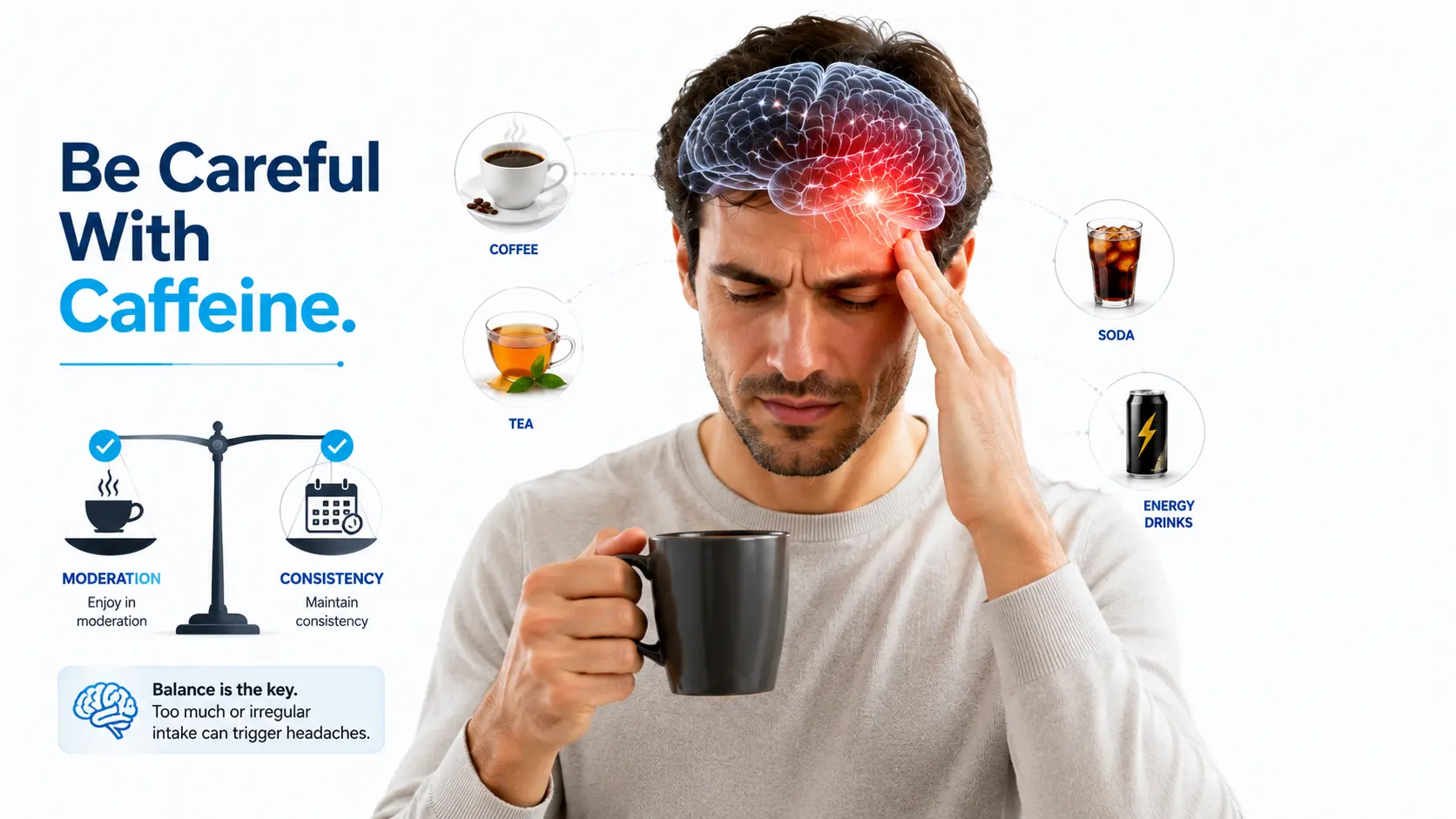
3. Be Careful With Caffeine
Coffee, tea, energy drinks, soda, and other caffeinated beverages are woven into many Americans’ daily routines, and the relationship between caffeine and headache is genuinely complicated. Some headache medications even contain caffeine as an ingredient. At the same time, drinking too much — or suddenly cutting back from your usual intake — can be associated with headaches.
The practical answer is consistency and moderation rather than assuming everyone with migraine must eliminate caffeine entirely.
If you drink several caffeinated beverages a day and frequently experience headaches, track your caffeine intake alongside your symptoms. That record can help you and your healthcare provider figure out whether there’s a meaningful pattern worth adjusting.

4. Make Sleep a Brain-Health Priority
Sleep is one of the most important daily habits for protecting long-term neurological health.
Many people sleep too little during the workweek and try to “catch up” on weekends, or stay awake late scrolling on a phone, watching television, or working. For people who are susceptible to migraine, major shifts in sleep schedule can matter.
Try to keep roughly the same sleeping and waking time every day. A healthier nighttime routine might include cutting back on stimulating activity close to bedtime, limiting unnecessary screen exposure right before sleep, keeping the bedroom comfortable, and allowing enough time for rest.
Persistent sleep problems deserve their own attention. If you regularly wake exhausted, experience severe daytime sleepiness, notice unusual nighttime movements, or have other ongoing sleep concerns, bring them up with a healthcare professional rather than assuming they will resolve on their own.

5. Exercise Regularly — But Start Gradually
Physical activity supports cardiovascular health, weight management, mobility, mood, and general well-being. It also matters directly for brain health, because the brain depends on a healthy vascular system to function well.
Walking is one of the simplest ways for many adults to become more active. Depending on health and physical ability, other good options include cycling, swimming, stretching, strength training, or other aerobic activity.
The key is not jumping from almost no activity straight into an extremely strenuous routine. Start gradually and build consistency over weeks, not days.
If exercise repeatedly triggers a new or unusual severe headache, dizziness, fainting, chest discomfort, or any neurological symptom, stop and seek medical advice rather than trying to push through it.

6. Reduce Long Periods of Inactivity
Formal exercise is only one part of daily movement. Someone can exercise for 30 minutes in the morning and still spend most of the remaining day sitting still. Office work, driving, television, gaming, and prolonged screen time can all add up to long stretches of inactivity.
Try to build movement into the day naturally. Stand up periodically, walk when it’s practical, stretch between long desk-work sessions, and treat physical movement as part of your everyday routine rather than a separate task.
These changes are primarily about improving overall health, not a specific cure for headache — but they support the same vascular and metabolic systems that keep your brain functioning well.

7. Understand the Connection Between Stress and Headaches
Stress is unavoidable, but chronic or poorly managed stress may influence headache patterns.
Work pressure, financial concerns, family responsibilities, poor sleep, travel, and irregular schedules can accumulate over weeks and months. Some people even notice headaches when intense stress finally lets up — for example, right at the start of a weekend.
Healthy stress-management strategies can include regular exercise, adequate sleep, relaxation techniques, scheduled breaks, enjoyable activities, and maintaining social connections. Most importantly, don’t assume every headache is “just stress.” A recurring or changing headache pattern may deserve a proper medical evaluation, not just a mental note to relax more.

8. Control Blood Pressure and Protect Vascular Health
Protecting your brain also means protecting your blood vessels.
High blood pressure is one of the most important modifiable risk factors for stroke, and many people have hypertension without any obvious symptoms — which is exactly why routine blood-pressure checks matter.
Healthy habits that support cardiovascular health include regular physical activity, a balanced diet, avoiding tobacco, maintaining an appropriate weight, and following prescribed treatment for hypertension when it applies to you. If you’ve been prescribed blood-pressure medication, don’t stop or change the dose simply because a reading looks better. Medication decisions should always go through the prescribing healthcare professional.

9. Take Diabetes, Cholesterol, and Other Conditions Seriously
Neurological health is connected to the rest of the body in ways that are easy to overlook.
Diabetes, for example, can damage nerves over time and contribute to diabetic neuropathy, which may cause numbness, tingling, pain, or other symptoms. Diabetes, abnormal cholesterol, hypertension, obesity, and smoking are all relevant to vascular health and stroke risk as well.
That means protecting the brain often involves far more than focusing on headaches alone. Know your health numbers when appropriate, keep up with routine medical appointments, take prescribed medications correctly, and bring up unexplained neurological symptoms with a qualified provider. For a closer look at how nerve-related symptoms show up day to day, see Neuropathy and Nerve Pain: 9 Proven Ways to Find Fast Relief.

10. Keep a Headache Diary to Protect Your Brain and Manage Headaches
One of the simplest and most useful things a person with recurring headaches can do is keep a diary. Don’t record only the pain — record the whole day.
Include:
- When the headache started and how long it lasted
- Pain severity and location
- Sleep duration
- Meals and any skipped meals
- Water and fluid intake
- Caffeine consumption
- Exercise
- Stress level
- Travel
- Medications taken
- Nausea or vomiting
- Light or sound sensitivity
- Dizziness
- Vision changes
- Numbness or weakness
After a few weeks, the diary often reveals patterns that are nearly impossible to remember otherwise. One person’s headaches might reliably follow poor sleep and a skipped breakfast. Another person’s symptoms might track closely with caffeine changes or unusually stressful workdays.
A diary can’t diagnose migraine or any other neurological disease on its own, but it can provide genuinely valuable information during a medical consultation — and it’s one of the easiest ways to actively protect your brain and manage headaches between appointments.

11. Know When Lifestyle Changes Are Not Enough
Perhaps the most important habit of all is knowing when to seek professional help.
Changing your diet, staying hydrated, exercising, sleeping regularly, and reducing stress are valuable health measures — but they should never be used to explain away serious neurological symptoms.
Seek medical evaluation when headaches become frequent, increasingly severe, noticeably different from your usual headaches, or when they start interfering with work and daily activities. This is also where advanced, evidence-based treatment options come in.
BOTOX Chronic Migraine Treatment: A Proven Option for the Right Patients
For adults who meet the clinical definition of chronic migraine — 15 or more headache days a month, with headaches lasting four hours or longer — BOTOX chronic migraine treatment is an FDA-approved preventive option, not a cosmetic procedure. The FDA-approved prescribing information confirms that BOTOX is indicated specifically for the prophylaxis of headaches in adults with chronic migraine, administered by a trained provider roughly every 12 weeks at specific sites around the head and neck.
BOTOX chronic migraine treatment is not the right fit for everyone, and it isn’t a first-line option for episodic migraine (14 or fewer headache days a month). A neurologist can help determine candidacy based on headache frequency, history, and prior treatments. If you’re weighing this option, our earlier post, BOTOX Chronic Migraine: 7 Facts Before Your First Injection, walks through what to expect before your first appointment, and Headache Management: 7 Proven Ways to Stop the Pain covers additional preventive and acute strategies that are often used alongside it.
A sudden, extremely severe headache, new facial drooping, difficulty speaking, sudden weakness or numbness, a new seizure, loss of consciousness, or any other sudden neurological deficit is a medical emergency. Do not wait for lifestyle changes or scheduled treatments to work when warning signs like these appear — seek emergency care immediately.
How to Protect Your Brain and Manage Headaches in Bloomington, IL and El Paso, TX
Residents of Bloomington, Illinois, and El Paso, Texas can start with a straightforward, positive approach: eat regularly, stay appropriately hydrated, sleep consistently, move every day, exercise appropriately, manage stress, monitor important health conditions, keep track of recurring symptoms, and seek medical care when neurological symptoms persist or change.
These habits are not guaranteed cures for migraine or neurological disease. Their real value is that they build a healthier foundation and make it much easier to spot patterns that need medical attention — which is exactly how you protect your brain and manage headaches over the long run rather than just reacting to the worst days.
For patients experiencing persistent headaches, migraine, dizziness, numbness, weakness, neuropathy, post-stroke problems, or other neurological concerns, Consultant Corner provides access to specialized neurological expertise, including BOTOX chronic migraine treatment, through in-person and telehealth visits. You can learn more about the full range of conditions treated on our 24 Neurological Conditions Treated by Consultant Corner page, or see 10 Reasons Patients Choose Consultant Corner for an overview of what to expect from care.
Meet Your Neurologist: Saqib A. Chaudhry, MD
Care at Consultant Corner is led by Saqib A. Chaudhry, MD, a Vascular Neurologist and Neuro-intensivist with extensive experience diagnosing and treating stroke, migraine and chronic headache disorders, epilepsy, neuropathy, and other complex neurological conditions. Dr. Chaudhry’s background in vascular neurology and neuro-critical care means patients are evaluated with an understanding of how headache, vascular health, and broader neurological risk factors connect — not just how to treat a single symptom in isolation. You can read more about his training and approach to care on the Our Doctor page.
Our Collaboration With MyCare Express Care in Bloomington, IL
Consultant Corner is proud to collaborate with MyCare Express Care, a walk-in and DirectCare clinic located at 1404 Eastland Dr, Suite 103, Bloomington, IL. MyCare Express Care offers accessible, affordable urgent and wellness care — including headache and pain management, physicals, and now virtual neurology appointments — for patients who need convenient access to a provider without long waits or complicated insurance hurdles. This partnership helps make it easier for Bloomington-area patients to move smoothly between everyday urgent care and specialized neurological care when a headache or symptom needs a closer look.
Frequently Asked Questions
What does it mean to “protect your brain and manage headaches”? It means combining everyday habits — consistent meals, hydration, sleep, exercise, and stress management — with appropriate medical evaluation so that both minor and serious neurological symptoms are addressed early rather than ignored.
How many headache days per month qualify as chronic migraine? Chronic migraine is generally defined as 15 or more headache days per month, with headaches lasting four hours or longer on at least 8 of those days, for at least three months.
Is BOTOX chronic migraine treatment the same as cosmetic BOTOX? No. BOTOX chronic migraine treatment uses the same active ingredient as cosmetic BOTOX, but it’s an FDA-approved therapeutic treatment administered at specific injection sites around the head and neck to prevent migraine, not to treat facial lines.
How often is BOTOX chronic migraine treatment repeated? Most patients receive treatment approximately every 12 weeks, based on FDA-approved dosing guidance and individual response.
Can lifestyle changes alone stop chronic migraine? For some people, consistent habits meaningfully reduce headache frequency and severity. For others — especially those who meet the clinical criteria for chronic migraine — lifestyle changes alone aren’t enough, and a neurologist may recommend preventive treatments like BOTOX, oral medications, or other options.
When should a headache be treated as an emergency? Seek emergency care immediately for a sudden, extremely severe headache, new facial drooping, difficulty speaking, sudden weakness or numbness, a new seizure, or loss of consciousness.
Does Consultant Corner treat patients in both Bloomington, IL and El Paso, TX? Yes. Consultant Corner provides neurological care, including BOTOX chronic migraine treatment, to patients in both Bloomington, Illinois and El Paso, Texas, with in-person and telehealth options available.
Ready to Talk to a Neurologist?
If headaches, migraine, or other neurological symptoms are affecting your daily life, you don’t have to figure it out alone. Contact Consultant Corner online to schedule a consultation with Dr. Saqib A. Chaudhry, MD, and take the next step toward learning how to protect your brain and manage headaches with a plan built around your health history.


