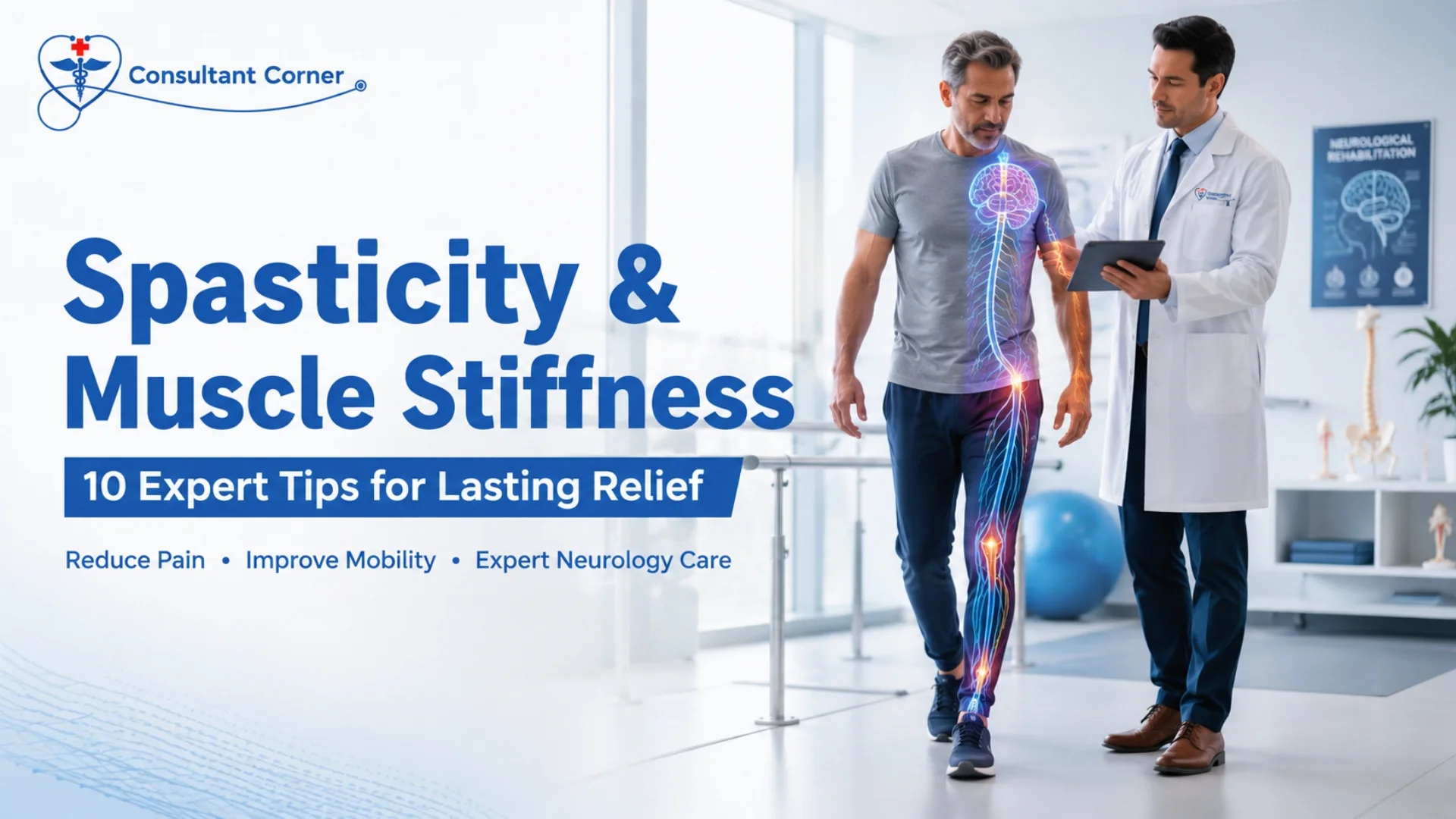
Spasticity & Muscle Stiffness: 10 Expert Tips for Lasting Relief
Millions of people with neurological conditions suffer from spasticity and muscle stiffness, and for most of them, this stiffness is more than just an inconvenience — it’s a daily obstacle to walking, dressing, sleeping, and moving around without pain. If you or a loved one has ever felt their muscles stiff, “stuck,” or impossible to control after a condition like stroke, brain injury, spinal cord injury, or multiple sclerosis, you’re dealing with a real neurological problem, not just muscle pain that will go away on its own.
At Consultant Corner, we see patients every week whose lives are disrupted by spasticity and muscle stiffness. The good news is that this condition is treatable, and with a combination of the right medical care, therapy, and home strategies, most patients regain significant comfort and mobility. In this guide, we’ll discuss what spasticity is, why it happens, what warning signs you should never ignore, and ten expert-backed tips that can bring lasting relief.
What is spasticity?
Spasticity is a neurological condition in which muscles become abnormally tight, stiff, or resistant to movement due to damage to the communication between the brain, spinal cord, and muscles. Unlike simple muscle soreness caused by exercise, spasticity and muscle stiffness are caused by disruptions in nerve signals that cause muscles to contract involuntarily or remain tense even at rest.
That’s why spasticity often occurs after events that damage the central nervous system, including stroke, traumatic brain injury, spinal cord injury, multiple sclerosis, and cerebral palsy. If you have already read our article titled Ischemic Stroke: Early Warning Signs, Treatment and Recovery, you know that people recovering from stroke are one of the largest groups affected by post-stroke spasticity, which sometimes appears weeks or even months after the initial event.
Spasticity Symptoms You Shouldn’t Ignore
Identifying spasticity and muscle stiffness early can make a significant difference in how well it responds to treatment. Common warning signs include:
- Sticky, rigid, or “stuck” muscles that prevent them from moving
- Painful spasms or sudden muscle contractions
- Difficulty bending or straightening arms, legs, or fingers
- Stiffness when walking, or dragging your feet
- Stiffness in the arms after a stroke or brain injury
- Joint stiffness or difficulty moving your full range of motion
If these symptoms appear after a diagnosis of a condition such as stroke, spinal cord injury, brain injury, or MS, don’t delay seeking treatment. Early treatment for spasticity and muscle stiffness can lead to long-term benefits, including increased mobility and reduced pain.
What causes spasticity?
Spasticity occurs when the parts of the brain or spinal cord that control muscle tension are damaged. The most common underlying causes include:
- Stroke (both ischemic and hemorrhagic)
- Multiple sclerosis (MS)
- Spinal cord injury
- Traumatic brain injury
- Cerebral palsy
- Neuropathy or nerve damage
- Neurodegenerative diseases, including Parkinson’s disease
If you’re trying to understand the connection between these conditions, our posts titled Multiple Sclerosis Symptoms and Treatment: 11 Essential Facts and Parkinson’s Disease Explained: 8 Early Signs to Look Out For will give you a helpful idea of how these neurological conditions can lead to muscle stiffness and loss of mobility over time.
The severity of spasticity and muscle stiffness can vary greatly depending on which part of the brain or spinal cord is damaged, how much time has passed since the injury or diagnosis, and whether early treatment was initiated. Some patients experience mild stiffness that is only noticeable during certain movements, while others develop severe spasticity that affects the entire limb and significantly limits their independence. Age, overall health, and how active a person is after diagnosis can also affect the progression of spasticity. This is why a one-size-fits-all treatment approach is rarely effective — effective treatment requires considering the specific cause and severity of each patient’s spasticity and muscle stiffness.
Spasticity rarely gets better on its own. If left untreated, persistent muscle tension can lead to contractures — permanent contractions of muscles and tendons that severely limit joint movement and may require surgery to correct. In addition to physical limitations, untreated spasticity often leads to other problems, such as skin damage due to limited movement, an increased risk of falls, chronic pain, and sleep disturbances. This is why a well-organized treatment plan is so important, and those who seek treatment early are more likely to recover than those who wait.

10 Expert Tips for Long-Term Relief from Spasticity and Muscle Stiffness
Below are ten strategies that, when combined with professional neurologist treatment, can help significantly reduce spasticity and muscle stiffness and restore normal movement.
1. Get a proper neurological evaluation first
Before starting any treatment, it is essential to identify exactly which muscles, nerves, and pathways are responsible for your stiffness. Spasticity and muscle stiffness can manifest differently from one patient to another — some experience stiffness primarily in the legs, others in the hands and wrists, and still others in different parts of the body on one side. A general practitioner may not be able to pick up on subtle signs that a neurologist trained in spasticity management can immediately pick up on; for example, the difference between true spastic muscle tightness and stiffness caused by musculoskeletal disease or general physical weakness. A thorough evaluation typically includes a review of your neurological history, a direct assessment of muscle tone and reflexes, and a discussion of how spasticity is affecting your specific daily activities. This first step is important, because every subsequent treatment — whether it’s medication, injections, therapy, or bracing — is based on an accurate picture of what’s actually happening in your nervous system.
2. Stretch daily — gently and regularly
Daily stretching keeps muscles and tendons flexible and helps prevent muscle contractions, which cause contractures. Even just five to ten minutes of slow, controlled stretching of the affected limb can make a noticeable difference within a few weeks. The key is consistency: spasticity can quickly get worse even after skipping stretching for a few days, as the nervous system “relearns” the tight position it was in at rest. Stretching should always be slow and steady, not jerky or forced, as rapid stretching can actually trigger a strong spastic reflex and increase pain. Many patients find it helpful to incorporate stretching into their existing routine, such as right after waking up or right before going to bed, so that it becomes an automatic habit rather than just another thing to remember.
3. Use heat before stretching
Applying a warm compress or heating pad to stiff muscles for 10-15 minutes before stretching increases blood circulation and makes muscle tissue more flexible, reducing pain during movement. Heat therapy is a simple, low-cost technique that works well with almost every treatment on this list. If you don’t have a heating pad, a warm bath, a hot shower, or even a hot towel can do the same thing. It’s important to remember that heat should be used with caution in areas where there is loss of sensation, which is common after a stroke or spinal cord injury, as loss of sensation can make it difficult to tell if the heat source is too hot.
4. Stick with physical therapy
Physical therapy is one of the most effective long-term ways to manage spasticity and muscle stiffness. A therapist can create a customized program based on your specific muscle groups and mobility goals, whether it’s walking more steadily or regaining use of an affected arm. In addition to stretching, physical therapy often includes exercises to strengthen the muscles opposite the spastic muscles, gait training, balance work, and education about safe movement patterns to reduce stress on stiff joints. The biggest measure of long-term success with physical therapy is not its intensity — but rather its consistency over several months, as the nervous system adapts gradually, not all at once.
5. Ask about Botulinum Toxin (Botox) Therapy
For many patients, specific Botox injections into overactive muscles can dramatically reduce muscle stiffness and spasms for three to four months at a time, allowing the body to regain strength and range of motion through therapy. Botox works by temporarily blocking the nerve signals that overcontract specific muscles, allowing opposing muscles and joints to move more freely. This treatment is especially effective for spasms that are concentrated in a specific area, such as a clenched fist, a bent wrist, or a foot that turns inward when walking. Because its effects are temporary, Botox is usually repeated on a schedule, and many patients take advantage of this period of relief to make significant improvements in physical therapy that continue long after the effects of the injections wear off.
6. Discuss oral muscle relaxants with your doctor
Medications such as baclofen, tizanidine, or dantrolene can help calm overactive nerve signals throughout the body. These medications are usually more effective for muscle spasms that are widespread in many parts of the body, rather than isolated muscle groups, such as the stiffness that occurs in both legs or the entire body after a spinal cord injury. Oral muscle relaxants work systemically, meaning they affect the entire nervous system rather than a specific muscle. Therefore, for people with widespread and localized muscle spasms, they are often used in conjunction with more specific treatments such as Botox or nerve blocks. The dose is usually started at a low level and increased gradually, as these medications can cause drowsiness or weakness if used too quickly.
7. Consider a nerve block for localized relief
When muscle spasms are concentrated in a specific muscle or organ, a nerve block can block the abnormal signals at their source, providing more specific and sometimes longer-lasting relief than oral medications alone. In a nerve block procedure, a numbing or nerve-disrupting agent is injected into the specific nerve responsible for excessive muscle contraction. This procedure is often used when Botox alone doesn’t provide enough relief, or when the spasms affect a larger muscle group that requires a different procedure. Like Botox, nerve blocks are usually used in conjunction with physical therapy to get the most benefit from temporary reduction in spasms.
8. Practice proper posture and alignment
How you sit, sleep, and stand throughout the day affects muscle tension. Adopting supportive positions, such as using cushions, braces, or splints, as recommended by your care team, can help prevent muscles from tightening up between therapy sessions. For example, a resting hand splint can keep fingers from clenching overnight, and proper positioning in a wheelchair can help prevent hip and knee stiffness from getting worse over time. Positioning techniques are often overlooked, but they work all the time and reinforce the improvements made through stretching, medication, and therapy, even when you’re not actively exercising.
9. Stay active within safe limits
Movement, even gentle and controlled movements, can help prevent muscles from tightening up. Activities like brisk walking, swimming, or seated exercises can maintain circulation and flexibility without putting too much stress on the affected limb. Water-based exercise is particularly helpful for many patients with spasticity and muscle stiffness, as the buoyancy of the water reduces stress on joints while promoting full range of motion. The goal is not intense exercise — but rather regular, safe movement that keeps the nervous system and muscles active, which helps prevent the rapid stiffening that often occurs with prolonged periods of inactivity.
10. Develop a long-term mobility plan with a specialist
Spasticity and muscle stiffness rarely respond to a single treatment. The most lasting relief comes from an ongoing, personalized plan that combines medication, therapy, and monitoring — adjusted over time as your condition changes. What works well in the first few months after a stroke or injury may need to be revisited a year later as your body and nervous system continue to adapt. Regular follow-up appointments help your care team fine-tune medication doses, schedule Botox injections, and adjust therapy goals so that progress doesn’t stall.
Daily Living with Spasticity and Muscle Stiffness
Beyond formal treatment, many patients find that small daily changes make a real difference in comfort and function. Wearing supportive shoes that accommodate foot stiffness, using adaptive equipment for hands affected by spasticity, and controlling the pace of activity throughout the day to avoid fatigue-related stiffness — all are practical strategies that complement treatment. Sleep quality also plays a big role, which many people don’t realize — sleep-disrupting muscle spasms can create a frustrating cycle of fatigue and increased stiffness the next day, which is why proper sleep positioning and, in some cases, nighttime medication timing are often part of a comprehensive spasticity and muscle stiffness management plan. Caregivers also play an important role in this, as they often experience gradual changes in stiffness or tension in a new location before the patient, making open communication with the care team essential.
Quick Reference: Spasticity Treatment Options Compared
| Treatment Option | Best For | How Often Needed | When Does Relief Usually Begin |
|---|---|---|---|
| Stretching and home exercises | Mild stiffness, daily maintenance | Daily | Gradually, over several weeks |
| Physiotherapy | Aims for functional mobility | 1–3 times a week | Several weeks to months |
| Oral muscle relaxants | Widespread, whole body spasticity | Daily | Several days to weeks |
| Botulinum toxin (Botox) | Localized, severe muscle stiffness | Every 3–4 months | 3–7 days |
| Nerve block | Localized, uni-limb spasticity | As needed | Several days |
| Bracing/positioning aids | Prevent muscle contraction | Ongoing | Immediate support |
When Spasticity Can Be Dangerous
While most spasticity and muscle stiffness can be managed on a planned schedule, some specific symptoms require urgent evaluation. Seek immediate medical attention if you notice the following:
- Sudden, unexplained stiffness
- Painful muscle contractions that don’t stop
- Redness, warmth, or swelling in the stiffened limb
- Sudden inability to move a limb at all
- Severe new difficulty walking
- New weakness or numbness in addition to the stiffness
These symptoms can indicate complications such as a blood clot, infection, or a new neurological problem and should never be dismissed as “just spasticity.” If you’re unsure whether your symptoms require emergency medical attention, our brief Head Injury: What is a Head Injury? explains other important neurological symptoms to be aware of.
How Consultant Corner helps with spasticity and muscle stiffness
Patients choose Consultant Corner for their spasticity treatment because of our specific, nerve-centered approach:
Specialized expertise in neurological spasticity. We accurately identify which muscles and nerves are responsible for your stiffness, rather than treating symptoms in isolation.
Specific treatment options. Our treatment plan may include muscle relaxants, botulinum toxin (Botox) therapy, nerve blocks, and structured rehabilitation techniques tailored to your needs.
A personalized mobility and function plan. The goals are always realistic: to improve walking, reduce pain, make dressing easier, and restore independence in daily life.
Ongoing treatment for post-stroke and MS spasticity. We monitor patients over time to help prevent long-term contractures and make changes to treatment as recovery progresses.
Same-week appointments. Getting treatment early means faster relief — and improved long-term function.
To learn more about how stroke-related spasticity develops, you may also find our article, Ischemic Stroke: Early Warning Signs, Treatment, and Recovery, helpful, as post-stroke spasticity is one of the leading reasons patients seek treatment from us.
Reliable external resources on spasticity
For additional medical information about spasticity and muscle stiffness, these external resources can be a reliable starting point:
- The National Institute of Neurological Disorders and Stroke (NINDS) provides a detailed overview of the causes and research on spasticity.
- The American Stroke Association provides guidance specifically focusing on post-stroke recovery and complications, including spasticity.
- The National Multiple Sclerosis Society has extensive resources on MS-related stiffness and seizure management.

Frequently Asked Questions About Spasticity and Muscle Stiffness
Is spasticity the same as a common muscle spasm? No. A common spasm is a temporary, self-limiting muscle contraction, usually caused by overuse or dehydration. Spasticity and muscle stiffness are caused by damage to nerve signals in the brain or spinal cord, and without treatment, it usually stays the same or gets worse.
Can spasticity go away on its own? Spasticity rarely goes away without treatment. In most cases, it stays the same or gets progressively worse, which is why an early evaluation and a well-structured treatment plan are so important.
How long does Botox last for treating spasticity? Botulinum toxin injections for muscle stiffness usually provide relief for three to four months, after which the treatment can be repeated as part of an ongoing management plan.
Is spasticity always caused by a stroke? No. Although stroke is a common cause, spasticity and muscle stiffness can also result from multiple sclerosis, spinal cord injury, brain injury, cerebral palsy, and other neurological conditions.
When should you see a specialist for muscle stiffness? If the stiffness interferes with walking, dressing, sleeping, or daily activities — or if it occurs after a stroke, brain injury, or spinal cord injury — you should see a neurologist rather than waiting for it to resolve on its own.
Can physical therapy alone treat spasticity? Physical therapy is an important part of treatment, but moderate to severe spasticity often gets best results with a combination of supervised therapy, medication, and procedures such as Botox or nerve blocks.
Does spasticity increase with age? Spasticity not only worsens with age, but without regular treatment and stretching, the muscles and tendons involved can become progressively stiffer over time, making movement more difficult even years after the original injury or diagnosis. This is why ongoing management, rather than a one-time treatment, provides the best long-term results.
What is the difference between spasticity and rigidity? Although these two terms are sometimes used interchangeably, they refer to different types of muscle tightness. Spasticity usually increases with movement, meaning the limb feels stiff when moved quickly and loose when moved slowly. Rigidity, which is more common in conditions like Parkinson’s disease, is constant regardless of how fast or slow the limb is being moved. A neurological evaluation can help determine what type of problem you are experiencing, as this difference can affect the treatment approach.
Regain Comfort, Mobility, and Control
Spasticity and muscle stiffness can be frustrating, painful, and limiting — but they are treatable. With proper neurological care, most patients see real and measurable improvements in movement, comfort, and independence.
If stiff, inflexible, or painful muscles are making it difficult for you to walk, get dressed, or perform daily activities, don’t wait for the stiffness to get worse.
👉 Book your spasticity evaluation today or call +1 888 208 2208 to speak with our team.