Migraines: Common Causes, Symptoms, and Prevention
The causes of migraines vary from person to person, but almost everyone who suffers from migraines eventually realizes that certain foods, habits, or environmental changes trigger an attack. If you’ve ever wondered why a stressful week, skipping a meal, or a glass of red wine left you in bed with a severe headache, you’re not wrong. Migraines are a real neurological disorder, and understanding your personal migraine triggers is a powerful step toward having fewer and milder attacks.
In the United States, people of all ages get migraines, although they are most common among adults ages 18 to 44, and women are affected about three times more often than men. Their severity usually varies depending on overall health, hormonal status, stress levels, and underlying medical conditions like high blood pressure or sleep problems. This guide discusses what migraines are, the most common causes of migraines, symptoms that signal an impending attack, and effective prevention strategies.
What Is a Migraine?
A migraine is not “just a bad headache.” It’s a neurological condition that causes moderate to severe, throbbing pain, usually on one side of the head. Migraines are often accompanied by nausea, vomiting, and increased sensitivity to light and sound. Some people experience an “aura” — a visual illusion like a flash of light or a shadow in their vision — before the pain begins.
A migraine can last from a few hours to a few days, and for many, it’s so distressing that it disrupts their work, school, and family life. If your headaches are disrupting your quality of life, it’s time to get checked out. You can read more about how different types of headaches are diagnosed in our related post, Tension Headaches vs. Migraines: How to Tell the Difference.
Migraines: Who’s Most Affected?
The incidence and severity of migraines vary at different stages of life:
- Children and adolescents: Migraines can begin in childhood, although their symptoms often differ, such as attacks being shorter in duration and more likely to be associated with stomach-related symptoms.
- Adults 18–44: Migraines are most common in this age group, often related to work stress, hormonal cycles, and lifestyle factors.
- Women of reproductive age: People in this age group are at particularly high risk of migraines due to hormonal fluctuations, especially during menstruation.
- Adults over 50: Migraines often decrease in frequency as they age, but their severity and risk of health complications, such as heart disease, can increase.
Underlying health problems also play a role in their severity. People who suffer from high blood pressure, chronic stress, sleep apnea, or hormonal imbalances are more likely to have frequent and severe migraine attacks.
Common Causes of Migraines
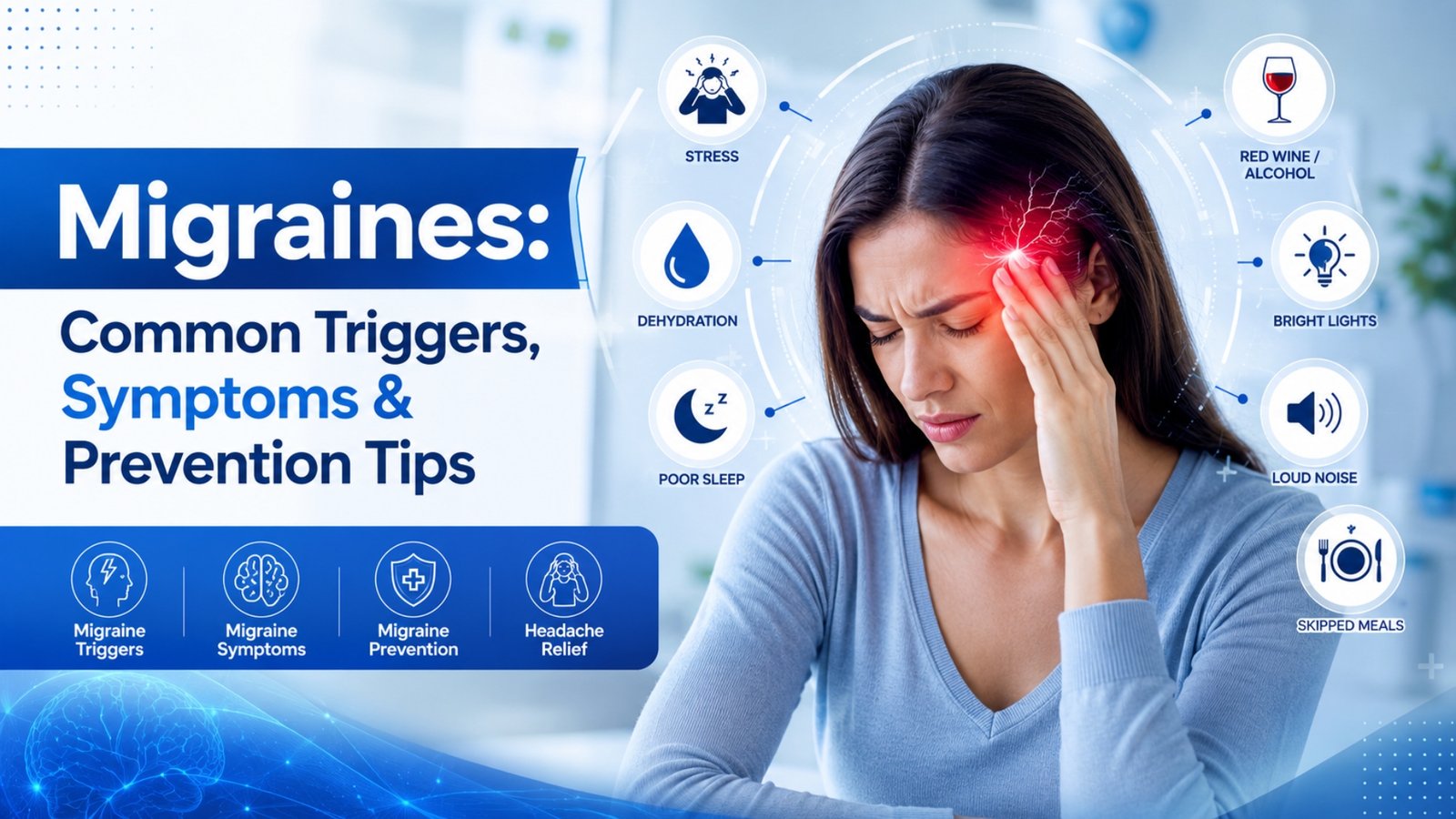
Identifying your personal migraine triggers is one of the most effective ways to prevent them. While migraine triggers vary from person to person, research and clinical experience have identified a few specific types that affect most migraine sufferers.
Food-Related Migraine Triggers
- Aged cheeses and processed meats containing tyramine
- Alcohol, especially red wine
- Caffeine — both in excess and when stopped suddenly
- Artificial sweeteners and MSG
- Skipping meals or prolonged fasting
Environmental and Sensory Triggers
- Bright or flashing lights
- Strong odors, such as perfumes, smoke, or cleaning products
- Sudden weather changes or changes in atmospheric pressure
- Loud noise or crowded environments
Lifestyle and Physical Triggers
- Prolonged stress or sudden emotional changes (even relief after stress can trigger a migraine attack)
- Poor sleep quality or irregular sleep schedule
- Dehydration
- Excessive physical exertion
- Hormonal changes, especially a drop in estrogen levels during the menstrual cycle
Why Is It Important to Identify Triggers
Since migraine triggers vary from person to person, keeping a headache diary — which includes notes on food, sleep, stress levels, and weather — can reveal patterns that might not be easily noticed otherwise. Many patients are surprised to learn that their attacks are not caused by one specific cause, but rather by a combination of factors.

Recognizing Migraine Symptoms Early
Migraines typically occur in four distinct stages, and recognizing the early signs can help you take action before the pain becomes severe.
| Stage | Common Symptoms | Duration |
|---|---|---|
| Prodrome | Mood swings, food cravings, neck stiffness, fatigue | A few hours to 1–2 days before |
| Aura (in some people) | Flashes of light in the eyes, blurred vision, tingling sensation | 5–60 minutes |
| Attack | Throbbing pain, nausea, sensitivity to light/sound | 4–72 hours |
| Postdrome | Fatigue, difficulty concentrating, mild residual pain | Up to 24 hours |
Not everyone experiences all four stages, and only about a quarter of migraines have an aura. Still, learning to recognize your prodrome symptoms can give you a valuable opportunity to take action — which could mean taking medication, resting in a dark room, or simply removing yourself from the environment that could trigger a migraine.
If your headache is accompanied by confusion, blurred vision, sudden severe pain (“the worst headache of your life”), fever, stiff neck, or symptoms of a head injury, seek emergency medical attention immediately. These may indicate a more serious underlying problem that requires urgent attention.
Effective Migraine Prevention Tips
Prevention rarely relies on a single solution — it’s a matter of maintaining consistency in many areas of daily life.
- Stick to a regular sleep schedule. Going to bed and waking up at the same time every day, including on weekends, helps keep your nervous system stable.
- Stay hydrated. Dehydration is one of the most overlooked causes of migraines, and even a simple act like drinking water regularly throughout the day can reduce its occurrence.
- Eat meals at regular intervals. Skipping meals can cause blood sugar levels to fluctuate, which can trigger migraine attacks.
- Limit known food triggers. Once you’ve identified your personal food triggers through a headache diary, reducing or eliminating them can make a noticeable difference.
- Actively manage stress. Techniques like deep breathing, light exercise, and mindfulness can reduce the frequency of stress-related migraines.
- Consume caffeine and alcohol in moderation. For many people, consistency is more important than complete avoidance.
- Consider taking preventative medications or supplements. For those who have frequent or severe migraines, a healthcare provider may recommend daily preventative treatments, magnesium, riboflavin, or other evidence-based options.
- Protect your eyes from screen stress. Taking frequent breaks and filtering out blue light can reduce vision-related migraines, especially for those who spend long hours at a computer. To learn more about this, check out our post on screen-related eye strain and headache management.
According to the American Migraine Foundation, identifying and controlling personal triggers, along with consistent lifestyle habits, are among the most effective non-drug approaches to reducing migraine attacks.
When to See a Professional
It’s normal to have occasional headaches, but certain symptoms should prompt professional evaluation:
- Having headaches every week or every day
- Triggering pain accompanied by nausea or sensitivity to light
- Increased pain with work or physical exertion
- Headaches that interfere with sleep, work, or daily tasks
- Pain around the eyes and watery or red eyes
- New or changing headache patterns after a head injury
Untreated, recurrent migraines may be related to neurological problems, sleep disorders, eye strain, high blood pressure, medication overuse, or chronic migraine syndrome. Early assessment helps identify the root cause and prevents occasional migraines from becoming a chronic problem. Our related post, Understanding Chronic Headache Syndrome, discusses in more detail how occasional migraines can change over time.

Why Patients Choose Consultant Corner for Migraine Treatment
At Consultant Corner, headache and migraine evaluations are person-centered, not just based on symptoms. These services typically include:
- Expert neurology evaluation to identify the root cause of your headaches, not just the outward symptoms
- Personalized treatment plan, including medication options, supplements, trigger management strategies, and stress reduction methods
- Review of previous imaging and lab reports, including CT/MRI scans and blood tests, to give you a clear idea of what’s going on
- Management of chronic or acute headaches, including migraines, tension headaches, cluster headaches, and post-concussion headaches
- Same-week appointments, because no one should have to wait to live with recurring headaches
Frequently Asked Questions About Migraine Triggers
What are the most common migraine triggers? The most commonly reported migraine triggers include stress, insufficient sleep, dehydration, skipping meals, hormonal changes, alcohol (especially red wine), strong smells, and bright or flashing lights.
Can migraines come on suddenly and without warning? Some migraines come on with little or no warning, but many people experience an early symptom (prodrome) phase hours or even a day before the pain begins, with symptoms such as fatigue, mood swings, or neck stiffness.
Are migraines hereditary? Yes. Migraines often run in families, and your chances of getting one are significantly higher if your parents have migraines.
How long does a typical migraine last? Without treatment, a migraine attack usually lasts from 4 to 72 hours, although the prodrome and postdrome phases can extend the duration by an additional day on either side.
When should I be concerned about a headache? If you suddenly experience a severe headache that feels like the worst of your life, or if you have a headache that is accompanied by confusion, vision loss, a stiff neck, fever, or a head injury, seek medical attention immediately.
Can lifestyle changes alone prevent migraines? For many people, getting enough sleep, drinking enough water, eating a healthy diet, and managing stress can significantly reduce the frequency of migraines. Others may need treatment in addition to lifestyle changes for complete relief.
Get Tested for Migraines and Recurrent Headaches
Recurrent headaches are not something you just have to put up with. Whether your pain is caused by migraines, tension headaches, or another underlying cause, a proper test can help you find real answers and lasting relief.
👉 Book your appointment online today or call our office to schedule your headache and migraine test.