
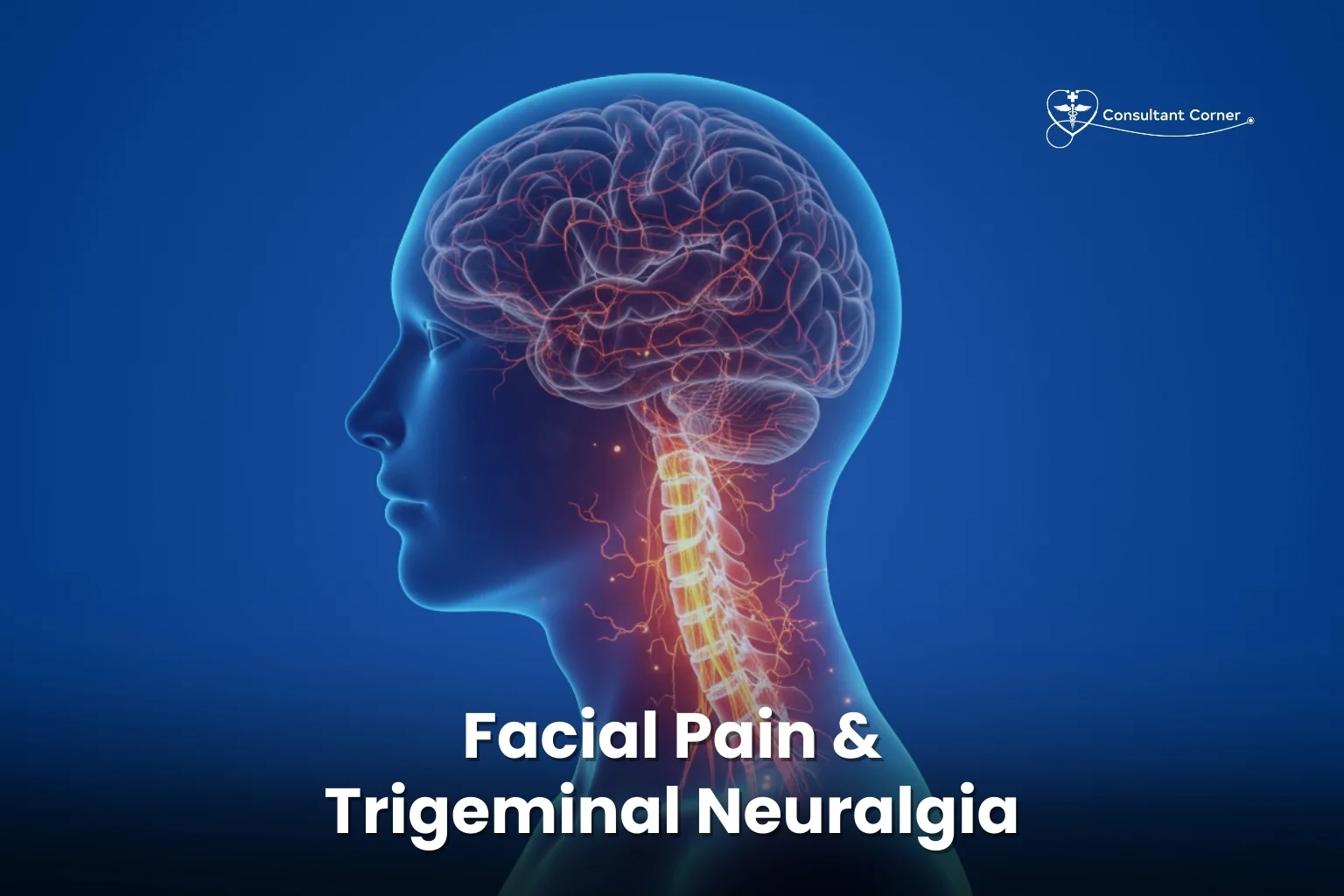
7 Warning Signs of Facial Pain & Trigeminal Neuralgia You Shouldn’t Ignore
Facial pain and trigeminal neuralgia are among the most misunderstood diseases in neurology, and once properly diagnosed, they are also among the most treatable. Patients often describe it as feeling like an electric shock in the cheek, jaw, or forehead — a sudden and intense jolt that everyday activities like brushing teeth, chewing, talking, or even light air on the skin can trigger an attack. Because the pain comes and goes for a short period of time, it is often mistaken for a dental problem, sinus infection, or jaw disease, and this misdiagnosis can delay treatment for months or even years.
At Consultant Corner, our neurology team — led by fellowship-trained vascular neurologist and neuro-intensivist Dr. Saqib A. Chowdhury — specializes in identifying the root cause of facial pain and developing a treatment plan that quickly stops these attacks. This guide discusses in detail what facial pain and trigeminal neuralgia feel like, what causes it, how it is diagnosed, and what treatment options can help patients return to a normal life
What is trigeminal neuralgia?
Trigeminal neuralgia (TN) is a chronic pain condition that affects the trigeminal nerve. This nerve is the nerve in the skull that is responsible for facial sensation and muscle movement such as biting and chewing. The trigeminal nerve has three branches — one covering the forehead and eye area, one covering the cheeks and upper jaw, and one covering the lower jaw — so facial pain and trigeminal neuralgia can occur in different parts of the face, depending on which branch is affected.
In most cases, it is thought to be caused by a blood vessel near the brainstem pressing on the trigeminal nerve, which gradually wears away the protective covering (myelin) around the nerve fibers. Once that covering is damaged, the nerve can send false signals, causing pain signals to be sent to the brain even when there is no actual injury to the face. In very rare cases, trigeminal neuralgia is associated with multiple sclerosis, tumors that are pressing on the nerve, or an underlying neurological condition — which is why proper imaging and evaluation are so important.

7 Warning Signs of Facial Pain and Trigeminal Neuralgia
If you experience sudden, electric, stabbing pain in your face, these are the common warning signs of trigeminal neuralgia that neurologists look for:
- Sudden, electric-shock-like facial pain that starts without warning
- A stabbing or sharp pain that lasts from a few seconds to a few minutes
- Pain triggered by chewing, talking, brushing your teeth, or light touch to your face
- Pain triggered by cold air, wind, or a light breeze blowing on your skin
- Pain attacks that come in waves or clusters, sometimes dozens of times a day
- Pain is limited to one side of the face, not both at once
- Pain returns weeks or months after the pain subsides
Any one of these symptoms is worth an examination by a neurologist, but if you notice several of them together, it is a strong indication that you may be dealing with facial pain and trigeminal neuralgia — not a dental or sinus problem.
How facial pain and trigeminal neuralgia differ from other facial pain
One of the biggest challenges with trigeminal neuralgia is that its symptoms can overlap with many unrelated conditions. Here’s a quick comparison to help you understand how it’s different:
| Condition | Common Types of Pain | Common Causes | Duration of Episode |
|---|---|---|---|
| Trigeminal Neuralgia | Electric shock, stabbing pain | Touch, chewing, air, talking | A few seconds to 2 minutes |
| TMJ Disorder | Dull, aching pain in the jaw | Chewing hard foods, grinding teeth | A few hours |
| Toothache (teeth/gums) | Throbbing, constant pain | Hot/cold foods, pressure on teeth | A few hours to a few days |
| Sinus Pain | Pressure-like pain in the cheek/forehead | Stuffy nose, leaning forward | A few days |
| Migraine | Throbbing, one-sided headache | Light, stress, hormonal changes | A few hours to 3 days |
This is exactly why a proper diagnosis is important. Treating trigeminal neuralgia (TN) as a dental problem, or treating dental problems as TN, can cause patients to suffer from pain for much longer than necessary.
What causes trigeminal neuralgia?
Although the exact cause varies from patient to patient, neurologists generally divide the causes of facial pain and trigeminal neuralgia into three categories:
- Primary (classic) TN: This is caused by compression of the trigeminal nerve root by a blood vessel, which is the most common cause of the condition.
- Secondary TN: This is caused by an underlying condition such as multiple sclerosis, a tumor, or a blood vessel defect that affects the nerve.
- Idiopathic TN: This is diagnosed when no clear structural cause is found on imaging, even though the symptoms are obvious.
Age is also a factor — trigeminal neuralgia is more common after the age of 50 and affects women more than men, although it can occur at any age. Research teams estimate that only about 12 out of every 100,000 people are diagnosed with the condition each year, which is why it is often misunderstood, even by patients who have been living with the symptoms for months.
How facial pain and trigeminal neuralgia are diagnosed
Since there is no single lab test to confirm trigeminal neuralgia, its diagnosis depends on a careful combination of the patient’s medical history, direct neurological examination, and imaging. When you come to Consultant Corner for an evaluation of facial pain, here’s generally what you can expect:
- A detailed history of symptoms. We ask about exactly what the pain feels like, how long each episode lasts, what triggers it, and which side of the face is affected. The pattern of your symptoms is often the most useful clue to a diagnosis.
- Neurological examination. We test facial sensation, jaw strength, and reflexes to rule out other nerve or muscle problems that could be causing the pain.
- MRI imaging. An MRI helps confirm whether a blood vessel is pressing on the trigeminal nerve root, and rules out tumors or multiple sclerosis as underlying causes.
- Ruling out other conditions. Dental problems, TMJ disorders, sinus infections, and cluster headaches can all cause symptoms similar to trigeminal neuralgia, so part of the evaluation is confirming what the pain is not, in addition to what it is.
This step-by-step process is what allows us to quickly move from the idea of “something is wrong with my face” to a clear diagnosis and treatment plan — often within the same week of symptom onset.
Treatment Options for Facial Pain and Trigeminal Neuralgia
Treatment approaches are rarely the same for everyone. Most patients start with medication and only move on to more advanced treatments if the pain is not adequately relieved. Here is a comparison of the main options in general:
| Treatment | How It Works | Best For | Type of Surgery |
|---|---|---|---|
| Anticonvulsant medications | Calm overactive nerve signals | First-line treatment for most patients | Non-surgical |
| Muscle relaxants | Used alongside medication for additional comfort | Patients who have partially responded to first-line medications | Non-surgical |
| Botox injections | Block pain signals at trigger points | Patients with local, predictable triggers | Minimally invasive |
| Microvascular decompression (MVD) | Surgically relieves pressure on nerves | Patients with known blood vessel pressure and poor response to medications | Surgical |
| Neuromodulation | Changes the way pain signals are processed | Patients who have not responded to medications or surgery | Minimally invasive |
Medication is almost always the first line of treatment, as about 4 out of 5 patients see significant improvement with the right medication and the right dosage. When medication alone is not enough, our team discusses which of the more advanced options are appropriate for your specific situation, always starting with the least invasive option that is most likely to be effective.

Living with Trigeminal Neuralgia: Some Practical Tips Between Appointments
While medication is the mainstay of managing facial pain and trigeminal neuralgia, many patients also find it helpful to make some small changes to their daily routine while their treatment plan is in effect:
- Identify your personal trigger zones. Many patients have one or two specific areas on their face that trigger flare-ups, and learning to avoid unnecessary contact with those areas can help reduce recurrence of attacks.
- Protect your face from wind and cold air. A scarf or high collar can reduce exposure on cold or windy days, which is a common trigger for many patients.
- Choose soft foods during flare-ups. Chewing can be a major trigger, so temporarily prioritizing soft foods while adjusting medication doses can help reduce the number of daily attacks.
- Keep a list of symptoms. Writing down when episodes occur, what triggers them, and how long they last will give your neurologist valuable information to tailor your treatment.
- Don’t wait for an attack to go away on its own. Since the pain of trigeminal neuralgia can escalate quickly, contacting your care team as soon as the pain begins can help you find relief faster than waiting for it to go away on its own.
None of these steps are a substitute for treatment, but they can make the weeks between diagnosis and full symptom control much more bearable.
Why patients choose Consultant Corner for facial pain and trigeminal neuralgia
Consultant Corner follows a well-organized and patient-centered approach to diagnosing and treating facial pain:
Expert diagnosis of facial pain
We carefully differentiate trigeminal neuralgia from TMJ disorders, dental pain, sinus problems, migraines, and other neuropathic pain conditions before making a treatment recommendation.
Effective nonsurgical treatment options
Many patients respond well to nerve-calming medications and specific therapies, which provide significant relief without surgery.
Imaging review to confirm diagnosis
An MRI helps our team assess whether a blood vessel is pressing on a nerve, or whether another condition, such as multiple sclerosis, is causing symptoms.
Personalized pain-management strategies
Each treatment plan includes managing the cause of the pain, optimal use of medications, and a long-term plan to keep pain under control.
Advanced options when needed
For patients who need more than just medication, we discuss Botox therapy, referrals for microvascular decompression surgery as needed, and neuromodulation options.
Same-week appointments
Severe facial pain is an emergency, and it shouldn’t take weeks to get an appointment — that’s why we prioritize scheduling appointments quickly for new patients with facial pain.
Meet the Neurologist Behind Your Treatment
Saqib A. Chowdhury, MD, leads Consultant Corner’s neurology team as a vascular neurologist and neuro-intensivist. This dual training is crucial for patients with facial pain and trigeminal neuralgia, as it allows Dr. Chowdhury to evaluate facial pain not in isolation, but in the larger context of vascular and nerve health — checking to see if a narrowed blood vessel, circulatory problem, or other neurological condition is responsible for the symptoms. For patients who have facial pain along with other neurological problems, such as a previous stroke, head injury, or chronic headaches, this broader perspective can often make the difference between a partial treatment plan and a complete cure.
Patients also realize that the evaluation doesn’t end with just “here’s a prescription.” Each visit discusses what to expect in the coming weeks, whether any symptoms require follow-up in the same week, and what next steps should be taken if the pain does not fully subside with the first treatment regimen.
The True Impact of Living with Facial Pain
It is easy to underestimate how distressing facial pain and trigeminal neuralgia can be until you have experienced it firsthand. Patients often report changing their eating habits to avoid chewing on the affected side, avoiding cold weather or air conditioning, speaking less during conversations to reduce jaw movement, and worrying about the next unexpected attack. Because the pain is not noticeable to others and its episodes are short-lived, friends, family, and even some healthcare providers may underestimate its true severity and disruptive impact. This gap between how the condition looks on the outside and how it feels on the inside is what makes an accurate diagnosis and a doctor who takes the symptoms seriously so important.

When to Seek Urgent Evaluation for Facial Pain
Most cases of facial pain and trigeminal neuralgia are not medical emergencies, but you should seek immediate medical attention if any of the following occur along with facial pain:
- Changes in vision
- Drowsiness on one side of the face
- Weakness or numbness in any part of the body
- Fever
- A sudden, severe headache that has never occurred before
- Difficulty speaking
These combined symptoms may indicate a stroke or infection, both of which require emergency treatment rather than a scheduled neurology visit.
Neurological Care Close to Home: Bloomington, Illinois and El Paso, Texas
Consultant Corner provides specialized neurological care in two communities:
- Neurologists in Bloomington, Illinois — Consultant Corner’s Bloomington branch provides comprehensive evaluation and treatment for facial pain, headaches, stroke recovery, and other neurological conditions.
- Health Consultants in El Paso, Texas — our El Paso team brings the same level of neurological expertise to patients across West Texas.
No matter where you are, our goal is the same: to provide an accurate diagnosis and develop a treatment plan based on your specific symptoms.
Our Collaboration with MyCare Express Care in Bloomington, Illinois
Consultant Corner is proud to partner with MyCare Express Care. It is a walk-in urgent care clinic located at 1404 Eastland Drive, Suite 103, in Bloomington, Illinois, open daily from 7 a.m. to 7 p.m. This collaboration means that patients who come to MyCare Express Care with an urgent problem, such as sudden facial pain, can be connected directly to Consultant Corner’s neurology team for follow-up evaluations, imaging reviews, and an ongoing treatment plan, including virtual neurology appointments. This provides a convenient link between same-day emergency care and specialized neurological follow-up, where patients do not have to go through their own referral process.
Related Neurological Disorders We Treat
Face pain does not usually occur in isolation from a patient’s other neurological problems, which is why our team also evaluates and treats a variety of related disorders:
- Head Injury — support in the assessment and recovery after a concussion or severe brain injury
- Ischemic Stroke — identifying the early warning signs and understanding its treatment and recovery process
- Headaches/Migraines — identifying common causes and prevention strategies
- Alzheimer’s Disease — identifying the early signs that every family should know
If you or a member of your family suffers from multiple of these problems in addition to face pain, our team can provide integrated treatment for all of them, rather than treating each symptom separately.
Learn more from trusted external sources
For additional information about trigeminal neuralgia from leading medical institutions, these external sources can be a good starting point:
- Cleveland Clinic: Trigeminal Neuralgia Symptoms and Treatment
- National Institute of Neurological Disorders and Stroke: Trigeminal Neuralgia Fact Sheet
These sources are useful for general education, but they are not a substitute for an in-person or virtual evaluation with a neurologist, who can review your specific symptoms and imaging.
Some Common Misconceptions About Facial Pain and Trigeminal Neuralgia
Misinformation about trigeminal neuralgia is common because the condition is rare and its symptoms overlap with more well-known problems. Clearing up a few misconceptions can help patients get the right treatment faster:
- Misconception: “It’s just a bad toothache.” Fact: Although TN pain may seem like it’s radiating from a tooth, it’s not caused by inflammation of the nerve, tooth decay, or infection. Dental treatment does not resolve nerve-related facial pain.
- Myth: “If medicine doesn’t work right away, nothing will.” Fact: It may take some trial and error to find the right medication and dosage. Many patients who don’t respond to the first medication find significant relief after a treatment plan is carefully tailored.
- Myth: “Surgery is the only real solution.” Fact: Most patients successfully control their symptoms with medication alone. Surgical options, such as microvascular decompression, are usually reserved for patients whose pain does not respond adequately to medication.
- Myth: “The pain will just go away.” Fact: Trigeminal neuralgia often has a cycle of waxing and waning pain, but it rarely goes away permanently without treatment, and without treatment, the pain tends to become more frequent over time.
Frequently Asked Questions About Facial Pain and Trigeminal Neuralgia
Is trigeminal neuralgia the same as toothache?
No. Although the pain may seem to be coming from a tooth, trigeminal neuralgia is a nerve problem, not a dental problem. Many patients undergo unnecessary dental treatment before a proper diagnosis is made, so a neurological evaluation is important if dental treatment does not relieve facial pain.
What triggers an attack of trigeminal neuralgia?
Common triggers include light touch, chewing, talking, brushing teeth, cold air, and even smiling. Causes can vary from person to person, and identifying your specific triggers is part of creating an effective treatment plan.
Is facial pain and trigeminal neuralgia curable?
There is no definitive cure, but the condition can be treated. Many patients find significant and long-lasting relief with medication alone, while others benefit from procedures such as Botox therapy or microvascular decompression surgery when medication is not enough.
Is trigeminal neuralgia dangerous?
Trigeminal neuralgia itself is not life-threatening, but its pain can be so severe that it affects eating, sleeping, and quality of life. In rare cases, it is associated with an underlying disease such as multiple sclerosis or a tumor, which is why imaging is an important part of the diagnosis.
How long does an episode of trigeminal neuralgia last?
An episode usually lasts from a few seconds to about two minutes, although it can occur in clusters, sometimes dozens of times a day during acute attacks.
When should I see a neurologist for facial pain?
If your facial pain is sudden, severe, or stabbing, triggered by touch or wind, and limited to one side of the face, it is time to schedule a neurological evaluation. For patients who are actively experiencing facial pain attacks, appointments are available within the same week.
Get Relief from Facial Pain and Trigeminal Neuralgia Today
Facial pain can be unbearable, especially when every bite, conversation, or breath of air poses the risk of another attack. The good news is that facial pain and trigeminal neuralgia respond well to the right treatment plan, and patients experience relief faster than they expect.
If you are ready to receive an accurate diagnosis and a treatment plan based on your symptoms, contact Consultant Corner online or call our office to schedule your evaluation.