Do Men and Women Experience Stroke Differently?
While the core mechanics of a stroke remain the same, clinical data show significant differences in how symptoms manifest based on gender. According to the World Stroke Organization (WSO), women are not only more likely to experience a stroke in their lifetime. Still, they are also 11% more likely to report non-traditional symptoms that lead to delayed diagnosis.
Understanding these nuances is vital because every 60 seconds of delayed treatment results in the death of nearly 2 million brain cells.
What Common Symptoms Are Shared by Both Genders?
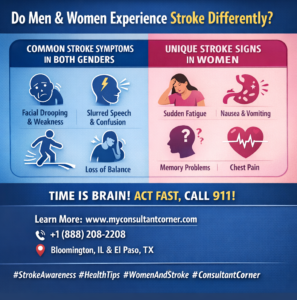
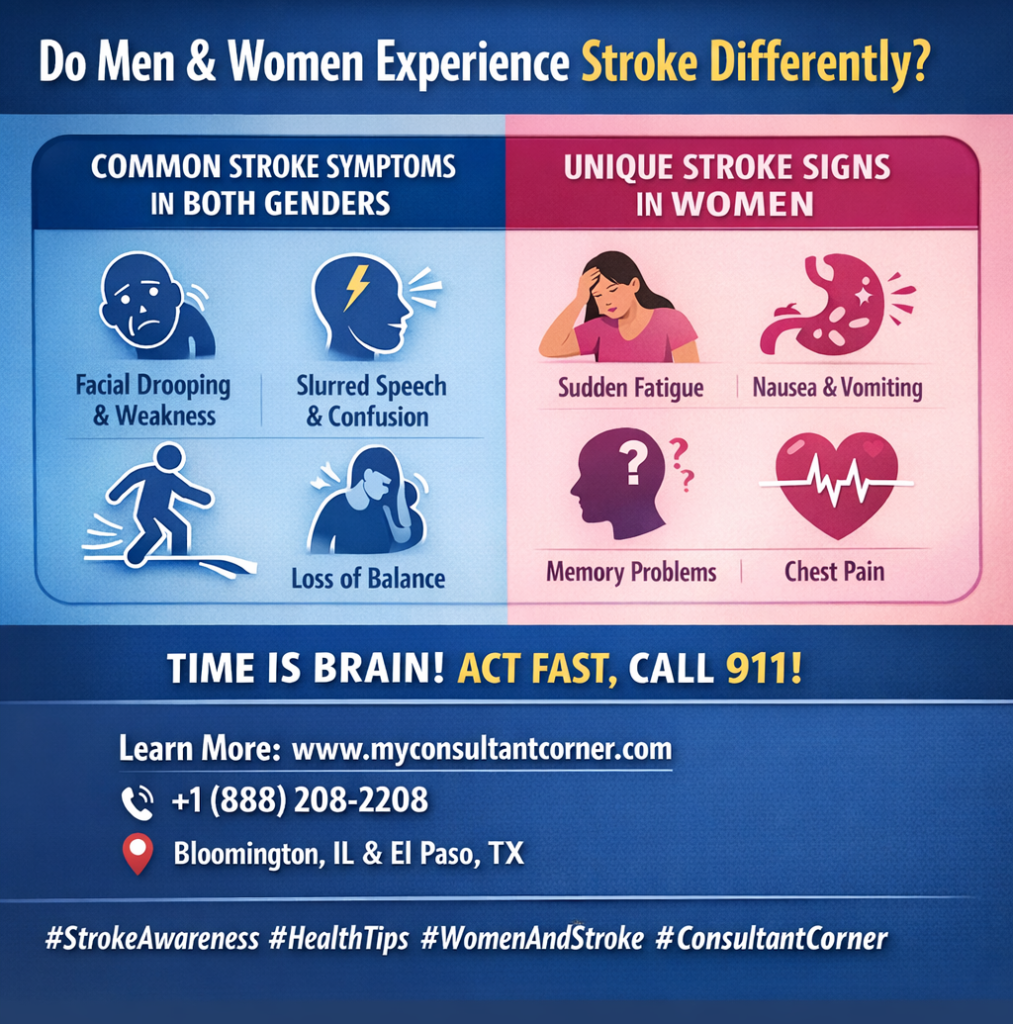
In the majority of cases, both men and women will display the “classic” neurological deficits associated with brain cell death. These symptoms are primarily focused on motor skills and sensory processing:
-
Sudden Asymmetry: Drooping of the face, or paralysis of the arm or leg—typically isolated to one side of the body.
-
Cognitive & Sensory Disruptions: Slurred speech, sudden confusion, vision loss, or a severe headache with no identifiable cause.
-
Mobility Issues: Difficulty walking or a sudden loss of balance (the “B” in the BE FAST protocol).
Why Are Stroke Signs Frequently Missed in Women?
Women are more likely to present with “subtle” or nonspecific symptoms, which are often mistakenly attributed to stress, exhaustion, or other minor ailments. This diagnostic gap is a leading cause of poorer outcomes for female patients.
Common “Non-Traditional” Symptoms in Women:
-
Systemic Weakness: A feeling of generalized exhaustion or extreme fatigue that comes on suddenly.
-
Gastrointestinal & Respiratory Signs: Nausea, vomiting, hiccups, or shortness of breath.
-
Altered Mental Status: Disorientation, sudden memory problems, or acting “out of character”.
-
Cardiac Mimics: Chest pain, palpitations, or a racing heartbeat that can sometimes be confused with a heart attack.
Which Symptoms Are Relatively More Common in Men?
Research suggests men are more likely to exhibit specific coordination and sensory issues. While these are still “classic” signs, they appear with higher frequency in male patients:
-
Ataxia: A sudden, noticeable loss of coordination in the limbs or an unsteady gait.
-
Paresthesia: Distinct sensations of numbness, tingling, or “pins and needles”.
-
Visual Disturbances: Higher reported rates of double vision or sudden dimming of sight in one eye.
How Does Gender Affect Treatment Timing and Survival?
| Feature | Statistical Impact on Women | Impact on Recovery |
|---|---|---|
| Recognition | Nonspecific signs (nausea, fatigue) lead to frequent misdiagnosis. | Delayed treatment. |
| Response Time | Women wait an average of 30 to 60 minutes longer to call 911. | Increased brain damage. |
| Age of Onset | Women typically have strokes at an older age than men. | Higher risk of mortality. |
| Disability Risk | Women face a higher rate of long-term nursing home placement post-stroke. | Reduced independence. |
When Should You Seek Emergency Help?
Regardless of sex, any sudden combination of these symptoms—even if they seem mild or resolve after a few minutes—must be treated as a medical emergency.
-
Call Emergency Services (911): Do not wait for a clinic appointment or try to “sleep it off”.
-
Trust Your Instincts: If a woman reports feeling “not right” combined with sudden fatigue or confusion, seek help immediately.
-
Time is Brain: Accessing clot-busting therapies within the first 3–4.5 hours is the most effective way to prevent permanent disability.
Your Recovery Doesn’t End at the Hospital Doors
At Consultant Corner, we believe that surviving a stroke is only the beginning. We treat stroke recovery as a continuous journey, not a one-time medical event. Our specialized neurology team offers personalized, data-driven post-stroke care through both convenient virtual consultations and in-person clinic visits. We focus on neuroplasticity, secondary prevention, and restoring your independence.
Take the Next Step Toward Healing
If you or a loved one needs expert guidance on the path to recovery, our team is ready to support you.
-
Visit: www.myconsultantcorner.com
-
Call: +1 (888) 208-2208
-
Email: info@myconsultantcorner.com
-
 Address: 1404 Eastland Dr, Bloomington, IL 61701, United States
 -
Address: 5140 Montana Ave, El Paso, TX 79903, United States
 Address: 1404 Eastland Dr, Bloomington, IL 61701, United States