What Are the Main Warning Signs of a Stroke?
A stroke happens when blood flow to a part of the brain is interrupted, leading to brain cell damage within minutes. Recognizing the early warning signs can save your life or someone else’s. According to the World Health Organization (WHO), stroke is the second leading cause of death globally, responsible for over 12 million cases every year.
Time is critical—knowing the signs and acting fast can reduce the risk of long-term disability and improve recovery outcomes.
How Can You Identify Stroke Symptoms Quickly? (Remember: BE FAST)
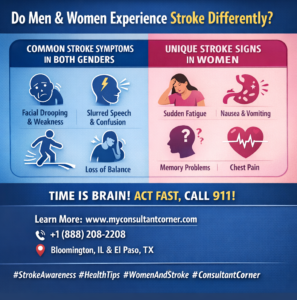
Medical experts use the BE FAST acronym to help people quickly recognize stroke symptoms. Each letter stands for a potential warning sign:
B – Balance: Is There Sudden Dizziness or Loss of Coordination?
If someone suddenly can’t walk straight, feels dizzy, or loses coordination, it could be an early stroke sign. Research from the American Stroke Association (ASA) suggests that around 40% of stroke patients experience balance problems or sudden dizziness.
E – Eyes: Is There Trouble Seeing Clearly?
Watch for blurred vision, double vision, or complete vision loss in one or both eyes. About 20% of stroke victims report sudden vision changes, which may appear alongside light sensitivity or visual field loss.
F – Face: Is One Side Drooping?
Ask the person to smile. If one side droops or feels numb, it’s a red flag. Facial asymmetry is one of the most common early signs of stroke and appears in over 60% of cases according to clinical data.
A – Arm: Do the Arms Feel Weak or Numb?
Have them raise both arms. If one arm drifts downward or can’t be lifted, that’s a strong indicator of a stroke. This weakness may also affect one leg, typically on the same side.
S – Speech: Is the Speech Slurred or Confusing?
Speech problems—like slurred words, difficulty understanding, or trouble finding the right words—often signal a stroke. Studies find that nearly 70% of stroke patients present some form of speech impairment at onset.
T – Time: Why Is Every Minute Critical?
If any of these signs appear, call emergency services immediately. Never wait for the symptoms to improve on their own. Each passing minute can cause an estimated 1.9 million brain cells to die, increasing the risk of permanent brain injury.
What Are Other Sudden Symptoms Not to Ignore?
Not every stroke follows the same pattern. Some people experience less common, but equally serious symptoms such as:
-
Sudden, severe headache without a known cause—especially if it comes out of nowhere.
-
Loss of consciousness, fainting, or seizure.
-
Nausea, vomiting, or vertigo (a spinning sensation).
-
Sudden confusion or trouble understanding speech.
Always treat these as potential emergencies—even if symptoms fade after a few minutes.
Why Is Early Recognition of Stroke So Important?
When it comes to stroke, every minute truly counts. Each second of delay means more brain cells are lost, and long-term complications become more likely. The World Health Organization (WHO) reports that strokes cause over 6.5 million deaths globally each year, and the risk of severe disability rises sharply with every lost minute of treatment time.
In short, the faster a stroke is recognized and treated, the better the outcome.
Why Does Fast Action Improve Access to Treatments?
Stroke treatments are highly time-sensitive. Clot-busting drugs (known as thrombolytics, such as tPA) and mechanical clot removal procedures must be given within 3 to 6 hours from symptom onset to be most effective.
When strokes are recognized quickly:
-
Patients reach CT scans faster, helping doctors confirm the stroke type (ischemic or hemorrhagic).
-
Life-saving therapies can be started sooner, limiting brain damage.
-
Supportive care (like managing blood pressure, oxygen, and glucose) can prevent secondary complications such as brain swelling or infection.
In contrast, delayed recognition may mean missing the treatment window entirely, reducing the chance of recovery.
How Does Early Recognition Improve Survival and Recovery?
Evidence is clear: faster diagnosis leads to better survival and long-term independence. A large-scale study in The Lancet Neurology found that patients treated within the first 90 minutes of a stroke were three times more likely to recover without major disability.
Prompt recognition and treatment also mean:
-
Lower mortality rates.
-
Fewer hospital complications, such as blood clots and pneumonia.
-
Greater chances of walking and speaking normally after recovery.
Essentially, time to treatment predicts quality of life after stroke.
When Should You Go to the ER for a Stroke?
If you suspect a stroke—even slightly—call emergency services immediately. Don’t wait to see if symptoms improve, and don’t try to drive yourself. Stroke is a time‑critical medical emergency, and fast action can mean the difference between full recovery and permanent disability.
According to the American Heart Association, early treatment within the first few hours can reduce disability by up to 30% and significantly improve survival.
The Consultant Corner Approach to Ischemic Stroke
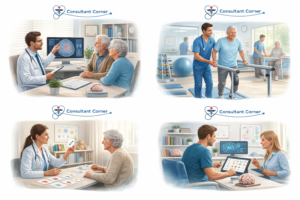
At Consultant Corner, we view ischemic stroke as an ongoing recovery process, not a single event. Our neurology team provides personalized post-stroke care through both in-clinic and virtual visits, focusing on recovery, prevention, and long-term brain health.
Take the Next Step
If you or a loved one is recovering from an ischemic stroke, we’re here to help.
Visit www.myconsultantcorner.com,
call: +1 (888) 208-2208, or
Email: info@myconsultantcorner.com to get started.
 Address: 1404 Eastland Dr, Bloomington, IL 61701, United States
Address: 5140 Montana Ave, El Paso, TX 79903, United States