Why Do I Have a Sore Back and Dizziness at the Same Time?
Experiencing back soreness with dizziness can be unsettling. These symptoms often occur together due to problems in the spine, muscles, posture, or nervous system. In some cases, they may even signal an underlying neurological or vascular condition.
Here’s a detailed look at what might be causing it — and when to seek medical help.
Can Cervical Spine Problems Cause Dizziness?
Yes. Conditions affecting the cervical spine (neck and upper back)—such as herniated discs, cervical spondylosis (arthritis of the neck), or muscle strain—can interfere with nerves and blood vessels responsible for balance.
When these structures are compressed or irritated, it can lead to neck pain, upper back soreness, and dizziness.
This condition is sometimes known as cervical vertigo, where neck-related issues trigger balance disturbances or lightheadedness.
Can Poor Posture Lead to Dizziness and Back Pain?
Absolutely. Spending long hours in poor posture—like slouching or forward head position—strains the muscles in your back and neck.
This muscle tension can reduce blood flow to the brain and affect your vestibular system (which controls balance), resulting in both back soreness and dizziness.
Modern lifestyles, which often involve computer work, phone use, or prolonged sitting, are common culprits behind this posture-related discomfort.
Learn More: Can Bad Posture Cause Headaches
Can Problems in the Spine or Neck Cause Dizziness?
Yes — spinal and neck issues are among the most common causes of dizziness combined with back pain.
When nerves in the neck or upper spine become compressed or irritated, they can interfere with the body’s balance centers in the brain.
Conditions such as:
- Cervical herniated discs
- Cervical spondylosis (arthritis of the neck)
- Pinched nerves in the neck or upper back
can lead to both neck soreness and dizziness, a condition often called cervicogenic dizziness or cervical vertigo.
Can Poor Posture or Muscle Tension Cause Dizziness?
Absolutely. Poor posture — especially forward head posture or slouching — puts excessive strain on the neck, shoulder, and upper back muscles.
Over time, this muscle tension can compress nerves or reduce blood flow to the brain, resulting in lightheadedness, imbalance, and pain.
This is common in people who sit for long hours at computers or look down at phones, and it may cause what’s known as postural or tension-related dizziness.
Could Spinal Injuries or Trauma Be the Cause?
Yes. Spinal cord injuries, whiplash, or severe back trauma can disrupt nerve signaling and balance mechanisms in the brainstem and inner ear.
This can lead to symptoms such as:
- Back pain or stiffness
- Vertigo or spinning sensation
- Loss of coordination or unsteadiness
Anyone who experiences dizziness after an accident or fall should seek medical care immediately to rule out spinal cord injury or concussion.
How Do Muscle Tension and Nerve Irritation Contribute?
When the upper back, neck, or shoulder muscles tighten excessively, they can press on nearby nerves and blood vessels, disrupting circulation and nerve signals.
This tension may cause a combination of headaches, dizziness, muscle stiffness, and soreness.
Chronic stress, lack of movement, or repetitive strain often worsen these symptoms.
Can Whiplash or Spine Injuries Cause Dizziness?
Yes. Traumatic injuries—such as whiplash from a car accident or sports injuries—can strain or damage neck muscles, ligaments, and spinal structures.
These injuries may alter how your brain processes signals from your neck and inner ear, leading to pain, dizziness, and imbalance.
Post-traumatic dizziness can persist for weeks or months if untreated.
What Other Conditions Can Cause Dizziness with Back Pain?
Some systemic or musculoskeletal conditions can also cause dizziness and back soreness, including:
- Osteoarthritis or sciatica
- Fibromyalgia
- Pregnancy (due to posture changes and circulation shifts)
- Dehydration or low blood sugar
- Vascular disorders affecting blood flow
Since these symptoms can overlap with those of many conditions, accurate diagnosis is crucial.
How Is Dizziness with Back Pain Treated?
Treatment depends on the underlying cause but may include:
- Posture correction and ergonomic adjustments
- Physical therapy to strengthen neck and back muscles
- Stretching and muscle relaxation techniques
- Pain relievers or muscle relaxants (if prescribed)
- Vestibular rehabilitation for dizziness related to balance disorders
If your dizziness is severe, persistent, or accompanied by numbness, vision problems, or difficulty walking, seek urgent medical attention. These could indicate a neurological or vascular emergency.
What Symptoms Should I Watch For?
Along with back pain, dizziness may appear as:
- Lightheadedness or faintness
- Feeling “off-balance” or unsteady
- Spinning sensation (vertigo)
- Blurred vision or disorientation
- Difficulty maintaining coordination
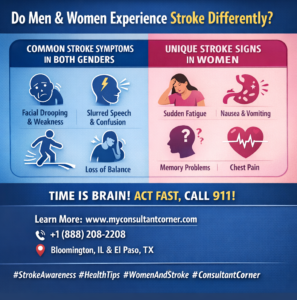
If these symptoms are persistent, severe, or worsening, or if they occur with numbness, weakness, or vision changes, urgent medical evaluation is necessary. Such signs could indicate stroke, nerve compression, or vascular problems.
When Should I See a Doctor?
You should contact a healthcare provider or neurologist if you experience:
- Recurrent or worsening dizziness
- Severe neck or upper back pain
- Unsteadiness or balance loss
- Headaches, blurred vision, or confusion
- Recent trauma or whiplash
Early evaluation can help identify treatable causes and prevent complications.
How Can MyCornerConsultant Help?
At MyCorner Consultant, we provide neurologist telehealth consultations for patients experiencing back pain, dizziness, and balance problems in Bloomington and all nearby cities.
We specialize in identifying and treating neurological causes, including:
- Cervical vertigo and balance disorders
- Headache and migraine
- Spine-related nerve compression
- Stroke and vascular issues
- Traumatic head or neck injuries
Through secure telehealth sessions, patients across Bloomington and all nearby cities can access expert neurological care without the need for in-person visits.
Take the First Step Toward Relief
If you’re struggling with persistent back soreness and dizziness, don’t ignore the signs — they could point to an underlying neurological or spinal condition.
Our goal at MyCornerConsultant is to help you understand your symptoms, identify the cause, and create a clear recovery plan — all through accessible, patient-centered telehealth care.
Schedule your online neurology consultation today and connect with a trusted Bloomington neurologist dedicated to your brain and spine health.