Why Do Migraines Make You Nauseous? The Brain-Gut Connection Explained
Usually severe migraine nausea and vomiting disrupts daily routines and reduces quality of life. Many patients complain that stomach symptoms feel as intense as head pain. Medical research shows that up to 80% of migraine patients experience nausea, and nearly 50% report vomiting during attacks (American Migraine Foundation). Understanding of the migraine gut brain connection helps patients recognize symptoms early and seek proper care.
Migraine Nausea And Vomiting
Neurological disorders often affect the digestive system more than the brain. Migraine stands out because it impacts both the nervous system and the digestive tract. Many patients notice nausea before migraine pain even begins. That early warning phase is known as the prodrome stage.
Migraine digestive symptoms is classified as part of the broader neurological cascade. through complex pathways the brain communicates with the gut. Stomach get upset, delayed digestion, and vomiting is caused due to disruption in those pathways.
Key observations from clinical studies:
- Around 70–80% of patients report nausea
- About 30–50% experience vomiting
- Gastrointestinal symptoms often predict migraine severity
The Migraine Gut Brain Connection And Its Role In Symptoms
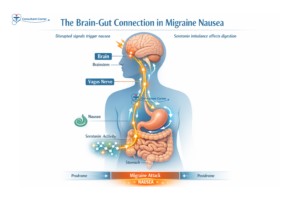
The migraine gut brain connection explains the reason why head pain links closely with stomach distress. The brain and gut communicate through the vagus nerve.
This acts as a major signaling pathway.Serotonin plays a major role in this process. Nearly 90% of serotonin exists in the gut, not the brain. Changes in serotonin levels affect both mood and digestion. Migraine episodes disrupt serotonin balance, which triggers nausea and slows stomach emptying.
Delayed gastric emptying, also called gastroparesis, appears in many migraine patients. Food remains in the stomach longer than normal. That delay leads to bloating, discomfort, and vomiting.
Why Migraines Cause Nausea And Vomiting During Attacks
Doctors explain why migraines cause nausea through neurological signaling changes. The brainstem becomes highly active during a migraine attack. That area controls vomiting reflexes.
Pain signals stimulate regions such as:
- The hypothalamus
- The brainstem vomiting center
- The trigeminal nerve system
Activation of those areas leads to migraine nausea and vomiting. Stronger migraines often cause more severe gastrointestinal symptoms.
Research from the National Institutes of Health shows that brainstem activation correlates directly with nausea severity in migraine patients.
Migraine Nausea Prodrome Symptoms And Early Warning Signs
Early detection improves symptom control. Many patients experience migraine nausea prodrome symptoms hours before headache onset.
Common early signs include:
- Mild nausea or queasiness
- Loss of appetite
- Fatigue or low energy
- Sensitivity to smell
Recognition of those symptoms allows faster treatment. Early medication use often reduces severity.
Migraine Stomach Problems Across Different Phases
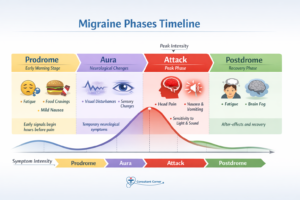
Migraine affects the digestive system in stages. Each phase presents different symptoms.
Prodrome Phase
In prodrome phase, Mild nausea before migraine begins. Changes in appetite often occur.
Attack Phase
In the attack phase severe migraine nausea and vomiting dominate. Patients may struggle to keep food or medication down.
Postdrome Phase
After headache relief lingering stomach discomfort and fatigue continue.
Studies suggest that over 60% of patients report digestive symptoms across multiple phases, not just during peak pain.
Migraine Vomiting Relief And Treatment Options
Effective migraine vomiting relief requires a combination of medical and lifestyle strategies. Treatment depends on symptom severity and frequency.
Medical Treatments
Doctors often recommend:
- Antiemetic medications (ondansetron, metoclopramide)
- Triptans for migraine control
- Preventive therapies for chronic cases
Lifestyle Strategies
Small changes in life of patients may benefit him:
- Small, frequent meals
- Hydration with electrolyte fluids
- Avoidance of trigger foods
Telehealth Advantage
My Consultant Corner offers fast access to neurologists through virtual visits. Early consultation improves symptom control and reduces emergency visits.
[Add Internal Link Here – Tele-neurology Consultation Page]
When Medical Attention Becomes Necessary
Certain symptoms require immediate medical evaluation. Delayed care can increase complications.
Seek medical help if:
- Severe vomiting leads to dehydration
- Migraine pattern changes suddenly
- Confusion or weakness appears
- Vision loss or speech difficulty occurs
- Symptoms persist beyond 72 hours
Early diagnosis improves long-term outcomes. Telehealth services allow quick access without travel delays.
Practical Tips For Managing Migraine Digestive Symptoms
Patients can reduce migraine digestive symptoms with consistent habits.
Helpful approaches:
- Maintain regular meal schedules
- Track triggers in a symptom journal
- Limit caffeine and alcohol intake
- Use prescribed medications early
Clinical data shows that trigger management reduces migraine frequency by up to 30% in many patients.
How My Consultant Corner Supports Migraine Patients
Specialized care improves results. My Consultant Corner provides personalized treatment plans tailored to each patient.
Services include:
- Expert neurological evaluation
- Customized migraine treatment plans
- Convenient telehealth visits
- Fast appointment availability
Patients gain access to accurate diagnosis and ongoing support.
Frequently Asked Questions About Migraine Nausea And Vomiting
What causes nausea during a migraine?
Brainstem activation and serotonin imbalance trigger stomach symptoms.
Can nausea start before head pain?
Yes. Many patients report nausea before migraine during the prodrome phase.
Why do migraines make you throw up?
Strong neurological signals activate the vomiting center in the brain.
How long does migraine nausea last?
Symptoms may last several hours or continue through all migraine phases.
What helps migraine vomiting relief quickly?
Antiemetic medications and early migraine treatment provide the fastest relief.
Are migraine stomach problems common?
Yes. Studies show that most migraine patients experience digestive symptoms.
Can telehealth help manage migraines?
Yes. Virtual consultations provide fast diagnosis and treatment adjustments.
When should medical care be considered?
Medical attention is necessary for severe symptoms, dehydration, or neurological changes.
Taking Control Of Migraine Nausea And Vomiting
Clear understanding of migraine nausea and vomiting helps patients take proactive steps. The migraine gut brain connection explains why symptoms extend beyond head pain. Early recognition, proper treatment, and expert care make a significant difference.
My Consultant Corner provides accessible, patient-centered neurological care through telehealth. Quick consultation can reduce symptoms and improve daily life.
Ready to take control of migraine symptoms?
Schedule a consultation with My Consultant Corner today and receive expert guidance tailored to individual needs.