11 Migraine Triggers That Could Be Causing Your Headaches
Headaches and migraine headaches rarely start suddenly. For most people who suffer from these recurring problems, a specific trigger — or a combination of triggers — activates the pain hours or even a full day before the first pain begins. If you’ve ever wondered why you get three migraines one week and none the next, the answer is usually not bad luck. It’s a specific pattern hidden in your sleep schedule, diet, stress, or environment, and once you can identify it, you can start to control it.
At Consultant Corner, we evaluate headache and migraine patients every week, who are surprised to learn how many common everyday things can trigger an attack. Some triggers are quite obvious, like a stressful deadline or skipping a meal. Others are much more subtle — like a change in atmospheric pressure, a light scent of perfume, or an extra hour of sleep on a Saturday morning. Since migraine causes rarely work alone, most sufferers are affected by the combined effects of two or three factors, which ultimately lead to a migraine attack.
Below, we’ve broken down the 11 most common causes of migraines, explained the science behind each, and outlined some practical steps you can take to reduce the frequency and severity of migraine disruptions in your life. Whether you have occasional migraines or a chronic condition with frequent attacks, understanding the cause of your pain is the foundation of any effective treatment plan.
Why It’s Important to Identify the Causes of Your Headaches and Migraines
A migraine is a neurological condition, not “just a bad headache.” Research from the Mayo Clinic shows that migraine attacks can be accompanied by severe throbbing pain, nausea, and extreme sensitivity to light and sound, and can last from a few hours to several days. Because the brain of someone with migraine is more sensitive to change than the average person, small changes — like skipping a meal, not getting enough sleep at night, or a change in the weather — can be enough to trigger a full-blown attack.
This sensitivity is why identifying triggers is so important. Our team at Consultant Corner walks patients through the process of making the connection between lifestyle and headache recurrence, which is discussed in more detail on our Understanding Headache / Migraine page. A headache and migraine diary — where sleep, food, stress, weather, and menstrual cycle are recorded alongside each attack — can often be the most useful tool for a patient to bring to their first appointment.
It’s also important to understand that triggers and causes are not the same thing. Migraines are a genetic, neurological condition — they are not caused by stress or bad habits. Triggers simply lower the tolerance level your brain needs to start responding on that day, when your nervous system is already primed to respond. This is why the same thing, say a glass of red wine, can cause a migraine one week and nothing the next: it depends on what else is going on in your body at the time. Understanding this correlation can help patients stop blaming themselves for “doing something wrong” and instead focus on practical things like pattern-tracking and prevention.
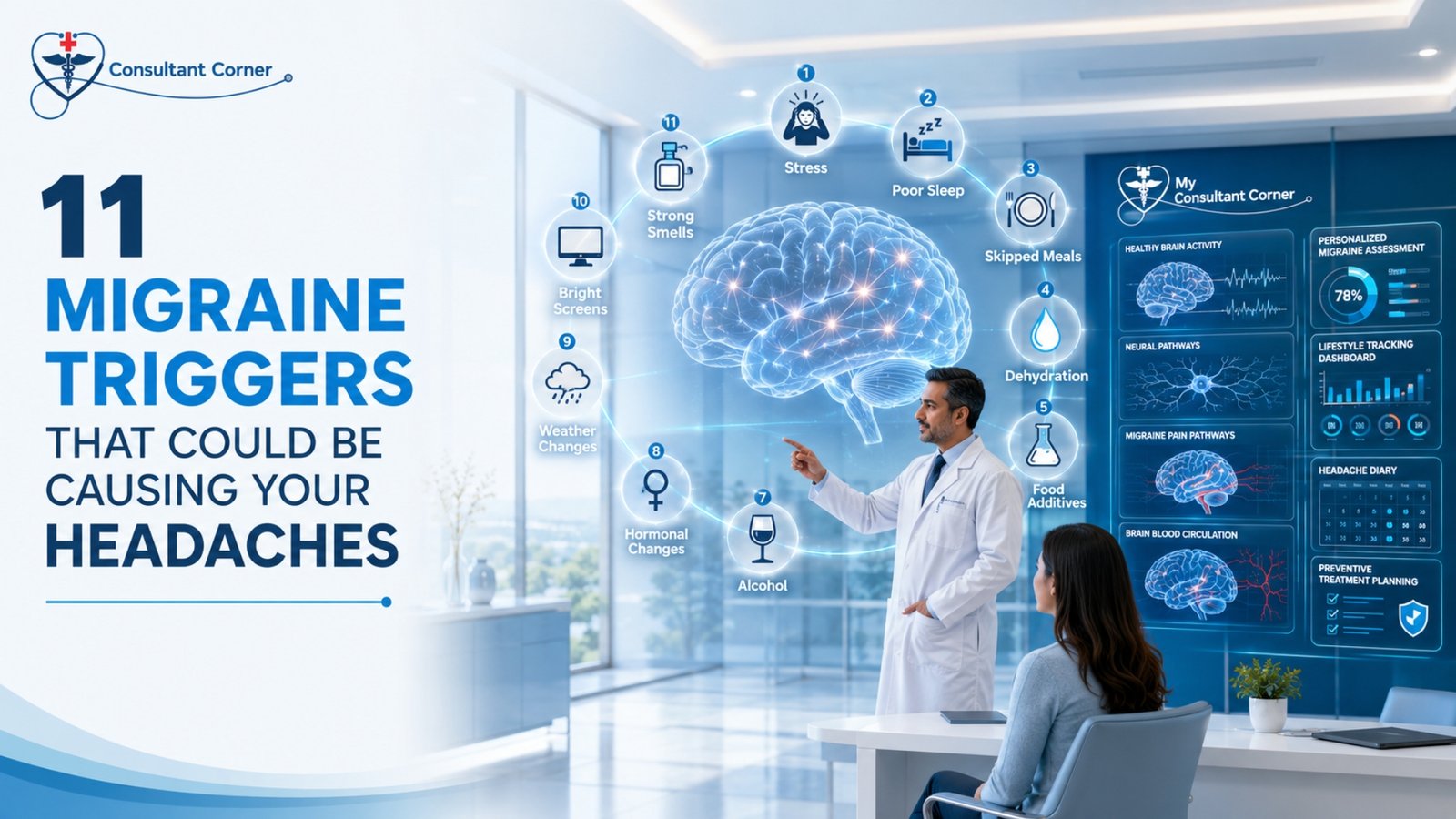
Below are the 11 most common triggers seen in our headache and migraine clinic, along with what the research says about why they matter.

1. Stress and Emotional Arousal
Stress is consistently ranked as the most commonly reported trigger for migraines. When the body is under chronic stress, it releases hormones like cortisol that can affect blood vessels and nerve signals in the brain. Interestingly, stress isn’t the only culprit — a sudden drop in stress after a tough week (sometimes called a “let-down migraine”) can be just as triggering. Simple stress-reduction strategies like breathing exercises, short walks, and regular rest can significantly reduce the frequency of headaches and migraines over time.
2. Irregular Sleep Patterns
Both too little sleep and too much sleep can trigger migraines. Migraine sufferers’ brains tend to prefer consistency, so going to bed and waking up at completely different times — even on the weekend — can be enough to trigger a migraine attack. According to the American Migraine Foundation, one of the most common triggers cited by sufferers is sleeping too much or too little. Aiming for 7-8 hours of uninterrupted sleep each night is one of the easiest and most effective preventative habits.
3. Skipping Meals and Dehydration
Skipping meals can cause blood sugar levels to drop, which can trigger migraines in susceptible people. Dehydration works in a similar way — even a small loss of fluids can reduce blood flow to the brain and lead to headaches. Eating regular meals and keeping water with you throughout the day are two of the easiest changes for a headache and migraine sufferer to make.
4. Certain Foods and Food Additives
Aged cheeses, nitrate-containing processed meats, foods with monosodium glutamate (MSG), and artificial sweeteners are often cited as migraine triggers. Not all migraine sufferers react to the same foods, which is why a food and headache diary is so valuable — it helps you identify your personal type rather than relying on a general “avoid these” list.
5. Caffeine and Alcohol
Caffeine is a double-edged sword. Small amounts can relieve an initial migraine, but excessive amounts — or suddenly stopping caffeine when your daily routine changes over the weekend — can trigger a migraine. Alcohol, especially red wine and other drinks containing sulfites and histamines, is another well-known trigger. Moderate and regular consumption, rather than complete avoidance, works best for most patients.
6. Hormonal Changes
Migraines affect women about three times more often than men, largely due to fluctuations in the hormone estrogen. Many women notice a strong connection between their menstrual cycle and headaches and migraine attacks, with pain often occurring in the days leading up to or during menstruation. Pregnancy, perimenopause, and hormonal medications like birth control pills can also alter the frequency and severity of migraines.
7. Changes in Weather and Atmospheric Pressure
Sudden changes in atmospheric pressure, humidity, or temperature are a factor that many sufferers notice before the local weather forecast changes. Although the exact mechanism is not fully understood, researchers believe that changes in pressure may affect the blood vessels and pressure-sensitive nerves in the brain. Since weather-related triggers cannot be avoided, patients who are sensitive to them often benefit from working with a specialist to develop a preventative treatment plan.
8. Bright Light and Screen Time
Flickering fluorescent lights, bright sunlight, and prolonged staring at screens — all of these can overstimulate the visual system and trigger migraine attacks. This is one reason why many migraine sufferers also report sensitivity to light (photophobia) after their headaches begin. Blue-light filters, screen breaks, and polarized sunglasses can help reduce the effects of this factor.
9. Strong Smells and Odors
A symptom called osmophobia is a sensitivity to strong odors, such as perfumes, cleaning products, gasoline, or cigarette smoke, and it is surprisingly common among migraine sufferers. For some patients, just a strong odor is enough to trigger a migraine attack within minutes, which usually occurs long before other symptoms appear.
10. Medication Overuse
Using over-the-counter or prescription headache medications for more than 10-15 days a month can actually cause more headaches, a condition called medication overuse headache (MOH). This is one of the most overlooked causes of headaches and migraines, as patients often try to simply treat existing pain. If you find yourself reaching for painkillers several times a week, it’s time to talk to a specialist about long-term prevention strategies instead of repeated, temporary treatments.
11. Head Injury and Concussion After-Effects
Head injury — even a mild concussion — can cause new or worse migraines, sometimes lasting months after the initial injury. Patients recovering from head trauma often develop a condition known as post-traumatic headache, which can be very similar to a typical migraine. If your headache started or worsened after a fall, sports injury, or car accident, you should read our guide on What is a Head Injury? and schedule an evaluation.
Quick-Fact Table: Common Causes of Migraines
| # | Cause Category | Easy Prevention Methods |
|---|---|---|
| 1 | Stress (emotional) | Do breathing exercises or take short walks daily |
| 2 | Irregular sleep (lifestyle) | Maintain a regular sleep and wake schedule |
| 3 | Skipping meals/dehydration (lifestyle) | Eat on a regular schedule and drink water regularly |
| 4 | Certain foods/food additives (dietary) | Keep a food diary of foods you eat |
| 5 | Caffeine/alcohol (dietary) | Limit intake and avoid quitting abruptly |
| 6 | Hormonal changes (physiological) | Monitor menstrual cycle-related patterns with your doctor |
| 7 | Weather/atmospheric pressure (environmental) | If weather is a known cause, discuss preventative treatment |
| 8 | Bright light/screen (environmental) | Use screen breaks and blue-light filters |
| 9 | Strong odors (environmental) | Avoid known odor triggers if possible |
| 10 | Medication overuse (medical) | Talk to a specialist about preventive options instead of repeated painkiller use |
| 11 | Head injury/concussion (medical) | Seek evaluation for post-traumatic headache |
When to See a Doctor for Headache and Migraine Symptoms
While most migraines are painful, they are not a medical emergency. But certain symptoms should never be ignored. According to the Cleveland Clinic, if your headache is accompanied by fever, stiff neck, confusion, seizures, double vision, weakness, numbness, or difficulty speaking, you should seek immediate medical attention, as these could be signs of a more serious neurological problem, such as a stroke. If your headache comes on suddenly and you describe it as “the worst headache of your life,” it’s important to seek emergency medical attention right away — our page on What Causes Ischemic Stroke? discusses the warning signs that are sometimes mistaken for an acute migraine.
It’s also important to remember that other neurological problems can also cause symptoms, such as headaches or dizziness, that mimic migraines. If you have a headache that is accompanied by a feeling of dizziness or imbalance, our article Vertigo and Dizziness: 9 Common Causes can help you understand whether it is something more than a simple migraine.
How Consultant Corner Diagnoses and Treats Migraines
Every headache and migraine evaluation at Consultant Corner begins with a detailed history — your headache pattern, known and suspected causes, previous treatments, and details of any imaging or lab tests you have had. From there, our team creates a personalized plan that may include lifestyle and cause-management strategies, medications for preventative or acute conditions, and, as needed, advanced therapies for chronic or severe cases.
This treatment is led by Sakib A. Chowdhury, MD, a board-certified vascular neurologist and neuro-intensivist with extensive experience in diagnosing and treating complex headache and migraine disorders. You can learn more about his background and approach to patient care on our Our Doctor page. For patients whose migraines are chronic or increasingly frequent, our related article, Why Do Migraines Last Day After Day? Causes and Risks, explains when a chronic migraine (status migrainosus) requires an emergency evaluation rather than home treatment.
Find a Headache and Migraine Specialist Near You
Consultant Corner offers neurological evaluations and headache and migraine treatment at multiple locations, including:
- Consultant Corner (Neurological Services in Bloomington, IL) — Neurologists in Bloomington, Illinois
- Consultant Corner (Neurological Services in El Paso, TX) — Health Consultants in El Paso, Texas
No matter where you are, our team offers the same comprehensive and cause-focused approach to headache and migraine care.

Creating a Personal Headache and Migraine Prevention Plan
Once you and your doctor have a clear idea of your individual triggers, the next step is to create a prevention plan that directly addresses them. This typically includes three levels of care:
- Lifestyle stabilization — regular sleep and wake times, regular meals, adequate hydration, and a manageable stress-reduction routine. While these changes may sound simple, for many headache and migraine sufferers they reduce attack rates more than any single medication.
- Changes needed for specific triggers — avoiding common foods or odor triggers, using a blue-light filter to reduce screen sensitivity, or planning ahead and keeping emergency medication on hand for weather-related attacks.
- Treatment — for patients whose migraines are frequent or severe despite lifestyle changes, a neurologist may recommend new therapies, such as preventive medications, supplements, or CGRP-targeting treatments, in addition to acute medications used at the first sign of an attack.
No one plan works for everyone, which is why personal assessment is so important. What may be a minor factor for one patient — like a cup of coffee — may be a major factor for another. Working with an expert ensures that your plan is tailored to your true nature, rather than a generic list of “foods to avoid.”
Frequently Asked Questions About Migraine Causes
What are the most common causes of migraines? Stress is the most commonly cited cause among headache and migraine sufferers, followed by irregular sleep and skipping meals. Most people with chronic migraines have multiple causes, and they are often related to each other — for example, a stressful week that disrupts sleep and eating is more likely to trigger a migraine attack than any one cause.
Can weather really cause migraines? Yes. Changes in atmospheric pressure, humidity, and temperature are well-established causes of headaches and migraines, although the weather cannot be controlled or avoided. Patients who notice such symptoms often benefit from a preventative treatment plan tailored to their susceptibility.
How do I find out my personal migraine triggers? The most reliable method is to keep a headache diary, where each attack is recorded along with sleep, food, stress, dehydration, weather, medications, and — for women — the time of the menstrual cycle. Over a few weeks, certain symptoms usually begin to emerge, which a specialist can help you interpret.
Is it normal to have migraines several times a week? No. If you have migraines more than a few times a month, or if you need frequent painkillers, you should see a specialist. Frequent migraine attacks can sometimes indicate a type of medication overuse headache or chronic migraine, which requires a specific prevention strategy rather than repeated temporary treatment.
When should you see a doctor for a headache? If your headache is weekly or daily, disrupts sleep or work, or is accompanied by nausea, sensitivity to light, or changes in vision, you should schedule an appointment with your doctor. If you have a sudden, severe headache that feels like the worst of your life, or if it is accompanied by confusion, weakness, fever, or vision loss, seek emergency medical attention immediately.
Is migraine curable? There is currently no cure for migraines, but the condition can be effectively managed. With proper management of migraine triggers, lifestyle changes, and the right combination of treatments, most patients can significantly reduce the impact of migraines on their lives.
Get Your Headaches and Migraines Under Control Today
You don’t have to guess when another migraine attack strikes. Understanding your personal triggers — and getting a professional evaluation for any unusual symptoms — is the first step to lasting relief. If frequent headaches or migraines are affecting your work, sleep, or daily life, the Consultant Corner team is ready to help.
👉 Contact us online to schedule your headache and migraine evaluation, or call our office directly at +1 888 208 2208.