
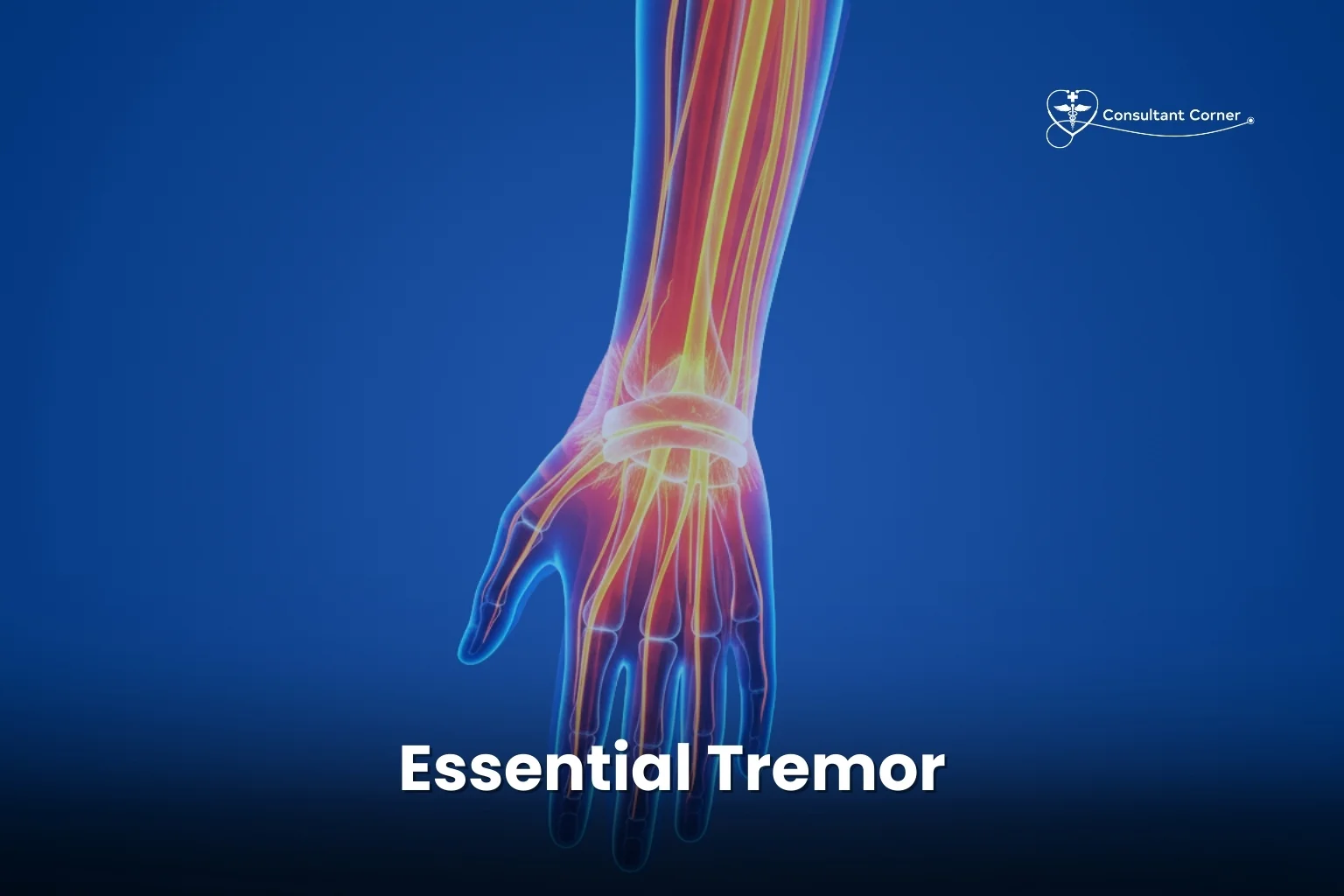
Tremor & Essential Tremor: 7 Signs Your Shaky Hands Need a Neurologist
Tremor & Essential Tremor are two of the most common — and most misunderstood — neurological conditions in the United States. If your hands shake when you lift a coffee cup, sign a document, or try to thread a needle, you are far from alone. Millions of Americans live with some form of tremor, and for many of them, the shaking is dismissed for years as “just nerves” or “just getting older.” It rarely is.
At Consultant Corner, we see patients every week who have quietly adapted their entire lives around a tremor — switching to straws because a cup shakes too much, avoiding restaurants because eating in public feels embarrassing, or giving up hobbies like painting, sewing, or playing guitar. The good news is that tremor is one of the most treatable conditions in neurology once it’s properly diagnosed. This guide walks through what Tremor & Essential Tremor actually are, the warning signs worth paying attention to, what causes them, and how a neurologist evaluates and treats them so you can get your hands — and your confidence — back.
What Is Tremor?
Tremor is an involuntary, rhythmic shaking movement that can affect the hands, arms, head, voice, jaw, or legs. It happens when muscles contract and relax repeatedly and unintentionally, and it can range from barely noticeable to disabling. Tremor itself isn’t a disease — it’s a symptom, and it can be caused by dozens of different underlying conditions, from something as simple as too much caffeine to something as serious as a stroke.
What Is Essential Tremor?
Essential Tremor is the most common movement disorder in adults, far more common than Parkinson’s disease, yet it’s frequently misdiagnosed or ignored for years. Essential Tremor typically:
- Affects both hands, though often unevenly
- Gets worse with action — reaching, writing, holding an object — rather than at rest
- Improves temporarily with alcohol in some patients (not a treatment, just a diagnostic clue)
- Can involve the head, voice, or chin
- Tends to run in families and slowly worsens over years
Essential Tremor is not dangerous on its own, but it is progressive, and it can significantly interfere with eating, writing, dressing, and working if left untreated. The encouraging part: Essential Tremor responds very well to the right combination of medication, lifestyle changes, and — in more advanced cases — procedural treatment.

7 Tremor Symptoms You Shouldn’t Ignore
Not every shake needs a neurologist, but these seven patterns are strong signals that it’s time for a proper evaluation.
1. Hands Shaking During Use
If your hands shake specifically when you try to use them — eating soup, writing a check, buttoning a shirt, holding your phone to text — this is a classic “action tremor” pattern and one of the hallmark signs of Essential Tremor.
2. Tremor at Rest, Especially One-Sided
A tremor that shows up when your hand is relaxed in your lap, particularly if it’s worse on one side of the body, is a pattern more associated with Parkinson’s disease than Essential Tremor. This distinction matters enormously for treatment, and it’s exactly the kind of nuance a specialist is trained to catch.
3. Shaking That Worsens With Stress, Fatigue, or Caffeine
Tremors of almost any type tend to intensify under stress, exhaustion, low blood sugar, or after caffeine. If you’ve noticed your tremor spikes during stressful weeks or after your morning coffee, it’s worth having it evaluated rather than just cutting back on caffeine and hoping.
4. Head, Voice, or Jaw Tremor
Tremor doesn’t only affect the hands. A shaking or nodding motion of the head, a quivering voice, or a trembling jaw can all be forms of Essential Tremor and are often mistaken for anxiety or aging.
5. Trouble With Fine Motor Tasks
Difficulty buttoning clothes, applying makeup, threading a needle, or holding utensils steady is often one of the earliest and most frustrating signs of tremor, because it affects independence and daily dignity.
6. A Family History of Tremor
Essential Tremor has a strong genetic component. If a parent, sibling, or grandparent had “shaky hands,” there’s a meaningfully higher chance you could develop it too, and recognizing the pattern early leads to better long-term management.
7. New Weakness, Slurred Speech, or Sudden Onset
A tremor that appears suddenly, especially alongside weakness, slurred speech, facial drooping, or loss of balance, is a medical emergency and could indicate a stroke. This should never wait for a scheduled appointment — call 911 immediately.
What’s Actually Causing Your Tremor?
Tremor has many possible causes, and pinpointing the right one changes everything about treatment. Some of the most common causes we evaluate at Consultant Corner include:
| Cause | How It Typically Presents | Why It Matters |
|---|---|---|
| Essential Tremor | Worsens with action; both hands; may run in families | Most common cause; highly treatable with medication |
| Parkinson’s Tremor | Occurs at rest; often one-sided; slower movements | Requires a different treatment approach entirely |
| Medication-Related Tremor | Develops after starting a new medication | Often reversible by adjusting or switching medication |
| Thyroid or Metabolic Issues | Tremor with weight changes, fatigue, or heart palpitations | Correcting the underlying imbalance often resolves the tremor |
| Post-Stroke Tremor | Develops after a stroke; may affect one side | Needs coordinated neurological rehabilitation |
| Stress or Anxiety Tremor | Comes and goes with emotional stress | Managed with a combination of strategies, not just medication |
| Genetic/Neurological Conditions | Tremor plus other neurological symptoms | Requires a full neurological workup to identify |
Because these causes overlap so much in how they look to the untrained eye, a proper neurological evaluation — including a review of your medications, lab work, and sometimes imaging — is the only reliable way to know what you’re actually dealing with.
How Essential Tremor Differs From Parkinson’s Disease
This is one of the most common points of confusion, and it’s genuinely understandable — both conditions cause shaking in older adults. The key differences your neurologist looks for include:
- Timing of the shake: Essential Tremor shows up during movement (action tremor); Parkinson’s Disease tremor typically shows up at rest.
- Symmetry: Essential Tremor usually affects both hands fairly evenly; Parkinson’s tremor often starts on one side.
- Associated symptoms: Parkinson’s tends to come with slowed movement, stiffness, and changes in walking, while Essential Tremor generally does not.
- Progression: Both conditions progress over time, but the treatment pathways are very different, which is exactly why an accurate diagnosis matters so much.
If you’d like a deeper look at Parkinson’s-specific symptoms, our related article on Parkinson’s Disease breaks down the early warning signs in more detail.
How Tremor Is Diagnosed
At Consultant Corner, evaluating a tremor is a structured process, not a guessing game. A typical work-up includes:
- A detailed history — when the shaking started, what makes it better or worse, family history, and current medications.
- A neurological exam — observing the tremor at rest, during posture (holding arms out), and during action (finger-to-nose testing, writing, pouring water).
- Lab work — checking thyroid function, metabolic panels, and vitamin levels, since several treatable conditions can cause or worsen tremor.
- Imaging when indicated — MRI or other imaging may be used to rule out structural causes, especially if the tremor is one-sided, sudden, or accompanied by other neurological symptoms.
- Medication review — certain common medications (some asthma inhalers, antidepressants, and seizure medications, among others) can cause or worsen tremor as a side effect.
This is also why we ask new patients to bring a full list of current medications and, if possible, a short video of the tremor on their phone — it can capture patterns that are hard to reproduce on demand in the office.
How Tremor Is Treated
Treatment is never one-size-fits-all, and it’s tailored to the type, severity, and cause of your tremor. Options we discuss with patients include:
- Medications — beta-blockers (like propranolol) and anti-seizure medications (like primidone) are first-line treatments for Essential Tremor and help a large percentage of patients.
- Lifestyle adjustments — reducing caffeine, managing stress, and adjusting sleep habits can meaningfully reduce tremor severity for many people.
- Occupational therapy — weighted utensils, adaptive tools, and specific exercises can help patients manage daily tasks like eating and writing.
- Botox injections — particularly helpful for head, voice, or hand tremor that doesn’t respond well to oral medication.
- Advanced procedural options — for tremor that is severe and doesn’t respond to medication, treatments like focused ultrasound or deep brain stimulation may be appropriate, and we can help coordinate a referral if that level of care is needed.
The goal at every step is function: being able to eat without spilling, write a legible signature, hold a grandchild’s hand steadily, or simply not worry about a shaking cup at dinner.
When Tremor Might Be a Medical Emergency
While most tremor is not an emergency, seek immediate care if your tremor appears suddenly and is accompanied by:
- New weakness or numbness
- Difficulty speaking or slurred speech
- Sudden loss of balance or coordination
- Facial drooping
- A severe, sudden headache
These can be signs of a stroke or other acute neurological event. If you notice these symptoms, call 911 right away rather than scheduling a routine appointment. You can learn more about recognizing the warning signs in our article on Ischemic Stroke.

Why Patients Choose Consultant Corner for Tremor Care
Consultant Corner is led by Saqib A. Chaudhry, MD, a Vascular Neurologist and Neuro-intensivist with extensive experience diagnosing and managing movement disorders, stroke, and complex neurological conditions. Patients choose us for tremor evaluation because we offer:
- Precise diagnosis — carefully distinguishing Essential Tremor from Parkinson’s, medication side effects, and other causes rather than guessing.
- Individualized treatment plans — combining medication, lifestyle changes, and referrals for advanced therapy when appropriate.
- A full medication and lab review — because sometimes the fastest fix is adjusting something you’re already taking.
- Same-week visits — so you’re not waiting months while symptoms and frustration build.
- A focus on daily function — our goal is getting you back to eating, writing, working, and socializing with confidence.
We proudly serve patients through both of our locations: Consultant Corner (Neurological Care in Bloomington, IL), serving as a trusted Neurologist in Bloomington, Illinois, and Consultant Corner (Neurological Care in El Paso, TX), serving as a Health consultant in El Paso, Texas.
Our Bloomington Partnership: MyCare Express Care
For patients in central Illinois, we’re proud to collaborate with MyCare Express Care, a walk-in clinic located in Bloomington, Illinois. MyCare Express Care offers convenient, same-day access to care for non-emergency illnesses and injuries, along with wellness services and virtual neurology appointments — making it easier for patients to get an initial evaluation quickly before being connected with a specialist like Consultant Corner for more complex neurological concerns like tremor. If you’re in the Bloomington area and need fast, walk-in access to care alongside specialized neurological follow-up, this partnership is designed to make that path as simple as possible.
Related Conditions We Treat
Tremor rarely shows up in isolation, and understanding related neurological conditions can help you recognize patterns worth discussing with your doctor. Explore our related articles:
- Head Injury — how trauma to the brain can affect movement and coordination
- Ischemic Stroke — recognizing the warning signs of a stroke, which can sometimes cause new tremor
- Headache / Migraine — understanding triggers and treatment for chronic headaches
- Alzheimer’s Disease — early symptoms every family should know
- Parkinson’s Disease — how it’s distinguished from Essential Tremor
- Neurological Care in Bloomington – Expert Brain Health Services for Illinois Residents — an overview of the neurological services available near you
- Millions of Americans Live with Chronic Neurological Disorders — a broader look at how common conditions like tremor really are

Living Well With Tremor: Practical Tips
While medical treatment is the foundation of managing tremor, small daily adjustments can also make a real difference:
- Limit caffeine, especially in the hours before tasks that require steady hands.
- Stay well-rested — fatigue is one of the most common tremor amplifiers.
- Use weighted or adaptive utensils for eating and writing tasks.
- Practice stress-reduction techniques like deep breathing, since stress and anxiety can worsen almost any type of tremor.
- Keep a symptom diary, noting when the tremor is worse or better, to share with your neurologist — this can meaningfully speed up diagnosis.
- Avoid self-diagnosing based on internet searches alone — tremor causes overlap significantly, and an accurate diagnosis really does require a professional evaluation.
Frequently Asked Questions About Tremor & Essential Tremor
Is Essential Tremor the same as Parkinson’s disease? No. While both cause shaking, Essential Tremor typically occurs during movement and affects both hands somewhat evenly, while Parkinson’s tremor usually occurs at rest and often starts on one side. They require different treatment approaches, which is why an accurate diagnosis matters.
Can Essential Tremor be cured? There is currently no outright cure for Essential Tremor, but it is highly manageable. Many patients see significant improvement with medication, lifestyle changes, and, for more severe cases, procedural treatments.
Does Essential Tremor get worse over time? Essential Tremor is typically slow and progressive, meaning it can gradually worsen over years. This is exactly why early evaluation and treatment matter — starting management sooner tends to preserve function longer.
What foods or habits make tremor worse? Caffeine, stress, fatigue, and low blood sugar are common tremor amplifiers. Certain medications can also worsen tremor, which is why a full medication review is part of a proper evaluation.
When should I see a neurologist for shaking hands? If your tremor interferes with daily tasks like eating, writing, or dressing, worsens over time, runs in your family, or is accompanied by other symptoms like weakness or speech changes, it’s time to schedule an evaluation.
Is tremor always a sign of a serious neurological disease? Not always. Tremor can be caused by something as simple as caffeine intake, stress, or a medication side effect. However, because the causes vary so widely, a professional evaluation is the only reliable way to know for sure.
Can lifestyle changes alone control tremor? For mild tremor, lifestyle changes like reducing caffeine and managing stress can help. For moderate to severe tremor, most patients need a combination of lifestyle changes and medical treatment for meaningful, lasting improvement.
You Don’t Have to Live With Shaking Hands
Tremor & Essential Tremor can feel isolating, but they are among the most treatable conditions in neurology once properly diagnosed. You don’t have to keep hiding your hands, avoiding social situations, or struggling through everyday tasks that used to feel simple. The sooner you’re evaluated, the faster we can help you get back to living — and doing — with confidence.
Ready to get your tremor evaluated? Contact Consultant Corner online to schedule your appointment, or call +1 888 208 2208 to speak with our team today.