Feeling dizzy after a head injury can feel scary and confusing. Sudden change in condition one moment you may feel fine, and the next, it may feel hard to stand, walk, or even turn your head. IDifferent people feels in different ways; some people feel like the room is spinning, while others feel lightheaded, unsteady, or off balance. Simple daily activities like bending down, getting up quickly, or walking through crowded places may become difficult.
For some people, dizziness starts right after a concussion or fall. Others may notice balance problems hours or even days later. This can feel confusing, especially if the injury first seemed minor.
Dizziness after a head injury is actually very common. According to the CDC, it is one of the most common symptoms after a mild traumatic brain injury (TBI). In many cases, symptoms improve with rest and proper care. However, ongoing dizziness can sometimes be a sign of deeper neurological or balance-related problems that should be checked by a doctor.
One of the hardest parts is knowing whether the dizziness is a normal part of recovery or something more serious.
The effects are not only physical. Dizziness can also affect everyday life emotionally and mentally. Driving may feel unsafe, focusing at work may become difficult, and even walking down stairs can create stress or anxiety.
Why Does Dizziness Happen After a Head Injury?
The body’s balance system is surprisingly complex. Staying upright requires constant communication between:
- the brain
- inner ear structures
- vision
- muscles and joints
- sensory nerves
After a head injury, that communication can temporarily become disrupted.
Even a mild concussion can affect the way the brain processes motion and orientation. Some patients feel as if they are swaying while standing still. Others experience sudden spinning sensations or difficulty focusing visually.
This happens because the brain and vestibular system work together continuously to maintain equilibrium and spatial awareness.
The Brain’s Role in Balance
The brain processes signals from multiple systems at once. It compares visual information with body movement and signals coming from the inner ear. If one of those systems becomes distorted after trauma, dizziness can occur.
During a concussion, the brain may move rapidly inside the skull. Even without visible bleeding or fractures, this sudden movement can temporarily affect brain cells and neurological pathways responsible for coordination and balance.
As a result, patients may experience:
- dizziness after head injury
- delayed reaction time
- unsteadiness
- blurred vision
- trouble focusing
- balance issues
- mental fog
- motion sensitivity
Some people notice symptoms only during activity. Others feel dizzy even while resting quietly.
Mental exertion can also worsen symptoms. Reading, scrolling on a phone, or working on a computer may increase dizziness because the injured brain has to work harder to process information.
A strong family history of migraines is more than coincidence, it represents a measurable neurological risk factor.
Early evaluation and awareness can significantly reduce long-term impact.
The Vestibular System and Inner Ear Connection
The vestibular system sits deep inside the inner ear and helps control:
- balance
- spatial awareness
- head movement
- body positioning
When head trauma affects this system, patients may develop vertigo after concussion or persistent motion sensitivity.
The sensation can feel overwhelming.
A grocery store aisle may suddenly feel disorienting. Looking up quickly may trigger nausea. Bright lights or crowded environments may worsen symptoms within minutes.
According to the Vestibular Disorders Association, vestibular dysfunction after concussion is one of the leading causes of persistent dizziness following mild traumatic brain injury.
In some cases, the vestibular system itself is injured. In others, the brain struggles to interpret vestibular signals correctly after trauma.
Both situations can produce similar symptoms.
Common Symptoms That May Accompany Dizziness
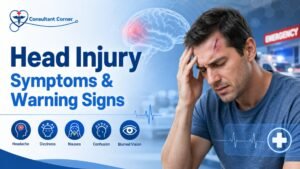
Dizziness after a concussion rarely appears alone. Many patients experience a combination of physical, neurological, visual, and cognitive symptoms.
Some symptoms are mild and improve quickly. Others linger for weeks and interfere with work, driving, exercise, or sleep.
Common symptoms include:
- Vertigo after concussion
- nausea
- headaches
- blurred vision
- sensitivity to light
- sensitivity to noise
- fatigue
- brain fog
- poor concentration
- neck pain
- motion sensitivity
- balance issues
- difficulty walking steadily
- ringing in the ears
- eye strain
- delayed reaction time
For some people, symptoms fluctuate throughout the day. They may feel better in the morning and worse later after physical or mental activity.
Others notice symptoms only while moving.
That unpredictability can create anxiety. Patients often wonder whether recovery is progressing normally or if something more serious is happening underneath.
Sometimes the symptoms are subtle rather than dramatic.
A person may feel “off” without being able to explain why. Walking through busy environments may suddenly feel overwhelming. Fast-moving objects or scrolling screens can trigger dizziness within seconds.
This can feel especially frustrating after what initially seemed like a mild injury.
Mild vs Serious Dizziness Symptoms
Mild Symptoms | Dangerous Symptoms |
Temporary lightheadedness | Repeated vomiting |
Mild imbalance | Loss of consciousness |
Brief nausea | Seizures |
Symptoms improving gradually | Severe confusion |
Mild motion sensitivity | Worsening neurological symptoms |
One important warning sign is worsening symptoms over time instead of gradual improvement.
If dizziness becomes more intense several days after injury, medical evaluation is important.
How Doctors Diagnose Dizziness After Head Trauma
A neurological evaluation helps determine whether dizziness is related to:
- concussion
- vestibular dysfunction
- inner ear injury
- cervical injury
- brain bleeding
- neurological complications
The diagnostic process often begins with a detailed symptom history.
Doctors may ask:
- When did symptoms begin?
- Does movement trigger dizziness?
- Is the room spinning?
- Are headaches present?
- Have symptoms improved or worsened?
- Is balance affected while walking?
Understanding how symptoms behave helps guide diagnosis.
Neurological Examination
A neurological examination evaluates:
- coordination
- balance
- reflexes
- eye movements
- speech
- memory
- concentration
- cognitive function
Even subtle abnormalities can provide important clues.
Doctors often observe how a patient walks, follows visual targets, or responds to movement.
Balance and Vestibular Testing
Vestibular testing may assess:
- eye tracking
- positional vertigo
- gait stability
- motion sensitivity
- coordination during movement
Patients with persistent balance issues after a concussion often benefit from specialized vestibular evaluation.
CT Scan and Imaging
CT scans are commonly used after a head injury when doctors suspect:
- brain bleeding
- skull fractures
- swelling
- serious trauma
MRI imaging may sometimes be recommended for prolonged symptoms or persistent neurological concerns.
According to the American Association of Neurological Surgeons, imaging decisions depend on symptom severity, neurological findings, and injury mechanism.
Treatment Options for Dizziness After Head Injury
Treatment depends on:
- symptom severity
- concussion recovery
- vestibular involvement
- neurological findings
- duration of symptoms
Some patients recover with rest alone. Others require structured rehabilitation and ongoing neurological care.
Vestibular Rehabilitation Therapy
Vestibular rehabilitation therapy is one of the most effective treatments for persistent dizziness and balance issues after concussion.
This specialized therapy uses targeted exercises to retrain the brain and vestibular system.
Treatment may include:
- balance training
- eye movement exercises
- motion desensitization
- walking coordination exercises
- posture training
- head movement exercises
Research supported by the Brain Trauma Foundation suggests vestibular rehabilitation may significantly improve recovery in patients with prolonged dizziness symptoms.
Improvement is often gradual rather than immediate. Many patients notice small gains over several weeks of therapy.
Recovery Timeline: How Long Does Dizziness Last?
Recovery varies widely.
Some people improve within days. Others continue experiencing symptoms for weeks or months.
Typical recovery timelines:
Injury Severity | Recovery Estimate |
Mild concussion | Days to weeks |
Moderate vestibular symptoms | Several weeks |
Persistent post-concussion symptoms | Months |
Factors affecting recovery include:
- age
- prior concussions
- vestibular dysfunction
- migraine history
- sleep quality
- stress levels
- early treatment access
According to the Cleveland Clinic, persistent dizziness after concussion may become part of post-concussion syndrome when symptoms continue beyond the expected recovery period.
Early treatment often improves recovery outcomes significantly.
When to See a Neurologist
You should consider a neurological evaluation if:
- Dizziness lasts more than several days
- balance issues worsen
- Symptoms interfere with work or driving
- Vertigo becomes severe
- headaches persist
- concentration problems continue
- Symptoms repeatedly return after activity
- Walking feels unstable
- Visual motion triggers symptoms
A neurologist can evaluate:
- concussion recovery
- vestibular dysfunction
- neurological complications
- cognitive symptoms
- long-term balance problems
Early treatment often improves outcomes and reduces prolonged recovery.
Consultant Corner Neurological Evaluation
Consultant Corner, neurological specialists evaluate dizziness after head injury using a patient-focused and symptom-based approach. Persistent dizziness can involve multiple systems at once, including the brain, vestibular pathways, visual processing, and coordination centers.
A professional neurological assessment may help identify:
- post-concussion symptoms
- vestibular dysfunction
- balance disorders
- cognitive complications
- delayed neurological recovery
Early diagnosis often improves recovery outcomes and helps patients return safely to work, sports, driving, and daily activities.
If dizziness continues after a concussion, fall, sports injury, or accident, schedule a neurological consultation with Consultant Corner for expert evaluation and personalized care.
Why Choose Consultant Corner?
Consultant Corner, patients receive compassionate neurological care focused on concussion recovery, dizziness evaluation, and balance-related neurological symptoms.
Our team understands how disruptive persistent dizziness can become. Many patients struggle silently because their symptoms are not always visible to others.
Consultant Corner provides:
- neurological consultation
- concussion evaluations
- balance disorder assessment
- symptom-guided treatment plans
- personalized recovery support
- Ongoing neurological monitoring
Whether symptoms developed after a sports injury, fall, accident, or concussion, expert neurological evaluation may help identify the underlying cause and guide recovery more effectively.
Persistent dizziness after a head injury should not be ignored. Book a neurological consultation with Consultant Corner for expert evaluation and personalized care.