Is It a Migraine Vs TMJ Pain? A Simple Self-Check Before Your Appointment

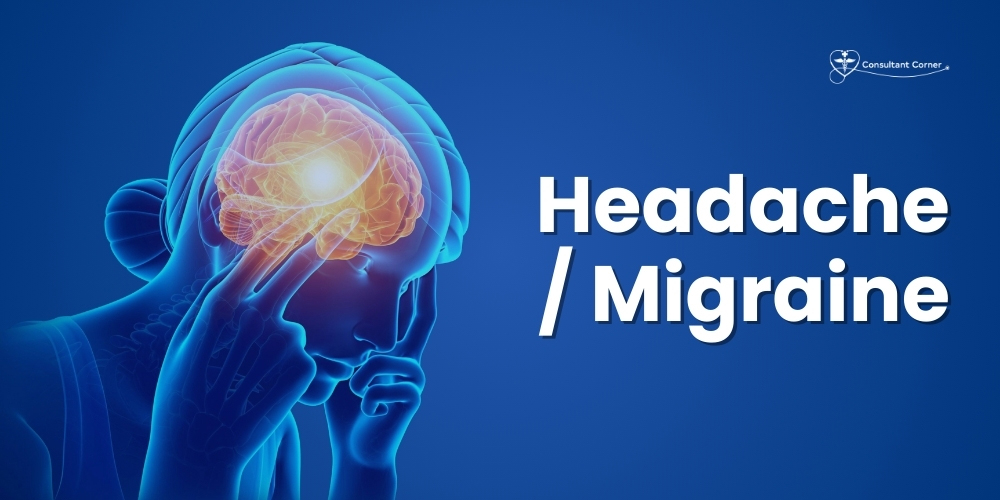
Many people confuse TMJ disorder and migraine because both can cause pain around the temples, face, and head. TMJ pain is usually a dull, aching pressure that worsens with chewing, talking, yawning, or jaw movement and is often accompanied by jaw clicking, morning stiffness, teeth grinding, ear fullness, or tinnitus. Migraine, on the other hand, typically causes throbbing or pulsating head pain, often on one side, along with nausea, sensitivity to light and sound, and sometimes visual aura.
A simple way to tell the difference is to look at your accompanying symptoms and triggers. If jaw movement makes your pain worse and you experience jaw-related symptoms, TMJ disorder may be the cause. If your headaches are associated with nausea, light sensitivity, sound sensitivity, or visual changes, migraine is more likely.
Understanding the difference between migraine and TMJ pain is not just useful; it can change the direction of your treatment entirely.
This guide will help you recognize the key differences, check your symptoms, and know exactly when to speak with a neurologist or headache specialist.
What Is TMJ Disorder?
The temporomandibular joint, commonly called the TMJ, connects your lower jaw to your skull, just in front of each ear. This joint is responsible for Every chewing motion, every yawn, and every word you speak.
TMJ disorder (also called TMD) is a group of conditions that affect this joint and the muscles around it.
Common causes include:
- Bruxism – teeth grinding, especially at night
- Jaw clenching – often triggered by stress or anxiety
- A misaligned bite
- Prior jaw injury or trauma
- Arthritis affecting the joint directly
- Sleep apnea, which has a known association with TMJ dysfunction
The pain often feels like a dull, aching pressure around the temple or jaw area, which is exactly why it gets mistaken for a headache or migraine.
What Is a Migraine?
A migraine is not simply a bad headache. It is a neurological condition involving abnormal brain activity that triggers intense, often debilitating pain – along with a distinct set of other symptoms.
Migraines involve changes in brain chemistry and nerve signaling. The trigeminal nerve – the largest cranial nerve in the face – plays an important role in migraine pain.
Chronic migraine is defined as 15 or more headache days per month, with at least 8 days showing migraine features, lasting more than 3 months. It is one of the most disabling neurological conditions affecting adults worldwide.
Get the Right Diagnosis for Your Head Pain
TMJ Disorder vs Migraine - How the Symptoms Differ
Both conditions cause head and temple pain. But when you look closely, the symptom patterns are quite different.
TMJ Disorder – What to Look For
- Pain that worsens when chewing, yawning, or talking
- Clicking, popping, or locking of the jaw
- Morning jaw stiffness or soreness after waking
- Ear pain or a feeling of fullness, without any infection
- Tinnitus (ringing in the ears)
- Dull, aching pressure in the temples or along the jaw
- Facial pain, often felt on both sides
- Dizziness or a sense of imbalance
- Neck and shoulder tension
- A partner reports that you grind your teeth at night
Migraine – What to Look For
- Moderate to severe throbbing or pulsating pain
- Pain is usually on one side of the head
- Nausea or vomiting during an attack
- Strong sensitivity to light (photophobia)
- Strong sensitivity to sound (phonophobia)
- Visual aura, zig-zag lines, blind spots, or flashing lights
- Pain that worsens with routine physical activity
- Attacks that last between 4 and 72 hours without treatment
- Warning signs in the hours before an attack (prodrome phase)
- Family history of migraine
Quick Comparison - TMJ Headache vs Migraine
Feature | TMJ Disorder | Migraine |
Pain type | Dull ache or pressure | Throbbing or pulsating |
Location | Jaw, temple, ear – often both sides | Often, one side can spread |
Triggered by jaw movement | Yes – chewing, yawning, talking | Rarely |
Nausea or vomiting | Uncommon | Very common |
Light and sound sensitivity | Mild, if at all | Hallmark symptom |
Duration | Persistent – may last days | 4–72 hours per episode |
Jaw clicking or locking | Yes | No |
Morning jaw stiffness | Yes – especially with bruxism | No |
Ear symptoms (tinnitus, fullness) | Common | Can occur during an ura |
Visual aura | No | In about 30% of cases |
Trigeminal nerve involvement | Yes – mechanical irritation | Yes – neurological activation |
Primary specialist | Dentist or oral surgeon | Neurologist or headache specialist |
Why TMJ and Migraine Are So Easily Confused
The reason these two conditions overlap so frequently comes down to one structure – the trigeminal nerve.
The trigeminal nerve is the largest cranial nerve in your head, with branches spreading across the forehead, cheek, jaw, and temples. It is the primary pain relay for the entire face and head.
In migraines, the trigeminal nerve becomes activated and releases inflammatory compounds that create the throbbing pain cascade. In TMJ disorder, mechanical stress on the temporomandibular joint directly irritates the same nerve branches.
This shared pathway means:
- TMJ inflammation can trigger a true migraine attack in someone already predisposed
- Migraine medications may partially reduce TMJ pain by calming trigeminal activity
- Both conditions can coexist and amplify each other over time
Research consistently shows that people with TMJ disorder are 2 to 4 times more likely to experience chronic migraine than those without it. This is not a coincidence; it reflects the shared neurobiology of both conditions.
6-Question Self-Check - Migraine or TMJ?

Use this self-check to organize your symptoms before your appointment. This is not a diagnosis; it is a tool to help you identify your pattern more clearly.
- Where is your pain located?
Jaw, temples, and around the ear – often on both sides, Points toward TMJ. One side of the head, sometimes spreading, Points toward migraine. Varies, sometimes jaw and sometimes a full head, may suggest both
- What does the pain feel like?
Dull, aching, pressure-like Points toward TMJ. Throbbing or pulsating, worse with movement Points toward migraine
- Does chewing or yawning make your headache worse?
Yes, jaw movement clearly worsens it, Strong TMJ indicator. No, jaw movement has no effect. Points toward migraine
- Do you experience nausea or sensitivity to light and sound?
Yes, these are regular parts of my episodes, pointing toward migraine
No, I don’t have these symptoms. Points toward TMJ
- Do you notice jaw clicking, jaw stiffness, or ear pain?
Yes, I wake up with jaw soreness or hear clicking, a strong TMJ indicator
No jaw symptoms at all, Points toward migraine
- Do you or your partner notice teeth grinding? Yes, I grind at night or clench during the day, Strong TMJ indicator
No grinding or clenching, Less likely TMJ as the primary driver
What your answers suggest:
Mostly TMJ indicators – Your headaches may be driven by jaw dysfunction
Mostly migraine indicators – A neurological evaluation is the right first step
Mixed answers – You may have both conditions, which is common and treatable
Can TMJ Cause Migraines?
Yes, this is one of the most important and most frequently missed connections in headache medicine.
TMJ disorder can trigger or worsen migraines by continuously irritating the trigeminal nerve. When the temporomandibular joint is inflamed, misaligned, or under stress from bruxism, it activates trigeminal pathways that are also involved in migraine generation.
For patients already predisposed to migraine, this creates a cycle:
- Ongoing jaw tension irritates the trigeminal nerve
- Trigeminal activation lowers the migraine threshold
- Migraines become more frequent and harder to control
- Migraine-related muscle tension worsens jaw pain
Addressing the TMJ component, through a night guard, physical therapy, or other targeted treatment, can significantly reduce migraine frequency in patients where both conditions overlap.
Migraine Triggers vs TMJ Triggers
Understanding what starts your pain can also help identify the cause.
Common migraine triggers:
- Hormonal changes (especially in women)
- Missed meals or fasting
- Disrupted sleep
- Strong smells, bright lights, or loud sounds
- Weather changes
- Caffeine changes or withdrawal
- High stress or anxiety
Common TMJ triggers:
- Chewing hard or chewy foods
- Prolonged talking or singing
- Wide mouth opening (dental appointments, yawning)
- Stress-related clenching
- Poor posture – especially head-forward positioning
- Sleeping on your stomach with your face turned to one side
- Teeth grinding during sleep
If your headaches consistently follow jaw activity, TMJ is a stronger suspect. If they follow hormonal cycles, weather shifts, or food triggers, migraine is more likely.
When Both Conditions Overlap
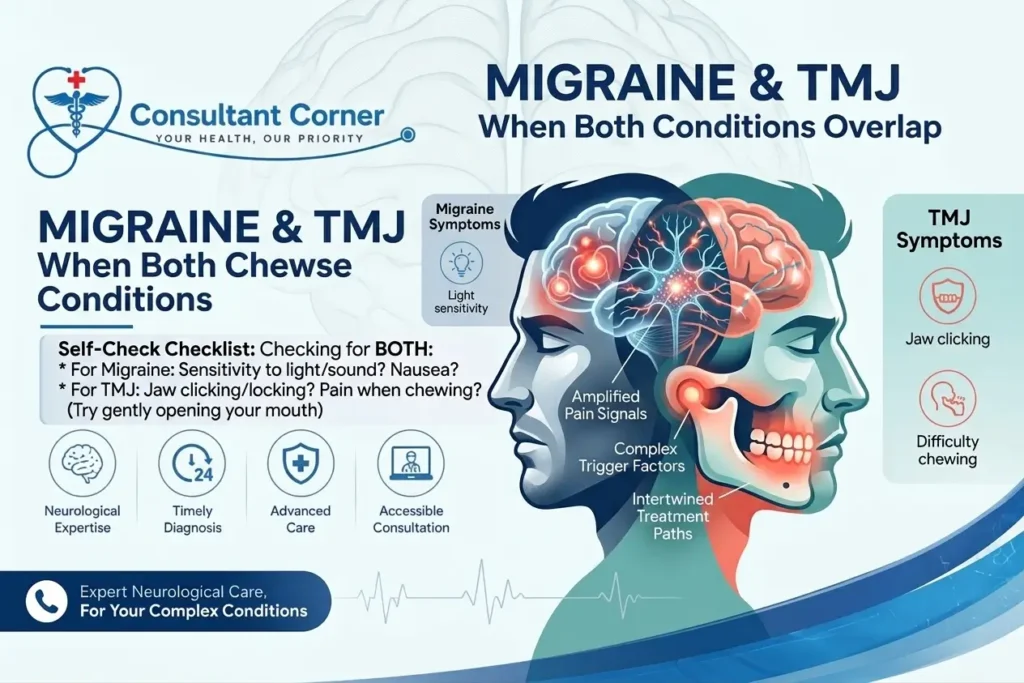
It is entirely possible – and clinically common – to have both TMJ disorder and migraine at the same time.
Signs that both may be present:
- You have classic migraine symptoms AND jaw clicking or morning stiffness
- Migraine medications help partially but never fully control your episodes
- Your headaches consistently worsen after periods of heavy jaw use (long meals, dental work, stress at work)
- You grind your teeth and also have episodes of nausea and light sensitivity
If this sounds familiar, the most effective approach is coordinated care, a neurologist to manage the migraine component, and a dentist or oral specialist to address the structural jaw issue.
Treating only one while ignoring the other often leads to partial improvement at best.
Treatment Options For Both Conditions
Getting the diagnosis right is what makes treatment effective.
TMJ Disorder Treatment
First-line treatment for TMJ disorder typically includes:
- A custom oral appliance (night guard) to reduce the impact of bruxism during sleep
- Physical therapy targeting the jaw muscles and neck
- Dietary adjustments – soft foods during flare periods
- Stress management to reduce daytime clenching
- Botox injections into the masseter muscle – an effective option for reducing jaw muscle tension
- Anti-inflammatory medications for acute flares
Migraine Treatment
A neurologist managing migraine may recommend:
- Acute medications, triptans, gepants, or other targeted migraine treatments – to stop attacks in progress
- Preventive therapies for chronic migraine, including CGRP monoclonal antibodies, Botox, beta-blockers, or other medications
- Trigger identification and lifestyle modifications
- Regular follow-up to adjust the treatment plan based on response
Botox for chronic migraine is an FDA-approved treatment that prevents attacks before they start. It is different from the Botox used for TMJ, though both involve the same substance used in different locations for different purposes.
Who Should You See First?
See a neurologist or headache specialist first if:
- Your primary complaint is headache, regardless of whether jaw symptoms are also present
- You have nausea, light sensitivity, sound sensitivity, or visual aura with your headaches
- Your headaches occur 10 or more days per month
- You are unsure whether the cause is neurological or structural
See a dentist or TMJ specialist first if:
- Jaw clicking, popping, or limited mouth opening is your dominant symptom
- Pain clearly worsens with chewing and improves with jaw rest
- Your teeth show wear from grinding, and your headaches are relatively mild
If you are not sure, a neurologist is the right starting point. A thorough neurological evaluation can determine whether your headaches have a neurological origin, a structural origin, or both – and direct you to the correct specialist from there.
Online neurology consultation is also a practical first step. At My Consultant Corner, patients can consult with a neurologist remotely to review their symptom history, discuss their headache pattern, and receive guidance on next steps, without waiting weeks for an in-person appointment.
Final Thought
Headache pain is your nervous system sending a message. When that pain involves your jaw, temples, and ears – with or without nausea or light sensitivity – it deserves more than a guess.
Whether your symptoms point toward migraine, TMJ disorder, or a combination of both, the right diagnosis is what determines the right treatment. And for most patients dealing with chronic or recurring headaches, that diagnosis starts with a neurologist.
If you have been living with unexplained head pain, jaw tension, or frequent headaches that are not fully controlled, a headache evaluation can provide real answers – and a clear path forward.
My Consultant Corner provides expert neurology consultations for patients dealing with migraine, chronic headache, and related neurological conditions. Our team is available for in-person and online consultations – so you can get the clarity you need, on your schedule.
Frequently Asked Questions
Can TMJ cause migraines?
Yes, TMJ disorder can trigger or worsen migraines by irritating the trigeminal nerve – the main pain pathway shared by both conditions. People with TMJ disorder are significantly more likely to experience chronic migraine.
How do I know if my headache is from TMJ?
The clearest sign is whether jaw movement changes your pain. If chewing, yawning, or talking worsens your headache – and rest relieves it – TMJ is strongly suspected. Jaw clicking, morning stiffness, and ear pain without infection are additional indicators.
What does a TMJ headache feel like?
A TMJ headache typically feels like a dull, aching pressure around the jaw, temples, and sometimes the ear. It tends to be constant rather than episodic and worsens with jaw activity. It rarely causes nausea or visual symptoms.
Can a neurologist diagnose TMJ?
A neurologist can determine whether your headaches have a neurological origin (migraine) or a structural origin (TMJ), or whether both are contributing. They will not perform a dental exam, but a detailed neurological evaluation can identify the most likely cause and direct you to the right specialist.
Can jaw problems cause chronic migraines?
In patients already predisposed to migraine, ongoing TMJ dysfunction can perpetuate chronic migraine by continuously lowering the trigeminal threshold. Treating the jaw component can reduce migraine frequency in these patients.
Recent Posts