
Head Injury Explained: Symptoms, Recovery, and Medical Care
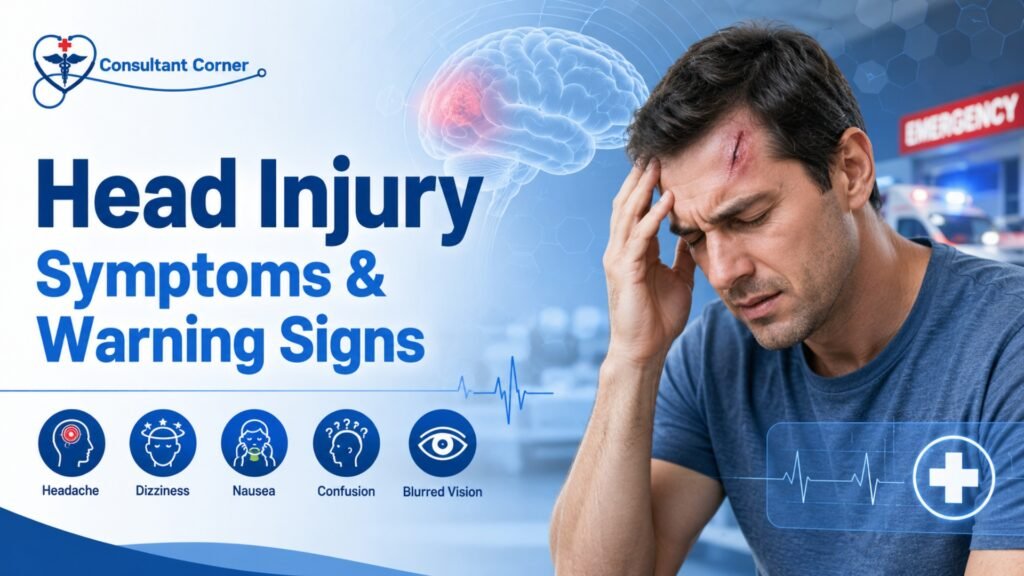
A head injury can happen in the blink of an eye — a bathroom fall, a car collision, a sports impact, or even a careless bump into a cabinet door. But the consequences can ripple through days, weeks, or even months of your life. Understanding what a head injury actually means, recognizing when symptoms signal danger, knowing what recovery looks like, and learning when to call a doctor can make a real difference in how quickly — and how completely — you or someone you love gets better. This comprehensive guide covers everything you need to know about head injury: the different types, common and emergency symptoms, the stages of recovery, special populations at risk, how doctors diagnose injury, and the steps you can take today to protect your brain health. What Is a Head Injury? A head injury is any form of trauma to the scalp, skull, or brain. The spectrum is wide — it can range from a minor bump that leaves a small lump, all the way to a traumatic brain injury (TBI) that disrupts memory, mood, movement, or consciousness. Not every head injury directly involves the brain. A scalp laceration may bleed dramatically (scalp tissue is highly vascular) but involve no brain trauma at all. Conversely, a head injury that looks minor on the surface can still cause significant damage to the brain beneath the skull. Medically, head injuries fall into two primary categories: Closed Head Injuries — The skull remains intact, but the brain can still be jolted, bruised, or twisted inside the cranial cavity. The most common type in this category is a concussion, which occurs when the brain moves rapidly within the skull and temporarily disrupts normal brain function. Closed head injuries represent roughly 75% of all traumatic brain injuries in the United States annually. Open (Penetrating) Head Injuries — An object breaches the skull and may directly damage brain tissue. These are generally more severe, almost always require emergency surgical intervention, and carry a higher risk of permanent neurological damage. Within both categories, a head injury is further classified by severity — mild, moderate, or severe — based on whether the person lost consciousness, how long confusion lasted, and what brain imaging reveals. How Common Is Head Injury? Head injury is far more common than most people realize. According to data from the Centers for Disease Control and Prevention (CDC), approximately 1.7 million traumatic brain injuries occur in the United States each year, with about 3% resulting in death. Adults are the most frequently affected group, though children and older adults face their own heightened risks. Common Causes of Head Injury The cause of a head injury often shapes the type and severity of damage. The most common causes include: Falls — Falls are the leading cause of head injury overall, particularly in young children and adults over age 65. Poor balance, vision changes, and medications that impair coordination all increase fall risk in older adults. Motor Vehicle Accidents — The forces involved in car collisions tend to produce more severe injuries. Whiplash-type movements can cause the brain to strike the interior of the skull even when there is no direct head impact. Sports-Related Impacts — Contact sports like football, soccer, rugby, hockey, and boxing frequently produce concussions. Even cycling and skiing carry significant head injury risk without proper helmet use. Workplace Accidents — Construction and industrial workers face elevated risk from falling objects, falls from elevated platforms, or machinery-related impacts. Physical Assaults — Blunt force trauma to the head during assaults accounts for a meaningful percentage of emergency department head injury presentations. Understanding the cause matters because high-energy impacts — such as those in motor vehicle accidents or falls from height — carry a much higher likelihood of serious brain injury even when initial symptoms appear mild. Head Injury Symptoms: What to Watch For One of the most critical things to understand about a head injury is that symptoms do not always appear immediately. They can emerge hours — sometimes even a day or two — after the initial trauma. This delayed onset is precisely why anyone who has sustained a head injury should be monitored closely for at least 24 to 48 hours, even if they feel completely fine at first. Common Symptoms of a Head Injury Persistent or worsening headache Dizziness or problems with balance and coordination Nausea or vomiting Confusion, mental fog, or difficulty concentrating Memory problems, especially difficulty recalling the injury event itself (post-traumatic amnesia) Sensitivity to light (photophobia) or noise (phonophobia) Unusual fatigue or drowsiness Irritability, mood swings, or heightened anxiety Ringing in the ears (tinnitus) or blurred vision Disrupted sleep — either difficulty falling asleep or sleeping far more than usual These symptoms overlap considerably with other neurological conditions. For instance, persistent headache after a head injury can mimic the presentation of a migraine disorder. If you’re uncertain whether your headache is related to trauma or to a primary headache condition, our blog post Understanding Headache / Migraine explores how different headache types present and how neurologists distinguish between them. Similarly, dizziness and balance problems following a head injury can sometimes overlap with conditions like vertigo. Our resource on Vertigo & Dizziness explains how these symptoms are assessed and when they require specialist evaluation. Emergency Warning Signs After a Head Injury While many head injury symptoms can be managed with rest and at-home monitoring, certain signs demand immediate emergency care. Brain swelling and internal bleeding can develop without any visible external injury. These are conditions that can rapidly become life-threatening if not addressed urgently. Call 911 or Go to the Emergency Room Immediately If: The headache rapidly intensifies rather than easing There is repeated or forceful vomiting (more than once or twice) The person has slurred speech or sudden difficulty finding words A seizure or convulsion occurs One pupil is noticeably larger than the other (unequal pupils) The person shows growing confusion, extreme disorientation, or dramatic behavioral change There is any loss of consciousness,